Sapphire Preferred vs. Ink Business Preferred
Choose the right Chase rewards card for your lifestyle and spending patterns
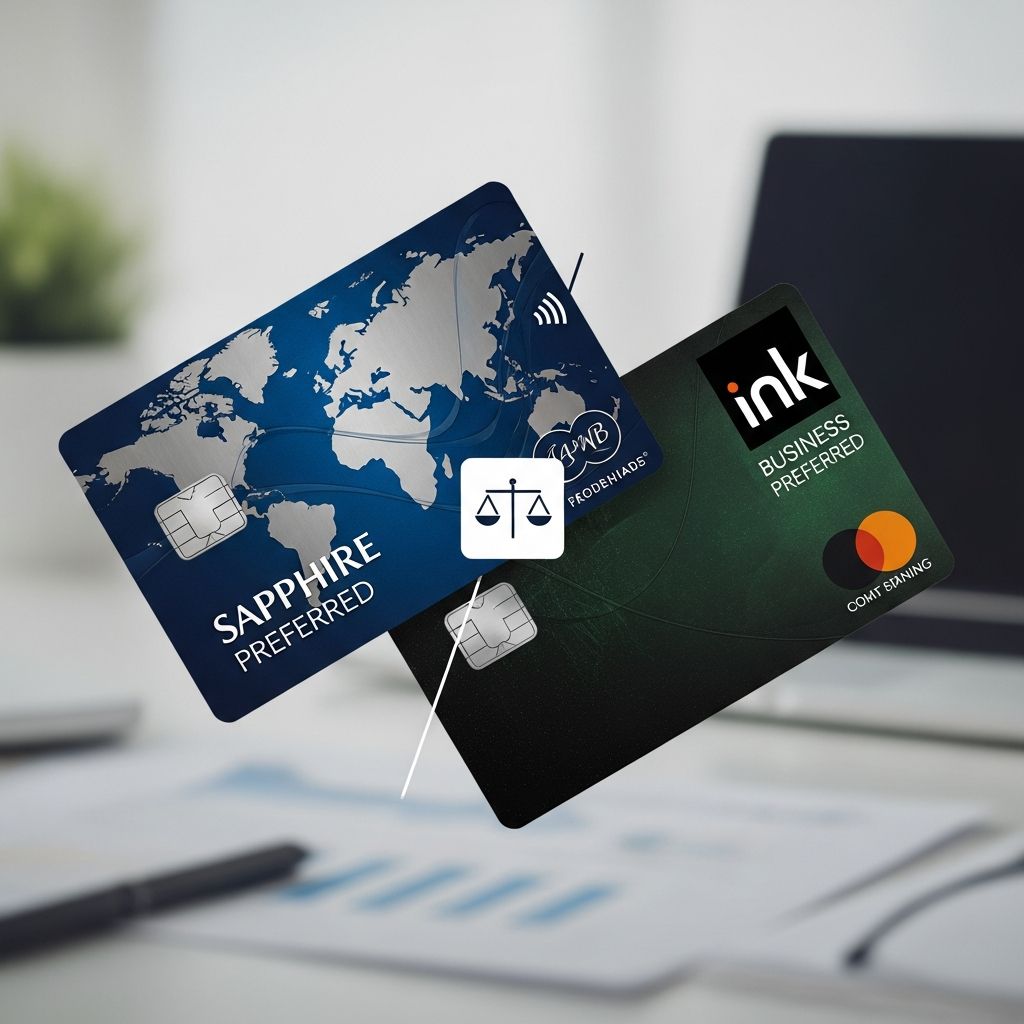
The landscape of rewards credit cards offers numerous options for different financial needs. Two prominent choices from Chase—the Sapphire Preferred and the Ink Business Preferred—stand out for their robust rewards structures and valuable benefits. However, these cards serve distinctly different purposes. The Sapphire Preferred caters to personal spending patterns, while the Ink Business Preferred addresses the needs of entrepreneurs and small business owners. Understanding the differences between these two products is essential for making an informed decision that aligns with your financial situation.
Fundamental Card Categories and User Base
The primary distinction between these credit cards lies in their intended audience. The Chase Sapphire Preferred functions as a personal credit card designed for individuals seeking enhanced rewards on everyday purchases and travel experiences. Conversely, the Ink Business Preferred operates as a commercial credit card tailored for business owners, freelancers, and entrepreneurs who want to optimize rewards on business-related expenditures.
This fundamental difference influences nearly every aspect of the cards, from eligibility requirements to reward categories and available perks. Before comparing specific features, potential applicants should determine which card category aligns with their spending circumstances.
Eligibility and Application Requirements
Eligibility requirements differ significantly between these two cards. The Sapphire Preferred is available to individuals with personal credit history and no specific business requirements. The Ink Business Preferred, however, requires applicants to have an active business operation. This includes sole proprietorships, freelancers, limited liability companies, and formal business entities.
Both cards are subject to Chase’s 5/24 rule, meaning applicants cannot have opened five or more cards across all financial institutions within the past 24 months. Additionally, Chase has specific welcome bonus eligibility guidelines for Sapphire cards that applicants should review before applying. The Ink Business Preferred offers more flexibility regarding card portfolio restrictions—meaning you can hold other Chase cards simultaneously without impacting eligibility.
Welcome Bonus Comparison
The opening incentives provide substantial initial value, though they differ in magnitude:
- Sapphire Preferred: Earn 75,000 bonus points after spending $5,000 within three months from account opening
- Ink Business Preferred: Earn 100,000 bonus points after spending $8,000 within three months from account opening
In terms of absolute value, the Ink Business Preferred provides a more substantial welcome bonus. When valued through Chase’s travel redemption portal, the Sapphire Preferred’s 75,000 points translate to approximately $937.50 in travel value, while the Ink Business Preferred’s 100,000 points equate to roughly $1,250 in travel redemptions.
Annual Fee Structure
Cost is an important consideration when evaluating credit card options. Both the Sapphire Preferred and Ink Business Preferred carry identical annual fees of $95. This parity means that annual membership costs should not be the determining factor when choosing between these two cards. Instead, focus on whether the rewards and benefits justify the annual fee based on your spending patterns and anticipated card usage.
Rewards Earning Categories and Point Multipliers
The most significant operational difference between these cards involves their rewards structures. Each card targets different spending categories to match the presumed spending patterns of its user base.
Sapphire Preferred Rewards Structure
The Sapphire Preferred emphasizes personal lifestyle spending:
- 3 points per $1 spent on dining and online grocery purchases
- 3 points per $1 spent on select streaming services
- 2 points per $1 spent on travel booked through Chase Travel
- 1 point per $1 on all other purchases
- 10% anniversary bonus points calculated from base points earned during the account year
Ink Business Preferred Rewards Structure
The Ink Business Preferred focuses on business expenditures:
- 3 points per $1 spent on the first $150,000 in combined purchases per account anniversary year across travel, shipping, internet, cable, phone services, and advertising purchases on social media and search engines
- 1 point per $1 on all other purchases
- Earnings cap of $150,000 annually in bonus categories
For individuals whose primary spending occurs in dining and entertainment, the Sapphire Preferred delivers superior value. Business owners with substantial advertising expenditures or regular shipping costs may find the Ink Business Preferred more rewarding. Notably, the Ink Business Preferred caps bonus earning at $150,000 annually, making it potentially less attractive for high-volume businesses.
Travel Protection and Insurance Benefits
| Protection Feature | Sapphire Preferred | Ink Business Preferred |
|---|---|---|
| Trip Cancellation and Interruption Insurance | Up to $10,000 per person, $20,000 per trip | Up to $5,000 per person, $10,000 per trip |
| Rental Car Collision Coverage | Primary coverage included | Primary coverage included |
| Purchase Protection | 120 days against damage or theft | Enhanced coverage available |
| Extended Warranty | One year added to manufacturer warranties | Coverage on eligible purchases |
| Baggage and Trip Delay Protection | Included | Not highlighted |
Both cards provide comprehensive travel protections, though the Sapphire Preferred offers more generous coverage limits. Frequent leisure travelers will appreciate the Sapphire Preferred’s enhanced trip insurance benefits. Business travelers using either card will benefit from primary rental car coverage and purchase protection.
Unique Benefits and Supplementary Perks
Sapphire Preferred Exclusive Benefits
The Sapphire Preferred includes several lifestyle-focused perks:
- $50 annual hotel credit through Chase Travel (applied at account anniversary)
- DoorDash DashPass membership for one year (at no additional cost)
- Up to $10 monthly credit on non-restaurant DoorDash orders
- Emergency travel assistance services
- Complimentary travel and emergency assistance services
Ink Business Preferred Exclusive Benefits
The Ink Business Preferred emphasizes business-oriented advantages:
- Cell phone protection (up to $1,000 per claim with $100 deductible) for phones paid with the card
- Complimentary employee cards at no additional cost
- Zero liability protection for unauthorized charges
- Enhanced purchase protection for business items
The hotel credit and DoorDash benefits make the Sapphire Preferred particularly attractive for lifestyle-focused cardholders. The Ink Business Preferred’s complimentary employee card feature provides significant value for businesses with multiple team members, as this eliminates supplementary card fees.
Foreign Transaction Fee Considerations
International travelers benefit from a shared advantage: neither card charges foreign transaction fees. This feature saves approximately 3% per transaction when making purchases abroad, making both cards excellent choices for frequent international travelers. This parity removes foreign transaction fees as a distinguishing factor when comparing these cards.
Points Redemption and Maximum Value Extraction
Both cards earn Ultimate Rewards points, considered among the most versatile rewards currencies available. The maximum value comes from transferring points to Chase’s network of 14 airline and hotel loyalty partners rather than redeeming for cash back or statement credits.
Through Chase Travel, cardholders can redeem points at rates up to 1.75 cents per point, depending on the specific redemption and Points Boost eligibility. Strategic redemptions through transfer partners typically yield higher values, sometimes reaching 2 cents per point or higher for premium cabin redemptions.
Determining Your Ideal Card Choice
Choose the Sapphire Preferred If You:
- Have significant dining and entertainment expenditures
- Travel frequently for personal reasons
- Value lifestyle perks like hotel credits and food delivery benefits
- Seek comprehensive travel insurance protections
- Don’t operate a formal business
Choose the Ink Business Preferred If You:
- Own or operate a business, including freelance operations
- Have substantial business travel expenses
- Spend significantly on advertising, shipping, or internet services
- Want complimentary employee cards for your team
- Value cell phone protection on business devices
Complementary Card Strategy
Rather than viewing these cards as competitors, many cardholders strategically use both simultaneously. The Sapphire Preferred handles personal lifestyle spending—dining, entertainment, and personal travel—while the Ink Business Preferred optimizes business expenditures. This dual-card approach maximizes rewards by directing spending to the card with the highest earning rate in each category.
Since both cards earn Ultimate Rewards points, consolidated accounts allow for powerful transfer opportunities to travel partners. A household or business can combine points across both cards for redemption strategies.
Frequently Asked Questions
Can I get both cards simultaneously?
Yes. The Ink Business Preferred’s lack of strict card portfolio limitations allows existing Sapphire Preferred holders to apply for the business card. However, both are subject to the 5/24 rule.
Which card offers better travel rewards?
The Sapphire Preferred edges ahead with higher insurance limits and travel perks. However, the Ink Business Preferred earns more points per dollar on most business travel purchases before the $150,000 cap.
Do I need a business to apply for the Ink Business Preferred?
Yes, but the definition is broad. Freelancers, consultants, and side-hustle operators qualify as business owners.
How are Ultimate Rewards points valued?
Through Chase Travel redemption, points typically equal 1.25 cents in value. Transfer redemptions to airline and hotel partners often exceed this value significantly.
Conclusion
The choice between Chase’s Sapphire Preferred and Ink Business Preferred ultimately depends on your spending patterns and financial situation. Personal cardholders with substantial dining and travel expenditures will find the Sapphire Preferred more rewarding. Business owners seeking to optimize commercial spending should consider the Ink Business Preferred. For many, both cards serve complementary purposes, maximizing rewards across personal and business categories while maintaining access to premium travel protections and lifestyle benefits. Evaluate your annual spending breakdown against each card’s reward categories to determine which option delivers the greatest value for your circumstances.
References
- Chase Sapphire Preferred vs. Ink Business Preferred: Which Is Better? — One Mile at a Time. 2025. https://onemileatatime.com/guides/chase-sapphire-preferred-vs-ink-business-preferred/
- Chase Sapphire Preferred vs. Ink Business Preferred — The Points Guy. 2025. https://thepointsguy.com/credit-cards/chase-sapphire-preferred-vs-ink-business-preferred/
- Chase Sapphire Preferred vs Ink Business Preferred — TryKeep. 2025. https://www.trykeep.com/newsroom/chase-sapphire-preferred-vs-ink-business-preferred
- Chase Sapphire Preferred Vs. Ink Business Preferred — Business Insider. 2025. https://www.businessinsider.com/personal-finance/credit-cards/chase-sapphire-preferred-vs-ink-business-preferred-card-comparison
- Compare Chase Credit Cards — Chase Bank. 2025. https://creditcards.chase.com/compare-credit-cards
Similar Articles








Read full bio of medha deb