Sampling in Statistics: Definition, Methods, and Applications
Master statistical sampling techniques for accurate data analysis and research insights.

What Is Sampling?
Sampling is a fundamental statistical technique used to select a subset of individuals, items, or observations from a larger population for the purpose of analysis and inference. Rather than examining an entire population, which is often impractical, time-consuming, or prohibitively expensive, researchers and statisticians use sampling to gather data from a representative group. This approach allows analysts to draw conclusions about the entire population based on the characteristics observed in the sample.
The concept of sampling is critical in numerous fields, including market research, social sciences, medicine, quality control, and finance. By selecting an appropriate sample, organizations can make informed decisions, conduct hypothesis tests, estimate population parameters, and validate theories without having to study every single member of a target population.
Understanding the Basics of Sampling
At its core, sampling addresses a practical problem: populations are often too large to study in their entirety. Imagine a pharmaceutical company wanting to test the efficacy of a new medication. Testing the drug on millions of people would be impossible. Instead, the company conducts clinical trials with a carefully selected sample of participants. The results from this sample are then generalized to the broader population of potential users.
The key to effective sampling is ensuring that the selected sample accurately represents the population from which it is drawn. When a sample is representative, the findings derived from analyzing that sample can be reliably applied to the larger population. This principle underlies all statistical inference and hypothesis testing.
Why Sampling Matters
- Cost Efficiency: Collecting data from a sample requires fewer resources than surveying an entire population
- Time Savings: Sampling significantly reduces the time needed to gather and analyze data
- Accuracy: Smaller, well-managed datasets often allow for more detailed and accurate data collection
- Feasibility: For many populations, complete enumeration is practically impossible
- Statistical Power: Proper sampling enables rigorous statistical testing and inference
Types of Sampling Methods
Sampling methods are generally categorized into two broad categories: probability sampling and non-probability sampling. Each approach has distinct characteristics, advantages, and applications.
Probability Sampling
Probability sampling is a method where every member of the population has a known, non-zero chance of being selected. This approach is based on the principles of randomization and provides a scientific foundation for statistical inference. Probability sampling methods are generally preferred in research because they allow for the calculation of sampling error and enable researchers to make valid generalizations about the population.
Simple Random Sampling
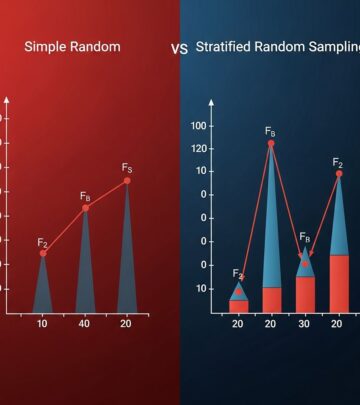
Simple random sampling is the most basic probability sampling method. In this technique, every member of the population has an equal chance of being selected. This method is often implemented by assigning each population member a number and then using a random number generator to select the sample. Simple random sampling is unbiased and straightforward but can be impractical for very large populations.
Stratified Random Sampling
Stratified random sampling divides the population into homogeneous subgroups called strata before sampling. Random samples are then drawn from each stratum proportional to the stratum’s size in the population. This method is particularly useful when the population contains distinct subgroups with different characteristics. For example, a market research firm might stratify a population by income level, age, or geographic region to ensure adequate representation of each group.
Cluster Sampling
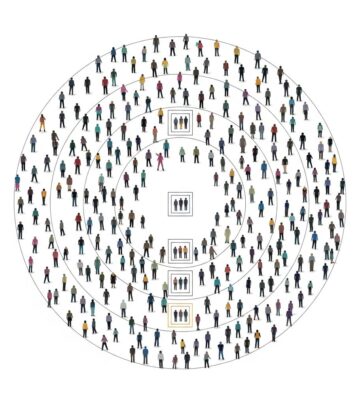
Cluster sampling involves dividing the population into clusters and then randomly selecting entire clusters for inclusion in the sample. Unlike stratified sampling, where samples are drawn from each stratum, cluster sampling may involve examining all members within selected clusters. This method is cost-effective for geographically dispersed populations, such as national surveys where researchers might randomly select specific counties or cities and then interview residents within those selected areas.
Systematic Sampling
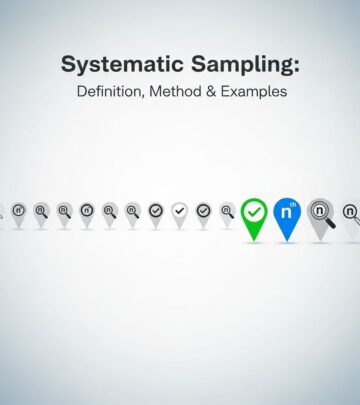
Systematic sampling requires selecting every kth member of the population, where k is calculated by dividing the population size by the desired sample size. For instance, if a researcher wants a sample of 100 from a population of 10,000, they might select every 100th name from a list. This method is easy to implement and often produces samples that are reasonably representative of the population, though it assumes the population list is not arranged in a way that correlates with the selection interval.
Non-Probability Sampling
Non-probability sampling methods do not guarantee that every population member has an equal chance of selection. While these methods are generally less rigorous than probability sampling, they are often used in exploratory research, qualitative studies, or situations where probability sampling is impractical. Non-probability samples cannot be used to reliably estimate population parameters or conduct formal statistical inference.
Convenience Sampling
Convenience sampling involves selecting individuals who are readily available and easy to access. For example, a researcher might survey shoppers at a specific mall or customers at a particular store. While this method is quick and inexpensive, it often introduces significant selection bias because the sample may not represent the broader population.
Purposive or Judgmental Sampling
In purposive sampling, researchers deliberately select participants they believe are most relevant to the research question. This method is common in qualitative research where the goal is to gather in-depth insights rather than make statistical generalizations. The researcher’s judgment drives the selection process, which can introduce bias but may yield valuable information for exploratory studies.
Snowball Sampling
Snowball sampling is used particularly in research involving hard-to-reach populations. Existing participants refer or recruit other potential participants, causing the sample to grow like a rolling snowball. This method is valuable for studying sensitive topics or populations without a clear sampling frame, such as undocumented immigrants or individuals with rare medical conditions.
Quota Sampling
Quota sampling sets predetermined quotas for different population segments. A researcher might ensure that a sample includes a specific number of males and females, or a certain proportion from different age groups. While quota sampling attempts to ensure representation of different groups, it is not a true probability sampling method because the selection within each quota is non-random.
Key Concepts in Sampling
Sample Size
The size of the sample is a critical consideration in sampling design. A larger sample generally provides more accurate estimates of population parameters and greater statistical power for hypothesis testing. However, larger samples also require more resources. The appropriate sample size depends on factors including the population size, the desired level of confidence, the acceptable margin of error, and the expected variability in the population. Statistical formulas and power analysis tools can help researchers determine optimal sample sizes for their studies.
Sampling Error
Sampling error is the difference between statistics calculated from a sample and the corresponding parameters of the entire population. For example, if the average age of a sample is 35 years old, but the average age of the entire population is 37 years old, the sampling error is 2 years. Sampling error is inevitable and decreases as sample size increases. Understanding and quantifying sampling error is essential for making valid inferences from sample data.
Sampling Frame
The sampling frame is the complete list of all population members from which the sample is drawn. For example, in employee surveys, the company roster serves as the sampling frame. A good sampling frame is accurate, complete, and up-to-date. When the sampling frame does not perfectly match the target population, frame error can occur, leading to biased results.
Confidence Level and Margin of Error
The confidence level indicates how certain researchers are that the sample results represent the true population parameter. Commonly used confidence levels are 90%, 95%, and 99%. The margin of error, also called confidence interval, specifies the range within which the true population parameter likely falls. For instance, an election poll might report that Candidate A has 52% support with a margin of error of plus or minus 3 percentage points at a 95% confidence level.
Applications of Sampling
Market Research
Market researchers use sampling to understand consumer preferences, behavior, and purchasing patterns. Instead of surveying every consumer, firms conduct surveys on representative samples to gain insights into market trends and develop targeted marketing strategies.
Quality Control
Manufacturing companies use sampling to monitor product quality without inspecting every single item produced. Statistical process control relies on sampling to detect deviations from quality standards and identify when processes require adjustment.
Political Polling
Election polls use sampling to estimate voter preferences and predict election outcomes. Pollsters carefully select samples to represent the voting population across different demographics and geographic regions.
Medical Research
Clinical trials employ sampling when testing new medications, treatments, and medical procedures. Researchers recruit samples of patients to participate in trials, and results are generalized to the broader patient population.
Environmental Monitoring
Environmental scientists use sampling to assess water quality, air pollution, and wildlife populations. Sampling allows for cost-effective monitoring of environmental conditions across large geographic areas.
Advantages and Disadvantages of Sampling
Advantages
- Reduces costs associated with data collection and analysis
- Enables timely completion of research projects
- Provides adequate data for making reliable decisions when conducted properly
- Allows researchers to focus resources on data quality rather than quantity
- Facilitates hypothesis testing and statistical inference
- Makes research on large or scattered populations feasible
Disadvantages
- Sampling introduces inherent variability and sampling error
- Improperly designed samples can produce biased results
- Results cannot always be generalized to entire populations
- Non-representative samples may lead to incorrect conclusions
- Requires expertise in study design and statistical methods
- May not capture rare characteristics or extreme values in the population
Choosing the Right Sampling Method
Selecting an appropriate sampling method requires careful consideration of research objectives, available resources, population characteristics, and practical constraints. Probability sampling methods are generally preferred when the goal is to make statistical inferences about a population. When statistical generalization is less critical, or when the population is difficult to access, non-probability methods may be acceptable.
Researchers should consider the following factors: the nature and size of the population, the required level of precision and confidence, time and budget constraints, the homogeneity or heterogeneity of the population, and ethical considerations. Consulting with a statistician during the research design phase can help ensure that the chosen sampling method is appropriate for the specific research context.
Frequently Asked Questions
Q: What is the difference between a population and a sample?
A: A population is the entire group of individuals or items that a researcher wants to study, while a sample is a subset of that population selected for analysis. Populations can be very large or infinite, making it impractical to study all members directly.
Q: Why is random sampling important?
A: Random sampling reduces bias and ensures that each population member has an equal or known chance of selection. This enables researchers to make valid statistical inferences and calculate sampling error reliably.
Q: How large should my sample be?
A: Sample size depends on factors including population size, desired confidence level, acceptable margin of error, and population variability. Statistical formulas and online calculators can help determine appropriate sample sizes based on these parameters.
Q: Can I use non-probability sampling for statistical inference?
A: Non-probability sampling is generally not appropriate for formal statistical inference about population parameters. However, it can be valuable for exploratory research, hypothesis generation, and qualitative studies where rigorous generalization is not required.
Q: What is sampling bias and how can I avoid it?
A: Sampling bias occurs when a sample is not representative of the population, leading to skewed results. To avoid bias, use probability sampling methods, ensure your sampling frame accurately represents the population, and verify that your sample characteristics match those of the target population.
Q: How do confidence intervals relate to sampling?
A: Confidence intervals use sample data to estimate a range in which the true population parameter likely falls. For example, you might report that based on your sample, the population mean falls between 45 and 55 with 95% confidence.
References
- Basic Sampling Terminology — U.S. Census Bureau. 2024. https://www.census.gov/topics/research/statistical-research-division/statistical-methods.html
- Sampling Methods and Sample Size Determination — National Center for Health Statistics (NCHS), CDC. 2024. https://www.cdc.gov/nchs/data/nhsr/nhsr094.pdf
- Statistical Sampling and Quality Control — International Organization for Standardization (ISO). 2023. https://www.iso.org/standard/40116.html
- Theory of Sampling: Basic Methods and Applications — Cochran, William G. John Wiley & Sons. 1977. (Referenced as foundational methodology in statistical sampling)
- Research Methods in Education and Psychology — American Psychological Association. 2024. https://www.apa.org/science/about/psa/research-methods
- Guidance on Sampling Methods for Official Statistics — European Statistical System. 2023. https://ec.europa.eu/eurostat/statistics-explained/index.php/Sampling_methods
Similar Articles








Read full bio of Sneha Tete