Sample Debt Validation Letter for Debt Collectors
Protect your rights with a comprehensive debt validation letter template and guide.
Understanding Debt Validation Letters
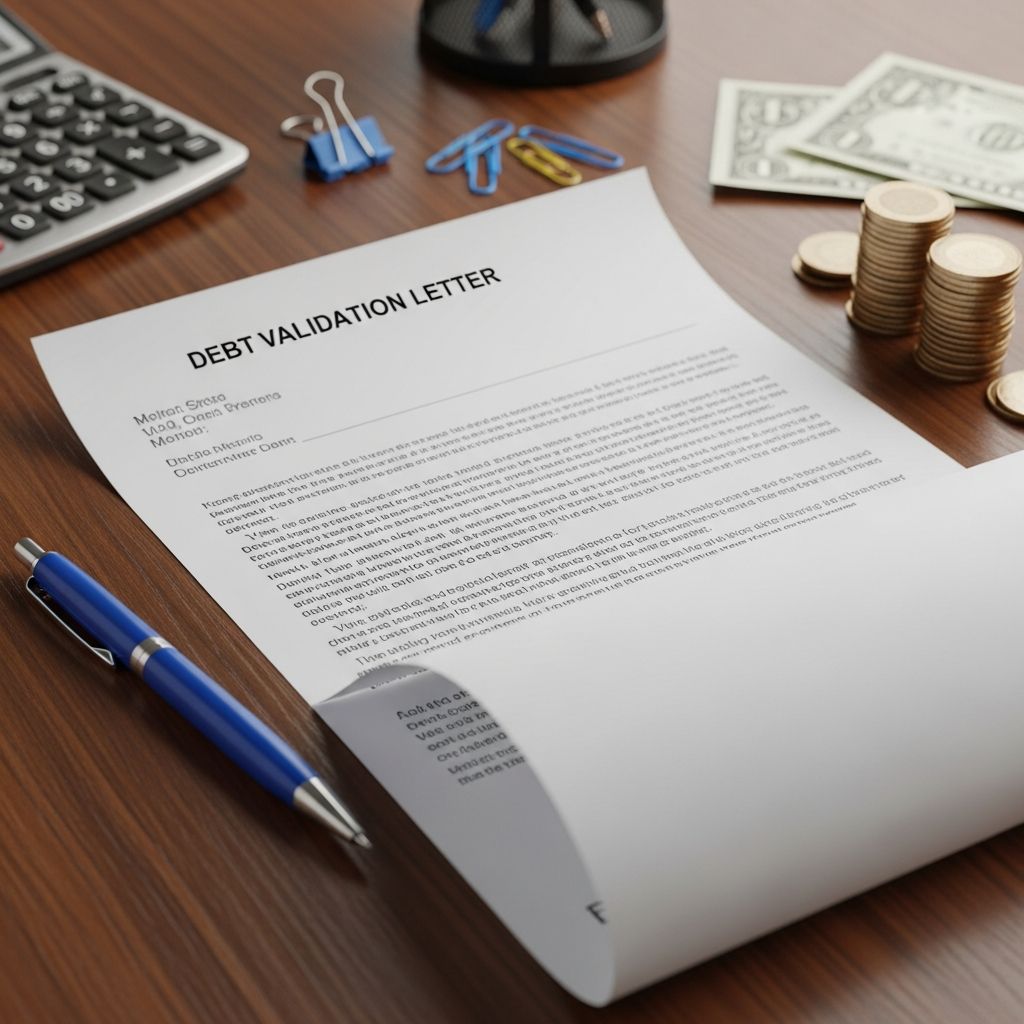
A debt validation letter is a formal written request that you send to a debt collector demanding proof that the debt they claim you owe is legitimate, that the amount is accurate, and that they have the legal authority to collect it from you. This powerful consumer protection tool is protected under the Fair Debt Collection Practices Act (FDCPA), which grants you specific rights when dealing with debt collectors. Sending this letter is one of the most effective ways to protect yourself from predatory collection tactics and potentially erroneous debts.
The key to understanding a debt validation letter is recognizing that it is fundamentally different from other debt-related correspondence. For example, it is not the same as a credit report dispute letter, which is used to correct inaccuracies on your credit report with credit bureaus. Instead, a debt validation letter directly confronts the debt collector and requires them to prove their claims before they can legally continue collection efforts.
Your Rights Under the Fair Debt Collection Practices Act
The FDCPA is a federal law that protects consumers from abusive and unfair debt collection practices. One of the most important protections it provides is the right to request validation of any debt within a specific timeframe. When you send a debt validation letter within 30 days of receiving the initial contact from a debt collector, they must cease collection efforts until they provide you with proper documentation proving the debt is valid. This automatic halt in collection activities gives you breathing room to investigate the claim and gather your own documentation.
Understanding these rights is crucial because many consumers are unaware of this protection and continue paying debts they may not actually owe or that contain errors. By knowing and exercising your FDCPA rights, you put yourself in a strong position to challenge questionable debts and ensure that collection efforts are based on legitimate claims.
What Information Must Debt Collectors Provide?
When you send a debt validation letter, you have the right to request comprehensive documentation from the debt collector. Understanding what information to request is essential for thoroughly validating whether the debt is legitimate. Here are the key pieces of information debt collectors must provide upon request:
- The full amount of the alleged debt, broken down into principal and any accrued interest, fees, or charges
- The name of the original creditor or creditors to whom you owe the debt
- Account numbers associated with the debt, particularly for accounts involving regular payments
- An itemized account statement showing all fees, penalties, and any payments or credits applied against the account
- The name, address, and contact information of the debt collector attempting to collect
- Documentation of replies and information about payment options
- Proof that the debt collector has legal authority to collect the debt
- A copy of any written agreement between you and the original creditor
- Verification that the debt is within the statute of limitations for collection
By requesting all of this information, you ensure that you have a complete picture of the debt and can determine whether it is accurate, whether you actually owe it, and whether the debt collector has the legal right to collect it.
How to Write an Effective Debt Validation Letter
Writing a debt validation letter that gets results requires careful attention to detail and clarity. Following specific steps ensures that your letter is legally sound and covers all necessary elements. Here is how to structure your debt validation letter:
Step 1: Include Both Parties’ Contact Information
Your debt validation letter must begin with complete contact information for both you and the debt collector. Start by typing your full name, street address, city, state, and zip code at the top of the letter. Below that, include the debt collector’s name, street address, city, state, and zip code. This information ensures that the letter reaches the correct recipient and that the debt collector can respond to you directly. Be sure to use the most current contact information for the debt collector, as this increases the likelihood that your letter will be received and processed.
Step 2: Identify the Specific Debt
Clearly identify the debt in question by including all relevant account information. If the debt collector provided an account number in their initial contact, include it prominently in your letter. Also include any account information from the original creditor, such as their account number. The more specific information you provide, the more difficult it becomes for the debt collector to claim confusion or inability to locate the account. This specificity also demonstrates that you are serious about your dispute and are not making frivolous claims.
Step 3: Lay Out Your Request Clearly
State the purpose of your letter explicitly and lay out in clear language what documentation and information you are requesting from the debt collector. Include information about the original creditor, the original amount of the debt, and any fees and penalties that have been added. Organize your requests in a numbered or bulleted list for maximum clarity. Make sure to include every piece of information you need to properly validate the debt. Being thorough at this stage prevents the debt collector from claiming they did not understand what you were requesting.
Step 4: Send the Letter Correctly
The manner in which you send your letter is just as important as its contents. Send the letter by certified mail with a return receipt requested. While this is not legally required, it provides crucial evidence that you followed proper procedures and that the debt collector received your letter. Keep copies of everything, including the certified mail receipt and the return receipt once it is returned to you. This documentation will be invaluable if you ever need to pursue legal action against the debt collector or if a dispute arises about whether you sent the letter within the required 30-day window.
The Critical 30-Day Deadline
One of the most important aspects of sending a debt validation letter is understanding and meeting the 30-day deadline. You must send your letter within 30 days of receiving the initial contact from the debt collector. This contact may come in the form of a phone call, a letter, or other communication. Once you send your validation letter within this window, the debt collector is legally required to stop all collection efforts until they provide you with proper documentation of the debt. If they do not respond within 30 days or if their response does not adequately validate the debt, you have grounds to dispute the debt further and potentially file a complaint with the Consumer Financial Protection Bureau or your state’s attorney general.
Validating the Collector’s Response
After you receive a response from the debt collector, your work is not finished. You must carefully examine the documentation they provide and compare it to your own records. Here is how to properly validate their response:
- Review all documentation provided against your personal financial records and statements
- Check your purchase history to verify that the alleged debt reflects actual purchases or charges you made
- Examine your account for any payments you made against the debt and verify the dates and amounts
- Calculate the balance yourself to ensure that fees, interest, and penalties have been correctly applied
- Verify that the debt is within the statute of limitations for collection in your state
- Confirm that the debt collector has the legal authority to collect the debt
- Look for any inconsistencies or red flags in the documentation provided
If the debt collector’s documentation fails to adequately prove the debt or if you find errors or inconsistencies, you can send a follow-up letter disputing the debt and demanding that collection efforts cease.
Common Reasons Debt Validation Letters Are Effective
Debt validation letters are powerful tools for several reasons. Many debt collectors operate on outdated or incomplete information, and they rely on consumers not knowing their rights. When you send a validation letter, you are forcing the debt collector to go back to the original creditor and gather proper documentation. In many cases, the original creditor no longer has complete records of the debt, particularly if the debt is old or has been sold multiple times. Additionally, some debts on collection accounts are actually the result of errors or identity theft. By requesting validation, you give yourself the opportunity to catch these problems before they further damage your credit or result in erroneous payments.
What to Do If the Debt Collector Does Not Respond
If the debt collector fails to provide adequate validation within the required timeframe, you have several options. First, you can send a cease and desist letter demanding that all collection efforts stop. Second, you can file a complaint with the Consumer Financial Protection Bureau. Third, you can consult with a consumer rights attorney about potential legal action. In many jurisdictions, failure to validate a debt within the required timeframe is considered a violation of the FDCPA and can result in monetary damages to you.
Using Templates and Professional Assistance
While writing your own debt validation letter is absolutely possible, using a template can help ensure that you do not miss any important elements. Many reputable legal websites offer free debt validation letter templates that you can customize with your specific information. If you are unsure about your rights or if you face significant debt collection activity, consulting with a consumer rights attorney is also an option. Many attorneys offer free initial consultations and work on a contingency basis for FDCPA violations.
Frequently Asked Questions
Q: What is the difference between a debt validation letter and a debt verification letter?
A: A debt validation letter requests proof under the FDCPA that you owe the debt and that the collector has the right to collect it. A debt verification letter is a more general request for information about the debt. While similar in many ways, validation is the legal term used in the FDCPA, making it the more powerful tool.
Q: Can I send my debt validation letter via email?
A: While email is faster, certified mail is the recommended method because it provides proof of delivery. Check the debt collector’s initial contact to see if they provided an email address, as some may accept electronic requests. However, sending via certified mail is safer and more legally defensible.
Q: What happens if the 30 days pass without me sending a validation letter?
A: You lose the automatic right to force the debt collector to stop collection efforts and provide validation. However, you can still dispute the debt with the credit bureaus or work with a consumer attorney to challenge it on other grounds.
Q: Can the debt collector sue me while I am requesting validation?
A: Legally, they should not pursue collection efforts while you have requested validation within the 30-day window. However, some collectors may attempt this anyway, which would be a violation of the FDCPA.
Q: What should I do if the collector’s response does not adequately validate the debt?
A: You can send a follow-up letter stating that their response does not meet the requirements of the FDCPA and demand that all collection efforts cease. You can also file a complaint with the Consumer Financial Protection Bureau or consult with an attorney.
Q: Should I pay the debt while waiting for validation?
A: No. Paying the debt can be interpreted as an admission that you owe it, which may affect your legal position. Wait for validation before making any payments.
Q: Can I request validation for multiple debts in one letter?
A: Yes, you can include multiple debts in one letter if they are all from the same debt collector. However, make sure to clearly separate and identify each debt to avoid confusion.
References
- Fair Debt Collection Practices Act (FDCPA), 15 U.S.C. § 1692 — Federal Trade Commission. Last updated 2024. https://www.ftc.gov/news-events/news/2021/11/ftc-issues-revised-guides-debt-collectors
- Consumer Financial Protection Bureau Debt Collection Resources — U.S. Consumer Financial Protection Bureau. Last updated 2024. https://www.consumerfinance.gov/about-us/newsroom/cfpb-takes-action-against-debt-collectors/
Similar Articles








Read full bio of medha deb