Salem State University: Affordable Quality Education
Discover Salem State University's commitment to affordable, quality education on Massachusetts' North Shore.
Salem State University: A Comprehensive Overview
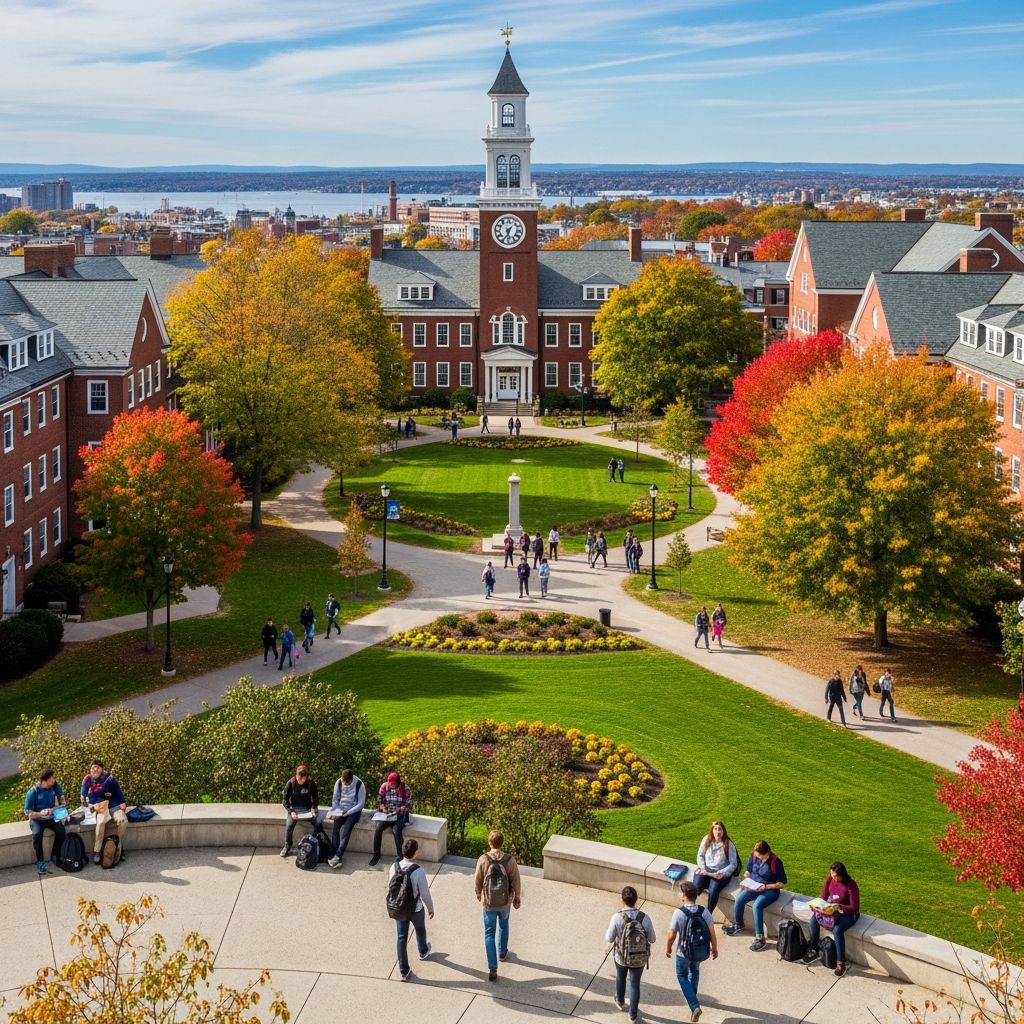
Salem State University stands as a prominent public comprehensive institution located on Massachusetts’ North Shore, serving thousands of students seeking affordable, high-quality education. Founded with a commitment to educational excellence and accessibility, the university has evolved into a vibrant academic community offering diverse degree programs and modern learning environments.
About Salem State University
Salem State University became an official university in 2010 when Massachusetts Governor Deval Patrick signed legislation elevating Salem State College and eight other public institutions to university status. The institution officially transitioned to Salem State University on October 26, 2010, marking a significant milestone in its history. Today, the university serves approximately 6,239 students across full-time and part-time enrollment, with both undergraduate and graduate populations.
As the North Shore’s public comprehensive university, Salem State demonstrates commitment to diversity and inclusion. The institution enrolls one of the most diverse student populations within the Massachusetts public higher education system, with students representing 40 states and 47 countries. This multicultural environment enriches the educational experience and prepares students for success in an increasingly global workforce.
Academic Programs and Opportunities
Salem State University offers students an extensive range of academic choices through six distinct academic divisions. The institution provides 33 undergraduate degree programs with over 100 concentrations and 80+ minors across various disciplines. This breadth of offerings ensures that students can find educational pathways aligned with their interests and career aspirations.
Academic Colleges and Schools
The university comprises six academic sub-units designed to serve different areas of study and professional development:
- Bertolon School of Business (3 departments)
- College of Arts and Sciences (20 departments)
- Maguire Meservey College of Health and Human Services (3 departments, including School of Nursing and School of Social Work)
- School of Education (2 departments)
- School of Continuing and Professional Studies
- School of Graduate Studies
Graduate students benefit from master’s degree programs and post-master’s certificates across various disciplines. The university also serves as the only member of the Massachusetts public higher education system with a graduate program in social work, providing specialized training for future social work professionals.
Honors Program
Salem State University hosts an approved Honors Program as a constituent of the statewide Massachusetts Commonwealth Honors Program, offering advanced academic opportunities for high-achieving students seeking additional intellectual challenges and enrichment.
Campus Infrastructure and Facilities
Salem State University operates across five distinct campuses totaling 115 acres with approximately 33 buildings. This distributed campus model provides specialized facilities tailored to different academic disciplines and student needs.
North Campus
North Campus serves as the oldest and largest campus, housing the institution’s primary academic and administrative functions. The campus contains two major academic buildings—the Edward Sullivan Building and Frederick Meier Hall—along with two residential halls, the university library, central administration building, theater, and campus center. The renowned Frederick E. Berry Library and Learning Commons serves as the center for educational exploration, historical preservation, and student academic support.
Meier Hall, the largest academic building on campus, was constructed in 1965 and named after President Frederick Meier. This facility houses the College of Arts and Sciences and hosts departments including biology, chemistry, political science, geography, geological sciences, and economics. The building features an observatory and greenhouse on its roof, reflecting the university’s commitment to hands-on learning experiences.
Harrington Campus
Harrington Campus, formerly known as Central Campus, was renamed in 2021 to honor President Nancy Harrington, who passed away the previous year. This campus hosts the Bertolon School of Business, music department, and communications department within a primary academic building. The campus includes three residence halls—Marsh, Viking, and Atlantic—providing on-campus housing options. Additionally, Harrington Campus features the Enterprise Center, a small business incubation facility, alongside the bookstore, campus police station, recital hall, baseball field, and tennis courts.
Student Life and Recreation
The Harold E. and Marilyn J. Gassett Fitness and Recreation Center provides state-of-the-art educational, social, and recreational experiences for the Salem State community. The university operates six residence halls housing more than 2,500 students, fostering vibrant residential communities that enhance student engagement and campus life.
Enrollment and Demographics
Salem State University maintains a healthy enrollment base reflecting the changing demographics of the North Shore region. As of Fall 2023, the university enrolled 4,853 undergraduate students and 1,396 graduate students, representing a total enrollment of 6,239 students. The first-year class consisted of 1,159 total first-year students, with students of color comprising 41.1% of this cohort, demonstrating the institution’s commitment to diversity.
The student body includes 978 applicants for the academic year 2022-23, with the university conferring 1,140 bachelor’s degrees, 494 master’s degrees, 21 post-bachelor’s certificates, and 60 post-master’s certificates during that period.
Admission and Academic Standards
Salem State University maintains an accessible admissions process with a 93% acceptance rate, reflecting the institution’s commitment to providing educational opportunities to a broad range of students. Despite this open admission philosophy, the university maintains rigorous academic standards and expectations for student success once enrolled.
The institution reports a 55% graduation rate, indicating meaningful student progress toward degree completion. The university continues investing in student support services and academic resources to enhance retention and graduation outcomes.
Learning Philosophy and Pedagogical Approach
Salem State University emphasizes experiential, student-centered learning through small classes with significant impact. The institution integrates interdisciplinary, civic, and hands-on learning into every academic path, ensuring students develop practical skills alongside theoretical knowledge. This commitment to active learning prepares graduates for success in professional environments requiring both technical expertise and collaborative abilities.
Exploratory Major Program
Recognizing that not all students enter college with clearly defined majors, Salem State offers an exploratory major program providing real guidance rather than guesswork. This program matches student strengths and passions with academic pathways leading to authentic professional success, allowing students to make informed decisions about their educational futures.
Strategic Vision and Future Development
Salem State University has developed an ambitious strategic vision for sustainable future growth and student success. The institution aims to close opportunity gaps by 2030 through implementation of best practices that remove systemic barriers across leadership, access and enrollment, academic policy and practice, and student support and belongingness.
SSU BOLD Initiative
The SSU BOLD project represents a transformative campus unification and modernization effort designed to meet contemporary workforce needs. This initiative includes construction of new life science wet labs, nursing simulation and occupational therapy laboratories, and general-purpose teaching and learning spaces equipped with updated technologies. By modernizing learning environments and consolidating the university’s footprint, SSU BOLD enhances the overall campus experience for all students while promoting fiscal sustainability.
Hispanic Serving Institution Journey
Salem State University is actively working to become a Hispanic Serving Institution, grounded in commitment to current student populations and demographic trends of the North Shore region. This strategic initiative reflects the university’s dedication to serving and supporting Hispanic and Latinx students through culturally responsive policies and practices.
Accreditation and Quality Assurance
Salem State University maintains accreditation by the New England Commission of Higher Education, ensuring that academic programs meet rigorous quality standards and that institutional practices comply with best practices in higher education. This accreditation status affirms the university’s commitment to educational excellence and continuous improvement.
Student Achievements and Leadership
Salem State students demonstrate exceptional leadership across academics, arts, athletics, and civic engagement. The university celebrates student accomplishments through senior spotlights and recognition programs that highlight student contributions to campus and community life. These initiatives reinforce Salem State’s commitment to developing not just knowledgeable graduates, but engaged citizens prepared to contribute meaningfully to society.
Frequently Asked Questions
Q: What is the acceptance rate at Salem State University?
A: Salem State University maintains a 93% acceptance rate, reflecting its commitment to providing educational opportunities to qualified students while maintaining academic standards.
Q: How many undergraduate majors does Salem State offer?
A: Salem State offers 33 undergraduate degree programs with over 100 concentrations and 80+ minors, providing diverse educational pathways across liberal arts, business, education, nursing, and social work disciplines.
Q: What is the total student enrollment at Salem State?
A: As of Fall 2023, Salem State enrolled 6,239 total students, including 4,853 undergraduate and 1,396 graduate students.
Q: Does Salem State have graduate programs?
A: Yes, Salem State offers master’s degrees and post-master’s certificates across various disciplines through its School of Graduate Studies, and is the only Massachusetts public higher education institution with a graduate program in social work.
Q: What campus facilities does Salem State provide?
A: Salem State operates five campuses on 115 acres with 33 buildings, including the Frederick E. Berry Library, Harold E. and Marilyn J. Gassett Fitness and Recreation Center, six residence halls, and specialized academic facilities across multiple disciplines.
Q: How diverse is the Salem State student body?
A: Salem State maintains one of the most diverse student populations in the Massachusetts public higher education system, with students representing 40 states and 47 countries, and students of color comprising 41.1% of first-year enrollment.
References
- Salem State University Official Website — Salem State University. 2025. https://www.salemstate.edu
- Salem State University Profile — College Board BigFuture. 2025. https://bigfuture.collegeboard.org/colleges/salem-state-university
Similar Articles








Read full bio of medha deb