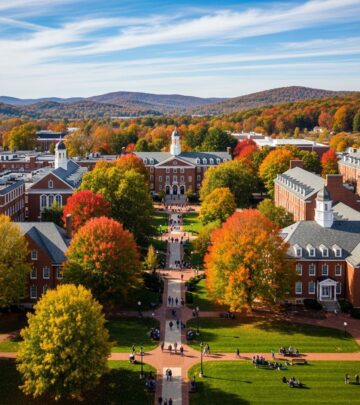
Rutgers University-New Brunswick: Academics, Admissions & Campus Life
Explore Rutgers University-New Brunswick's academic programs, campus facilities, and student life opportunities.
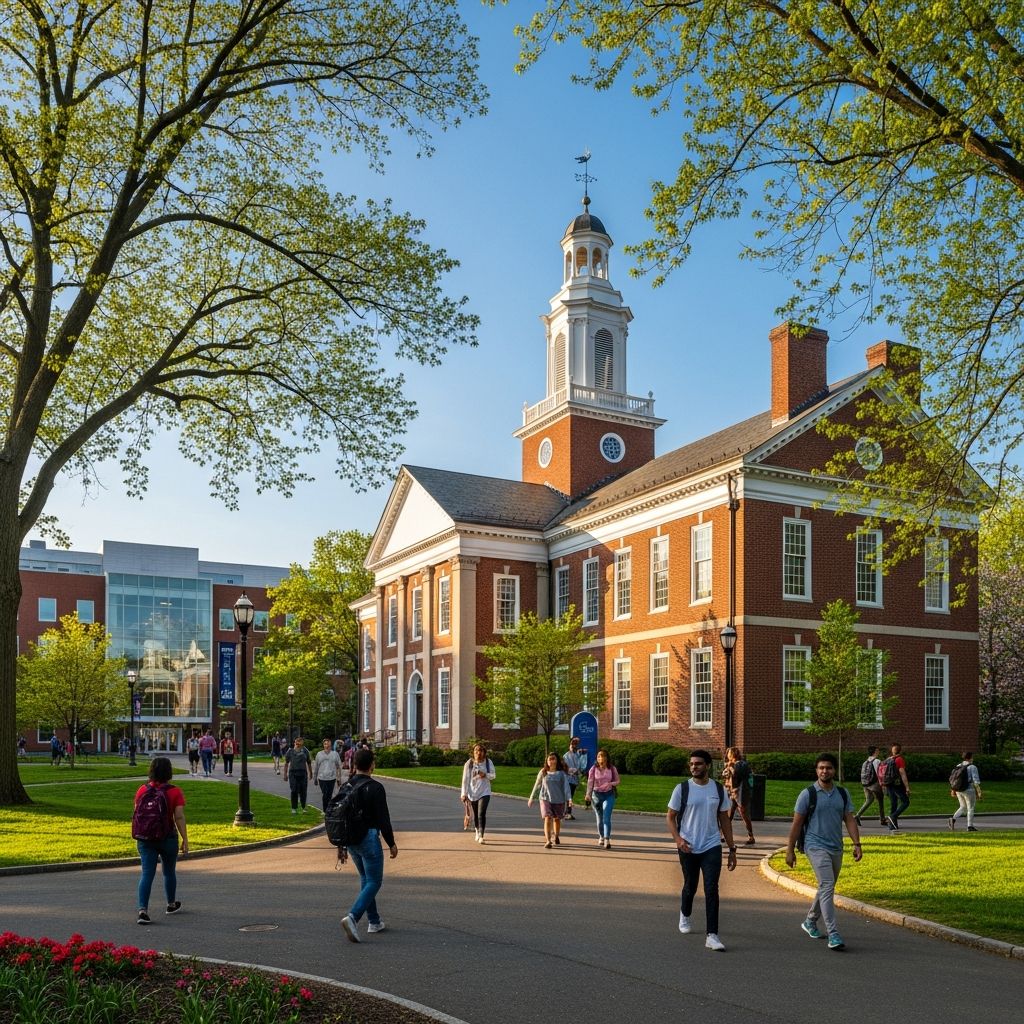
Rutgers University-New Brunswick: New Jersey’s Flagship Research Institution
Rutgers University-New Brunswick stands as a preeminent public research university and the flagship campus of the Rutgers University system. As a member of the Association of American Universities and the Big Ten Academic Alliance, this institution combines centuries of academic tradition with cutting-edge research facilities and modern educational approaches. Located in central New Jersey, approximately 90 minutes from both New York City and Philadelphia, Rutgers-New Brunswick offers students a unique blend of urban proximity and collegiate atmosphere across its distinctive five-campus community.
The Five-Campus Community Experience
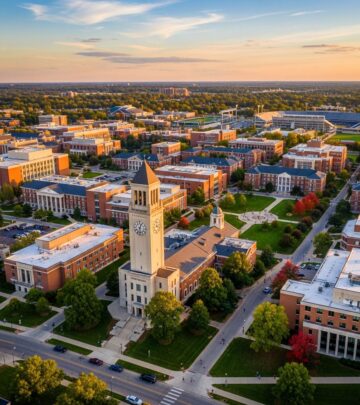
What sets Rutgers-New Brunswick apart from other major universities is its innovative five-campus structure. Rather than operating as a single consolidated campus, Rutgers-New Brunswick comprises five distinct campuses spread across New Brunswick and Piscataway: College Avenue, Busch, Livingston, Cook, and Douglass. Each campus maintains its own character, student center, libraries, dining facilities, and residential options, yet remains connected through a free intercampus bus service.
College Avenue represents the historic heart of the institution, featuring colonial architecture and landmark structures dating back to the American Revolution. This campus is home to the Honors College and serves as the intellectual and cultural center of the university.
Busch Campus provides a modern, high-tech suburban environment with a particular focus on natural sciences and engineering disciplines. This campus hosts the SHI Stadium and features state-of-the-art facilities for physics, engineering, mathematics, statistics, pharmacy, chemistry, geology, biology, and psychology.
Livingston Campus offers students a tree-lined, classically collegiate atmosphere with its own distinct residential and academic spaces.
Cook Campus, officially the George H. Cook Campus, emphasizes agricultural and environmental sciences. This location includes farms, gardens, research centers, the School of Environmental and Biological Sciences, the Institute of Marine and Coastal Sciences, and Rutgers Gardens. It also hosts community improvement initiatives such as Rutgers Against Hunger and the New Brunswick Community Farmers Market.
Douglass Residential College features historic architecture combined with global living-learning communities that foster international perspectives among residents.
Academic Excellence and Research Opportunities
Rutgers-New Brunswick offers exceptional academic breadth through more than 120 undergraduate majors and programs, supported by over 175 research centers across campus. The university is classified as an “R1: Doctoral University” with very high research activity, making it one of the nation’s leading research institutions.
Undergraduate research plays a central role in the educational experience. As a research university, it is common for undergraduates to conduct original research and collaborate directly with faculty members across numerous disciplines. These research opportunities culminate in the annual Aresty Undergraduate Research Symposium, where students present their findings to the university community.
The classroom experience blends lecture-based courses with smaller, discussion-oriented seminars. Introductory courses typically use lecture formats to accommodate larger enrollments, while upper-level electives provide opportunities for direct student-professor interaction and student presentations. Faculty members at Rutgers are described as intelligent, experienced scholars who bring extensive expertise to their teaching. The most effective instructors are known for being accessible, proactive, and genuinely interested in students who take initiative in their education.
Schools and Colleges Within the University
The New Brunswick campus encompasses 19 undergraduate, graduate, and professional schools, providing students with exceptional variety in their academic pursuits. Notable schools include the School of Engineering and the Mason Gross School of the Arts, allowing undergraduates to pursue virtually any field of academic interest.
This diversity of academic units means that whether a student is interested in engineering, arts, sciences, business, environmental sciences, or professional studies, Rutgers-New Brunswick provides specialized schools with dedicated faculty and resources.
Campus Facilities and Infrastructure
Rutgers-New Brunswick operates on an impressive physical scale, encompassing 2,656 acres and more than 700 buildings. The campus includes six student centers and five recreation centers distributed across the five campuses. This extensive infrastructure supports both academic and extracurricular activities.
Housing and Residential Life
One of the largest student housing operations in the United States, Rutgers-New Brunswick houses more than 16,000 resident students in traditional dorms, suites, and apartments spread throughout dozens of residential options. This substantial on-campus housing inventory creates vibrant residential communities and supports living-learning initiatives.
Recreation and Wellness Facilities
Students have access to comprehensive recreation centers equipped with gymnasiums, courts, fitness facilities, and specialized athletic amenities. Beyond physical fitness, the university provides extensive clinical care including medical services, mental health counseling, and wellness programming.
Technology and Learning Resources
The campus features numerous computer centers and printing facilities with more than 850 computers available for student use. Libraries across the five campuses provide extensive collections and study spaces supporting academic work at all levels.
Diversity and Inclusive Community
Rutgers-New Brunswick attracts a genuinely diverse student body representing all 50 states and more than 100 countries. This diversity extends across multiple dimensions including academic backgrounds, cultural traditions, religious beliefs, ethnicities, and linguistic capabilities.
Students consistently report that the university maintains a welcoming environment where different identities and perspectives are valued. LGBTQ+ communities find inclusive spaces and support networks. While some student friend groups may reflect racial or ethnic patterns, the overall campus culture promotes cross-cultural connections and celebrates diversity as a fundamental strength of the institution.
Academic Support and Career Preparation
The university provides extensive academic and career support infrastructure designed to help students succeed. Resources include academic advising, tutoring services, writing centers, and specialized support programs. Many students report that professors demonstrate genuine interest in student success and maintain open-door policies for academic guidance.
Career services at Rutgers-New Brunswick help students develop professional skills and secure meaningful employment opportunities. The university hosts numerous career fairs, maintains relationships with major employers, and leverages its prime location between New York City and Philadelphia to provide internship and job placement opportunities. With more than 750 student organizations, students can explore diverse interests and build networks in virtually every field.
The university emphasizes preparing students for respectable, well-paying careers and offers second-chance academic policies allowing students to improve their records and academic standing.
Location and Access to Opportunities
Situated in central New Jersey, Rutgers-New Brunswick provides students with unprecedented access to major metropolitan centers. Located 90 minutes or less from New York City and Philadelphia, students can engage with Fortune 500 companies, cultural institutions, internship opportunities, and professional networks without leaving the region. The iconic Jersey Shore is also within reasonable driving distance, offering additional recreational opportunities.
This strategic location means students benefit from the academic resources of a comprehensive research university while maintaining access to the employment, cultural, and social opportunities of major urban centers.
Affordability and Financial Aid
As New Jersey’s public research university, Rutgers-New Brunswick keeps costs competitive compared to private institutions. The university provides financial aid to approximately three-quarters of undergraduate students, making a Rutgers education accessible to students from diverse socioeconomic backgrounds. This commitment to affordability aligns with the university’s mission as a land-grant institution dedicated to serving the public good.
Historical Significance and Institutional Heritage
Rutgers University holds a unique position in American higher education. Founded in 1766, it is recognized as the oldest campus of the Rutgers system and played a significant role in American collegiate athletics—particularly as the birthplace of college football. Originally established as a private institution affiliated with the Dutch Reformed Church, Rutgers became a secular institution and the state university of New Jersey through legislation passed in 1945 and 1956. The university remains the only institution in the United States that simultaneously holds the designations of colonial chartered college (1766), land-grant institution (1864), and state university (1945/1956). This triple designation reflects Rutgers’ commitment to academic excellence, public service, and accessibility.
Frequently Asked Questions
What is the student body size at Rutgers-New Brunswick?
Rutgers-New Brunswick serves a large student population across its five campuses, with more than 16,000 resident students living on campus. The student body includes representation from all 50 states and more than 100 countries, creating a genuinely diverse academic community.
Are classes taught primarily as lectures or seminars?
Most introductory courses utilize lecture formats given their size, while upper-level electives tend to be smaller classes with more discussion-based learning and student presentations. This balance allows for both broad accessibility and intimate learning experiences.
What research opportunities are available to undergraduates?
Rutgers-New Brunswick actively encourages undergraduate research participation. Students frequently conduct original research and collaborate with faculty across the university’s numerous departments and research centers, with opportunities to present findings at the annual Aresty Undergraduate Research Symposium.
How does the five-campus structure work for students?
A free intercampus bus service connects all five campuses, allowing students to access classes, facilities, and social activities across locations. Each campus maintains its own residential options, dining facilities, and student centers, creating distinct community spaces while preserving unified institutional identity.
What career support does Rutgers-New Brunswick provide?
The university offers comprehensive career services including academic advising, career counseling, job placement assistance, internship coordination, and access to career fairs. The location near major urban centers provides students with exceptional internship and employment opportunities with leading organizations.
What is the cost of attending Rutgers-New Brunswick?
As a public research university, Rutgers-New Brunswick maintains competitive tuition rates. The university provides financial aid to approximately three-quarters of undergraduate students, supporting accessibility for students from diverse economic backgrounds.
References
- Rutgers University–New Brunswick — The Princeton Review. Accessed November 2025. https://www.princetonreview.com/college/rutgers-university-new-brunswick-1022413
- Rutgers University–New Brunswick — Wikipedia. Accessed November 2025. https://en.wikipedia.org/wiki/Rutgers_University%E2%80%93New_Brunswick
- About Rutgers University–New Brunswick — Official Rutgers University. Accessed November 2025. https://www.rutgers.edu/new-brunswick
- Rutgers University–New Brunswick — Niche. Accessed November 2025. https://www.niche.com/colleges/rutgers-universitynew-brunswick/
- Rutgers University–New Brunswick Overview — College Raptor. Accessed November 2025. https://www.collegeraptor.com/colleges/Rutgers-University-New-Brunswick-NJ–186380
- Explore Our Spaces — Rutgers–New Brunswick Official Campus Guide. Accessed November 2025. https://newbrunswick.rutgers.edu/discover-rutgers/explore-our-spaces
- Rutgers–New Brunswick Homepage — Rutgers University. Accessed November 2025. https://newbrunswick.rutgers.edu
Similar Articles








Read full bio of medha deb