Rust Belt: Definition, History, and Economic Impact
Understanding the Rust Belt: America's industrial decline and deindustrialization

Understanding the Rust Belt: America’s Industrial Heartland in Decline
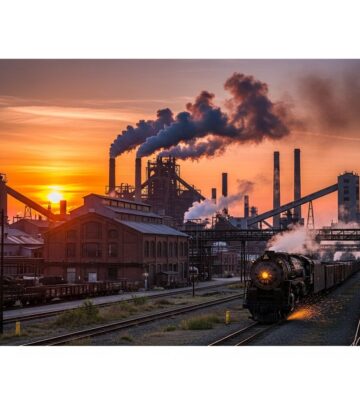
The Rust Belt represents one of the most significant economic transformations in American history. Once the thriving industrial heartland of the United States, this geographic region experienced dramatic economic decline beginning in the 1950s and 1960s, with the most severe deterioration occurring from the late 1970s through the 1980s. The term “Rust Belt” itself derives from the corrosive effects of deindustrialization—referring not to literal rust on metal, but rather to the socially corrosive impacts of economic decline, population loss, and urban decay that have plagued the region for decades. Today, the Rust Belt serves as both a historical reminder of America’s manufacturing dominance and a case study in economic disruption and regional transformation.
What Is the Rust Belt?
The Rust Belt, formerly known as the Steel Belt or Factory Belt, encompasses a substantial portion of the American Midwest and Northeast. While boundaries remain somewhat debated due to the region being defined by economic experience rather than natural borders, the core Rust Belt typically includes Indiana, Illinois, Michigan, Missouri, Ohio, Wisconsin, Pennsylvania, and West Virginia. Some broader definitions extend the region eastward to include former textile manufacturing centers in Massachusetts, westward to eastern Iowa, and southward to Kentucky’s coalfields.
This geographic region was distinguished by its abundance of natural resources, particularly iron ore and coal reserves, combined with critical transportation infrastructure including the Great Lakes, Ohio River, and Erie Canal. These geographic advantages made the Rust Belt the ideal location for America’s dominant industries during the industrial revolution.
The Rise of Industrial Prosperity
The transformation of the Rust Belt into America’s industrial powerhouse began in the second half of the 19th century and accelerated dramatically throughout the first half of the 20th century. The region’s prosperity was built on a foundation of natural resource abundance and superior transportation networks. Iron ore reserves were transported via freighters across the Great Lakes to port cities such as Cleveland and Buffalo, where they were processed in steel plants or shipped to inland manufacturing hubs like Youngstown, Ohio, and Pittsburgh. These cities benefited from their proximity to Pennsylvania and West Virginia coal fields, creating a network of steel mills and metals-related manufacturing that generated tremendous wealth.
The success of Rust Belt industries created more than just economic prosperity—it fostered rich, diverse urban cultures and generated significant fortunes for industrialists and entrepreneurs. Perhaps more importantly, the rise of organized labor during this period contributed to the creation of well-paying blue-collar jobs that supported a burgeoning middle class, though persistent racial discrimination limited access and equity for people of color.
The Beginning of Industrial Decline
Most economic historians date the reversal of the Rust Belt’s prosperity to the 1970s, though some researchers identify roots of decline extending back to the 1950s. Regardless of the precise starting point, the region’s economic collapse resulted from multiple interconnected factors rather than a single cause. Understanding these factors is essential to comprehending why the Rust Belt transformed so dramatically from industrial powerhouse to economically distressed region.
Foreign Competition and Labor Cost Disadvantages
One of the primary drivers of Rust Belt decline was increased competition from foreign industrial competitors, particularly in Asia. Countries like Japan and Germany rebuilt their industries following World War II using more modern and efficient technologies. These nations enjoyed significant labor cost advantages over American manufacturers. In response, many Rust Belt companies relocated operations to the American South, where labor unions were less established and wages considerably lower. This flight of manufacturing represented a fundamental shift in American industrial geography.
Technological Obsolescence and Complacency
A second major factor was widespread failure to modernize industrial machinery and infrastructure. Complacency born from the post-World War II economic boom led American industrialists to underestimate competitive threats. While foreign competitors invested in cutting-edge manufacturing technologies and efficient production methods, American factories continued operating with aging equipment. This technological gap severely hampered competitiveness when foreign rivals entered American markets with superior products and lower prices.
Currency Exchange Rates and Trade Policy
Economic policy decisions also contributed substantially to Rust Belt decline. In the early 1980s, high-interest rates attracted wealthy foreign investment into U.S. banks, causing the U.S. dollar to appreciate significantly. A strong dollar made American products more expensive for foreign buyers while making imports substantially cheaper for American consumers. This misaligned exchange rate persisted until 1986, allowing Japanese imports in particular to make rapid inroads into U.S. markets. From 1987 to 1999, continued stock market growth perpetuated this favorable exchange rate for imports but unfavorable rate for American manufacturing exports.
Globalization and Trade Liberalization
The expanding world market, economic globalization, and removal of trade barriers fundamentally altered competitive dynamics. These broader economic forces, combined with the North American Free Trade Agreement (NAFTA), shifted manufacturing patterns and exposed Rust Belt industries to unprecedented global competition. Additionally, the rise of automation in industrial processes and new organizational methods such as just-in-time manufacturing allowed factories to maintain production with significantly fewer workers, reducing labor demand dramatically.
The Scope of Economic Devastation
The impact of these combined factors proved devastating for the Rust Belt region. Manufacturing employment in the region declined by 32.9 percent between 1969 and 1996. Cities throughout the region struggled with multiple interconnected difficulties including severe population loss, inadequate education systems, declining tax revenues, high unemployment and crime rates, drug epidemics, swelling welfare rolls, municipal deficit spending, and poor credit ratings. Beginning with the recession of 1970-71, a new pattern of deindustrializing economy emerged that saw traditional manufacturing workers experiencing repeated lay-offs through successive economic downturns.
The China Effect and Trade Deficits
In 1984, a new dimension was added to Rust Belt challenges when incremental expansion of the U.S. trade deficit with China began, combined with growing deficits with Japan, South Korea, and Taiwan. Research has documented that Chinese import competition was particularly severe for certain U.S. regions and manufacturing sectors. Economists have estimated that competition from Chinese imports cost the United States as many as 2.4 million jobs in total between 1999 and 2011. However, more recent reassessments acknowledge that consumer benefits from lower prices partially offset these job losses—with only about 6.3 percent of the U.S. population experiencing net losses from Chinese import competition once lower consumer prices were factored into calculations.
Broader Economic Consequences
The manufacturing collapse in the Rust Belt generated ripple effects throughout regional economies. Increased import exposure reduced wages in non-manufacturing sectors due to lower demand for non-manufacturing goods and increased labor supply from workers who had lost manufacturing employment. This wage compression affected even workers in sectors not directly competing with imports. Large long-run trade deficits also dragged down GDP and employment while increasing corporate borrowing to fund retiree benefits, straining government budgets across the region and nation.
Policy Responses and Economic Adjustment
While the negative impacts of trade competition on specific regions have been well documented, economic researchers have emphasized that these findings reflect broader economic disruptions including technological change and recessions, rather than trade alone. Rather than advocating for protectionist measures like tariffs, most economists argue that policy responses should focus on helping workers adapt to economic change. Some researchers have noted that the economic adjustment process has largely concluded, suggesting that ongoing policy debates may not fully reflect current economic realities.
Path Forward for Rust Belt Recovery
Despite decades of economic hardship, the Rust Belt possesses significant assets for potential recovery. The region retains its productive workforce, entrepreneurial traditions, and existing industrial infrastructure. Revitalization efforts have begun in some areas, with cities investing in technology sectors, healthcare innovation, and advanced manufacturing. Successful recovery requires learning from historical mistakes—particularly avoiding the complacency and resistance to innovation that characterized earlier decades. The Rust Belt’s future depends on embracing technological advancement, investing in workforce education and training, and fostering innovation-driven industries that can compete effectively in global markets.
Frequently Asked Questions
Q: Which states are included in the Rust Belt?
A: Core Rust Belt states include Illinois, Indiana, Michigan, Missouri, Ohio, Pennsylvania, West Virginia, and Wisconsin, with some definitions extending to include parts of New York, Massachusetts, Iowa, and Kentucky.
Q: When did the Rust Belt’s economic decline begin?
A: While most historians date the decline to the 1970s, some evidence suggests roots extending back to the 1950s. Manufacturing peaked as a percentage of U.S. GDP in 1953 and declined thereafter, with particularly severe deterioration in the late 1970s and early 1980s.
Q: What caused the Rust Belt’s industrial collapse?
A: Multiple factors contributed, including foreign competition with lower labor costs, technological obsolescence of American factories, unfavorable currency exchange rates, globalization, automation, and changing trade policies including NAFTA.
Q: How significant were Chinese imports in causing Rust Belt job losses?
A: Chinese import competition cost the U.S. approximately 2.4 million jobs between 1999 and 2011. However, when consumer price benefits are included, only about 6.3 percent of the U.S. population experienced net losses from Chinese import competition.
Q: Can the Rust Belt recover economically?
A: Yes. Recovery requires investing in technological innovation, workforce education, and new industries like advanced manufacturing and technology sectors while avoiding past policy mistakes and complacency.
References
- Rust Belt — Wikipedia. Accessed 2025-11-29. https://en.wikipedia.org/wiki/Rust_Belt
- Rust Belt: Definition, Map, States, & Cities — Britannica. Accessed 2025-11-29. https://www.britannica.com/place/Rust-Belt
- Why The Rust Belt Collapsed — YouTube. Accessed 2025-11-29. https://www.youtube.com/watch?v=nEI8wFg09d0
- Rust Belt States 2025 — World Population Review. Accessed 2025-11-29. https://worldpopulationreview.com/state-rankings/rust-belt-states
Similar Articles








Read full bio of medha deb