Russian Economy: Structure, Challenges, and Future
Understanding Russia's economic structure, current challenges, and long-term prospects.
Understanding the Russian Economy
The Russian economy represents one of the world’s largest by purchasing power parity, yet it faces significant structural challenges as it navigates wartime pressures and international sanctions. After experiencing strong growth in 2023 and 2024, the Russian economy is now entering a period of deceleration that presents both immediate and long-term concerns for policymakers and citizens alike.
Economic Structure and Key Sectors
Russia’s economy is traditionally structured around its vast natural resources, particularly oil and natural gas, which have historically generated substantial export revenues. However, the economic landscape has shifted dramatically, with the defense and military-industrial complex now dominating growth and investment priorities. The economy comprises several key sectors that contribute to Russia’s overall GDP and employment figures.
Energy Sector
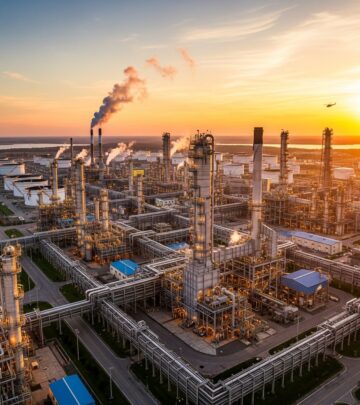
Energy exports remain crucial to Russia’s fiscal revenues, though declining oil prices and reduced natural gas exports have significantly diminished this revenue stream. Government tax revenues from energy exports fell to 5 percent of GDP in the first half of 2025 from 7 percent in the same period of 2024, reflecting the vulnerability of Russia’s economy to global energy market fluctuations. The energy sector’s challenges are compounded by international sanctions that restrict Russia’s access to advanced technology for extraction and refinement.
Defense and Military-Industrial Complex
The defense sector has emerged as the primary engine of economic growth, with military production now representing the only sector experiencing significant expansion. Defense and security spending accounted for approximately 40 percent of Russia’s total government spending in 2025, exceeding combined spending on education, healthcare, social policy, and the national economy. Wages in defense sector factories have surged by 30-60 percent due to acute labor shortages, contrasting sharply with stagnant incomes in civilian sectors.
Civilian Sectors
Non-military industries face mounting pressures from high interest rates, labor shortages, and rising costs. Manufacturing and retail sectors have experienced reduced net profits, while overall civilian economic activity continues to decelerate. GDP growth dropped from 5.4 percent in the first quarter to 3.1 percent in the third quarter of 2024, with further slowdowns observed in 2025.
Current Economic Challenges
Russia’s economy faces a confluence of serious challenges that threaten sustainable growth and living standards for ordinary citizens. These issues have become increasingly pronounced as the war economy enters its third year.
Persistent Inflation
Inflation remains one of Russia’s most pressing economic problems. Official statistics reported inflation reaching 9.6 percent by December 2024 on an annualized basis, but perceived inflation is considerably higher, with citizens reporting actual price increases of 16-21 percent annually. Food and service prices continue to rise faster than in the previous year, placing strain on household budgets and eroding purchasing power. This inflation dynamic is largely driven by military spending and war-related production channeling income into consumer markets without corresponding increases in consumer goods supply.
Labor Market Imbalances
Acute labor shortages have fundamentally transformed Russia’s labor market. Demand for labor has risen by 2 million (2.7 percent) from pre-war levels while labor supply has contracted, driving unemployment down from 4-5 percent to just 2.1-2.3 percent. This extremely tight labor market has driven wage pressures, particularly in defense-related industries, but has created severe constraints on civilian sector growth. Large-scale emigration and military conscription have depleted the available workforce, contributing to Russia’s shifting economic dynamics.
Reclassification as High-Income Country
In mid-2024, the World Bank reclassified Russia as a high-income country—not as a result of improved productivity or genuine development, but because government expenditures on war financing have inflated nominal incomes. This reclassification obscures the underlying economic weakness and structural problems affecting most of the population outside the defense sector.
Income Inequality and Pension Compression
Income inequality in Russia has grown significantly, with pensions indexed below perceived inflation now averaging only $150-200 per month. Public sector salaries similarly lag behind actual inflation, while defense workers enjoy substantial wage increases. This widening gap between war-related and civilian incomes creates social tensions and reduces living standards for pensioners and public employees.
Impact of Sanctions and Trade Restrictions
International sanctions imposed following Russia’s invasion of Ukraine have fundamentally altered the economic landscape. While Russia has demonstrated adaptive capacity in finding alternative trade partners, the restrictions on access to advanced technology and foreign markets represent serious long-term constraints on economic growth.
Russia’s continued reliance on imported technological products makes it vulnerable to further sanctions targeting export revenues. The potential implementation of stricter financial sanctions to limit Russian oil revenues—similar to measures successfully applied to Iran—represents a significant downside risk for 2025 and beyond. However, so far Russia has successfully maintained oil sales to alternative buyers despite existing sanctions.
China now dominates Russia’s industrial imports, reflecting the reorientation of trade patterns away from Western suppliers. Over 40 percent of Russia’s non-food retail consists of imported goods, creating vulnerability to currency fluctuations and supply chain disruptions.
Recent Economic Performance and Projections
The Russian economy’s recent trajectory reveals a sharp deceleration from earlier growth rates. After expanding 4.1 percent annually in both 2023 and 2024, growth slowed dramatically to 1.4 percent year-on-year in the first quarter of 2025 and 1.1 percent in the second quarter. The BOFIT forecast predicts that growth for all of 2025 will remain at or below 1 percent.
Industrial output presents a particularly stark picture: while total industrial output was 10.2 percent higher than in 2021, excluding war-related industries it grew by only 3 percent. This divergence highlights how defense production is masking underlying civilian sector weakness.
Stagflation Risk
A stagflation scenario—combining high inflation with slow growth—increasingly threatens Russia’s economy. Avoiding this outcome would require a sharp decline in inflation coupled with economic growth of at least 2 percent, both of which remain uncertain. Current trends suggest stagflation becoming the baseline scenario rather than an exceptional risk.
Medium-Term Outlook (2025-2027)
The BOFIT forecast anticipates Russian GDP growing at only about 1 percent annually throughout the forecast period, with growth constrained by the needs of war, labor shortages, and slower growth in public spending. The Center for Analysis and Strategies in Europe forecasts a prolonged period of political and economic stagnation without much development or prosperity over the next decade. Some analysts expect a moderate recession in 2026, with potential contraction between 1 and 1.4 percent.
The Two-Speed Economy
The divergence between military and civilian economic performance creates what analysts call a “two-speed economy.” The Kremlin has deliberately prioritized military production while shielding war-related sectors from economic pressures affecting the rest of the country. This strategy reflects Putin’s commitment to sustaining the military effort, despite increasing costs for ordinary Russians and non-military industries.
War-related incomes are being funneled into consumer markets, driving inflation and deepening the imbalance between military and civilian sectors. This unsustainable dynamic cannot persist indefinitely, as the civilian economy weakens and government fiscal capacity becomes increasingly constrained by falling energy export revenues.
Government Fiscal Position
Russia’s fiscal situation has deteriorated from earlier in the war. The fiscal deficit is projected to widen to 2.9 percent of GDP in 2025 and remain at around 2.7 percent in 2026-2027, due to reduced revenues from subdued energy prices that are expected to recover only slightly. Defense spending remains at historically elevated levels, consuming an unprecedented share of government resources and leaving limited capacity for civilian investment or social spending increases.
The National Wealth Fund—Russia’s primary fiscal reserve—has been depleted to support government spending, further reducing the country’s financial flexibility for addressing future shocks or adjusting policy priorities.
Central Bank Policy
The Central Bank has pursued an aggressive interest rate cutting cycle, reducing its benchmark rate by 50 basis points on October 24, 2025, to 16.5 percent—the fourth consecutive cut. This monetary easing reflects efforts to support growth despite persistent inflation concerns. However, high interest rates continue to constrain credit availability and investment in civilian sectors, particularly in manufacturing and small business.
Frequently Asked Questions
Q: What is Russia’s current GDP growth rate?
A: Russian GDP grew 1.4 percent year-on-year in the first quarter of 2025 and 1.1 percent in the second quarter, down sharply from 4.1 percent growth in 2024. Forecasts suggest growth will remain at or below 1 percent for all of 2025.
Q: Why is inflation so high in Russia?
A: Inflation is driven by military spending and war-related production channeling income into consumer markets without corresponding increases in goods supply. Official inflation stood at 9.6 percent in December 2024, but perceived inflation is 16-21 percent annually.
Q: How has the labor market changed in Russia?
A: Labor shortages have intensified due to military conscription and emigration. Unemployment has fallen to 2.1-2.3 percent from 4-5 percent, driving wage increases in defense industries but constraining civilian sector growth.
Q: What role does defense spending play in Russia’s economy?
A: Defense spending accounts for approximately 40 percent of government expenditure in 2025. The military-industrial complex is now the only sector experiencing significant growth, masking weakness in civilian industries.
Q: How vulnerable is Russia to increased sanctions?
A: Russia remains vulnerable to stricter sanctions targeting oil export revenues, as it depends on energy exports for significant fiscal revenue. Restrictions on technology and access to Western markets further constrain long-term growth potential.
Q: Is Russia’s economy sustainable long-term?
A: Experts forecast prolonged stagnation and limited development over the next decade. While Russia can sustain current war spending and provide basic living standards, structural imbalances and resource constraints limit sustainable growth prospects.
References
- The Risks of Russia’s Two Speed Economy in 2025 — Wilson Center. 2025. https://www.wilsoncenter.org/blog-post/risks-russias-two-speed-economy-2025
- Early frosts – the Russian economy at the end of spring 2025 — NEST Centre. 2025. https://nestcentre.org/early-frosts/
- BOFIT Forecast for Russian Economy 2025–2027 — Bank of Finland Institute for Economies in Transition. 2025. https://www.suomenpankki.fi/en/news-and-topical/press-releases-and-news/releases/2025/bofit-forecast-for-russian-economy-20252027/
- Russian Federation MPO – October 2025 — The World Bank. 2025. https://thedocs.worldbank.org/en/doc/d5f32ef28464d01f195827b7e020a3e8-0500022021/related/mpo-rus.pdf
- How long can the Russian economy continue to fund the frontline — Euronews Business. 2025-10-28. https://www.euronews.com/business/2025/10/28/how-long-can-the-russian-economy-continue-to-fund-the-frontline
- Economy of Russia — Wikipedia (referencing official government sources and international organizations). 2025. https://en.wikipedia.org/wiki/Economy_of_Russia
- The ‘Fortress Russia’ economy has adapted well to pressure — Chatham House. 2025-09. https://www.chathamhouse.org/2025/09/fortress-russia-economy-has-adapted-well-pressure-stagflation-presents-opportunity-west
Similar Articles








Read full bio of medha deb