Routing Number: What It Is and How to Find Yours
Learn what a routing number is, why you need it, and how to locate yours for banking transactions.
What Is a Routing Number?
A routing number is a nine-digit code that identifies your bank or credit union for electronic transactions. Think of it as your financial institution’s electronic address in the banking system. This unique identifier ensures your money reaches the correct bank when you make electronic payments, receive direct deposits, or transfer funds between accounts.
Developed by the American Bankers Association in 1910, routing numbers were originally created to streamline the processing of paper checks. However, they have evolved significantly over the decades to facilitate numerous digital banking transactions in today’s modern financial landscape. Also known as ABA routing numbers or routing transit numbers (RTN), these codes are essential components of the banking infrastructure.
Every bank and credit union has at least one routing number assigned to it. However, larger financial institutions often maintain multiple routing numbers for different states, regions, or specific transaction types. This helps ensure that transactions are processed efficiently through the appropriate banking channels and clearing houses.
Understanding the Nine-Digit Format
Routing numbers follow a standardized nine-digit format established by the American Bankers Association. Each digit serves a specific purpose in the banking system:
- First four digits: These are assigned by the Federal Reserve and identify the Federal Reserve Bank district and processing center responsible for handling transactions.
- Next four digits (positions five through eight): These uniquely identify the specific bank or credit union within that Federal Reserve district.
- Ninth digit: This is a mathematical check digit used to verify the authenticity and accuracy of the routing number, helping prevent errors in transaction processing.
This structured format ensures that every routing number in the United States is unique and can be validated through mathematical algorithms. The check digit provides an additional layer of security and accuracy to prevent misdirected payments.
What Routing Numbers Are Used For
Routing numbers enable a wide variety of banking transactions that require accurate identification of your financial institution. Understanding when you need your routing number can help you manage your finances more effectively and avoid delays in account setup.
Direct Deposit and Payroll
When you set up direct deposit for your paycheck, your employer needs both your account number and routing number to ensure funds reach your account at the correct bank. This is one of the most common uses of routing numbers in everyday banking.
Electronic Transfers and Payments
Routing numbers facilitate ACH (Automated Clearing House) transfers between accounts, wire transfers for large transactions, and online bill payments. These numbers also enable peer-to-peer payments through popular apps like Venmo or Zelle. Without routing numbers, electronic payment systems couldn’t distinguish between different financial institutions, potentially sending your mortgage payment or other critical payments to the wrong bank entirely.
Tax Refunds and Payments
If you want to receive your tax refund as a direct deposit or make a tax payment from your account using electronic withdrawal, you’ll need to provide your routing number to the appropriate tax authority.
Online and Phone Transfers
You’ll likely need to provide your routing number when making any payment directly from a checking or savings account online or over the phone. This ensures the payment is withdrawn from the correct financial institution.
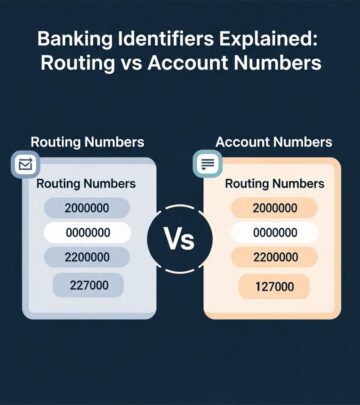
Routing Number vs. Account Number: Key Differences
While both numbers are essential for banking transactions, they serve distinctly different purposes in the financial system. Understanding the difference between these two identifiers is crucial for managing your accounts effectively.
| Characteristic | Routing Number | Account Number |
|---|---|---|
| Purpose | Identifies your bank to the financial network | Identifies your specific account |
| Uniqueness | Same for everyone at a specific bank (in the same region) | Unique to your personal account |
| Information Classification | Public information | Private information |
| Primary Use | Routes external payments to correct bank | Identifies your specific funds within the bank |
| Number Length | Always 9 digits | Typically 8-12 digits (varies) |
You can think of your bank account like your street address. The routing number is like the city and state, while your account number is like your specific street address. You need both sets of information for money to get properly routed into and out of your account. Using both unique identifiers helps reduce fraud since your account number is specific to you, and your bank’s routing number is specific to them.
Where to Find Your Routing Number
Your routing number is readily available from multiple sources, making it easy to locate when you need it:
On Your Checks
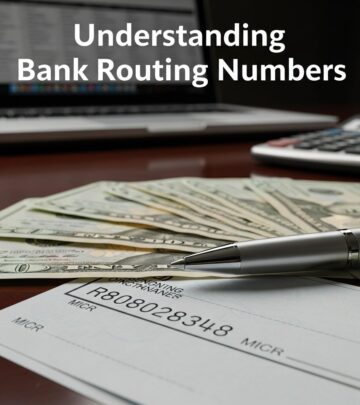
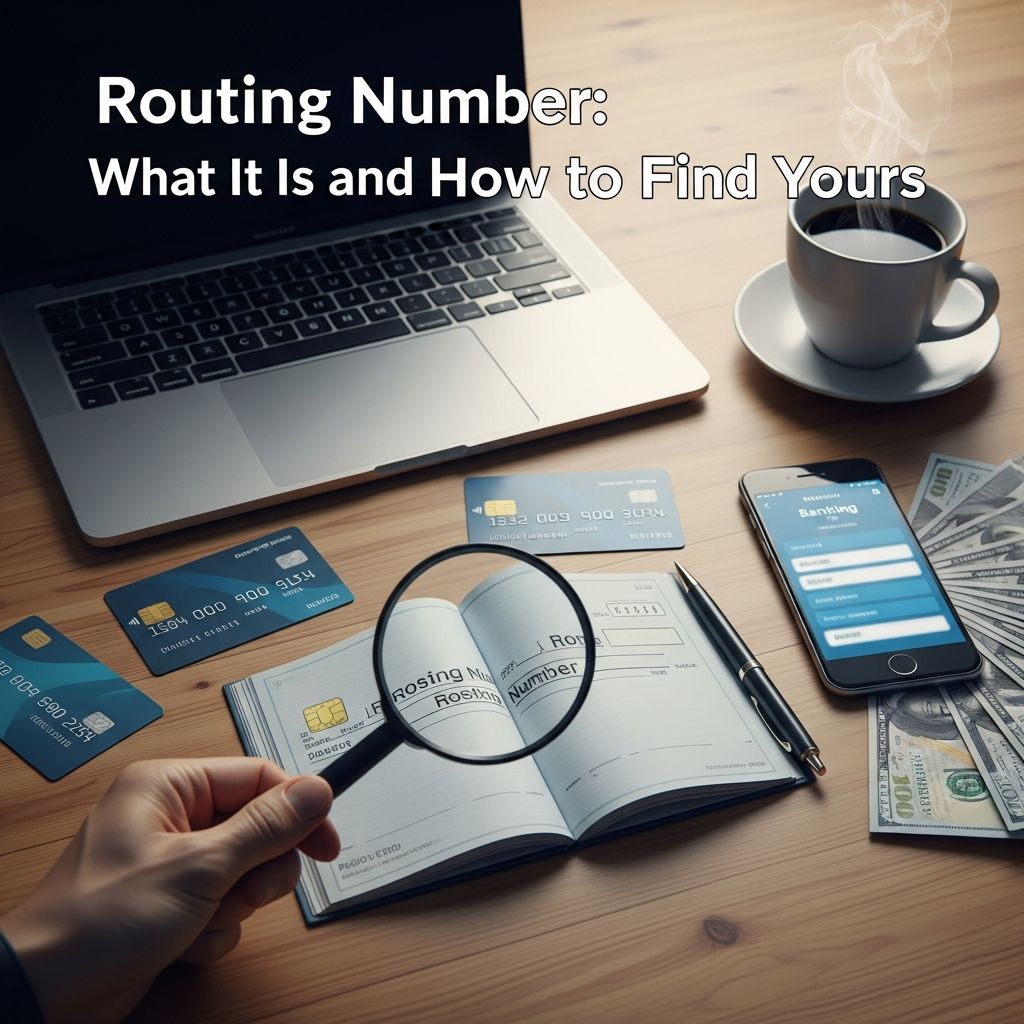
The routing number appears in the bottom left corner of your paper checks, displayed as the first nine-digit number. It’s immediately followed by your account number. This is often the easiest place to find your routing number if you have access to your checks.
Through Your Mobile Banking App
Most banks provide routing number information directly within their mobile banking applications. You can usually find this information in your account details or settings section.
By Calling Your Bank
Customer service representatives can quickly provide your routing number over the phone. Simply call your bank’s customer service line and provide your account information.
On Your Bank’s Website
Many banks display routing number information prominently on their websites, often with tools to look up routing numbers based on your location or account type.
Why Large Banks Have Multiple Routing Numbers
Large banks often have dozens of routing numbers assigned to them, while smaller banks typically use just one. This difference reflects the complexity and scale of operations at larger institutions.
The primary reason for multiple routing numbers is to handle transactions processed through different geographic regions or states where the bank operates. A routing number often depends on where you first opened your account at that bank. Additionally, large banks may have separate routing numbers for different types of transactions, such as ACH transfers versus wire transfers, to ensure efficient processing through appropriate clearing channels.
When You Don’t Need Your Routing Number
It’s important to understand that you generally only need your routing number when funds are being directly transferred to or from your bank account. For most everyday consumer transactions, your routing number is not required.
For example, you do not need your routing number when making debit card or credit card purchases at retail stores or online retailers. These transactions process through different payment networks and don’t require routing number information. Your routing number is specifically needed for transactions that involve direct electronic transfers between bank accounts.
Security Considerations
Since routing numbers are public information that identifies your bank rather than your individual account, there are limited security risks associated with sharing them. However, it’s still important to exercise caution. You should never provide your routing number or account number to unsolicited callers or through unsecured email or text messages. Always verify that you’re providing this information to legitimate banking services or authorized payees.
The Evolution of Routing Numbers
The ABA Routing Number has undergone significant changes since its creation in 1910 to accommodate the Federal Reserve System, the advent of MICR (Magnetic Ink Character Recognition) technology, and the implementation of regulations like the Expedited Funds Availability Act and Check 21. Today, routing numbers are used to designate participants in automated clearinghouses, electronic funds transfer systems, and online banking platforms.
Routing numbers can only be issued to federal or state chartered financial institutions that have been determined to be eligible for a master account by a Federal Reserve Bank. Once a financial institution receives an assigned routing number, it must actually be granted a master account at one of the twelve Federal Reserve Banks to have direct access to the Federal Reserve’s payment systems and to settle transactions with other participants in the central banking system.
Frequently Asked Questions
Q: What is the difference between a routing number and a SWIFT code?
A: A routing number is used for domestic banking transactions within the United States, while a SWIFT code is used for international wire transfers. SWIFT codes identify banks internationally and are typically 8 to 11 characters long, whereas routing numbers are always exactly nine digits.
Q: Can a routing number change?
A: In most cases, your routing number remains stable. However, if your bank merges with another institution or you move your account to a different branch location, your routing number may change. It’s best to check with your bank directly if you’re concerned about changes.
Q: Is my routing number the same across all my accounts at the same bank?
A: If your accounts are held at the same branch or location, they typically share the same routing number. However, if you have accounts at different branch locations, they may have different routing numbers, particularly at larger banks.
Q: Can I use someone else’s routing number?
A: You should only use your own bank’s routing number for transactions related to your account. Using another bank’s routing number for your transactions will result in the funds being sent to the wrong financial institution.
Q: What happens if I provide the wrong routing number?
A: If you provide an incorrect routing number, the payment may be sent to the wrong bank or financial institution. This could delay your transaction or result in the funds being sent to another person’s account. Many banks have systems in place to catch obvious errors, but it’s critical to verify your routing number before submitting transactions.
Q: Are routing numbers the same for checking and savings accounts?
A: Generally, your routing number is the same for both checking and savings accounts at the same bank location. The routing number identifies the financial institution, not the type of account you hold there.
Bottom Line
A routing number is an important piece of information for many banking transactions. While it may seem like just another number to remember, knowing your routing number and where to find it can save you time and hassle when setting up direct deposits, paying bills online, or transferring money between accounts.
Unlike your account number, routing numbers are public information that identifies your bank, not your individual account. For most everyday banking needs, you’ll use your routing number along with your account number to ensure money moves to and from your account correctly. By understanding what routing numbers are, how they work, and when you need them, you can navigate your banking transactions with confidence and efficiency.
References
- What Is a Routing Number? Definition and Where to Find Yours — NerdWallet. https://www.nerdwallet.com/banking/learn/what-is-a-routing-number
- Routing Number: What It Is And How To Find Yours — Bankrate. https://www.bankrate.com/banking/checking/what-is-a-routing-number/
- Routing Number Definition: What is a Routing Number? — Tipalti. https://tipalti.com/resources/learn/routing-number/
- What Is A Bank Routing Number (and Where Can You Find It)? — PNC Bank. https://www.pnc.com/insights/personal-finance/spend/what-is-a-bank-routing-number.html
- Routing Number Policy & Procedures — American Bankers Association. https://www.aba.com/news-research/analysis-guides/routing-number-policy-procedures
- ABA Routing Number — American Bankers Association. https://www.aba.com/about-us/routing-number
Similar Articles








Read full bio of Sneha Tete