Roth Vs Traditional IRA: How To Choose In 2025
Discover the key differences between Roth and Traditional IRAs, when to choose each, and why combining them might optimize your retirement strategy.
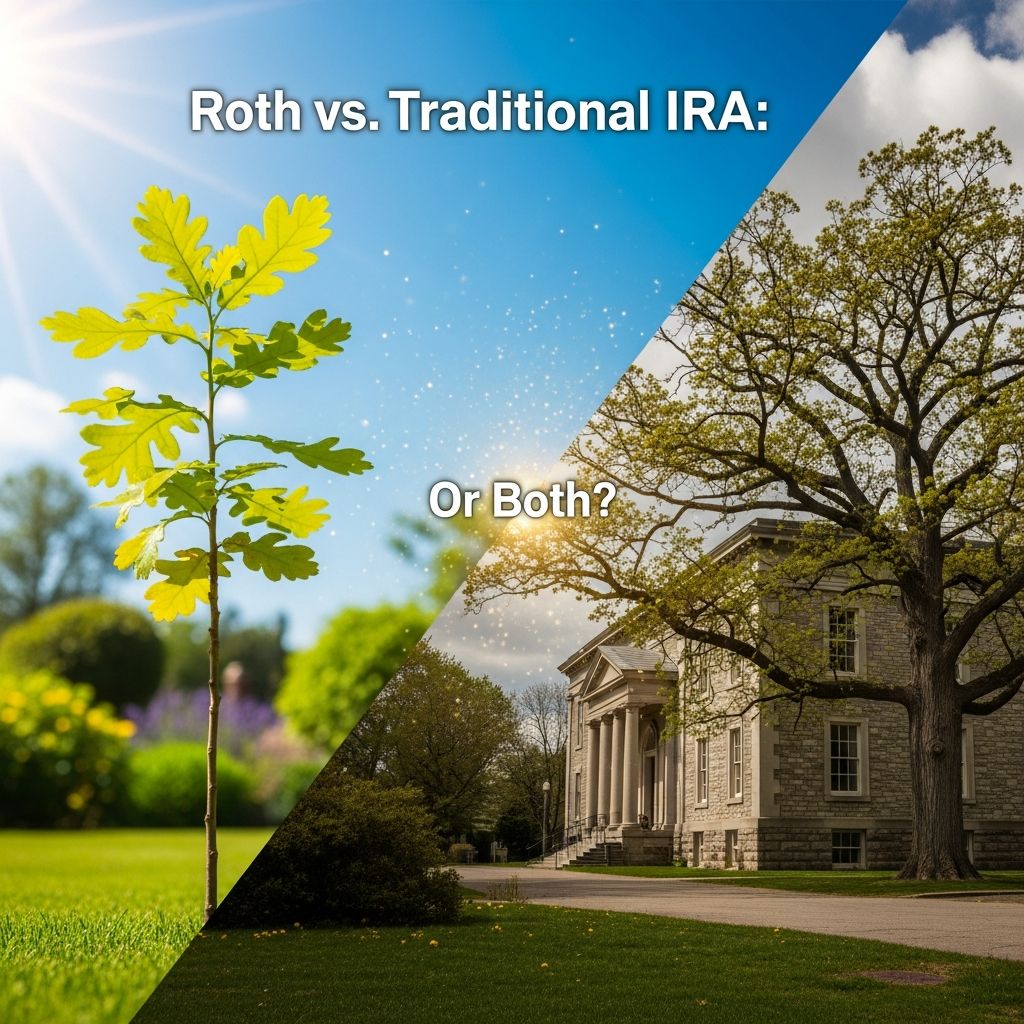
Individual Retirement Accounts (IRAs) are cornerstone tools for building long-term wealth, but choosing between a Roth IRA and a Traditional IRA—or deciding to use both—requires understanding their distinct tax treatments, eligibility rules, and withdrawal options. This guide breaks down the fundamentals, compares key features, and explores strategic combinations to help you align your savings with future financial needs.
Understanding the Core Tax Distinctions
The primary divergence between these accounts lies in tax timing. Traditional IRAs allow contributions with pre-tax dollars, potentially reducing your current taxable income through deductions. Growth occurs tax-deferred, but withdrawals in retirement are taxed as ordinary income. In contrast, Roth IRAs use after-tax contributions, offering no upfront deduction but providing tax-free qualified withdrawals, including earnings.
This timing matters profoundly. If your current tax rate exceeds your expected retirement rate, a Traditional IRA maximizes immediate savings. Conversely, anticipating higher future taxes—due to rising income, policy changes, or bracket creep—favors Roth accounts for back-end benefits.
Contribution Rules and Eligibility Breakdown
Both IRAs share identical annual limits: $7,000 for 2025, with a $1,000 catch-up for those 50 and older. Contributions must stem from earned income, and spousal provisions allow non-working partners to participate.
| Feature | Traditional IRA | Roth IRA |
|---|---|---|
| Income Limits for Contributions | None | Phase-out based on MAGI (e.g., full contributions up to certain thresholds in 2025) |
| Tax Deductibility | Often deductible, depending on income and employer plan coverage | Never deductible |
| Age Limit for Contributions | No upper limit if earning income (per SECURE Act) | None |
High earners may find Roth direct contributions restricted but can use backdoor strategies, converting Traditional funds after taxes.
Withdrawal Flexibility and Penalties
Accessing funds before retirement triggers rules that differ significantly. Traditional IRA early withdrawals (before 59½) face ordinary income tax plus a 10% penalty, with exceptions for homebuying ($10,000 lifetime), education, medical expenses, or health insurance.
Roth IRAs offer superior flexibility: contributions (your principal) can be withdrawn anytime tax- and penalty-free. Earnings require age 59½ and a 5-year holding period for tax-free status, but the same exceptions apply.
- First-time homebuyers: Up to $10,000 penalty-free from either account.
- Emergencies: Roth contributions provide penalty-free liquidity.
- Structured payments: Equal periodic distributions can avoid penalties on Traditional IRAs.
Required Minimum Distributions: A Critical Factor
Traditional IRAs mandate Required Minimum Distributions (RMDs) starting at age 73 (or 75 for those born 1960 or later), calculated by life expectancy and account balance. Failure incurs a 25% excise tax (reducible to 10%).
Roth IRAs impose no lifetime RMDs for the owner, enabling indefinite tax-free growth. Inherited Roths follow a 10-year depletion rule for non-spouses under the SECURE Act.
This absence of RMDs makes Roths ideal for legacy planning, passing assets to heirs without forced taxation.
Recent Legislative Updates Impacting Choices
The SECURE Act and SECURE 2.0 have reshaped IRA landscapes:
- No age cap on Traditional contributions with earned income.
- RMD age raised to 73/75.
- 529-to-Roth rollovers allowed (up to $35,000 lifetime, starting 2024).
- 10-year inherited IRA rule for most beneficiaries.
These changes enhance flexibility, particularly for late-career savers and education savers.
Strategic Scenarios: When to Choose Traditional
Opt for Traditional IRAs if:
- You seek immediate tax relief to lower adjusted gross income, qualifying for credits like child tax or student loan deductions.
- Retirement tax bracket projection is lower than current.
- You’re in a peak earning year but expect downturns.
Tax-deferred growth compounds efficiently, especially in high-tax years.
Strategic Scenarios: When Roth Shines
Roth IRAs excel when:
- Expecting higher future taxes or brackets.
- Prioritizing withdrawal flexibility and no RMDs.
- Planning multi-generational wealth transfer.
- Younger savers benefit from decades of tax-free compounding.
Penalty-free contribution access adds emergency liquidity.
The Power of Combining Both: Tax Diversification
Rather than an either/or, many experts advocate a “tax diversification” approach—holding both pre-tax (Traditional) and after-tax (Roth) assets. This hedges against uncertain future tax rates, allowing strategic withdrawals to minimize brackets.
For instance, fill low brackets with Traditional funds first, then tap Roth tax-free. Roth conversions in low-income years (e.g., early retirement) can shift assets strategically, paying taxes now at lower rates.
| Portfolio Mix | Benefits | Example Allocation |
|---|---|---|
| 60% Traditional / 40% Roth | Balances upfront deductions with future flexibility | High earner today, moderate retirement income |
| 30% Traditional / 70% Roth | Maximizes tax-free growth and legacy | Young professional, rising career trajectory |
| 50/50 Split | Optimal hedge against tax volatility | Uncertain policy/tax future |
Practical Steps to Get Started
- Assess your tax situation: Calculate current vs. projected brackets using IRS tools.
- Check eligibility: Use MAGI to confirm Roth access.
- Consider conversions: Backdoor Roth or partial ladders for high earners.
- Diversify investments: Within IRAs, blend stocks, bonds for growth.
- Consult professionals: Tax advisors ensure alignment with estate plans.
Frequently Asked Questions (FAQs)
Can I contribute to both IRAs in the same year?
Yes, the contribution limit applies separately to each, allowing up to $14,000 total ($16,000 if 50+) if eligible.
What if my income exceeds Roth limits?
Contribute to a Traditional IRA, then convert to Roth (backdoor strategy). Taxes apply only on pre-tax amounts.
Do employer plans affect IRA deductibility?
Yes, if covered by a workplace plan, high earners may face Traditional deduction phase-outs.
Are Roth withdrawals always tax-free?
Qualified ones yes (age 59½ + 5-year rule). Non-qualified earnings face taxes and 10% penalty.
How do inherited IRAs differ?
Non-spouse beneficiaries must empty most within 10 years; Roths remain tax-free if qualified.
Long-Term Projections: A Hypothetical Example
Consider a 35-year-old earning $100,000 annually, contributing $7,000 yearly at 7% growth for 30 years.
- Traditional IRA: ~$850,000 ending value; $255,000 tax bill at 30% withdrawal rate.
- Roth IRA: Same growth, $0 taxes on qualified withdrawals.
- Combined: Flexibility to withdraw $40,000 tax-efficiently yearly.
Assumptions simplify; actual results vary by rates and laws.
References
- Roth IRA vs. Traditional IRA: Key Differences, Benefits & When To Choose Each — Mercer Advisors. 2025. https://www.merceradvisors.com/insights/retirement/roth-ira-vs-traditional-ira-key-differences-benefits-when-to-choose-each/
- Roth IRA vs Traditional IRA: What's the Difference? — City National Bank. 2025. https://www.cnb.com/personal-banking/insights/roth-ira-traditional-ira.html
- Roth IRA vs. traditional IRA — Protective Life. 2025. https://www.protective.com/learn/what-is-the-difference-between-roth-and-traditional-ira
- Roth IRA vs. Traditional IRA: Rules & Tax Benefits — Vanguard. 2025. https://investor.vanguard.com/investor-resources-education/iras/roth-vs-traditional-ira
- Roth IRA Benefits: Roth IRA vs Traditional IRA Accounts — U.S. Bank. 2025. https://www.usbank.com/retirement-planning/financial-perspectives/roth-ira-benefits.html
- Roth IRA vs. Traditional IRA: Differences and Rules — Charles Schwab. 2025. https://www.schwab.com/ira/roth-vs-traditional-ira
- Traditional and Roth IRAs — Internal Revenue Service. 2025-02-06. https://www.irs.gov/retirement-plans/traditional-and-roth-iras
Similar Articles








Read full bio of Sneha Tete