Roth IRA Withdrawal Rules: Complete Guide
Master Roth IRA withdrawal rules, tax implications, and penalty exceptions.
Understanding Roth IRA Withdrawal Rules
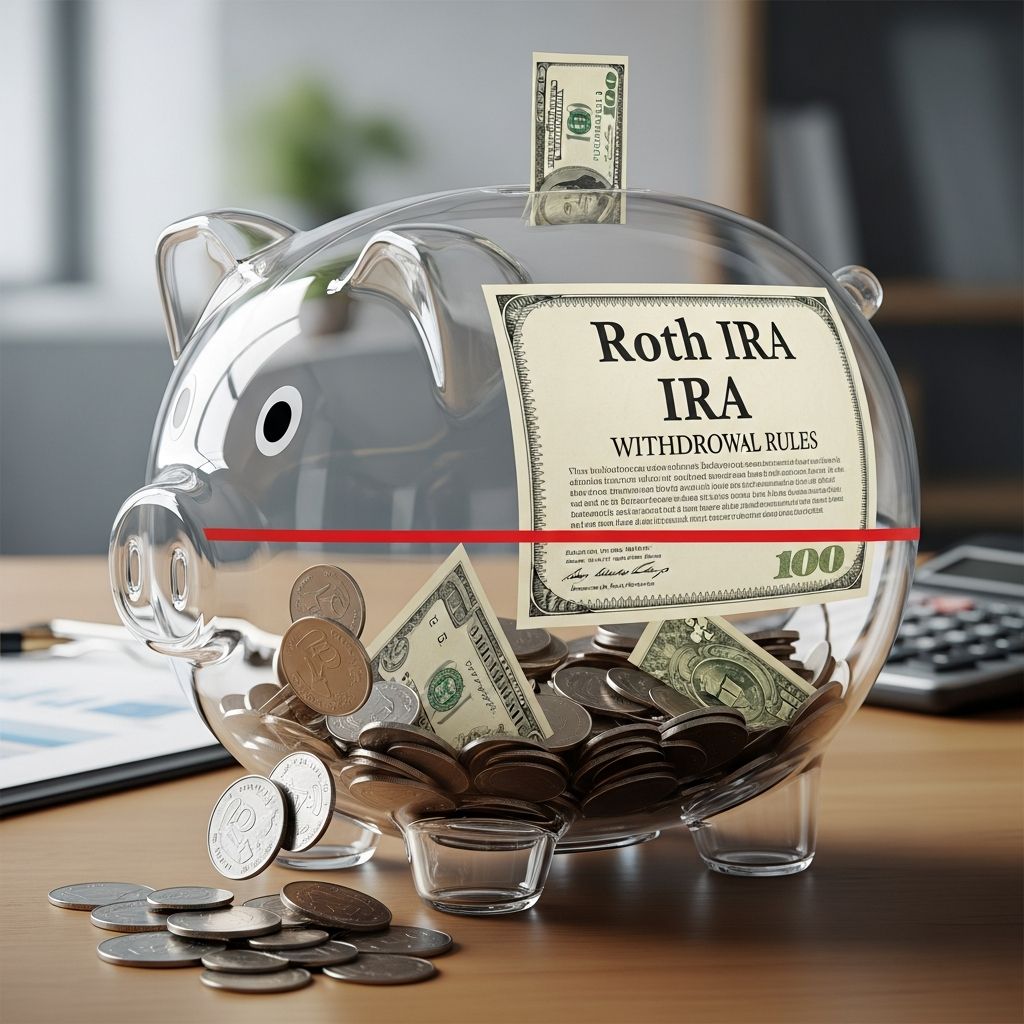
A Roth IRA is one of the most tax-advantaged retirement savings vehicles available to Americans. Unlike traditional IRAs where contributions may be tax-deductible and earnings grow tax-deferred, Roth IRAs offer tax-free growth and tax-free qualified withdrawals. However, understanding the withdrawal rules is critical to maximizing the benefits of this account while avoiding unexpected taxes and penalties. The rules governing Roth IRA withdrawals are more flexible than those for traditional IRAs, but they still contain important limitations and requirements that every account holder should understand.
The Basics of Roth IRA Withdrawals
The fundamental distinction that makes Roth IRA withdrawals unique is the treatment of contributions versus earnings. Since you fund a Roth IRA with after-tax dollars, you have already paid income tax on the money you contribute. This means you can withdraw your contributions at any time, at any age, without paying income taxes or incurring the 10% early withdrawal penalty that typically applies to retirement accounts.
Earnings, however, are treated differently. The investment gains and interest accumulated within your Roth IRA are subject to more restrictive withdrawal rules. To withdraw earnings tax-free, you must satisfy specific conditions regarding your age and how long you have held the account.
Contribution Withdrawals: Tax-Free and Penalty-Free
One of the most attractive features of a Roth IRA is the ability to withdraw your contributions without tax consequences or penalties. Since you contributed money that was already subject to income tax, the IRS does not tax you again when you take these funds out. This flexibility distinguishes Roth IRAs from traditional IRAs and makes them particularly appealing for investors who want access to their money.
The ability to withdraw contributions penalty-free applies regardless of your age or how long the money has been in the account. Whether you need funds for an emergency at age 35 or simply want to access your contributions at any point, you can do so without triggering the standard 10% early withdrawal penalty. However, you must be able to distinguish between your contributions and your account’s earnings, as the IRS tracks these amounts separately.
Earnings Withdrawals and Qualified Distributions
Withdrawing earnings from your Roth IRA is considerably more restrictive than withdrawing contributions. To withdraw earnings tax-free and penalty-free, you must meet the requirements for a qualified distribution. The IRS defines a qualified distribution as one that occurs after you have held your Roth IRA for at least five tax years and one of the following conditions is met:
- You have reached age 59½
- You are disabled or deceased
- You are using the funds to purchase a first home (limited to $10,000 lifetime)
- You have substantial unreimbursed medical expenses
If you withdraw earnings before meeting these requirements, you will owe income tax on the earnings portion and may face a 10% penalty tax, unless you qualify for a specific exception.
The Five-Year Rule Explained
The five-year rule is a cornerstone of Roth IRA withdrawal regulations. This rule requires that you hold your Roth IRA for at least five tax years before you can withdraw earnings tax-free. The clock starts on January 1st of the year you make your first Roth IRA contribution, regardless of when during the year you actually contributed.
It is important to note that the five-year rule applies separately to each Roth IRA conversion you make. If you convert funds from a traditional IRA to a Roth IRA, that conversion triggers its own five-year holding period for the converted amount. This means you could have held one Roth IRA for seven years but still face a five-year waiting period for a conversion you made two years ago.
Early Withdrawal Exceptions and Penalties
The IRS recognizes certain hardship situations where you can withdraw earnings from your Roth IRA before age 59½ without incurring the standard 10% penalty. These exceptions include:
- Disability or death (distributions to beneficiaries)
- First-time home purchase (maximum $10,000 lifetime limit)
- Qualified education expenses for you or family members
- Unreimbursed medical expenses exceeding 7.5% of adjusted gross income
- Health insurance premiums while unemployed
- Qualified reservist distributions for military service
If you withdraw earnings and do not qualify for an exception, you will owe income tax on the earnings at your ordinary income tax rate plus a 10% penalty tax on the earnings portion. The contribution portion remains tax-free and penalty-free.
Roth Conversion Contributions and the Pro-Rata Rule
When you convert funds from a traditional IRA, SEP IRA, or SIMPLE IRA to a Roth IRA, the conversion contribution is subject to specific withdrawal rules. Conversion contributions must generally remain in the account for five years before they can be withdrawn without penalty, though you can withdraw them after that period without the 10% penalty if you are over 59½.
The pro-rata rule becomes important if you have both traditional and Roth IRAs. This rule requires that when you convert funds, the IRS considers all your traditional, SEP, and SIMPLE IRAs as a single account for tax purposes. This can result in a portion of your conversion being taxable if you have pre-tax money in any traditional IRA accounts.
Required Minimum Distributions and Roth IRAs
A significant advantage of Roth IRAs is that they are not subject to required minimum distributions (RMDs) during the account holder’s lifetime. Unlike traditional IRAs, which require you to begin taking distributions at age 72, you can leave your Roth IRA untouched for your entire life if you wish, allowing the account to grow tax-free indefinitely.
However, beneficiaries of Roth IRAs are subject to RMD rules after inheriting the account. The rules vary depending on whether the beneficiary is a spouse, eligible designated beneficiary, or a non-designated beneficiary, and these rules were significantly changed by the SECURE Act.
Tax Treatment of Roth IRA Withdrawals
Understanding the tax treatment of your withdrawals is essential for tax planning. Contributions to your Roth IRA are never taxable when withdrawn because you already paid income tax on them. Earnings withdrawals, however, are taxable at your ordinary income tax rate if they do not qualify as part of a qualified distribution.
The IRS uses a specific ordering rule to determine which funds you are withdrawing when you take money from your Roth IRA. Withdrawals are treated as coming first from your contributions, then from conversions (on a pro-rata basis using the FIFO method), and finally from earnings. This ordering rule protects you by allowing you to access contributions first without tax consequences.
Qualified Educational Expenses and First-Time Home Purchase
Two important exceptions allow early withdrawal of earnings without the 10% penalty. For qualified education expenses, you can withdraw earnings penalty-free (though still subject to income tax) to pay for tuition, fees, books, supplies, and equipment for yourself, your spouse, or your children at an accredited educational institution. Room and board is included if the student maintains at least half-time enrollment status.
The first-time home buyer exception allows you to withdraw up to $10,000 of earnings (and any amount of contributions) during your lifetime to purchase a primary residence. This is a one-time lifetime limit, and you must use the funds within 120 days of withdrawal. “First-time” includes anyone who has not owned a primary residence in the preceding two years.
Substantially Equal Periodic Payments (Rule 72(t))
If you need to withdraw funds before age 59½ but do not qualify for another exception, you can use Rule 72(t), which allows you to take substantially equal periodic payments (SEPPs) from your Roth IRA without penalty. This strategy requires you to calculate equal payments based on life expectancy tables and commit to taking those payments for either five years or until age 59½, whichever is longer.
While this exception eliminates the 10% penalty, the withdrawn earnings are still subject to ordinary income tax. Failing to follow the requirements of Rule 72(t) strictly can result in retroactive penalties and interest, so this strategy should typically be implemented with professional guidance.
Roth IRA Rollovers and Transfers
You can roll over or transfer funds between Roth IRAs without tax consequences, provided you follow proper procedures. A trustee-to-trustee transfer, where one financial institution transfers funds directly to another, is the cleanest method. You can also perform an indirect rollover, where you receive the funds and then deposit them into another Roth IRA within 60 days, though this method has additional risks and is generally less preferred.
You are limited to one indirect rollover per 12-month period across all your IRAs (both traditional and Roth combined). Violating this rule can result in the excess amount being treated as a taxable distribution and potentially subject to additional penalties.
State Tax Considerations
While Roth IRA withdrawals are generally free from federal income tax if they are qualified distributions, some states impose income tax on IRA withdrawals. The tax treatment varies significantly by state. Some states, like Florida and Texas, do not have state income taxes. Others provide exemptions or preferential treatment for retirement account distributions. Understanding your state’s specific rules is important for comprehensive retirement planning.
Inherited Roth IRAs and Beneficiary Withdrawals
When you inherit a Roth IRA, the withdrawal rules depend on your relationship to the original account holder and when they passed away. Surviving spouses have the option to treat the inherited Roth as their own, allowing them to delay distributions and maintain the tax-free growth benefits. Other beneficiaries must distribute the entire account within ten years under current SECURE Act rules (with some exceptions for eligible designated beneficiaries).
Beneficiaries can withdraw contributions tax-free and penalty-free at any time. Earnings withdrawals depend on whether the original account holder had satisfied the five-year rule and age requirements before death.
Frequently Asked Questions
Q: Can I withdraw my Roth IRA contributions at any time without penalty?
A: Yes, you can withdraw contributions to your Roth IRA at any time without paying taxes or the 10% early withdrawal penalty, regardless of your age or how long the money has been in the account.
Q: What is the five-year rule for Roth IRA withdrawals?
A: The five-year rule requires that you hold your Roth IRA for at least five tax years before withdrawing earnings tax-free. The clock starts on January 1st of the year you make your first Roth contribution.
Q: Can I withdraw Roth IRA earnings before age 59½?
A: You can withdraw earnings before age 59½ without the 10% penalty only if you qualify for a specific exception, such as disability, first-time home purchase, qualified education expenses, or substantial medical expenses. Earnings are still subject to income tax unless you meet all requirements for a qualified distribution.
Q: Do I have to take required minimum distributions from my Roth IRA?
A: No, Roth IRAs are not subject to required minimum distributions during your lifetime, allowing your account to grow tax-free indefinitely. Beneficiaries, however, are subject to distribution rules after inheriting the account.
Q: What happens if I need to withdraw funds within the first five years of opening my Roth IRA?
A: You can withdraw contributions penalty-free and tax-free anytime. If you need to withdraw earnings within five years, you will generally owe income tax on those earnings and face a 10% penalty unless you qualify for an exception.
Q: How does the pro-rata rule affect my Roth conversion?
A: The pro-rata rule requires the IRS to consider all your traditional and Roth IRAs as a single account for conversion purposes. If you have pre-tax money in traditional IRAs, a portion of your conversion will be taxable based on the ratio of pre-tax to after-tax funds in all your accounts combined.
Q: Can I use my first $10,000 of Roth IRA earnings for a home purchase?
A: Yes, the first-time home buyer exception allows you to withdraw up to $10,000 of earnings (plus unlimited contributions) without the 10% penalty, though earnings are still subject to income tax. You must use the funds within 120 days.
References
- Retirement plans FAQs regarding IRAs distributions (withdrawals) — Internal Revenue Service (IRS). 2025. https://www.irs.gov/retirement-plans/retirement-plans-faqs-regarding-iras-distributions-withdrawals
Similar Articles








Read full bio of medha deb