Roth IRA: Tax-Free Retirement Savings Account
Understand Roth IRAs: Tax-free growth, withdrawal rules, and eligibility requirements for retirement planning.

What Is a Roth IRA?
A Roth IRA is an individual retirement account that allows eligible taxpayers to make contributions on an after-tax basis and enjoy tax-free growth and withdrawals in retirement. Named after Senator William Roth, who sponsored the legislation creating it, the Roth IRA was established in 1997 as part of the Taxpayer Relief Act. Unlike traditional IRAs, where contributions may be tax-deductible, Roth IRA contributions are made with after-tax dollars, meaning you’ve already paid income taxes on the money you contribute.
The primary advantage of a Roth IRA is that qualified distributions are entirely tax-free, providing significant tax savings over decades of investing. This makes the Roth IRA an attractive option for individuals who expect to be in a higher tax bracket during retirement or who want to minimize their lifetime tax burden.
How a Roth IRA Works
Understanding the mechanics of a Roth IRA is essential for maximizing its benefits. Here’s how it operates:
- After-Tax Contributions: You contribute money that has already been taxed at your ordinary income tax rate. These contributions are not tax-deductible in the year you make them.
- Tax-Free Growth: Your investments grow tax-free within the account. Unlike taxable brokerage accounts, you don’t pay capital gains taxes or dividend taxes on earnings within the Roth IRA.
- Tax-Free Withdrawals: When you reach age 59½ and have held the account for at least five years, you can withdraw both your contributions and earnings completely tax-free.
- No Required Minimum Distributions: Unlike traditional IRAs, Roth IRAs have no required minimum distributions (RMDs) during your lifetime, allowing your money to continue growing tax-free.
Roth IRA Eligibility and Income Limits
While anyone with earned income can open a Roth IRA, direct contributions are subject to income limitations. Your ability to contribute is based on your modified adjusted gross income (MAGI) and filing status.
2024 and 2025 Income Limits
| Filing Status | 2024 Phase-Out Range | 2025 Phase-Out Range |
|---|---|---|
| Single | $146,000 – $161,000 | $151,000 – $166,000 |
| Married Filing Jointly | $230,000 – $240,000 | $236,000 – $246,000 |
| Married Filing Separately | $0 – $10,000 | $0 – $10,000 |
If your income exceeds these limits, you cannot make direct Roth IRA contributions. However, you may be able to use a “backdoor Roth IRA” strategy, which involves making a non-deductible contribution to a traditional IRA and then converting it to a Roth IRA.
Contribution Limits
The IRS sets annual contribution limits for Roth IRAs, which are adjusted periodically for inflation:
- 2024: $7,000 for individuals under age 50; $8,000 for those 50 and older
- 2025: $7,000 for individuals under age 50; $8,000 for those 50 and older
- Catch-Up Contributions: Individuals age 50 and older can make an additional $1,000 catch-up contribution annually
These limits apply to the total of all your IRAs (traditional and Roth combined). You can contribute as little or as much as you want up to the annual limit, as long as you have sufficient earned income for the year.
Roth IRA Withdrawal Rules
One of the most appealing aspects of Roth IRAs is the flexibility in withdrawals. Understanding the withdrawal rules is crucial to avoid penalties and taxes:
Qualified Distributions
To qualify for tax-free and penalty-free withdrawals, you must meet two conditions:
- You must be at least 59½ years old
- You must have held the Roth IRA for at least five tax years
Once these conditions are met, you can withdraw your earnings and contributions without income tax or penalties.
Non-Qualified Distributions
If you withdraw earnings before meeting the qualified distribution requirements, those earnings are subject to ordinary income tax plus a 10% early withdrawal penalty. However, contributions can always be withdrawn tax-free and penalty-free at any time, since you’ve already paid taxes on that money.
Exceptions to the Early Withdrawal Penalty
While withdrawals before age 59½ typically incur a 10% penalty on earnings, several exceptions exist:
- First-time home purchase (up to $10,000 lifetime limit)
- Qualified education expenses
- Disability or medical expenses exceeding 7.5% of AGI
- Birth or adoption expenses (up to $5,000)
- Substantially equal periodic payments
Benefits of a Roth IRA
The Roth IRA offers numerous advantages that make it an attractive retirement savings vehicle:
Tax-Free Growth and Withdrawals
The most significant benefit is that your money grows tax-free, and qualified withdrawals are entirely tax-free. This is particularly valuable for long-term investors who can allow their money to compound over decades without tax drag.
No Required Minimum Distributions
Unlike traditional IRAs and 401(k)s, Roth IRAs have no RMDs during your lifetime. This allows you to leave your money invested and growing for as long as you wish, making Roth IRAs excellent for legacy and estate planning.
Flexibility with Contributions
Since contributions are made with after-tax dollars, you can withdraw your contributions (not earnings) at any time without penalties or taxes. This provides a safety net and liquidity that other retirement accounts don’t offer.
No Income Limits for Conversions
While direct contributions have income limits, anyone can convert a traditional IRA to a Roth IRA, regardless of income level. This provides a pathway for high earners to build substantial Roth accounts.
Tax-Free Growth for Heirs
Beneficiaries who inherit a Roth IRA can take tax-free distributions, though they must follow specific withdrawal rules under current law.
Roth IRA vs. Traditional IRA
| Feature | Roth IRA | Traditional IRA |
|---|---|---|
| Contribution Tax Treatment | After-tax (non-deductible) | Pre-tax (tax-deductible) |
| Qualified Withdrawal Taxation | Tax-free | Fully taxable |
| Income Limits for Contributions | Yes | No |
| Required Minimum Distributions | None during lifetime | Beginning at age 73 |
| Early Withdrawal of Contributions | Tax and penalty-free | Subject to income tax and 10% penalty |
| Best For | Expecting higher future tax rates | Currently in high tax bracket |
Roth IRA Conversion Strategy
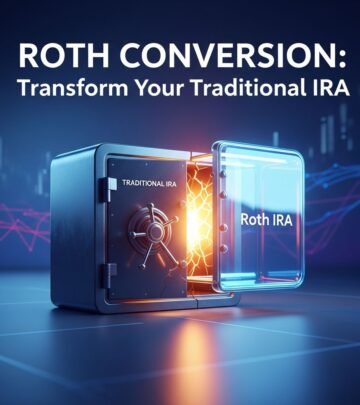
A Roth conversion involves rolling money from a traditional IRA or other pre-tax retirement account into a Roth IRA. This strategy can be beneficial in several scenarios:
- Low-Income Years: Converting during years when your income and tax rate are lower can minimize tax liability on the conversion.
- Early Retirement: People who retire before accessing Social Security or traditional retirement funds may benefit from filling lower tax brackets with Roth conversions.
- Market Downturns: Converting when your account values are depressed reduces the tax bill on the conversion.
- Legacy Planning: Moving funds to a Roth allows tax-free growth for heirs and reduces your taxable estate.
One consideration is the pro-rata rule: if you have both deductible and non-deductible IRA contributions, conversions are treated as proportionally funded by pre-tax and after-tax dollars, which can create unexpected tax consequences.
Opening and Managing a Roth IRA
Opening a Roth IRA is straightforward and can be done through most financial institutions:
- Choose a Provider: Open an account at a bank, brokerage firm, credit union, or through a robo-advisor
- Complete Application: Provide personal information and verify your identity
- Fund Your Account: Deposit money through bank transfer, check, or rollover
- Select Investments: Choose from stocks, bonds, mutual funds, ETFs, or other eligible investments
- Monitor and Rebalance: Regularly review your portfolio and make adjustments as needed
Who Should Consider a Roth IRA?
Roth IRAs are particularly suitable for:
- Young professionals who expect to be in higher tax brackets later in their careers
- High-income earners using backdoor conversion strategies
- Individuals who want to minimize required distributions in retirement
- People planning to leave substantial retirement assets to heirs
- Those who want tax diversification across their retirement accounts
- Self-employed individuals and business owners
Frequently Asked Questions (FAQs)
Q: Can I withdraw my Roth IRA contributions before age 59½?
A: Yes, you can withdraw your contributions (not earnings) tax-free and penalty-free at any time, since you already paid taxes on this money. Earnings withdrawals before age 59½ are subject to taxes and a 10% penalty unless an exception applies.
Q: What is the five-year rule for Roth IRAs?
A: The five-year rule requires that you hold a Roth IRA for at least five tax years to qualify for tax-free withdrawal of earnings. This rule applies to each Roth account separately if you have multiple accounts, although there are certain aggregation rules.
Q: Can I have both a Roth IRA and a traditional IRA?
A: Yes, you can have both accounts, but your total contributions to all IRAs combined cannot exceed the annual contribution limit ($7,000 for 2025, or $8,000 if age 50 or older).
Q: What happens to my Roth IRA when I die?
A: Your beneficiaries inherit the Roth IRA and can take tax-free distributions. However, they must follow specific distribution rules established by current law regarding how long they have to withdraw the funds.
Q: Is there a backdoor Roth IRA contribution limit?
A: A backdoor Roth conversion has no contribution limit—you can convert unlimited amounts of traditional IRA funds to a Roth IRA. However, conversions are subject to income tax on any pre-tax amounts converted, and high conversion amounts may trigger the alternative minimum tax.
Q: Can I use a Roth IRA for first-time home purchase?
A: Yes, you can withdraw up to $10,000 in lifetime earnings penalty-free for a first-time home purchase, provided you meet the five-year holding requirement. Your contributions can always be withdrawn tax and penalty-free.
References
- IRA Contribution Limits for 2024 and 2025 — Internal Revenue Service (IRS). 2024. https://www.irs.gov/retirement-plans/ira-deduction-limits
- Roth IRAs – Topic No. 451 — Internal Revenue Service (IRS). 2024. https://www.irs.gov/taxtopics/tc451
- Publication 590-A: Contributions to Individual Retirement Arrangements (IRAs) — Internal Revenue Service (IRS). 2024. https://www.irs.gov/publications/p590a
- Publication 590-B: Distributions from Individual Retirement Arrangements (IRAs) — Internal Revenue Service (IRS). 2024. https://www.irs.gov/publications/p590b
- Required Minimum Distributions – Topic No. 409 — Internal Revenue Service (IRS). 2024. https://www.irs.gov/taxtopics/tc409
- Roth Conversion FAQ — U.S. Securities and Exchange Commission (SEC). 2023. https://www.sec.gov/investor/alerts/ia_roth_conversion.pdf
Similar Articles








Read full bio of Sneha Tete