Roth IRA: 5 Steps To Open, Fund, And Maximize Benefits
Unlock tax-free retirement growth with Roth IRAs: flexible savings for future financial freedom without mandatory withdrawals.

A Roth IRA offers a powerful way to build retirement wealth through after-tax contributions that grow tax-free, providing penalty-free access to principal and tax-free qualified distributions later in life. This account stands out for its flexibility and long-term tax efficiency, making it ideal for those anticipating higher future tax rates or seeking inheritance advantages.
Core Principles of Roth IRA Accounts
Roth IRAs differ from traditional retirement accounts by accepting contributions from income already taxed by the government. This setup allows investments within the account—such as stocks, bonds, or mutual funds—to compound without annual tax liabilities on gains or dividends. Once conditions like age 59½ and a five-year holding period are met, owners can access both contributions and earnings without owing taxes or penalties.
Unlike pretax options, Roth accounts impose no required minimum distributions (RMDs) during the owner’s lifetime, preserving capital for extended growth or legacy planning. Contributions, however, remain accessible at any time tax- and penalty-free, offering liquidity for emergencies while protecting earnings until retirement.
Key Advantages Driving Popularity
- Tax-Free Compounding: Investments expand without erosion from capital gains or income taxes, potentially multiplying wealth significantly over decades.
- Flexible Access: Withdraw original contributions anytime without IRS penalties, providing a safety net distinct from employer plans like 401(k)s.
- No Lifetime RMDs: Avoid forced withdrawals at age 73, unlike traditional IRAs, allowing funds to grow longer or pass to heirs intact.
- Heir Benefits: Beneficiaries inherit tax-free if the account meets the five-year rule, enhancing estate planning efficiency.
- Investment Control: Owners select from broad options beyond employer limitations, tailoring portfolios to risk tolerance and goals.
Eligibility and Contribution Guidelines
Opening a Roth IRA requires earned income, such as wages or self-employment earnings, but imposes no age cap—unlike older traditional IRA rules. Contribution amounts phase out based on modified adjusted gross income (MAGI): for 2026, full contributions up to $7,000 ($8,000 if 50+) are available for singles under $146,000 MAGI and joint filers under $230,000, with phaseouts thereafter.
| Tax Filing Status | Full Contribution MAGI Limit (2026 Est.) | Phaseout Range |
|---|---|---|
| Single/Head of Household | < $146,000 | $146,000 – $161,000 |
| Married Filing Jointly | < $230,000 | $230,000 – $240,000 |
| Married Filing Separately | < $0 (if lived with spouse) | $0 – $10,000 |
Spousal contributions allow non-working partners to fund via the working spouse’s income, broadening access for couples. Annual limits apply across all IRAs, preventing overfunding.
Roth IRA vs. Traditional IRA: A Side-by-Side Analysis
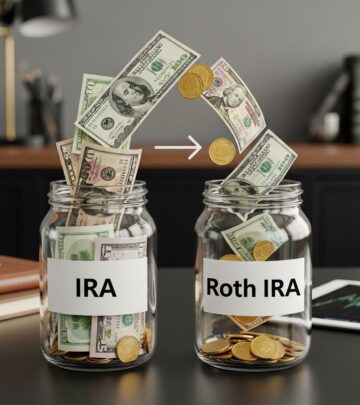
Choosing between Roth and traditional IRAs hinges on current versus future tax brackets. Traditional accounts offer upfront deductions but tax withdrawals as ordinary income, with RMDs starting at age 73. Roth flips this: pay taxes now for tax-free retirement income.
| Feature | Roth IRA | Traditional IRA |
|---|---|---|
| Contributions | After-tax (no deduction) | Pretax (deductible) |
| Growth | Tax-free | Tax-deferred |
| Qualified Withdrawals | Tax-free (age 59½ + 5 years) | Taxed as income |
| RMDs | None during lifetime | Required at age 73 |
| Best For | Higher future brackets, flexibility | Lower future brackets, immediate relief |
Roth suits younger savers or those in low brackets now, expecting rises from career growth or policy changes. Traditional fits high earners seeking current deductions.
Strategic Ways to Maximize Roth Benefits
Beyond basics, Roth conversions from traditional IRAs or 401(k)s allow high earners to shift funds, paying taxes upfront for future freedom—ideal post-retirement or in low-income years. Backdoor Roth strategies enable contributions above direct limits by converting nondeductible traditional IRA funds.
Asset location matters: place high-growth investments in Roth for untaxed appreciation, reserving tax-deferred accounts for bonds. Pairing with employer Roth 401(k)s diversifies tax exposure, blending pretax and Roth for bracket management in retirement.
Navigating Withdrawals and Exceptions
Contributions exit penalty-free anytime; earnings require age 59½ and five-year seasoning from first contribution. Exceptions waive 10% early penalties for first-home buys (up to $10,000 lifetime), education, medical costs exceeding 7.5% AGI, or health insurance if unemployed.
Inherited Roths offer tax-free distributions to beneficiaries after five years, though non-spouses face 10-year depletion rules under SECURE Act updates. Spouses can treat as their own, dodging RMDs.
Steps to Launch Your Roth IRA
- Assess Eligibility: Confirm earned income and MAGI fit IRS thresholds.
- Select Provider: Compare fees, investment choices, and tools from brokers like Vanguard or Schwab.
- Fund Account: Link bank for contributions, automating for consistency.
- Invest Wisely: Diversify via low-cost index funds or target-date portfolios aligned with retirement horizon.
- Monitor Annually: Adjust for life changes, limits, or conversions.
Frequently Asked Questions
Can I contribute to a Roth IRA if I’m over 70½?
Yes, no age limit exists as long as you have earned income.
Is a Roth IRA better than a 401(k)?
It complements 401(k)s with broader investments and no RMDs, but lacks matching; prioritize employer matches first.
What if my income exceeds limits?
Consider backdoor conversions or wait for lower-income years.
Are Roth earnings always tax-free?
Qualified withdrawals are, after age 59½ and five years; early earnings face taxes and 10% penalty unless excepted.
Can self-employed individuals use Roth IRAs?
Absolutely, using net business income up to limits.
Long-Term Impact on Retirement Security
Consistent Roth contributions harness compounding powerfully. For instance, $7,000 yearly at 7% return over 30 years yields over $700,000 tax-free. This shields against rising taxes, Social Security taxation, or Medicare premiums tied to income. Integrating Roth into holistic planning—alongside HSAs, 529s, or real estate—fortifies multigenerational wealth.
Consult tax professionals for personalized fit, as rules evolve with legislation like SECURE 2.0 expanding exceptions. Starting early maximizes this versatile tool’s potential.
References
- Roth IRAs | Internal Revenue Service — IRS. 2025-12-01. https://www.irs.gov/retirement-plans/roth-iras
- What is a Roth IRA: Benefits & How to Open an Account — TIAA. 2025-11-15. https://www.tiaa.org/public/retire/financial-products/iras/roth-ira
- What is a Roth IRA? — Charles Schwab. 2026-01-10. https://www.schwab.com/ira/roth-ira
- Benefits of a Roth IRA — Ameriprise Financial. 2025-10-20. https://www.ameriprise.com/financial-goals-priorities/retirement/roth-ira-benefits
- Roth IRA: What it is and How to Open an Account — Vanguard. 2026-02-01. https://investor.vanguard.com/accounts-plans/iras/roth-ira
- 9 compelling Roth IRA benefits — Fidelity Investments. 2025-09-15. https://www.fidelity.com/learning-center/personal-finance/retirement/nine-reasons-roth
Similar Articles








Read full bio of medha deb