Roth IRA Conversion: Complete Guide To Taxes And Timing
Unlock tax-free retirement growth: Master Roth IRA conversions with strategies to minimize taxes and maximize benefits.

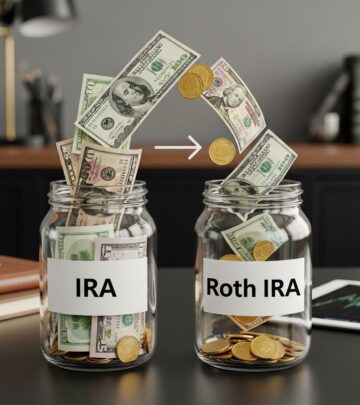
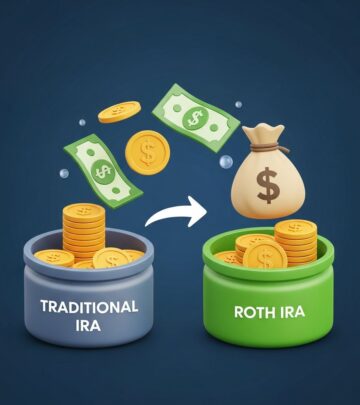
Converting a traditional IRA to a Roth IRA allows individuals to shift pretax retirement savings into an account that offers tax-free qualified withdrawals in the future. This process involves paying income taxes on the converted amount upfront, providing potential long-term tax advantages especially for those expecting higher tax rates or brackets in retirement.
Understanding the Fundamentals of Roth Conversions
A Roth IRA conversion transforms funds from a traditional IRA, where contributions are typically pretax and growth is tax-deferred, into a Roth IRA featuring after-tax contributions and tax-free growth plus distributions after age 59½ and a five-year holding period. Unlike direct Roth contributions, which face income limits, conversions have no such restrictions, making them accessible regardless of earnings.
The core appeal lies in eliminating future required minimum distributions (RMDs) for Roth IRAs, unlike traditional IRAs which mandate withdrawals starting at age 73. This flexibility suits estate planning, as heirs inherit Roth funds tax-free, contrasting with taxable traditional IRA inheritances.
Tax Consequences and Planning Essentials
Upon conversion, the transferred amount counts as taxable income in the year of conversion, potentially increasing your tax bracket. For instance, converting a large sum could push ordinary income into higher brackets, amplifying the federal tax bill—federal rates range from 10% to 37% depending on 2026 brackets.
State taxes may also apply, varying by residency. Investment gains within the IRA up to the conversion date are included in the taxable amount. To mitigate, consider partial conversions over multiple years, filling lower tax brackets without spiking into higher ones.
- Full vs. Partial Conversions: A full conversion suits those in low-income years; partial allows bracket management.
- Withholding Options: Providers may withhold taxes, but using non-retirement funds to pay avoids reducing the converted principal.
- Pro-Rata Rule Impact: Applies if holding pre-tax and after-tax IRAs; taxes are prorated across all IRAs.
Step-by-Step Process for Executing a Conversion
Initiating a conversion typically involves online platforms or forms from custodians like major brokerages. First, ensure a Roth IRA exists; open one if needed via account selection in retirement sections.
- Select Accounts: Navigate to transfer or move money sections.
- Choose From/To: Pick traditional IRA as source, Roth as destination.
- Specify Amount: Opt for full, partial cash, or in-kind assets; note total value for taxes.
- Review Disclosures: Confirm tax implications and withholding choices.
- Submit: Digitally sign and process; track for Form 1099-R issuance.
For 401(k)s, rollovers to Roth IRAs follow similar steps post-employment, or in-plan if permitted.
Advanced Strategies: Backdoor and Mega Backdoor Roth
High earners bypassing direct Roth contributions use the backdoor method: Contribute after-tax dollars to a traditional IRA (non-deductible), then convert promptly to Roth, minimizing taxable gains. Success hinges on no other pre-tax IRA balances due to pro-rata calculations.
Example: With $95,000 pre-tax IRA and $5,000 new after-tax contribution (total $100,000), 95% of any conversion is taxable. To avoid, roll pre-tax IRAs into employer plans first.
Mega backdoor applies to 401(k)s allowing after-tax contributions up to limits, converted internally or rolled to Roth. This leverages higher plan limits for substantial tax-free shifts.
| Strategy | Eligibility | Tax Benefit | Risk |
|---|---|---|---|
| Standard Conversion | All | Tax-free future growth | Upfront tax hit |
| Backdoor Roth | High earners, no pre-tax IRAs | Near-zero tax on conversion | Pro-rata rule |
| Mega Backdoor | Plans allowing after-tax + conversions | Large tax-free amounts | Plan-specific |
Five-Year Rules and Withdrawal Considerations
Each conversion initiates a five-year clock for penalty-free earnings withdrawals; contributions withdraw tax/penalty-free anytime. For those under 59½, conversions avoid 10% early withdrawal penalty on converted principal after five years per conversion, but earnings face it sooner.
Track multiple conversions separately. Qualified distributions require account age five years and age 59½, death, or disability.
Optimal Timing for Conversions
Ideal windows include low-income years like job transitions, pre-RMD ages, or market dips reducing converted values. Spreading conversions manages brackets; post-2025 tax cut sunsets may elevate future rates, favoring earlier action.
Model scenarios: If retiring at 65 with $1M IRA, converting $50K annually from 55-64 might save taxes versus RMDs at 73.
Reporting Conversions on Taxes
Custodians issue Form 1099-R for the distribution; report on Form 8606 Part II for conversions, tracking basis to avoid double taxation. Enter net converted amount under nondeductible IRAs; software populates from 1099-R.
Pro-rata basis: Calculate nontaxable portion as after-tax basis divided by total IRA value.
Pros and Cons of Converting
- Pros: Tax-free growth/distributions, no RMDs, estate benefits, hedge against tax hikes.
- Cons: Immediate tax payment, irreversible (no recharacterizations post-2017), market risk on unpaid taxes.
Frequently Asked Questions
Can anyone convert to a Roth IRA?
Yes, no income limits apply to conversions, unlike contributions.
What if I have both pre-tax and after-tax IRA funds?
Pro-rata rule taxes conversions proportionally; aggregate all IRAs.
Is there a deadline for conversions?
No, anytime, but year-end counts for that tax year.
Can I convert a 401(k)?
Yes, via rollover after separation or in-service if allowed.
How do I pay the conversion taxes?
Best from external funds to preserve IRA growth potential.
Long-Term Planning Integration
Incorporate conversions into holistic retirement strategies alongside Social Security timing, spending forecasts, and legacy goals. Consult tax professionals for personalized modeling, especially with state taxes or complex portfolios. As of 2026, ongoing TCJA provisions influence brackets, but planning assumes potential changes.
Regular reviews adjust for life events, market conditions, and legislative shifts, ensuring conversions align with evolving financial landscapes.
References
- How to Convert a Traditional IRA to a Roth IRA — Charles Schwab. 2023. https://www.schwab.com/content/how-to-convert-traditional-ira-to-roth-ira
- How to convert to a Roth—and when to do it — TIAA. 2024. https://www.tiaa.org/public/invest/services/wealth-management/perspectives/roth-conversions-rollover-backdoor
- How do I report my conversion from a Traditional IRA to a Roth IRA — TaxSlayer Support. 2023. https://support.taxslayer.com/hc/en-us/articles/360015702212-How-do-I-report-my-conversion-from-a-Traditional-IRA-to-a-Roth-IRA-Backdoor-Roth
- Guide to Roth Conversions: IRA and 401(k) to Roth IRA — Bank of America Private Bank. 2024. https://www.privatebank.bankofamerica.com/articles/roth-ira-conversion.html
- Roth IRA Conversion Rules and FAQ — Wells Fargo. 2024. https://www.wellsfargo.com/investing/retirement/ira/roth-ira-conversion/
Similar Articles








Read full bio of Sneha Tete