Roth IRA Conversion: 6 Key Factors To Evaluate
Understand when converting to a Roth IRA makes financial sense for your retirement strategy.
Converting a traditional Individual Retirement Account to a Roth IRA has become an increasingly popular retirement planning strategy. However, this decision involves complex tax considerations and long-term financial implications that require careful evaluation. Understanding whether a conversion makes sense for your specific situation requires examining multiple factors, including your current income level, anticipated retirement tax rates, and ability to cover conversion costs from non-retirement funds.
Understanding the Mechanics of Roth IRA Conversions
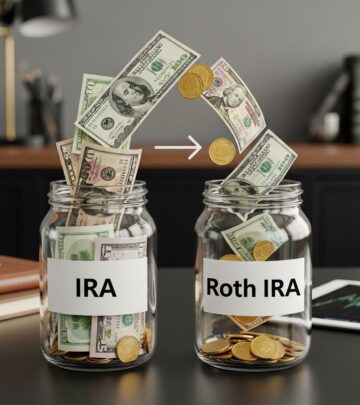
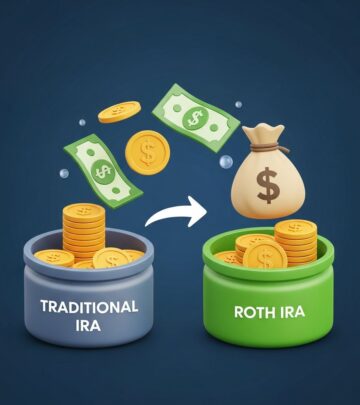
A Roth IRA conversion occurs when funds held in a traditional IRA are transferred into a Roth IRA account. The fundamental difference between these two account types centers on tax treatment. Traditional IRA contributions may be tax-deductible in the year they are made, and the account grows tax-deferred. However, withdrawals in retirement are taxed as ordinary income. In contrast, Roth IRA contributions are made with after-tax dollars, but the account grows tax-free, and qualified withdrawals are entirely tax-free.
When you convert funds to a Roth IRA, the IRS treats the transaction as if you distributed the entire converted amount from your traditional IRA in that tax year. This means the full amount of the conversion becomes taxable income in the year the conversion occurs. You must pay income taxes on the converted funds, though you may spread this tax obligation across multiple conversions in different years to manage the tax impact.
The Immediate Tax Consequence
The most significant drawback of any Roth IRA conversion is the immediate tax liability. When you convert funds from a traditional IRA, the IRS requires you to report the converted amount as taxable income for that tax year. This can substantially increase your annual tax bill. For example, converting $100,000 could add that entire amount to your taxable income, potentially pushing you into a higher federal and state tax bracket.
The critical aspect of managing conversion taxes is how you pay them. Ideally, you should use funds from a taxable brokerage account or other non-retirement sources to cover the tax liability. This approach preserves the full converted amount within the Roth IRA, allowing all of it to grow tax-free going forward. If you use funds from the IRA itself to pay the conversion taxes, you reduce the amount available for tax-free growth, which diminishes one of the primary benefits of the conversion strategy. Additionally, withdrawing from an IRA before age 59½ to pay conversion taxes could trigger a 10% early withdrawal penalty.
Tax Bracket Considerations and Income Planning
One of the most important factors in determining whether to convert is your current and projected future tax rate. If you expect to be in a higher tax bracket during retirement than you are now, converting at today’s lower rates could provide long-term tax savings. Conversely, if you anticipate being in a lower tax bracket in retirement, a conversion would lock in a higher current tax rate.
Converting during years when your income is lower—such as between jobs or after retirement begins—can reduce the immediate tax impact. However, the conversion itself increases your taxable income for that year, potentially pushing you into the next tax bracket if you’re near the threshold. Many taxpayers benefit from executing partial conversions over multiple years rather than converting the entire IRA balance in a single year. This strategy spreads the tax liability and helps you avoid jumping into a higher tax bracket, allowing you to stay within your target tax bracket while gradually shifting assets to the tax-free Roth environment.
Medicare Premium and “Stealth Tax” Implications
A frequently overlooked consequence of Roth conversions involves Medicare premiums and related taxes. The conversion income increases your Modified Adjusted Gross Income (MAGI), which is used to calculate Medicare Part B and Part D premiums. If your MAGI exceeds certain thresholds, you become subject to Income-Related Monthly Adjustment Amounts (IRMAA), which are essentially surcharges on your Medicare premiums.
These “stealth taxes” can be particularly significant for those within a few years of Medicare eligibility. The IRS uses a two-year lookback rule for MAGI, meaning that Roth conversions performed at age 63 or older can trigger higher Medicare charges due to income reported two years earlier. Additionally, higher income from conversion can reduce eligibility for certain tax credits and deductions you might otherwise claim. Social Security benefits may also be partially taxed if conversion income pushes your combined income threshold too high. These hidden costs must be factored into the conversion analysis and are often underestimated by taxpayers and advisors.
Liquidity Requirements and Cash Flow Planning
A practical but often overlooked requirement for a successful conversion strategy is having sufficient liquid assets outside your retirement accounts. Since you should pay conversion taxes from non-retirement sources, you need accessible funds in taxable accounts, savings accounts, or cash reserves. Without this liquidity, you may be forced into an unfavorable situation: either abandoning the conversion strategy or using IRA funds to cover the tax bill, which undermines the entire purpose of the conversion.
If you lack sufficient outside funds to cover taxes, a conversion may not be worth pursuing. The IRS withholding approach, while available, actually reduces the amount of funds converted to the Roth and limits the future tax-free growth you achieve. This scenario often appears in real-world situations where individuals have concentrated wealth in retirement accounts but limited liquid assets elsewhere.
Timing Strategies for Optimal Conversion Outcomes
The timing of a Roth conversion significantly influences its success. Several life events and market conditions create favorable windows for executing conversions:
- Early retirement years: If you retire before claiming Social Security and before Medicare eligibility, you may have a narrow window of lower income years to execute conversions at lower effective tax rates.
- Market downturns: Converting when account values have declined means you lock in a lower taxable amount. If the account subsequently recovers, all future growth is tax-free.
- Between employment: Transitional periods between jobs, sabbaticals, or voluntary career breaks create years with lower income, making them ideal for conversions.
- Business loss years: Self-employed individuals can time conversions during years when business losses offset conversion income.
Required Minimum Distribution Elimination
Traditional IRA owners must begin taking Required Minimum Distributions (RMDs) at age 73, calculating withdrawals based on life expectancy tables and account balances. These mandatory distributions are taxed as ordinary income and can push retirees into higher tax brackets than they would otherwise experience. Roth IRA owners, however, face no RMD requirements during their lifetime.
For those with substantial retirement savings who don’t need retirement income immediately, converting to a Roth eliminates future RMD obligations and preserves account assets for continued tax-free growth and legacy planning. This benefit increases in value the longer you live and the more your account grows, making the upfront conversion tax cost potentially worthwhile over a multi-decade retirement horizon.
Splitting Conversions Across Multiple Accounts
A sophisticated conversion strategy involves separating a traditional IRA into multiple accounts before converting them separately. For instance, you could divide a $600,000 IRA into six separate $100,000 accounts, each containing different asset classes or investment strategies. Each account would then be converted to a separate Roth IRA. This approach provides flexibility: if some accounts underperform after conversion, you may recharacterize (reverse) conversions for only those accounts while maintaining the conversions for stronger performers. This granular approach allows for more precise tax management and the ability to undo disadvantageous conversions without losing the benefits of successful ones.
Situations Where Conversions May Not Make Sense
Several circumstances suggest that converting to a Roth IRA may not be advantageous:
- Peak earning years: Converting during your highest income years generates substantial taxes and provides minimal benefit.
- Expected lower future tax rates: If you believe federal income tax rates will decrease significantly, converting now locks in a higher rate.
- Charity as primary beneficiary: If you plan to donate your IRA to charity, keeping it as a traditional IRA provides superior tax results.
- Insufficient outside funds: Without enough liquid assets to pay taxes, the conversion strategy deteriorates significantly.
- Proximity to Medicare enrollment: The IRMAA surcharge risk often outweighs conversion benefits for those nearing Medicare eligibility.
Key Factors to Analyze Before Converting
| Factor | Favorable for Conversion | Unfavorable for Conversion |
|---|---|---|
| Current vs. Retirement Tax Rate | Lower now, higher in retirement | Higher now, lower in retirement |
| Income Level | Below peak earning years | Peak earning years |
| Liquid Assets | Substantial funds available to pay taxes | Minimal outside retirement accounts |
| Medicare Proximity | 5+ years from eligibility | Within 2 years of eligibility |
| Life Expectancy | Long expected lifespan | Short expected lifespan |
| RMD Needs | Doesn’t need RMD income | Depends on RMD for living expenses |
Working With Financial Professionals
The complexity of Roth conversion decisions makes professional guidance essential. Tax professionals, financial advisors, and retirement planners can perform detailed analyses of your specific situation, including tax projections, Social Security optimization, Medicare impact modeling, and estate planning consequences. These professionals can also help you execute multi-year conversion strategies and navigate special situations involving business interests, concentrated stock positions, or complex family circumstances. Given the potential for significant financial consequences from conversion mistakes, the cost of professional consultation is typically a worthwhile investment.
Final Considerations
Roth IRA conversions are not universally appropriate despite their current popularity. The decision depends entirely on your individual financial picture, tax circumstances, time horizon, and retirement planning objectives. While conversions can provide meaningful long-term tax advantages and greater flexibility in retirement, they come with immediate and ongoing costs that must be carefully evaluated. A thorough analysis should precede any conversion decision, and ongoing monitoring is essential as tax laws and your personal circumstances change over time.
References
- Understanding the Problematic Consequences of Roth IRA Conversions — STW Serve. https://stwserve.com/understanding-the-problematic-consequences-of-roth-ira-conversions/
- Advantages and Pitfalls of Roth IRA Conversions — Duane Morris LLP. https://www.duanemorris.com/articles/advantages_pitfalls_roth_ira_conversion_3696.html
- Pros and Cons of Roth Conversion — Edelman Financial Engines. https://www.edelmanfinancialengines.com/education/tax/roth-conversion-pros-and-cons/
- Roth IRA Conversions: Pros and Cons — Thrivent Financial. https://www.thrivent.com/insights/retirement-planning/pros-and-cons-roth-ira-conversions
- Is a Roth IRA Conversion Right for You? — Vanguard Investor Resources. https://investor.vanguard.com/investor-resources-education/iras/ira-roth-conversion
- 7 Reasons NOT to Convert to a Roth IRA — MOD Wealth Management. https://www.modwm.com/reasons-not-to-convert-to-a-roth-ira/
- 5 Reasons Why a Roth Conversion Might Be a Bad Idea — WealthKeel. https://wealthkeel.com/blog/roth-conversion-bad-idea/
Similar Articles








Read full bio of Sneha Tete