Roth Conversion: Transform Your Traditional IRA
Explore the strategic decision of converting a traditional IRA to a Roth IRA, weighing tax impacts, long-term benefits, and key eligibility rules for optimal retirement planning.
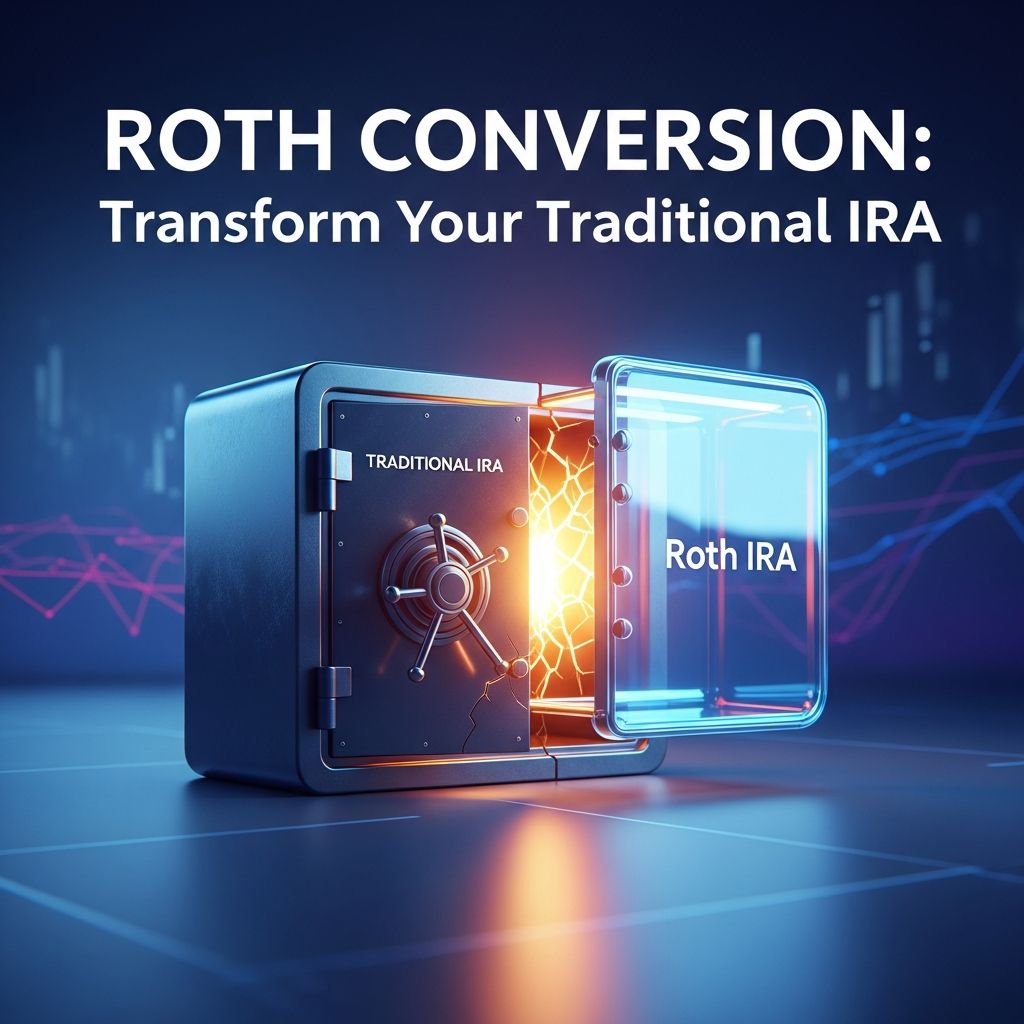
Converting a traditional IRA to a Roth IRA involves paying taxes on the transferred amount now for potential tax-free growth and withdrawals later. This strategy suits those expecting higher future tax rates or seeking retirement flexibility without mandatory distributions.
Understanding the Basics of IRA Accounts
Individual Retirement Accounts (IRAs) serve as powerful tools for building retirement wealth. A
traditional IRA
allows pre-tax contributions, offering immediate tax deductions while deferring taxes on growth until withdrawal. In contrast, aRoth IRA
uses after-tax dollars, providing no upfront deduction but enabling tax-free qualified withdrawals, including earnings.Both account types share annual contribution limits. For 2026, individuals under 50 can contribute up to $7,500, while those 50 and older qualify for catch-up contributions up to $8,600. These limits apply across all IRAs combined, promoting disciplined saving.
| Feature | Roth IRA | Traditional IRA |
|---|---|---|
| Contribution Type | After-tax | Pre-tax (deductible if eligible) |
| Tax on Growth | Tax-free if qualified | Tax-deferred |
| 2026 Contribution Limit (Under 50) | $7,500 | $7,500 |
| RMDs | None during owner’s lifetime | Required at age 73 |
Mechanics of a Roth IRA Conversion
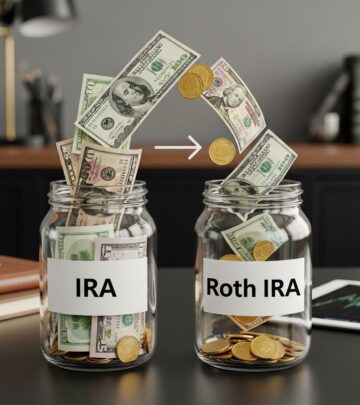
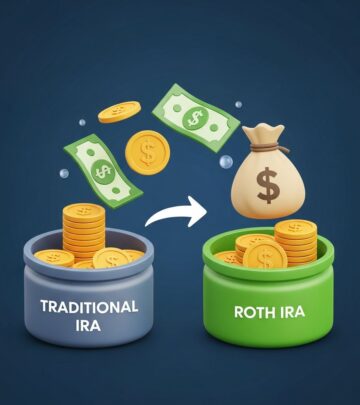
A Roth conversion transfers funds from a traditional IRA to a Roth IRA, triggering income tax on the converted amount in the year of transfer. Unlike direct Roth contributions, conversions have no income limits, allowing high earners to participate. The IRS treats the pre-tax balance as taxable income, potentially pushing you into a higher bracket.
Conversions can occur partially or fully. Partial conversions let you manage tax liability annually, spreading the burden. For example, converting just enough to fill a lower tax bracket minimizes the immediate hit while building Roth assets over time.
Tax Implications of Converting
The primary drawback is the upfront tax bill. If your traditional IRA holds $100,000 in pre-tax funds, converting it adds $100,000 to your taxable income. At a 24% marginal rate, that’s a $24,000 tax payment. However, post-conversion growth escapes future taxes.
Consider your current versus future tax situation. If you’re in a low bracket now—perhaps due to job loss or early retirement—a conversion locks in lower rates. Future tax hikes or bracket creep could make this advantageous. Roth conversions also avoid RMDs, preserving wealth for heirs with tax-free inheritance potential.
- Immediate Tax Cost: Converted amount taxed as ordinary income.
- No 10% Penalty: Conversions avoid early withdrawal penalties, regardless of age.
- Five-Year Rule: Earnings must stay five years for tax-free access, but contributions withdraw anytime tax-free.
Financial Scenarios Favoring Conversion
Not everyone benefits equally. Conversion shines if you anticipate a higher retirement tax bracket, have a long time horizon for growth, or want to minimize estate taxes. Younger savers leverage decades of compounding tax-free.
For instance, those in their 40s or 50s might convert to sidestep RMDs at 73, which force taxable distributions even if unneeded. Heirs inherit Roth funds tax-free, unlike traditional IRAs requiring distribution within 10 years under SECURE Act rules.
High earners ineligible for direct Roth contributions use conversions as a backdoor entry, first funding a traditional IRA then converting.
Potential Drawbacks and Risks
Conversions aren’t risk-free. A large one-year conversion spikes income, risking higher Medicare premiums two years later via IRMAA surcharges or reduced Social Security taxation. It may also phase out other deductions.
If tax rates drop or you enter a lower bracket in retirement, the upfront payment proves costly. Market downturns post-conversion amplify losses on already-taxed funds. Always model scenarios with tax software or advisors.
| Scenario | Best Choice | Reason |
|---|---|---|
| Expect higher future taxes | Convert to Roth | Tax-free withdrawals save more |
| Need immediate tax break | Keep Traditional | Deduct contributions now |
| Short time to retirement | Assess carefully | Less growth time offsets tax cost |
| High current income | Partial conversion | Manage bracket creep |
Strategic Planning for Conversions
Timing matters. Convert in low-income years, like between jobs or pre-Social Security. Pair with tax-loss harvesting to offset gains. For 2026, single filers phase out of direct Roth contributions above $153,000 MAGI, making conversions vital for higher earners.
Recharacterization ended in 2018, so conversions are irrevocable—double-check before proceeding. Track the five-year clock per conversion for earnings withdrawals.
Impact on Required Minimum Distributions
Traditional IRAs mandate RMDs starting at 73, calculated by life expectancy and account balance. These taxable outflows disrupt tax planning. Roth IRAs skip lifetime RMDs, allowing indefinite growth. Converting reduces traditional balances, lowering future RMDs.
Legacy and Beneficiary Considerations
Roth IRAs offer superior inheritance. Beneficiaries withdraw tax-free over 10 years (non-spouses) or continue tax-free (spouses). Traditional IRA heirs face taxes on distributions. For estate planning, conversions hedge against rising rates.
Comparing Contribution and Withdrawal Rules
Direct Roth contributions require earned income under phaseouts: $153,000-$173,000 for singles in 2026. Traditional IRAs accept contributions anytime with earned income, deductibility varying by coverage and income.
Withdrawals: Roth contributions exit anytime tax/penalty-free; earnings need age 59½ and five years. Traditional: All taxed post-59½ penalty-free, earlier hits 10% penalty barring exceptions.
Real-World Examples of Conversion Success
Consider a 45-year-old earning $80,000 annually converting $20,000 yearly. At 22% tax, they pay $4,400 now, but 20 years of tax-free growth at 7% yields substantial savings if retired at 32% effective rate.
Another: Retiree in 12% bracket converts to fill it, avoiding 22% RMD taxes later.
Steps to Execute a Conversion
- Contact your IRA custodian to initiate transfer.
- Choose partial or full amount.
- Report on Form 8606; pay taxes via withholding or estimated payments.
- Fund new or existing Roth IRA.
- Monitor five-year rules.
Frequently Asked Questions
Can I reverse a Roth conversion?
No, recharacterizations ended with TCJA 2018. Plan carefully.
Does conversion affect financial aid?
Yes, converted amounts count as income, impacting FAFSA two years later.
Are there limits on conversion amounts?
No, but tax impact scales with size.
Can I convert employer plan funds?
Yes, via rollover to traditional IRA first, then convert.
Is a Roth conversion worth it in 2026?
Depends on your tax now vs. later; model projections.
Consulting Professionals
Tax laws evolve; use CPAs or financial planners for personalized math. Tools from Vanguard or Fidelity aid simulations.
References
- Roth IRA vs. Traditional IRA: Rules & Tax Benefits — Vanguard. 2026. https://investor.vanguard.com/investor-resources-education/iras/roth-vs-traditional-ira
- Roth IRA vs traditional IRA | Comparing IRAs — Fidelity Investments. 2026. https://www.fidelity.com/retirement-ira/ira-comparison
- Traditional vs. Roth IRA: key differences & which to choose — Prudential. 2026. https://www.prudential.com/financial-education/traditional-vs-roth-ira
- Which IRA is Right for Me? (Roth vs. Traditional) — MissionSquare. 2026. https://www.missionsq.org/products-and-services/iras/which-ira-is-right-for-me.html
- Roth IRA vs. Traditional IRA: Differences and Rules — Charles Schwab. 2026. https://www.schwab.com/ira/roth-vs-traditional-ira
- Traditional and Roth IRAs — Internal Revenue Service. 2026. https://www.irs.gov/retirement-plans/traditional-and-roth-iras
Similar Articles








Read full bio of Sneha Tete