Roth 401(k) vs Traditional 401(k): A Complete Comparison
Understand the tax implications and benefits of each retirement plan option
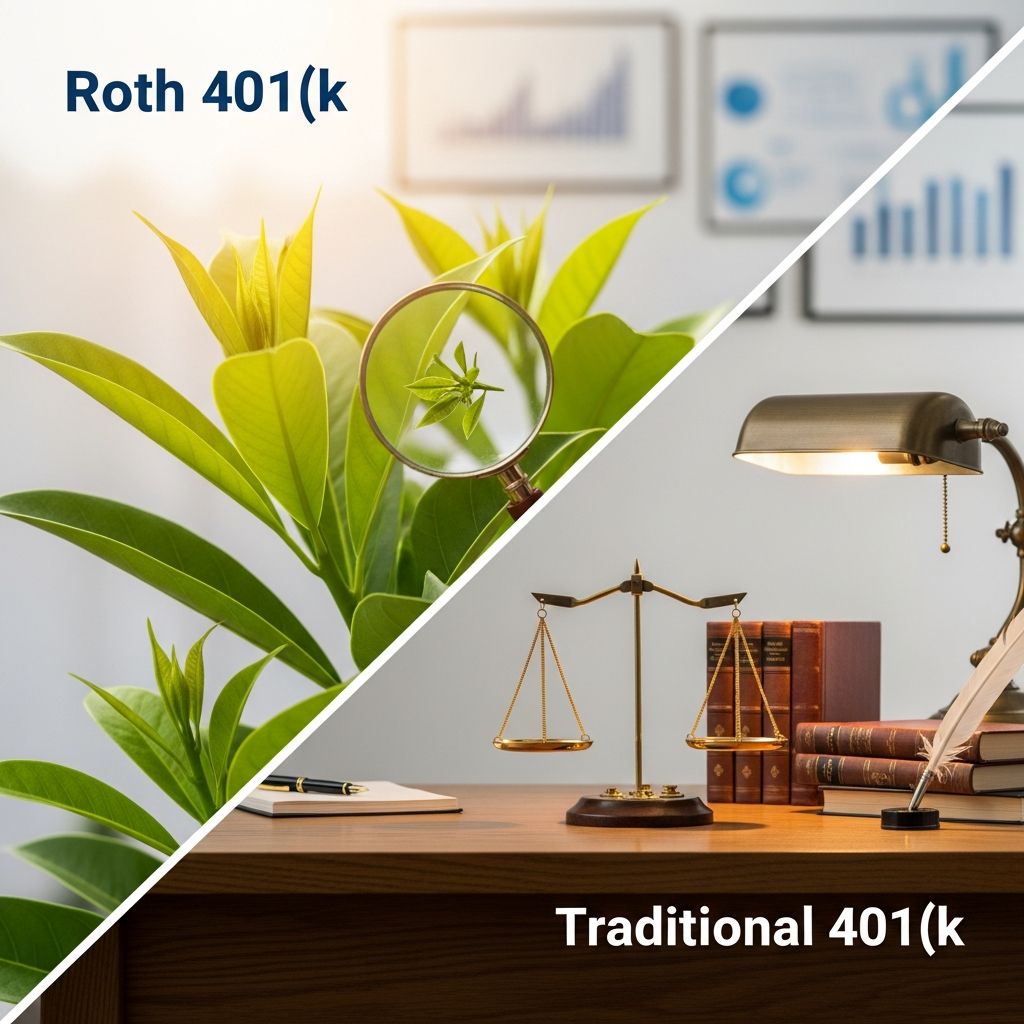
When planning for retirement, one of the most important decisions you’ll make is selecting the right employer-sponsored retirement account. Two primary options available to most workers are the Roth 401(k) and the traditional 401(k), each offering distinct advantages depending on your financial situation and tax outlook. Understanding how these accounts differ in taxation, contribution limits, and withdrawal rules is essential for maximizing your retirement savings.
Understanding the Fundamental Tax Difference
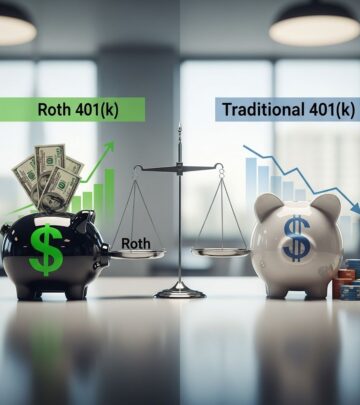
The most critical distinction between these two retirement vehicles centers on when you pay taxes. A traditional 401(k) operates on a tax-deferred model, meaning contributions reduce your current taxable income, but you’ll owe taxes when withdrawing funds in retirement. Conversely, a Roth 401(k) requires you to contribute after-tax dollars, so you pay income tax now rather than later, but qualified distributions in retirement remain entirely tax-free.
This fundamental difference shapes nearly every other aspect of these accounts. Your choice between them should reflect your expectations about future tax rates, current financial needs, and long-term wealth accumulation goals.
Analyzing Annual Contribution Limits and Catch-Up Opportunities
Both account types share identical contribution limits, making them equally attractive from a savings capacity perspective. For 2026, employees can contribute up to $24,500 annually to either account. This substantial limit allows for significant wealth building over a career.
The Secure 2.0 Act introduced enhanced catch-up contributions for older workers. Employees aged 50 and above can contribute an additional $8,000 per year, reaching a total of $32,500 annually. Even more significantly, workers aged 60, 61, 62, and 63 qualify for an elevated catch-up contribution of $11,250, allowing contributions up to $35,750 in those specific years.
One important consideration: if you choose to split contributions between both a Roth and traditional 401(k), your combined contributions cannot exceed the annual limit. You must allocate your allowable contribution across both accounts rather than maxing out each separately.
How Tax Treatment Affects Your Paycheck and Financial Planning
The after-tax nature of Roth 401(k) contributions produces a more immediate financial impact on your net paycheck compared to traditional 401(k) contributions. When you contribute pre-tax dollars to a traditional plan, your gross income is reduced, so your employer withholds less in payroll taxes. With a Roth 401(k), the full contribution amount comes from your already-taxed income, reducing your take-home pay more noticeably.
This distinction matters significantly for those living paycheck to paycheck or those managing tight budgets. A traditional 401(k) provides better monthly cash flow, while a Roth 401(k) requires more disposable income to fund comparable contribution amounts.
Additionally, employers can only match contributions using pre-tax dollars. If your employer offers matching contributions, that portion automatically goes into a pre-tax account regardless of whether you’ve chosen a Roth or traditional plan. This creates a subtle advantage: employers are essentially subsidizing your traditional account while your Roth receives only your own after-tax contributions.
Retirement Withdrawal Rules and Tax Implications
Understanding withdrawal regulations is crucial because penalties and taxes can significantly diminish retirement income. Both plans generally impose a 10% penalty on withdrawals before age 59½, with limited exceptions for disability or death.
For traditional 401(k)s, all distributions are taxed as ordinary income at your marginal tax rate upon withdrawal. If you withdraw $50,000 and are in the 24% tax bracket, you’d owe $12,000 in federal taxes immediately. This tax obligation can push you into a higher bracket if you take large distributions.
Roth 401(k)s offer superior flexibility: qualified distributions are completely tax-free if the account has been held for at least five years and you’re at least 59½ years old. This tax-free treatment applies to both contributions and earnings, potentially generating substantial tax savings compared to traditional accounts, particularly if you anticipate being in a higher tax bracket during retirement.
However, unlike Roth IRAs, Roth 401(k) participants cannot withdraw contributions at any time without penalty. The five-year holding period and age requirements apply rigidly.
Required Minimum Distributions: Planning for Mandatory Withdrawals
Traditional 401(k) participants must begin taking required minimum distributions (RMDs) at age 73, calculated based on life expectancy tables and account balance. These mandatory withdrawals can increase taxable income unexpectedly and potentially trigger higher Medicare premiums or reduced Social Security benefits.
Roth 401(k)s present a significant advantage here: account holders are not subject to RMDs during their lifetime. Your money can continue growing tax-free indefinitely, providing superior flexibility in retirement spending and estate planning. This extended growth period can substantially increase wealth transfer to heirs.
Comparing Income Eligibility and Access Requirements
Traditional 401(k)s impose no income limitations. Regardless of how much you earn, you can contribute the maximum allowable amount. This accessibility makes traditional plans valuable for high earners seeking tax deductions.
Roth 401(k)s also have no income restrictions, distinguishing them from Roth IRAs, which limit contributions for higher earners. This is a crucial advantage for wealthy individuals who exceed Roth IRA income thresholds but still want after-tax retirement savings with tax-free distributions.
Employer Matching Contributions and Account Structure
Most employers offering 401(k) plans provide matching contributions—a powerful benefit for retirement savings. However, employer matches always flow into pre-tax accounts, regardless of your personal contribution choice. This means even if you’ve selected a Roth 401(k), your employer’s matching dollars will be taxed upon distribution in retirement.
To maximize tax efficiency with employer matches, some workers contribute enough to the traditional portion to capture the full match, then direct additional contributions to their Roth account, creating a hybrid strategy.
Evaluating Your Tax Rate Outlook
Choosing between these accounts largely depends on comparing your current tax rate with your expected retirement tax rate. If you’re in a low tax bracket now and expect higher earnings (and thus higher tax brackets) in the future, a Roth 401(k) makes sense—you pay taxes at favorable rates now and avoid future taxes.
Conversely, if you’re in a high tax bracket currently and expect lower income in retirement, a traditional 401(k) provides immediate tax savings that exceed future tax obligations. This strategy works particularly well for those with significant non-retirement income who want to reduce current taxable income.
For those uncertain about future tax rates—particularly given changing political tax policy—splitting contributions between both account types provides diversification across tax treatments.
Comparing Withdrawals Before Retirement Age
Both accounts generally penalize early withdrawals before age 59½ with a 10% penalty plus income taxes on earnings. However, the IRS does recognize certain hardship exceptions including disability, death, and specific medical expenses.
Notably, Roth IRA holders can withdraw contributions (not earnings) at any time without penalty, but Roth 401(k) participants cannot. This represents a meaningful distinction for those who might need account access before retirement—a Roth 401(k) offers less flexibility than its IRA counterpart.
Contribution Limits Comparison Table
| Category | Roth 401(k) | Traditional 401(k) |
|---|---|---|
| 2026 Base Limit | $24,500 | $24,500 |
| Age 50+ Catch-Up | $8,000 | $8,000 |
| Ages 60-63 Catch-Up | $11,250 | $11,250 |
| Income Limits | None | None |
Key Advantages and Disadvantages Summary
Roth 401(k) Strengths
- Tax-free qualified distributions providing significant retirement income without tax liability
- No required minimum distributions during your lifetime, allowing extended tax-free growth
- No income restrictions, making it accessible for high earners who can’t use Roth IRAs
- Tax diversification for those managing complex retirement portfolios
- Estate planning benefits since heirs receive tax-free distributions
Traditional 401(k) Strengths
- Immediate tax deduction reducing current taxable income and potentially lowering tax bracket
- Higher take-home pay due to pre-tax contributions reducing payroll taxes
- Tax-deferred growth allowing investments to compound without annual tax drag
- Better cash flow management for those prioritizing monthly liquidity
- Strategic tax planning for high earners in peak earning years
Frequently Asked Questions
Can I contribute to both a Roth and traditional 401(k)?
Yes, you can split your contributions between both account types in the same year. However, your total combined contributions cannot exceed the annual limit of $24,500 (plus applicable catch-up contributions). The IRS treats them as a single aggregate limit rather than separate limits for each account type.
What happens to employer matching contributions in a Roth 401(k)?
Employer matching dollars must flow into a pre-tax traditional account portion, even if you contribute to a Roth 401(k). These matching funds are subject to taxation upon distribution in retirement. This creates a hybrid account structure for many participants.
Which account is better for young professionals?
Young professionals typically benefit more from Roth 401(k)s because they have decades of tax-free growth ahead and are generally in lower tax brackets now than they expect to be during retirement. However, those with significant current tax liability might prefer traditional accounts for immediate deductions.
Are there penalties for withdrawing from either account before 59½?
Yes, both accounts generally impose a 10% penalty on early withdrawals before age 59½, plus income taxes on earnings. Limited exceptions exist for disability, death, and specific hardships, but these exceptions are narrowly defined by the IRS.
Do Roth 401(k)s have income limits like Roth IRAs?
No, Roth 401(k)s have no income restrictions, making them accessible to all earners regardless of income level. This distinguishes them from Roth IRAs, which phase out for higher earners, making Roth 401(k)s particularly valuable for wealthy individuals.
Making Your Decision: Strategic Considerations
Selecting between Roth and traditional 401(k)s requires honest assessment of your personal financial situation, career trajectory, and tax outlook. Consider consulting with a tax professional or financial advisor who understands your complete financial picture, including other income sources, investment strategy, and estate planning goals.
Many successful retirees use a hybrid approach, contributing to both accounts to create tax diversification in retirement. This strategy provides flexibility to withdraw from either account depending on annual tax circumstances, potentially optimizing your overall tax position.
Remember that contribution limits increase periodically, and legislation like the Secure 2.0 Act continues introducing new opportunities. Staying informed about these changes ensures you’re maximizing available retirement savings strategies.
References
- Roth 401(k) vs. 401(k): Comparison and 2025-2026 Limits — NerdWallet. 2026. https://www.nerdwallet.com/retirement/learn/roth-401k-vs-401k
- Roth 401(k) vs. 401(k): Which one is better for you? — Bankrate. 2026. https://www.bankrate.com/retirement/traditional-401k-vs-roth-401k/
- Roth 401(k) vs. Traditional 401(k): Understanding the Key Differences — Johnson Financial Group. 2026. https://www.johnsonfinancialgroup.com/resources/blogs/young-professionals/roth-401k-vs-traditional-401k-understanding-the-key-differences/
- Roth vs. Traditional 401(k): What’s the difference? — H&R Block. 2026. https://www.hrblock.com/tax-center/income/roth-vs-traditional-401k/
- Traditional 401k vs Roth 401k Calculator — UMCU. 2026. https://www.umcu.org/learn/resources/calculators/traditional-401-k-vs-roth-401-k-calculator
- Roth comparison chart — Internal Revenue Service. https://www.irs.gov/retirement-plans/roth-comparison-chart
Similar Articles








Read full bio of medha deb