Roth 401(k): Tax-Free Growth and Retirement Benefits
Understand Roth 401(k) plans: tax advantages, withdrawal rules, and how they compare to traditional 401(k)s.

Roth 401(k): Understanding Tax-Free Retirement Growth
A Roth 401(k) is a type of employer-sponsored retirement savings plan that combines features of both traditional 401(k) plans and Roth IRAs. Unlike traditional 401(k) accounts where contributions are made with pre-tax dollars, Roth 401(k) contributions are made with after-tax dollars. This fundamental difference shapes how the account grows, how you withdraw funds, and the overall tax implications for your retirement. The Roth 401(k) was introduced as part of the Economic Growth and Tax Relief Reconciliation Act of 2001, providing workers with greater flexibility in managing their retirement savings strategy.
The primary appeal of a Roth 401(k) lies in its tax-free growth potential. Once you contribute after-tax dollars to your account, all investment earnings—including dividends, interest, and capital gains—grow tax-free. When you reach retirement and begin making qualified withdrawals, both your contributions and earnings can be accessed entirely tax-free, assuming you meet certain eligibility requirements. This structure makes Roth 401(k)s particularly attractive for individuals who expect to be in a higher tax bracket during retirement or those who want to minimize their tax burden in their later years.
Key Features of Roth 401(k) Plans
- After-Tax Contributions: Contributions are made with after-tax dollars, meaning you pay income taxes in the year you contribute
- Tax-Free Growth: Investment earnings grow without any annual tax liability
- Qualified Tax-Free Withdrawals: Distributions of both contributions and earnings are tax-free if you meet qualified distribution requirements
- Employer Matching: Employers can contribute matching funds, though employer matches go into a traditional pre-tax account
- Higher Contribution Limits: Follows the same contribution limits as traditional 401(k)s, adjusted annually for inflation
- No Income Limits: Unlike Roth IRAs, Roth 401(k)s have no income restrictions on who can participate
Roth 401(k) Contribution Limits and Rules
Understanding contribution limits is essential for maximizing your Roth 401(k) benefits. The IRS sets annual contribution limits for all 401(k) plans, whether traditional or Roth. For 2024, employees can contribute up to $23,500 annually to their 401(k) accounts. Individuals aged 50 and older are eligible for catch-up contributions of an additional $7,500, bringing their total potential contribution to $31,000 per year.
It’s important to note that these limits apply to combined contributions across all 401(k) plans you may have with different employers. If you have multiple jobs and participate in 401(k) plans at each employer, your total contributions across all plans cannot exceed the annual limit. Additionally, any employer matching contributions count toward this limit, further emphasizing the importance of understanding your total retirement savings picture.
Unlike traditional IRAs and Roth IRAs, which have income phase-out limits for contributions, Roth 401(k) plans do not restrict participation based on income level. This makes them an excellent option for high-income earners who may be phased out of Roth IRA contributions due to their earnings. Employees can contribute to a Roth 401(k) regardless of how much income they earn, providing greater flexibility in retirement planning strategies.
Tax Advantages of Roth 401(k) Plans
The primary tax advantage of a Roth 401(k) is the opportunity for tax-free growth and tax-free qualified withdrawals. While you don’t receive an immediate tax deduction for your contributions—since you’re contributing after-tax dollars—the long-term tax savings can be substantial. If your investments perform well and your account balance grows significantly over several decades, all of that growth escapes federal income taxation.
This tax-free withdrawal feature is particularly valuable during retirement when you may have less income and want to minimize your tax burden. Withdrawals from a Roth 401(k) don’t count toward your modified adjusted gross income (MAGI), which means they won’t trigger additional taxes on Social Security benefits or increase Medicare premium costs. This is a significant advantage for retirees managing multiple income sources.
Another tax benefit is the flexibility to manage your tax situation across accounts. Since Roth contributions are after-tax, you can strategically use Roth 401(k) contributions in years when you’re in a lower tax bracket, knowing that the money will grow tax-free and be withdrawn tax-free during retirement. This flexibility is especially beneficial for individuals in early retirement who are strategically managing income to stay in lower tax brackets.
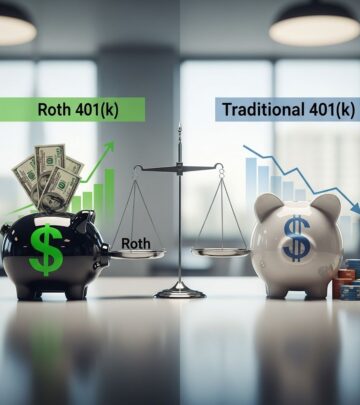
Roth 401(k) vs. Traditional 401(k): Key Differences
While both Roth and traditional 401(k) plans are employer-sponsored retirement savings vehicles, they differ significantly in their tax treatment and withdrawal rules. Understanding these differences is crucial for selecting the right plan for your financial situation.
| Feature | Roth 401(k) | Traditional 401(k) |
|---|---|---|
| Tax Treatment of Contributions | After-tax dollars | Pre-tax dollars (tax-deductible) |
| Tax on Earnings | Tax-free growth | Tax-deferred growth |
| Tax on Qualified Withdrawals | Tax-free (contributions and earnings) | Fully taxable as ordinary income |
| Income Limits on Participation | No income limits | No income limits on participation |
| Required Minimum Distributions (RMDs) | Required at age 73 (as of 2023) | Required at age 73 (as of 2023) |
| Early Withdrawal Penalties | Contributions can be withdrawn anytime tax and penalty-free; earnings subject to 10% penalty before age 59½ | All withdrawals before age 59½ subject to 10% penalty and income taxes |
| Immediate Tax Benefit | No immediate tax deduction | Immediate tax deduction reduces current taxable income |
Roth 401(k) Withdrawal Rules and Qualified Distributions
One of the most important aspects of Roth 401(k) planning is understanding the withdrawal rules. To receive tax-free and penalty-free distributions from your Roth 401(k), you must satisfy two critical conditions: the account must have been open for at least five tax years, and you must be at least 59½ years old at the time of withdrawal. Additionally, distributions must be used for qualifying purposes such as retirement, death, disability, or hardship situations.
A significant advantage of Roth 401(k)s compared to traditional 401(k)s is that contributions can always be withdrawn tax-free and penalty-free. Since you’ve already paid taxes on the money you contributed, the IRS allows you to access your contributions without additional tax consequences. However, earnings on those contributions are subject to different rules. If you withdraw earnings before age 59½ and the account hasn’t been open for five years, you’ll owe income taxes and a 10% early withdrawal penalty on the earnings portion.
Unlike Roth IRAs, Roth 401(k) accounts are subject to Required Minimum Distributions (RMDs) beginning at age 73, as of 2023. This means you must begin withdrawing a minimum amount annually from your Roth 401(k), even if you don’t need the money. However, a strategic workaround exists: you can roll over your Roth 401(k) into a Roth IRA, which doesn’t have RMDs during your lifetime, providing greater flexibility in managing your retirement distributions.
Withdrawal Scenarios and Tax Implications
- Qualified Distribution (Age 59½ and 5-Year Rule Met): Entire withdrawal is tax-free and penalty-free
- Non-Qualified Distribution (Before Age 59½ or 5-Year Rule Not Met): Contributions withdrawn tax and penalty-free; earnings subject to income taxes and 10% penalty
- Death or Disability Exemption: Early withdrawal penalties waived, but 5-year rule may still apply to earnings
- Substantially Equal Periodic Payments: Series of substantially equal payments may allow early withdrawal without 10% penalty, but earnings still taxable
Employer Contributions and Matching in Roth 401(k)s
A unique aspect of Roth 401(k)s is how employer contributions are handled. When an employer contributes matching funds to an employee’s Roth 401(k), the employer contribution must go into a separate traditional (pre-tax) account. This means that while your own contributions are after-tax, your employer’s matching contributions and any profit-sharing contributions remain in the traditional 401(k) portion of your account. This creates a dual-account structure within your overall 401(k) plan.
This distinction has important implications for retirement planning. The employer contributions in the traditional portion will be taxable when you withdraw them in retirement. This doesn’t diminish the value of employer matching—it’s still free money—but it’s important to account for the tax liability on that portion when planning your retirement withdrawals. Some employers offer both traditional and Roth 401(k) options, allowing employees to choose which type of account receives their contributions.
Who Should Consider a Roth 401(k)?
Roth 401(k)s are particularly beneficial for several types of individuals. Young workers just starting their careers often benefit significantly from Roth 401(k)s because they typically have decades of earning potential ahead and can take maximum advantage of tax-free growth. If you expect to be in a higher tax bracket during retirement than you are now, a Roth 401(k) makes strategic sense.
High-income earners benefit from Roth 401(k)s because there are no income limits on participation, unlike Roth IRAs, which have income phase-out limits. Additionally, if you have significant non-retirement assets and want to create tax-free income streams in retirement, Roth 401(k) contributions can be an effective strategy.
Individuals who are uncertain about future tax rates may also benefit from the diversification that comes from having both pre-tax and after-tax retirement accounts. This diversification allows for more sophisticated tax planning in retirement, as you can withdraw from different account types strategically to minimize your overall tax burden.
Frequently Asked Questions About Roth 401(k)s
Q: Can I contribute to both a traditional 401(k) and a Roth 401(k) at the same employer?
A: Yes, many employers offer both options. However, your combined contributions to traditional and Roth 401(k) accounts cannot exceed the annual IRS limit ($23,500 in 2024). You must split your contributions between the two account types.
Q: What happens to my Roth 401(k) if I change employers?
A: When you leave an employer, you can roll your Roth 401(k) balance into a Roth IRA at a financial institution of your choice. This roll-over is tax-free and penalty-free, and it provides the additional benefit of eliminating Required Minimum Distributions during your lifetime.
Q: Are there any circumstances where I can withdraw my earnings tax-free before age 59½?
A: In limited situations, such as permanent disability or medical expenses exceeding a certain threshold, early withdrawals may qualify for exceptions. Additionally, if you experience a qualifying hardship, you may withdraw earnings, though they would still be subject to income taxes and potentially the 10% penalty.
Q: How does a Roth 401(k) affect my Social Security benefits?
A: Roth 401(k) withdrawals do not count toward your modified adjusted gross income (MAGI), which means they won’t trigger taxation of Social Security benefits or increase your Medicare premiums. This is a significant advantage over traditional 401(k) withdrawals.
Q: Can I still contribute to a Roth IRA if I have a Roth 401(k)?
A: Yes, but your Roth IRA contributions may be limited or phased out based on your income level. It’s important to coordinate your contributions across all retirement accounts to stay within IRS limits and maximize your retirement savings strategy.
Q: What is the 5-year rule for Roth 401(k)s?
A: The 5-year rule requires that your Roth 401(k) account must be open for at least five tax years before you can withdraw earnings tax-free. If you make your first contribution in 2024, you cannot withdraw earnings tax-free until 2029, even if you’re over age 59½.
Planning Your Roth 401(k) Strategy
Effective retirement planning requires understanding how your Roth 401(k) fits into your overall financial picture. Consider your current tax bracket, your expected tax bracket in retirement, your income level relative to Roth IRA phase-out limits, and your time horizon until retirement. If you expect to be in a higher tax bracket in retirement, contributing to a Roth 401(k) now while you’re in a lower bracket can result in significant tax savings over your lifetime.
Additionally, consider how Roth 401(k)s complement other retirement accounts you might have. A diversified approach that includes both pre-tax and after-tax retirement accounts provides flexibility in managing your tax liability during retirement. Consulting with a tax advisor or financial planner can help you develop a comprehensive retirement strategy that maximizes your Roth 401(k) benefits while considering your unique financial circumstances and goals.
References
- Internal Revenue Service (IRS) – 401(k) Plans – Deferrals and Contributions — U.S. Department of the Treasury. 2024. https://www.irs.gov/retirement-plans/plan-participant-employee/401k-plans-deferrals-and-contributions
- Internal Revenue Service (IRS) – Roth Comparison Chart — U.S. Department of the Treasury. 2024. https://www.irs.gov/retirement-plans/roth-ira-and-roth-401k-contribution-and-eligibility-limits
- Internal Revenue Service (IRS) – Required Minimum Distributions (RMDs) — U.S. Department of the Treasury. 2024. https://www.irs.gov/retirement-plans/retirement-plans-faqs-regarding-required-minimum-distributions
- U.S. Securities and Exchange Commission (SEC) – Investor Bulletin: What You Should Know About 401(k) Plans — SEC Office of Investor Education and Advocacy. 2023. https://www.sec.gov/oiea/investor-alerts-and-bulletins/investor-alert-what-you-should-know-about-401k-plans
- Federal Reserve Bank of New York – Personal Savings Rate and Retirement Planning — Federal Reserve System. 2024. https://www.newyorkfed.org/medialibrary/media/research
- U.S. Department of Labor – Retirement Plans, Benefits & Savings – 401(k)s — Employee Benefits Security Administration. 2024. https://www.dol.gov/agencies/ebsa/workers-and-families/getting-ready-for-retirement/savings-plans/401k-plans
Similar Articles








Read full bio of Sneha Tete