Roth 401(k) Matching Explained
Unlock tax-free growth potential with new Roth 401(k) matching rules from SECURE 2.0—choose pre-tax or after-tax employer contributions.

Recent legislative updates have transformed how employers can contribute to employee retirement accounts, particularly through Roth 401(k) options. This shift empowers workers to direct matching funds into after-tax accounts for potential tax-free growth in retirement.
Understanding the Basics of 401(k) Matching
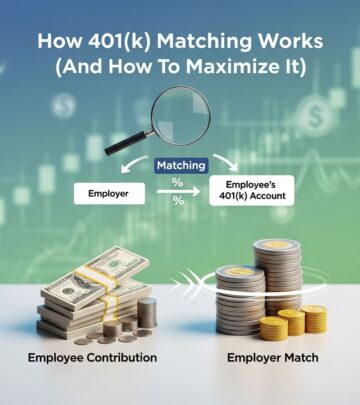
Employer matching in 401(k) plans incentivizes saving by mirroring a portion of employee contributions, often up to a set percentage of salary. Traditionally, these matches went into pre-tax accounts, deferring taxes until withdrawal. Now, options expand to include Roth treatment, where contributions are taxed upfront but qualified withdrawals are tax-free.
- Matching typically equals 50% to 100% of employee deferrals up to 6% of compensation.
- Plans may include safe harbor or discretionary matches, both eligible for Roth designation under new rules.
- Employees elect Roth for their deferrals independently of employer matches.
Key Changes from SECURE 2.0 Legislation
The SECURE 2.0 Act, enacted in 2022, introduced provisions effective December 29, 2022, allowing Roth designation for employer matches and nonelective contributions in 401(k), 403(b), and governmental 457(b) plans. This breaks from prior rules limiting Roth only to employee elective deferrals.
IRS Notice 2024-02, released December 20, 2023, clarified implementation, addressing vesting, tax reporting, and nondiscrimination concerns. Employers can now offer this mid-plan without prior Roth elective deferrals, though formal amendments are due by December 31, 2026.
| Aspect | Pre-SECURE 2.0 | Post-SECURE 2.0 |
|---|---|---|
| Match Location | Pre-tax account only | Employee choice: pre-tax or Roth |
| Tax on Match | Deferred until withdrawal | Taxed in year allocated if Roth |
| Vesting Requirement | Plan-dependent schedule | 100% vested for Roth designation |
| Plans Affected | 401(k) only for matches | 401(k), 403(b), 457(b) |
How Roth Matching Contributions Are Taxed
When employees elect Roth for employer matches, the contribution value counts as taxable income in the allocation year, reported on Form W-2 or 1099-R, not via payroll withholding for FICA/FUTA. Earnings grow tax-free, and qualified distributions (after age 59½ and 5-year holding) are tax-exempt.
For 2025 contributions, expect inclusion on 2026 W-2s. This upfront tax may suit those anticipating higher future rates or wanting tax diversification.
- No payroll tax withholding on Roth matches, unlike employee Roth deferrals.
- Governmental 457(b) Roth nonelectives may trigger FICA if applicable.
- Excluded from certain safe harbor compensation definitions for testing.
Vesting Rules for Roth Employer Contributions
A critical stipulation: Roth-designated matches or nonelectives must be 100% vested upon allocation. Partially vested amounts cannot qualify, preventing issues for plans with graded schedules. Excluding non-vested employees from Roth elections avoids discrimination violations under IRC Section 401(a)(4).
This immediate vesting aligns with Roth’s tax-free growth promise, ensuring employees receive full benefits without forfeiture risk.
Employer Implementation Considerations
Offering Roth matching is optional; employers decide based on administrative feasibility. Providers and payroll systems are updating for compliance, with retroactive elections possible once ready.
Plans must pass nondiscrimination tests, but Roth matches count toward 415(c) limits (not 402(g)), enabling higher allocations for exceeding elective caps.
- Update plan documents promptly; amend by 2026 end.
- Communicate options clearly to avoid confusion on tax impacts.
- Consider even without employee Roth deferrals.
Strategic Advantages for Retirement Planning
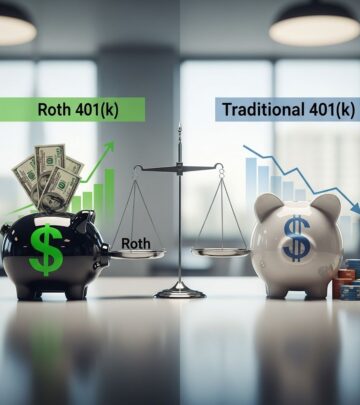
Roth matching diversifies tax exposure: pre-tax for current deductions, Roth for future tax-free income. Ideal for younger workers or those in lower brackets now versus retirement.
Combined with no RMDs for Roth 401(k)s (post-2024), funds grow indefinitely. High earners benefit from exceeding deferral limits via matches.
| Scenario | Best Choice | Reason |
|---|---|---|
| Expect higher taxes in retirement | Roth match | Tax-free qualified withdrawals |
| Need current deduction | Pre-tax match | Defers taxes to later |
| Maxing elective deferrals | Roth match | Higher overall limits |
Potential Drawbacks and Tax Planning Tips
Upfront taxation on matches increases current-year liability, potentially pushing into higher brackets. Plan withholdings accordingly.
- Estimate tax hit: Match value x marginal rate.
- Coordinate with Roth IRA phaseouts for high earners.
- Model scenarios using retirement calculators.
Not all plans offer this yet; check with HR. Popularity may grow as systems adapt, especially for high savers.
Who Qualifies and Contribution Limits
Eligible employees in offering plans can elect per contribution or ongoing. No income limits like Roth IRAs.
2025 limits: Deferrals $23,500 ($31,000 age 50+); total additions $70,000. Roth matches boost toward the latter.
FAQs on Roth 401(k) Matching
Can my employer force Roth matching?
No, it’s optional and employee-elected if offered.
Are Roth matches subject to RMDs?
No, Roth 401(k)s are RMD-exempt after 2024.
What if I’m not fully vested?
You can’t designate partial matches as Roth; they default to pre-tax.
Does this apply to 403(b) plans?
Yes, along with 401(k) and 457(b).
How do I report Roth match taxes?
On W-2 (2025 matches in 2026) without payroll withholding.
Steps to Maximize Your Benefits
- Review plan documents for Roth match availability.
- Assess tax bracket now vs. retirement.
- Elect via payroll or plan portal.
- Adjust withholdings for tax bill.
- Monitor vesting and annual statements.
Consult a tax advisor for personalized strategy, as rules evolve.
References
- How Roth 401(k) Matching Works With Your Employer — SmartAsset. 2024. https://smartasset.com/retirement/how-roth-401k-matching-works-with-your-employer
- Roth 401(k) Changes: New Rules to Know for 2025 and 2026 Taxes — Kiplinger. 2024. https://www.kiplinger.com/taxes/roth-401k-changes-what-you-should-know
- Roth Matching and Nonelective Contributions — Employee Fiduciary. 2024-01-15. https://www.employeefiduciary.com/blog/roth-matching-and-nonelective-contributions
- Understanding new Roth 401(k) catch-up rules — Fidelity Investments. 2024. https://www.fidelity.com/learning-center/personal-finance/401k-catch-up-contributions-high-earners
- IRS guidance illuminates SECURE 2.0’s Roth employer contributions — Mercer. 2024. https://www.mercer.com/insights/law-and-policy/irs-guidance-illuminates-secure-2-0-s-roth-employer-contribution/
- The Gift That Keeps on Giving: New IRS Guidance on Roth Employer Contributions — Bricker Graydon. 2024. https://www.brickergraydon.com/benefits-insights/the-gift-that-keeps-on-giving-new-irs-guidance-on-roth-employer-contributions
- Retirement plans FAQs on designated Roth accounts — Internal Revenue Service (IRS.gov). 2024-03-01. https://www.irs.gov/retirement-plans/retirement-plans-faqs-on-designated-roth-accounts
Similar Articles








Read full bio of medha deb