Rolling SIMPLE IRA Assets Into a New 401(k) Plan
Complete guide to converting SIMPLE IRA to 401(k) and managing employee rollovers.
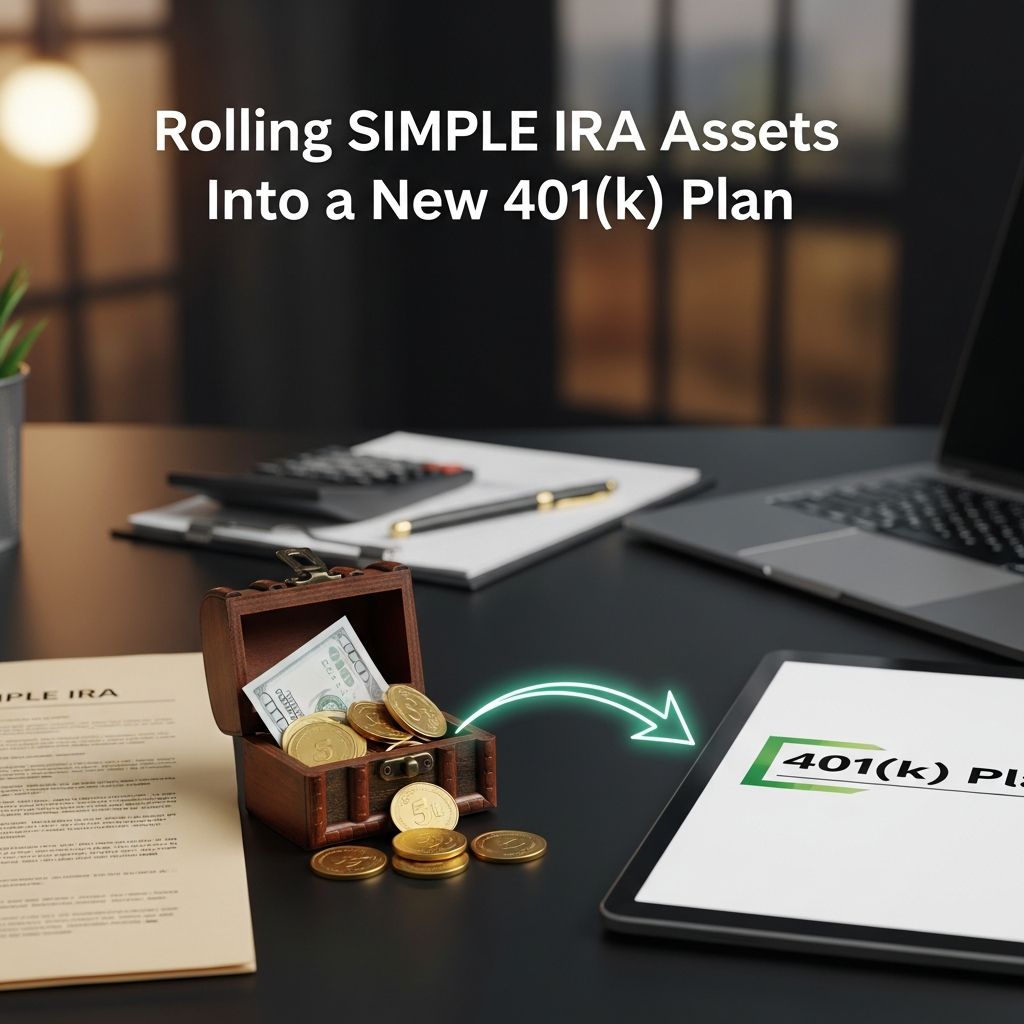
Many small business owners and self-employed individuals use SIMPLE IRAs as an accessible retirement savings option. However, as your business grows or your retirement planning needs evolve, you may consider transitioning to a more robust 401(k) plan. Rolling SIMPLE IRA assets into a new 401(k) involves several important steps, compliance considerations, and tax implications that both employers and employees need to understand.
Understanding SIMPLE IRA Plans
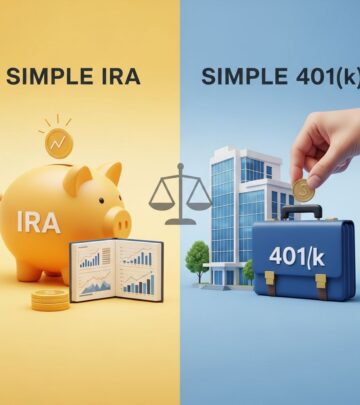
A SIMPLE IRA (Savings Incentive Match Plan for Employees Individual Retirement Account) is a retirement savings plan designed for small businesses with 100 or fewer employees. These plans operate on a calendar-year basis, running from January through December and requiring annual renewal. SIMPLE IRAs are popular among small business owners because they offer lower administrative burdens and costs compared to traditional 401(k) plans, while still allowing employers to contribute to employee retirement savings.
SIMPLE IRAs typically require mandatory employer contributions, either matching contributions or non-elective contributions, which can make them valuable for employees. However, as businesses expand or organizational needs change, some employers find that a 401(k) plan better suits their retirement benefits strategy.
The Impact of the SECURE 2.0 Act on SIMPLE IRA Conversions
The SECURE 2.0 Act, passed in 2022, made significant changes to retirement plan regulations that directly affected how and when employers can convert SIMPLE IRAs to 401(k) plans. Prior to these changes, SIMPLE IRA conversions typically had to occur during the fourth quarter of the year in preparation for January 1st implementation. The new legislation fundamentally changed this timeline.
Under the updated rules effective for plan years beginning after December 31, 2023, employers can now replace a SIMPLE IRA with a SIMPLE 401(k) or other 401(k) plan that requires mandatory employer contributions at any point during the calendar year. This flexibility represents a major shift from the previous requirement to complete conversions by year-end for January 1st effective dates.
Additionally, the SECURE 2.0 Act modified contribution limits and employee match requirements for SIMPLE plans, making it even more important for business owners to evaluate whether their current plan structure still meets their needs and compliance requirements.
Timing Requirements for SIMPLE IRA to 401(k) Conversions
Year-End Conversions
Traditionally, most SIMPLE IRA to 401(k) conversions occurred at year-end. The conventional process involved employers notifying their SIMPLE IRA provider by November 2nd (60 days before December 31st) that they intended to terminate the plan effective December 31st. Employers were required to continue making contributions through the end of the calendar year. The new 401(k) plan would then become effective on January 1st of the following year, allowing employees to begin rollovers immediately.
Mid-Year Conversions
One of the most significant changes introduced by SECURE 2.0 is the ability to transition mid-year. Starting in 2024, employers can terminate their SIMPLE IRA plan and adopt a safe harbor 401(k) plan at virtually any point during the calendar year. However, mid-year conversions come with specific requirements and restrictions.
To qualify for a mid-year SIMPLE IRA transition, the employer must adopt a safe harbor 401(k) plan immediately following the SIMPLE IRA termination date. Safe harbor plans require employers to make automatic employer contributions and include specific vesting schedules, removing some of the discretion in plan design. Additionally, the SIMPLE IRA must terminate no later than September 30th, and the safe harbor plan must begin no later than October 1st of the calendar year to allow for at least three months of deferrals in the first year.
Eligibility Requirements for Rolling Over SIMPLE IRA Assets
The Two-Year Rule
One of the most important considerations when rolling over SIMPLE IRA assets is the two-year participation requirement. Employees who have participated in a SIMPLE IRA for less than two years are restricted in where they can roll over their funds. During the first two years of participation, SIMPLE IRA assets can only be rolled over to another SIMPLE IRA plan.
After two years of participation, employees gain the flexibility to roll their SIMPLE IRA balances into other retirement plans, including 401(k) plans, 403(b) plans, or traditional IRAs. The two-year waiting period is measured from the date the employer first deposits money into the employee’s SIMPLE IRA account. This timeline does not reset if the employer moves the SIMPLE IRA to a different financial institution or if the employee transfers assets within the same plan structure.
Exceptions to the Two-Year Rule
SECURE 2.0 introduced an important exception to the two-year rule for mid-year transitions. When an employer terminates a SIMPLE IRA plan and replaces it with a safe harbor 401(k) or 403(b) plan, employees can roll over their SIMPLE IRA assets to the new 401(k) plan even if they have not yet met the two-year participation requirement. This waiver applies specifically when the SIMPLE IRA assets are subject to the same distribution limitations as safe harbor contributions under the replacement plan, meaning funds cannot be distributed before age 59½, death, disability, or termination from employment.
Steps for Converting Your SIMPLE IRA to a 401(k)
Step 1: Decide to Switch Retirement Plans
The first step is evaluating whether a 401(k) plan better serves your business needs than a SIMPLE IRA. Consider factors such as business growth, employee retention goals, contribution flexibility, loan provisions, and administrative resources. Take time to design a 401(k) plan that aligns with your business objectives and employee demographics.
Step 2: Provide Notice to Employees and Your SIMPLE IRA Provider
Once you’ve decided to convert, you must provide formal notice to both your employees and your SIMPLE IRA provider. Even though SECURE 2.0 allows mid-year conversions, it remains best practice to provide the conventional 60-day notification period to employees about the plan change. For year-end conversions, notify your SIMPLE IRA provider by November 2nd that you’ll be discontinuing the plan as of December 31st.
For mid-year transitions, you must send a SIMPLE IRA termination notice at least 30 days in advance of the plan termination date, and a safe harbor notice at least 30 days before the new 401(k) plan’s effective date. The safe harbor notice should communicate the plan’s provisions and prorated contribution limits for the year of conversion.
Step 3: Establish Your 401(k) Plan
Work with your 401(k) plan provider to design and establish a plan structure that meets your business needs. You’ll need to determine contribution limits, vesting schedules, loan provisions, and other plan features. Set the effective date for your new 401(k) plan to coincide with your SIMPLE IRA termination date.
Step 4: Update Your Payroll Provider
If you use an outsourced payroll provider, inform them of your plan conversion. Provide details about the SIMPLE IRA termination date and the 401(k) effective date. Ensure your payroll provider updates their systems to process contributions correctly and coordinate the transition smoothly.
Step 5: Continue SIMPLE IRA Contributions Through Termination
Employers must continue making required contributions to the SIMPLE IRA plan through the termination date, whether that’s December 31st for year-end conversions or the mid-year termination date for safe harbor transitions. This obligation ensures compliance with federal regulations and demonstrates good faith to employees.
Step 6: Help Participants Roll Over Their Assets
Once your SIMPLE IRA is terminated, employees can complete rollovers into your new 401(k) plan. Direct rollovers, where funds transfer directly from the SIMPLE IRA provider to the 401(k) plan provider, are the most common and recommended approach. Employees typically initiate direct rollovers by contacting both their current SIMPLE IRA administrator and their new 401(k) plan administrator, who guide them through the necessary paperwork and facilitate the fund transfer.
Understanding Aggregate Elective Deferral Limits During Conversion Years
An important consideration during the conversion year is the aggregate elective deferral limit. Employees are restricted to an aggregate elective deferral limit (including catch-up contributions) during the year they make the switch between plans. This means you must calculate the maximum contribution an employee can make by taking the time they participate in the SIMPLE IRA plan and the time they participate in the 401(k) plan and splitting the IRS contribution limits accordingly.
For example, if an employee participated in a SIMPLE IRA for six months and then switches to a 401(k) for the remaining six months, their maximum deferral limit would be prorated based on these periods. This pro-rating requirement ensures compliance with IRS regulations and prevents employees from exceeding annual contribution limits across multiple plans in a single year.
Tax Implications of SIMPLE IRA Rollovers
Tax-Free Rollovers
When employees who have participated in a SIMPLE IRA for at least two years roll their balances into a 401(k) plan, the transfer is generally tax-free. A direct rollover, where funds move directly from one plan to another without the employee receiving a distribution check, is the most straightforward way to ensure the rollover maintains its tax-free status.
Taxable Rollovers
Rollovers that occur before the two-year participation requirement is met have significant tax consequences. If an employee attempts to roll over SIMPLE IRA assets before the two-year period has ended, they must include the amount of the withdrawal in their taxable income for the year and pay income taxes on it. Additionally, if they haven’t reached age 59½, they may also face a 10% early withdrawal penalty, further reducing their retirement savings.
Roth Conversions
Employees have the option to roll their SIMPLE IRA assets into a Roth IRA instead of a 401(k) plan. When rolling into a Roth IRA, any pre-tax funds included in the rollover must be included in the employee’s taxable income for the year of conversion. This approach makes sense for employees who expect to be in a higher tax bracket in retirement or who want tax-free growth on their retirement savings going forward.
Documentation and Compliance Considerations
Employers should document all actions taken during the SIMPLE IRA to 401(k) conversion process. While there is no requirement to contact the Internal Revenue Service (IRS) about the plan change, maintaining detailed records demonstrates compliance with federal regulations and provides protection in case of an audit or employee dispute.
Documentation should include the termination notice to the SIMPLE IRA provider, employee notifications about the plan change, the effective date of the new 401(k) plan, and records of employee rollovers. These documents should be retained for at least six years in accordance with IRS record-keeping requirements.
Frequently Asked Questions
Q: Can I roll over SIMPLE IRA assets to a regular IRA instead of a 401(k)?
A: Yes. After meeting the two-year participation requirement, employees can roll their SIMPLE IRA assets into a traditional IRA or a Roth IRA, in addition to rolling into a 401(k) plan. However, note that rolling into a Roth IRA will trigger income taxes on the pre-tax funds being converted.
Q: What happens if an employee doesn’t roll over their SIMPLE IRA assets when the plan terminates?
A: Employees are not required to roll over their SIMPLE IRA assets. They can choose to leave their funds in the SIMPLE IRA, even after the employer-sponsored plan is terminated. The SIMPLE IRA would continue to exist as an individual account with the financial institution, though it would no longer receive employer contributions.
Q: Does the two-year waiting period reset if my employer moves the SIMPLE IRA to a different financial institution?
A: No. The two-year waiting period does not reset if the SIMPLE IRA is moved to a different financial institution or provider. The timing is based on when the employer first made deposits into your account, not on when the account was created or transferred.
Q: Can I do a mid-year conversion from SIMPLE IRA to 401(k) in 2024?
A: Yes, starting in 2024, you can terminate your SIMPLE IRA and adopt a safe harbor 401(k) plan at any point during the calendar year, as long as the SIMPLE IRA terminates no later than September 30th and the safe harbor plan begins no later than October 1st.
Q: Will I have to pay taxes when I roll over my SIMPLE IRA to a 401(k)?
A: Not if you’ve been in the SIMPLE IRA for at least two years and you complete a direct rollover to a 401(k) plan. However, if you roll over before two years have passed, you’ll owe income taxes on the amount rolled over. If you roll into a Roth IRA instead, pre-tax funds will be taxable in the year of conversion.
Q: How long do I have to complete a rollover after my SIMPLE IRA is terminated?
A: For direct rollovers, the transfer typically occurs within days to a few weeks. If you receive a distribution check and want to do an indirect rollover, you have 60 days from the date you receive the check to deposit it into a new retirement plan to maintain the tax-free status of the rollover.
Q: What’s the difference between a SIMPLE 401(k) and a traditional 401(k)?
A: A SIMPLE 401(k) is designed specifically for small businesses and has simpler administration requirements and lower costs than a traditional 401(k). A traditional 401(k) offers more flexibility in plan design and higher contribution limits, making it suitable for larger organizations or businesses with more sophisticated retirement benefits needs.
Key Takeaways
Rolling SIMPLE IRA assets into a 401(k) plan is a strategic decision that requires careful planning and coordination. The SECURE 2.0 Act has made the process more flexible, allowing conversions at virtually any point during the year rather than only at year-end. However, employers and employees still need to understand eligibility requirements, particularly the two-year participation rule, and must navigate timing, notice, and contribution limit requirements.
By following the step-by-step conversion process, providing appropriate notice to employees, and working with qualified plan providers and payroll administrators, you can ensure a smooth transition from a SIMPLE IRA to a 401(k) that better serves your business and employee retirement needs.
References
- Simple IRA to 401(k) Conversion — Associated Bank. 2024. https://www.associatedbank.com/education/articles/business-insights/strategy-and-management/simple-ira-to-401k-conversion
- Completing A SIMPLE IRA Rollover to a 401k: Tips for The Conversion — Complete Payroll Solutions. 2024. https://www.completepayrollsolutions.com/blog/simple-ira-rollover-t0-401k
- Replacing a SIMPLE IRA with a 401(k) – Frequently Asked Questions — Employee Fiduciary. 2024. https://www.employeefiduciary.com/blog/replacing-simple-iras-with-a-401k
- Replacing your SIMPLE IRA with a 401(k) midyear — Human Interest. 2024. https://humaninterest.com/learn/articles/convert-simple-ira-to-401k/
- Is it time to replace your SIMPLE IRA Plan or SEP-IRA with a 401(k)? — Voya. 2024. https://www.voya.com/voya-insights/it-time-replace-your-simple-ira-plan-or-sep-401k
- Can I move money from a SIMPLE IRA to my Gusto 401(k) or IRA? — Gusto. 2024. https://help.guideline.com/en/articles/9308574-can-i-move-money-from-a-simple-ira-to-my-gusto-401-k-or-ira
- SIMPLE IRA withdrawal and transfer rules — Internal Revenue Service. 2024. https://www.irs.gov/retirement-plans/simple-ira-withdrawal-and-transfer-rules
Similar Articles








Read full bio of medha deb