Rocket Money vs YNAB
Discover which budgeting app suits your financial style: Rocket Money's automation or YNAB's disciplined approach.
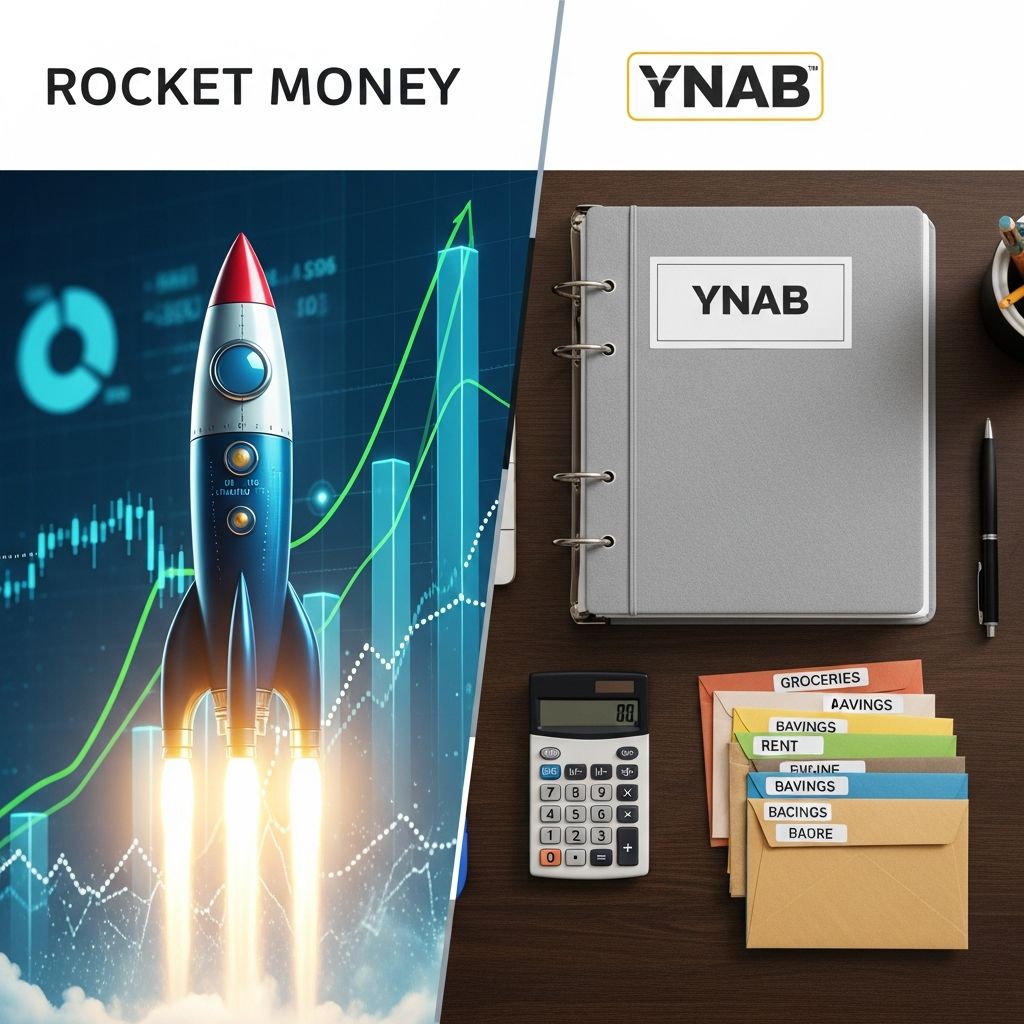
Choosing between Rocket Money and YNAB can transform how you handle everyday finances. These apps cater to different needs—Rocket Money emphasizes effortless automation for busy users, while YNAB promotes proactive, hands-on budgeting for those seeking control.
Understanding the Core Budgeting Philosophies
Each app adopts a unique approach to money management. Rocket Money automates tracking and optimization, detecting paychecks, categorizing expenses, and even handling subscriptions without much user input. This makes it ideal for individuals wanting quick insights into spending patterns and savings opportunities.
YNAB, on the other hand, follows a zero-based budgeting method where every dollar must be assigned a purpose. Users actively allocate funds to categories, fostering discipline and accountability. This philosophy suits detail-oriented people committed to long-term financial planning.
Key Features Breakdown
Both platforms offer robust tools, but their strengths differ significantly.
- Account Linking and Syncing: Rocket Money connects bank accounts, credit cards, and investments for real-time updates. YNAB syncs accounts but checks for transactions every 24 hours or upon app opening.
- Spending Tracking: Real-time alerts are available in both, but Rocket Money adds balance notifications and automatic categorization.
- Subscription Tools: Rocket Money shines with detection, management, and cancellation services—features absent in YNAB.
- Goal Setting: YNAB provides detailed goal tracking with reports on trends and net worth. Rocket Money offers automated savings into FDIC-insured accounts for goals.
- Debt Management: YNAB includes payoff tools and calculators; Rocket Money lacks these but monitors overall debt in net worth views.
Premium Features and User Experience
Rocket Money’s free tier covers basic tracking, with Premium unlocking advanced automation like bill negotiation and shared budgets. Its interface prioritizes simplicity, using pie charts for overviews.
YNAB requires a paid subscription from the start but delivers educational resources, customizable reports, and shared access for up to six users. The app encourages manual reviews, which can build better habits but demands more time.
Pricing Structures in Detail
Cost is a major differentiator. YNAB charges $14.99 monthly or $109 annually, with a 34-day free trial. No free version exists, making it a commitment.
Rocket Money offers free basics and a flexible Premium at $7–$14 monthly (pay-what-you-wish), with a 7-day trial. Annual costs max at $144, often lower.
| Aspect | Rocket Money | YNAB |
|---|---|---|
| Free Tier | Yes (basic tracking) | No |
| Monthly Cost | $7–$14 (flexible) | $14.99 |
| Annual Cost | Up to $144 | $109 |
| Free Trial | 7 days (Premium) | 34 days |
Strengths and Limitations
Rocket Money Advantages
- Automation reduces manual work, ideal for passive users.
- Credit score monitoring and bill alerts add value.
- Subscription cancellation saves time and money.
Rocket Money Drawbacks
- Limited deep analysis or investment advice.
- Less emphasis on tying spending to long-term goals.
YNAB Advantages
- Comprehensive reports and educational workshops promote financial literacy.
- Structured system aids debt reduction and savings.
YNAB Drawbacks
- Higher fixed costs without extras like credit tracking.
- Manual elements can frustrate beginners.
Who Should Choose Which App?
Opt for Rocket Money if you value convenience, automation, and subscription control—perfect for newcomers or those with hectic schedules.
Select YNAB for rigorous budgeting, detailed insights, and behavioral change, especially if you’re tackling debt or building habits.
Integration with Broader Financial Strategies
Neither app fully addresses advanced planning like tax optimization or retirement modeling. Users often combine them with tools for investments or forecasting to create a complete system.
Frequently Asked Questions
Is Rocket Money better than YNAB for beginners?
Yes, its automation and free tier make it more accessible for starters.
Does YNAB sync investments automatically?
No, investment updates are mostly manual.
Can I share budgets with family in both apps?
YNAB supports up to six; Rocket Money Premium allows sharing.
Which has better customer support?
YNAB offers personalized help; Rocket Money relies on standard channels.
Are there mobile apps for both?
Yes, both have highly rated iOS and Android versions.
Real-User Insights from 2026 Reviews
Recent comparisons highlight Rocket Money’s edge in time-saving features, while YNAB users report higher savings through discipline. Videos and blogs note Rocket Money’s growth in popularity for its all-in-one approach.
In summary, your choice depends on whether you prefer set-it-and-forget-it ease or active financial mastery. Test trials to see what fits.
References
- YNAB vs. Rocket Money [2026]: I Tried Both — FinanceBuzz. 2026. https://financebuzz.com/rocket-money-vs-ynab
- YNAB vs Rocket Money (2026) – Which One Is BETTER? — YouTube (The Money Monger). 2026. https://www.youtube.com/watch?v=TRuaPt66pYU
- Rocket Money vs YNAB — Rocket Money. 2026. https://www.rocketmoney.com/compare/ynab
- YNAB vs Rocket Money: Which Wins? — Origin Financial. 2026. https://useorigin.com/resources/blog/ynab-vs-rocket-money-which-wins
- Empower vs Rocket Money vs YNAB (2026) – Which One Is BEST? — YouTube. 2026. https://www.youtube.com/watch?v=yf3MMcKLuL0
- Best Budgeting Apps For 2026 (Free And Paid) — The College Investor. 2026. https://thecollegeinvestor.com/32672/best-budgeting-apps/
Similar Articles








Read full bio of Sneha Tete