Roaring Twenties: How the Golden Decade Led to Economic Crash
Explore how prosperity turned to panic: The economic factors behind the 1929 stock market crash.

The Roaring Twenties and the Seeds of Economic Collapse
The 1920s represented one of the most prosperous and dynamic periods in American history, earning the designation “Roaring Twenties.” This era was characterized by rapid industrialization, technological innovation, and unprecedented consumer spending. Yet beneath the glittering surface of jazz, flappers, and mass production lay the seeds of economic catastrophe. The very mechanisms that drove the decade’s prosperity—unbridled speculation, unchecked credit expansion, and systemic financial fragility—would ultimately transform the golden era into one of history’s most devastating economic downturns. Understanding how the Roaring Twenties led to the 1929 crash requires examining the interconnected factors that created an unsustainable economic bubble.
Economic Expansion and the Foundation of Prosperity
The 1920s began with remarkable industrial growth that seemed to promise unlimited prosperity. Following World War I, American manufacturing capacity had expanded dramatically, and new industries emerged to dominate the economic landscape. The automobile industry revolutionized transportation and created entire supply chains of supporting industries. Radio, motion pictures, and electrical appliances transformed consumer culture and household living. These technological advances increased productivity, reduced production costs, and created widespread employment opportunities.
Corporate profits soared as businesses capitalized on growing consumer demand and technological efficiencies. Stock market valuations surged in response to these impressive earnings, attracting millions of new investors who believed the economic boom would continue indefinitely. Advertising became increasingly sophisticated, encouraging consumers to purchase on credit rather than save, fundamentally altering spending patterns. This combination of technological innovation, rising profits, and optimistic consumer sentiment created an intoxicating sense of economic invulnerability.
The Stock Market Speculation Bubble
Perhaps no feature of the Roaring Twenties better exemplifies the era’s excess than the explosive growth in stock market speculation. Stock prices rose dramatically throughout the decade, with major indices more than tripling in value between 1921 and 1929. This remarkable appreciation attracted ordinary Americans to equity investing in unprecedented numbers, fundamentally changing the nature of market participation.
The most dangerous aspect of this investment frenzy was the widespread use of margin buying—purchasing stocks with borrowed money while putting down only a small percentage of the purchase price. Brokers typically loaned up to 90 percent of a stock’s purchase price, enabling investors to control large quantities of stock with minimal capital. This arrangement magnified both gains and losses. As long as stock prices continued rising, margin buying seemed like a path to easy wealth. However, this system created catastrophic vulnerability to price declines.
Investment trusts, a precursor to modern mutual funds, proliferated during the 1920s and often engaged in their own margin speculation, layering leverage upon leverage throughout the financial system. Thousands of Americans who possessed no real investment expertise participated in stock market trading, often driven by unrealistic expectations and little understanding of the risks involved. Shoeshine boys, housemaids, and barbers became active traders, contributing to what economist Irving Fisher would later recognize as a dangerous disconnect between market valuations and economic fundamentals.
Wealth Inequality and Underconsumption
While the 1920s created tremendous wealth, this prosperity was distributed extremely unevenly throughout society. The top one percent of Americans experienced income growth far exceeding that of middle and working-class households. Despite productivity gains and economic expansion, wage growth for most workers stagnated relative to corporate profits and asset appreciation.
This concentration of wealth created a fundamental economic imbalance. The wealthy, who received disproportionate shares of productivity gains, saved and invested much of their income rather than spending it. Meanwhile, most households lacked sufficient income growth to sustain accelerating consumption patterns. Economists Waddill Catchings and William Trufant Foster articulated this problem clearly: the economy produced more than consumers could afford to purchase. Without sufficient purchasing power among the broader population, demand growth could not sustain the expanding production capacity and rising corporate profits that justified elevated stock valuations.
This widening gap between production and consumption made the economy increasingly vulnerable to any shock that disrupted either lending or spending patterns. The stock market boom, fueled largely by speculative fervor rather than rational evaluation of long-term earnings capacity, created massive wealth for successful traders and investors. However, this paper wealth did not translate into sufficient consumer spending to support the economy’s productive capacity indefinitely.
Banking System Fragility and Excessive Debt
The banking system of the 1920s operated with minimal regulation, contributing significantly to the ultimate financial collapse. Banks were subject to few restrictions on lending practices, capital requirements, or reserve ratios. This deregulatory environment encouraged reckless lending and the accumulation of excessive leverage throughout the economy.
Banks themselves became aggressive participants in stock market speculation, often using depositors’ money to purchase securities and provide margin loans to investors. The profits from these activities seemed spectacular during the bull market, but the practice concentrated risk dangerously within the banking system. When stock prices eventually declined, banks faced simultaneous problems: losses on their own securities portfolios, defaults by margin borrowers who could not meet margin calls, and depositor panic withdrawals.
Corporate debt also expanded dramatically during the 1920s, as businesses borrowed heavily to finance expansion and modernization. Consumer debt grew explosively as Americans embraced installment purchasing for automobiles, appliances, and other consumer goods. This proliferation of debt at all levels—personal, corporate, and financial—created what Irving Fisher termed “over-indebtedness.” The economy had become dependent on continued lending expansion to service existing debt and fund new spending. Any interruption in credit availability would trigger cascading defaults.
Agricultural Crisis and Regional Instability
While urban areas and industrial centers experienced the Roaring Twenties’ prosperity, agricultural regions suffered from chronic depression. Farm prices remained depressed throughout the decade despite increased productivity. Farmers had invested heavily in new equipment and machinery during the prosperous war years, but the postwar decline in agricultural prices left them struggling with debt service. Rural areas experienced high tax burdens from infrastructure investments made during better times, further straining farm finances.
This agricultural crisis created a fragmented economic landscape where significant portions of the nation experienced ongoing economic distress even as headline statistics showed national prosperity. Rural banks, heavily exposed to agricultural lending, faced deteriorating loan portfolios. The agricultural crisis foreshadowed the broader economic collapse and demonstrated the dangers of unequal prosperity distribution across different economic sectors and regions.
The Structural Vulnerability of Unchecked Speculation
The fundamental problem underlying the Roaring Twenties was the disconnect between stock market valuations and economic reality. Stock prices had risen to levels that bore little relationship to corporate earnings or rational projections of future profitability. Dividend yields had fallen to historically low levels, indicating that investors were purchasing stocks almost entirely based on expectations of continued price appreciation—a classic speculative bubble.
Sophisticated observers recognized these dangers. Yale economist Irving Fisher famously declared that stocks had reached “a permanently high plateau” just weeks before the October 1929 crash, though his confidence reflected the era’s pervasive optimism rather than sound analysis. More prescient observers warned of a dangerous disconnect between valuations and fundamentals, but their cautions were drowned out by the roar of optimism and the profits flowing to successful speculators.
The margin system that had enabled the bull market became a mechanism for transmitting losses throughout the financial system once prices began declining. As stock prices fell, margin investors faced margin calls requiring them to deposit additional funds or face forced liquidation of their positions. These forced sales accelerated price declines, triggering additional margin calls in a vicious feedback loop.
Government and Central Bank Policy Failures
The Federal Reserve, established in 1913 to prevent financial crises, failed catastrophically to address the mounting dangers of the 1920s. Rather than restraining speculation and the excessive expansion of credit, Federal Reserve policy remained accommodative throughout most of the decade. The Fed’s focus on maintaining stable gold reserves and international financial relationships took precedence over managing domestic credit expansion and restraining speculation.
The banking panics of 1930-1931 and the subsequent collapse of the commercial banking system revealed the Fed’s critical failure. From fall 1930 through winter 1933, the money supply fell by nearly 30 percent as the banking system collapsed. The Federal Reserve possessed the authority and tools to prevent this monetary contraction by expanding credit and sustaining banking system liquidity. Instead, passivity and philosophical disagreements among Federal Reserve officials prevented coordinated action.
President Hoover’s early responses focused on maintaining confidence and encouraging continued spending by business and consumers. While these efforts reflected sound economic theory, they proved insufficient to address the systemic financial crisis. Hoover requested increased Federal Reserve credit and encouraged public works spending, but these measures could not counteract the deflationary spiral once it began.
The Cascade to Collapse
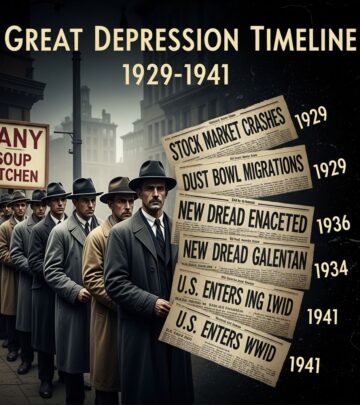
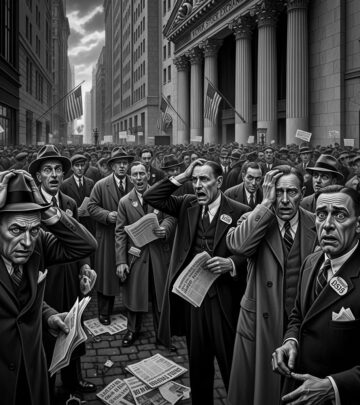
The stock market crash of October 1929 marked the dramatic punctuation point of the Roaring Twenties’ end, but the underlying vulnerabilities had been building for years. Margin investors faced forced liquidation of positions as prices fell, accelerating the decline. Brokerage houses failed as clients could not meet margin calls. Banks suffered losses on their own securities holdings and faced defaults by borrowers who had financed stock purchases with debt.
Once the banking system began to fail, the economic collapse became self-reinforcing. As Irving Fisher’s debt deflation theory predicted, the very effort of debtors to reduce their debt burdens by selling assets and cutting spending actually intensified the economic contraction. Falling prices increased the real burden of existing debts, pushing more borrowers into insolvency. Business bankruptcies soared as revenues collapsed while debt obligations remained fixed. Consumer spending plummeted as unemployment rose and consumer confidence evaporated.
The seemingly unshakeable economic prosperity of the Roaring Twenties collapsed with shocking rapidity once the credit-fueled bubble burst. What had appeared to be a new permanent era of endless prosperity revealed itself as an unsustainable speculative excess built on fragile foundations of excessive leverage, unequal wealth distribution, and systemic financial weakness.
Key Factors That Led to the Crash
The transition from Roaring Twenties prosperity to Great Depression catastrophe resulted from multiple reinforcing factors:
| Factor | Impact |
|---|---|
| Stock market speculation | Unsustainable valuations disconnected from economic fundamentals |
| Margin buying | Amplified losses when prices declined; triggered forced liquidations |
| Wealth inequality | Insufficient consumer purchasing power to sustain economic growth |
| Excessive debt | Over-leverage at personal, corporate, and financial levels |
| Weak banking regulation | Banks engaged in risky speculation with depositors’ funds |
| Agricultural crisis | Rural weakness undermined regional banking systems |
| Federal Reserve passivity | Failed to prevent banking collapse and monetary contraction |
Frequently Asked Questions
Q: Why was the stock market so overvalued in the 1920s?
A: Stock prices rose to unsustainable levels driven by speculative fervor rather than rational valuation. Margin buying enabled investors to purchase stocks with minimal capital, and widespread optimism about unlimited economic growth attracted inexperienced investors who pushed prices ever higher without regard for earnings or dividends.
Q: How did margin buying contribute to the crash?
A: Margin buying magnified both gains and losses. When stock prices began falling, margin calls forced investors to sell positions or deposit additional funds. These forced sales accelerated price declines, triggering additional margin calls and creating a destructive feedback loop that devastated market prices.
Q: Why didn’t the Federal Reserve prevent the Great Depression?
A: The Federal Reserve possessed the tools to prevent the monetary contraction and banking collapse but failed to use them effectively. Philosophical disagreements among officials, lack of precedent, and focus on other priorities prevented coordinated action to sustain credit and banking system liquidity during the crisis.
Q: How did wealth inequality contribute to the economic collapse?
A: The concentration of wealth among the top one percent meant that most Americans lacked sufficient income growth to sustain consumer spending at levels required to absorb the economy’s expanding production capacity. This underconsumption created economic vulnerability to any disruption in credit or confidence.
Q: What role did excessive debt play in the crash?
A: Excessive leverage at personal, corporate, and financial levels created systemic vulnerability. Once prices began falling and borrowers defaulted, the debt-deflation cycle accelerated economic contraction, as Irving Fisher’s theory predicted. Debtors’ efforts to reduce debt through selling assets and cutting spending intensified the overall economic decline.
Q: Why did the agricultural crisis matter to the overall economy?
A: Depressed farm prices and farmer debt burdens throughout the 1920s weakened rural banks and revealed economic fragmentation. The agricultural crisis demonstrated that prosperity was unequally distributed and created warning signs that the broader economy was unsustainably structured, foreshadowing the general collapse.
References
- Great Depression — Wikipedia. Accessed November 2025. https://en.wikipedia.org/wiki/Great_Depression
- The Great Depression — Federal Reserve History. Accessed November 2025. https://www.federalreservehistory.org/essays/great-depression
- Great Depression Facts — FDR Presidential Library & Museum. Accessed November 2025. https://www.fdrlibrary.org/great-depression-facts
- The Great Depression — Herbert Hoover Presidential Library-Museum. Accessed November 2025. https://hoover.archives.gov/exhibits/great-depression
- The Great Depression Begins (1920s) — Iowa PBS. Accessed November 2025. https://www.iowapbs.org/iowapathways/mypath/2561/great-depression-begins-1920s
- The Causes of the Great Depression — Texas Gateway. Accessed November 2025. https://texasgateway.org/resource/causes-great-depression
Similar Articles








Read full bio of Sneha Tete