Risks of Bank Account and Routing Numbers
Discover the serious threats posed by exposing your bank account and routing numbers, and learn proven strategies to safeguard your finances from fraudsters.

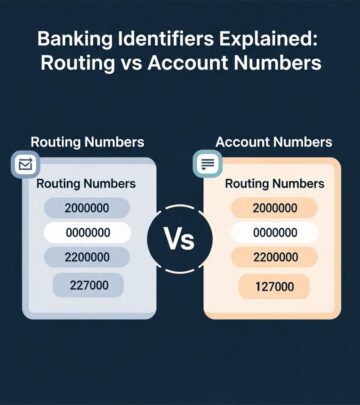
Bank account and routing numbers are vital for everyday transactions like direct deposits and bill payments, but they become dangerous tools in the hands of fraudsters. These nine-digit codes identify your financial institution, while the account number pinpoints your specific holdings, enabling quick electronic processing across networks like the Automated Clearing House (ACH).
Understanding the Core Components
The
routing number
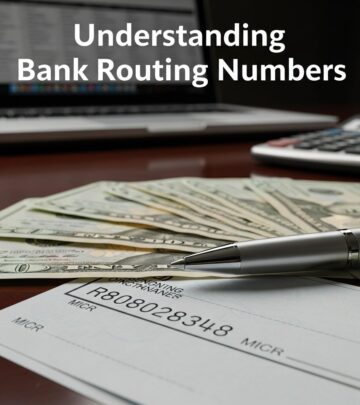
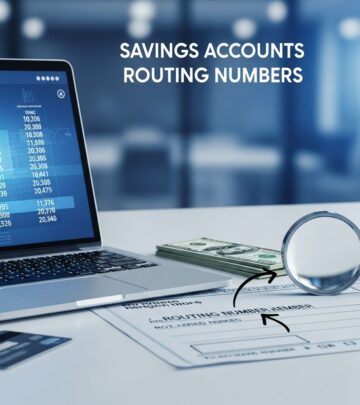
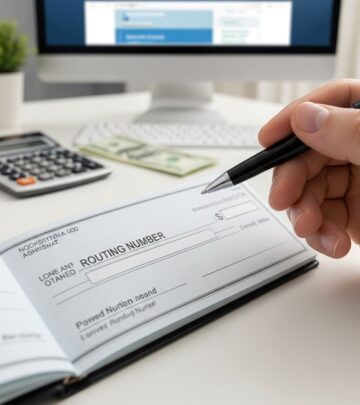
, often called an ABA number, routes transactions to the correct bank or credit union. It appears as the first nine digits at the bottom of checks or in online banking portals. Theaccount number
follows, uniquely identifying your funds within that institution. Together, they facilitate seamless transfers but expose you to risks if compromised.Unlike credit card numbers requiring CVV verification, these details suffice for many ACH pulls or check creations, making vigilance essential. Financial institutions process billions via ACH daily, underscoring the system’s efficiency—and vulnerability.
Primary Threats from Exposure
When both numbers fall into malicious hands, scammers gain leverage for direct financial attacks. Here’s a breakdown of key dangers:
- Unauthorized ACH Transactions: Fraudsters initiate electronic debits or credits, siphoning funds for fake bills or transfers. ACH handles routine payments like utilities, but criminals mimic these to drain accounts unnoticed.
- Counterfeit Check Creation: Using design software, criminals print fake checks with your details, cashing them at ATMs or depositing via mobile apps. Retailers may accept without scrutiny, leading to losses.
- Online Purchase Exploitation: Lax e-commerce sites allow payments solely with account details, enabling rapid spending sprees on goods or services.
- Money Laundering Schemes: Illicit funds deposited into your account appear legitimate before quick withdrawals, implicating you in investigations.
- Identity Theft Gateway: Paired with basic personal data, these numbers fuel new account openings, tax refund hijacks, or credit applications.
Isolated account numbers pose lower risks, as withdrawals require routing details to locate the bank. However, full exposure amplifies threats exponentially.
Real-World Fraud Scenarios
Fraudsters obtain these numbers via data breaches, phishing emails, stolen mail, or discarded checks. For instance, intercepted payroll checks expose details visible through envelopes. Digital scans from compromised apps or malware further proliferate risks.
| Fraud Type | How It Works | Potential Loss |
|---|---|---|
| ACH Debit Fraud | Scammer sets up recurring pulls disguised as utilities | $500–$5,000 per incident |
| Fake Check Deposit | Mobile app deposit of printed check into scammer’s account | Up to check limit, often $1,000+ |
| Online Shopping | Direct bank payment on unsecured sites | Hundreds to thousands quickly |
| Laundering | Unexpected deposit followed by withdrawal request | Thousands, plus legal fees |
These examples highlight patterns reported across banking sectors, from regional credit unions to national banks.
Protective Measures for Everyday Banking
Minimize exposure through proactive habits:
- Switch to Digital Payments: Use apps or cards instead of paper checks, which broadcast numbers openly.
- Secure Physical Documents: Shred statements, obscure check details in mail with carbon paper.
- Monitor Accounts Daily: Enable alerts for transactions over $1; review statements weekly.
- Verify Recipients: Share details only with trusted parties via encrypted channels.
- Enable Bank Safeguards: Activate two-factor authentication (2FA), transaction limits, and fraud alerts.
Banks offer tools like positive pay for businesses and real-time monitoring for consumers, blocking suspicious ACH pulls.
Immediate Response to Suspicious Activity
Spot an odd deposit or debit? Act fast:
- Contact your bank’s fraud team within 48 hours to freeze the account.
- Dispute charges promptly—federal rules cap liability at $50 if reported timely, rising after 60 days.
- File a police report and alert the FTC at IdentityTheft.gov.
- Change online banking credentials and scan devices for malware.
Investigations typically conclude in 10 days, with provisional credits during review.
Regulatory Protections and Bank Policies
U.S. laws like Regulation E govern electronic transfers, mandating disclosures and error resolution timelines. The Federal Trade Commission (FTC) oversees identity theft responses, providing recovery blueprints. Major banks align with these, often exceeding requirements with AI-driven anomaly detection.
Primary Source: Consumer Financial Protection Bureau (CFPB) guidelines on electronic fund transfers emphasize prompt reporting to limit losses. (CFPB.gov, updated 2025).
Another authoritative reference: Federal Reserve’s ACH rules detail risk management for institutions. (FederalReserve.gov, 2024).
Advanced Safeguards for High-Risk Users
Businesses or frequent check-users benefit from:
- Virtual account numbers for one-time use.
- Tokenization services replacing real details in apps.
- Third-party verification for vendors.
Fintech innovations like plaid-linked payments add layers without exposing core numbers.
FAQs on Bank Number Security
Is it safe to give my routing number alone?
Routing numbers are public for many banks and safe for legitimate direct deposits, but never share with unknowns.
Can someone drain my account with just the account number?
No, routing is needed for most actions, limiting solo account number risks.
How do I know if my account is used for laundering?
Watch for unexplained incoming wires; report immediately to avoid complicity.
What if I spot fraud after 60 days?
Liability may increase; contact your bank regardless for investigation.
Are mobile deposits safe from check fraud?
Banks verify via watermarks, but scammers alter images—monitor closely.
By understanding these vulnerabilities and defenses, you empower yourself against evolving threats. Regular habits and swift action preserve financial stability.
References
- What Can Someone Do With Bank Account and Routing Numbers? — Experian. 2024. https://www.experian.com/blogs/ask-experian/what-can-someone-do-with-your-bank-account-and-routing-numbers/
- If Someone Has Your Bank Account Number Can They Take Money — SoFi. 2024. https://www.sofi.com/learn/content/what-can-someone-do-with-your-bank-account-and-routing-number/
- Electronic Fund Transfer Act (Regulation E) — Consumer Financial Protection Bureau. 2025-01-15. https://www.consumerfinance.gov/rules-policy/regulations/1005/
- ACH Operating Rules — NACHA / Federal Reserve. 2024-09-20. https://www.frbservices.org/resources/financial-services/ach
- Protecting Your Bank Account Information — Banesco USA. 2024. https://banescousa.com/blog/protect-bank-account-information-financial-fraud/
- Is Giving Your Bank Account Number Safe? — Eftsure. 2024. https://www.eftsure.com/blog/cyber-crime/giving-your-bank-account-number/
Similar Articles








Read full bio of Sneha Tete