Risks of High-Yield Investment Programs (HYIPs)
Uncover the hidden dangers of High-Yield Investment Programs (HYIPs) and protect your finances from Ponzi schemes disguised as lucrative opportunities.

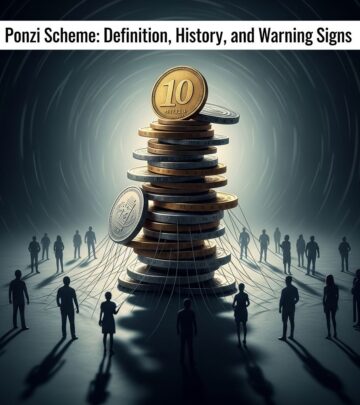
High-Yield Investment Programs (HYIPs) promise extraordinary returns that sound too good to be true—and they usually are. These schemes lure investors with guarantees of 1% daily returns or 100% monthly profits, often claiming to trade in forex, arbitrage, or other complex strategies. In reality, most HYIPs are unsustainable Ponzi or pyramid schemes that rely on new investor money to pay earlier participants. According to financial regulators, over 90% of HYIPs collapse within months, leaving the majority of investors with total losses. This article delves into the mechanics, risks, warning signs, historical examples, and safer alternatives to help you avoid these traps.
What Are High-Yield Investment Programs (HYIPs)?
HYIPs are online investment platforms that advertise exceptionally high returns, typically ranging from 0.5% to 5% per day or 30% to 200% per month. They often present themselves as legitimate funds investing in foreign exchange (forex), sports betting arbitrage, or cryptocurrency trading. Participants are encouraged to deposit money, sometimes as little as $10, and promised exponential growth through compounding.
Unlike traditional investments like stocks or bonds, HYIPs rarely provide verifiable business plans, audited financials, or transparent operations. Websites feature flashy designs, countdown timers for ‘limited-time offers,’ and fake testimonials to build credibility. The appeal lies in the low entry barrier and quick payouts to early investors, creating a false sense of legitimacy.
- Common promises: Daily interest payments, referral bonuses, and ‘guaranteed’ principal return after a set period.
- Typical lifespan: 1-18 months before collapse.
- Global reach: Operated anonymously via offshore servers, targeting retail investors worldwide.
How Do HYIPs Work?
HYIPs operate on a simple but fraudulent model: they use funds from new investors to pay returns to earlier ones, mimicking legitimate investment success. No actual trading or profit-generating activities occur in most cases. Operators spend heavily on marketing through forums, social media, and affiliate programs, where recruiters earn commissions for bringing in new members.
The cycle begins with small initial payouts to build trust. As deposits grow, payouts slow, excuses emerge (e.g., ‘trading losses’ or ‘bank delays’), and eventually, the site vanishes. This Ponzi structure is mathematically doomed; returns exceeding 1-2% monthly cannot be sustained without infinite new money.
| Stage | Description | Investor Impact |
|---|---|---|
| Launch & Hype | Heavy advertising, quick payouts to first investors. | Gains build word-of-mouth. |
| Growth | Mass influx via referrals; promised returns paid. | Most profits realized here. |
| Maturity | Payouts delay; operators cash out. | Late investors wait. |
| Collapse | Site offline, funds gone. | 90%+ lose everything. |
Why Are HYIPs So Risky?
The primary risk is total loss of principal, as HYIPs lack regulatory oversight and insurance. Unlike FDIC-insured savings accounts (up to $250,000), HYIP deposits are unsecured and often held in untraceable cryptocurrencies or offshore accounts. Additional dangers include:
- Illegality: HYIPs violate securities laws in most jurisdictions, classifying them as fraud.
- Liquidity risk: Withdrawals become impossible as schemes falter.
- Opportunity cost: Money tied up in HYIPs misses safer, compounding returns elsewhere.
- Psychological toll: Greed-driven decisions lead to chasing losses in other scams.
High-yield bonds or junk bonds, while risky, offer some recovery potential in downturns via diversification; HYIPs provide none. Economic data shows legitimate high-risk investments like crypto or cyclical stocks have volatile but recoverable histories—HYIPs do not.
Common HYIP Scams and Red Flags
Scammers evolve tactics, but patterns persist. Watch for:
- Guaranteed high returns: Anything over 1% monthly without risk disclosure is fraudulent.
- Anonymous operators: No verifiable company registration or physical address.
- Pressure tactics: ‘Invest now before rates drop’ or limited spots.
- Fake proofs: Screenshots of payouts, stock images of executives, or paid reviews.
- Referral emphasis: Earnings from recruiting signal pyramid schemes.
Other scams mimic HYIPs: ‘prime bank’ trading, offshore mutual funds, or crypto arbitrage bots—all promising outsized gains without substance.
Real-World Examples of HYIP Failures
History is littered with notorious collapses:
- OneCoin (2014-2019): Promised crypto riches; defrauded $4 billion from millions. Founder Ruja Ignatova vanished; still wanted by FBI.
- BitConnect (2016-2018): 1% daily returns via ‘trading bot’; crashed, costing $2 billion. Charged as Ponzi by SEC.
- MMM Global (2011 revival): Nigerian variant bilked 5 million; operator Sergey Mavrodi died amid probes.
These cases illustrate the scale: early entrants profit, but the structure ensures mass ruin. In 2024-2025, similar schemes surged amid crypto hype, with regulators issuing repeated warnings.
Legal and Regulatory Warnings
U.S. SEC, CFTC, and FBI label HYIPs as illegal securities fraud. The SEC states: ‘Promises of high returns with little risk usually indicate fraud.’ Internationally, the FCA (UK) and ASIC (Australia) blacklist HYIPs routinely. Investors rarely recover funds due to anonymous operations. Penalties include criminal charges, but enforcement lags behind digital anonymity.
Alternatives to HYIPs: Safer High-Yield Options
Seek legitimate paths for better returns without extreme risk:
| Option | Avg. Yield (2026) | Risk Level | Protection |
|---|---|---|---|
| HYSA | 4-5% | Low | FDIC up to $250k |
| CDs | 4-5.5% | Low | FDIC |
| S&P 500 Index | 7-10% long-term | Medium | Diversified |
| High-Yield Bonds | 6-8% | High | Some recovery |
| HYIP | 30-100% (promised) | Extreme | None |
High-yield savings accounts (HYSAs) and CDs offer principal protection with competitive APYs, beating inflation without volatility. For growth, index funds historically return ~10% annually with diversification reducing principal risk. Advanced strategies like tactical asset allocation further mitigate market and credit risks.
Frequently Asked Questions (FAQs)
Q: Can any HYIP be legitimate?
A: No. Legitimate high-return investments disclose risks and are regulated; HYIPs evade both.
Q: What if I see payouts—does that mean it’s real?
A: Early payouts are funded by new deposits, a classic Ponzi hallmark. Collapse is inevitable.
Q: How can I recover HYIP losses?
A: Report to SEC/FBI or local authorities, but recovery is rare due to offshore ops. Consult a lawyer.
Q: Are crypto HYIPs safer?
A: No—many like BitConnect used crypto for anonymity, amplifying risks amid volatility.
Q: What’s the best low-risk high-yield option?
A: FDIC-insured HYSAs or CDs from reputable banks, yielding 4-5% with zero principal risk.
References
- High-Risk Investments To Avoid In 2025 — Bankrate. 2024. https://www.bankrate.com/investing/high-risk-investments-to-avoid/
- What Types of Investment Risk Are There? — MoneyRates. 2025. https://www.moneyrates.com/investment/investment-risk.htm
- Low-Risk Investments: Keep Your Money Safe As It Grows — MoneyRates. 2025. https://www.moneyrates.com/investment/low-risk-investments.htm
- The Best High-Yield Savings Accounts for January 2026 — MoneyRates. 2026-01-01. https://www.moneyrates.com/savings/high-yield-savings-accounts.htm
- Advanced Asset Allocation Strategies for 2025 — MoneyRates. 2025. https://www.moneyrates.com/investment/advanced-asset-allocation.htm
Similar Articles








Read full bio of Sneha Tete