Rising Wedge Pattern: Trading Guide & Analysis
Master the rising wedge pattern and identify bearish reversal signals in technical trading analysis.
Understanding the Rising Wedge Pattern in Trading
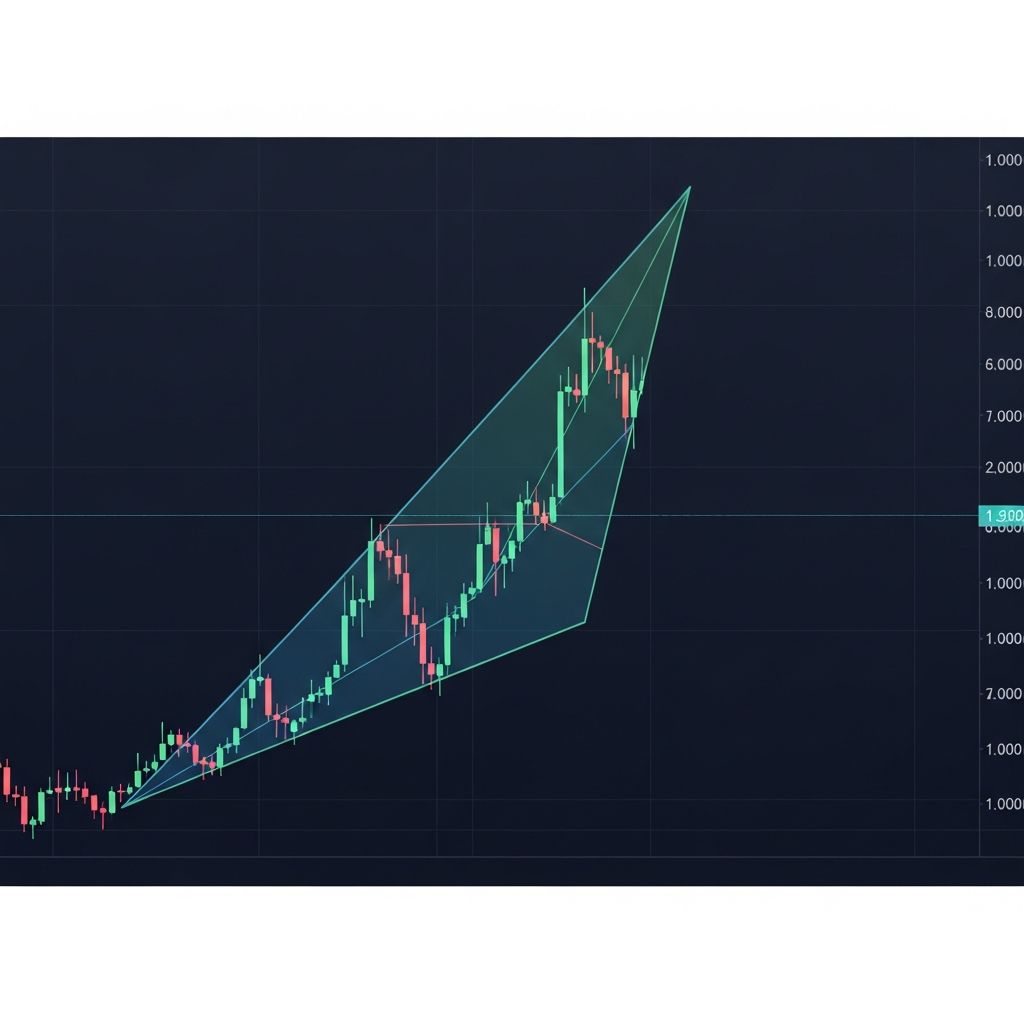
The rising wedge pattern represents one of the most significant technical analysis formations that traders use to identify potential bearish reversals in financial markets. This chart pattern emerges when the price action displays a series of higher highs and higher lows, with both points of resistance and support trending upward while gradually converging toward a single point. The pattern typically develops following a strong uptrend, signaling that bullish momentum is weakening and a potential price decline may occur. Understanding this pattern is crucial for traders seeking to enhance their technical analysis capabilities and make more informed trading decisions.
What Defines a Rising Wedge Pattern?
A rising wedge is characterized by two converging trend lines that slope upward, creating a distinctive triangular formation that narrows as prices advance. The pattern forms when traders observe consistently higher highs and higher lows, with the distance between these two trend lines gradually decreasing. The upper trend line is drawn by connecting at least two significant higher highs, while the lower trend line links multiple higher lows. This convergence creates a visual wedge shape, with both lines angling upward but moving closer together as the pattern develops.
The most critical identifying feature of a rising wedge is the volume behavior accompanying the price action. As the wedge develops, trading volume typically declines, indicating that buying pressure is weakening and market participants are becoming less committed to the uptrend. This reduced conviction among buyers serves as an important confirmation signal that the pattern is forming correctly. Traders who understand this combination of price action and volume dynamics can more effectively recognize rising wedge patterns and position themselves accordingly.
Key Characteristics of the Rising Wedge
Several distinct characteristics define a properly formed rising wedge pattern and distinguish it from other chart formations:
Converging Trend Lines: Both the upper and lower trend lines slope upward at similar angles, creating the characteristic wedge shape. These lines should converge at a future point, often referred to as the apex of the wedge. The convergence indicates that the price range is narrowing and consolidation is occurring.
Higher Highs and Lows: Within the rising wedge, each successive peak is higher than the previous one, and each valley is also higher than its predecessor. This pattern of increasing highs and lows creates the distinctive upward slope of the formation and suggests that although momentum is weakening, the uptrend is still technically intact.
Declining Volume: One of the most important confirming factors of a rising wedge is the decreasing trading volume as the pattern develops. This declining volume indicates that fewer market participants are willing to buy at higher prices, suggesting weakening conviction among bulls and increasing likelihood of reversal.
Decreased Volatility: As the wedge narrows, the range of price movement typically decreases. This period of reduced volatility can be followed by a sudden sharp movement once the price breaks from the pattern, usually in the downward direction.
How to Identify a Rising Wedge Pattern
Successfully identifying a rising wedge pattern requires a systematic approach combining several analytical techniques. Traders should follow these specific steps to confirm the presence of this pattern:
Step 1: Locate an Uptrend Begin by identifying a significant uptrend in the price movement. Rising wedges typically form after extended bullish moves, making this context essential for proper pattern recognition. The uptrend should be clear and well-defined, with prices reaching new highs over an extended period.
Step 2: Draw the Converging Trend Lines Identify the two converging trend lines by connecting at least two higher highs with the upper trend line and two higher lows with the lower trend line. Both lines must slope upward and gradually move closer together. Accurate placement of these lines is critical for proper pattern analysis.
Step 3: Confirm Declining Volume Observe the volume trend as the wedge develops. Volume should generally decline as prices move within the wedge boundaries, confirming that buying pressure is weakening. This volume confirmation is essential for distinguishing a true rising wedge from other consolidation patterns.
Step 4: Monitor for Breakout Signals Watch carefully as the price approaches the apex of the wedge. A confirmed breakout occurs when price closes below the lower trend line with increased volume, signaling the completion of the pattern and the likely beginning of the reversal move.
Rising Wedge vs. Other Chart Patterns
Understanding how the rising wedge compares to other common chart patterns helps traders avoid confusion and make more accurate technical analyses:
| Pattern Type | Shape | Trend Direction | Expected Breakout | Key Indicator |
|---|---|---|---|---|
| Rising Wedge | Converging Upward | Upward | Downward (Bearish) | Higher highs and lows; declining volume |
| Ascending Triangle | Horizontal Upper Line | Upward | Upward (Bullish) | Flat upper line; higher lows; increasing volume |
| Descending Triangle | Horizontal Lower Line | Downward | Downward (Bearish) | Flat lower line; lower highs; increasing volume |
| Flag Pattern | Parallel Lines | Any | Continuation of Prior Trend | Quick move followed by consolidation |
The rising wedge differs fundamentally from these patterns in its expected breakout direction and the underlying market psychology it represents. While ascending triangles often lead to continued upward movement, rising wedges typically resolve with downward breakouts, making them valuable reversal indicators for traders.
What a Rising Wedge Pattern Indicates
The rising wedge pattern carries significant meaning in technical analysis, serving as a bearish reversal indicator that often precedes substantial price declines. When this pattern appears, it suggests that although prices are still moving higher, the momentum driving the uptrend is diminishing. Market participants who were enthusiastically buying at lower prices become hesitant at higher levels, as indicated by the declining volume pattern. This psychological shift—from bullish conviction to cautious hesitation—is what makes the rising wedge such a reliable reversal signal.
Historical price data demonstrates that rising wedges frequently precede sharp selloffs. For example, during the late 2000s, the stock of XYZ Corporation formed a prominent rising wedge pattern over several months following an extended bullish advance. The stock had reached a peak of approximately $75 before the wedge formation began, with volume gradually declining as higher highs and higher lows continued to form. When the pattern eventually broke below the lower trend line, it triggered a significant price decline, validating the predictive power of this technical formation.
Trading the Rising Wedge Pattern
Traders can implement specific strategies when identifying a rising wedge pattern to capitalize on the anticipated bearish reversal:
Identifying Entry Points: The most aggressive traders may enter short positions as soon as the price closes below the lower trend line of the rising wedge. This approach maximizes profit potential but carries higher risk if the pattern fails to complete. More conservative traders might wait for additional confirmation signals, such as a subsequent test of the broken trend line or the establishment of lower highs and lower lows.
Setting Stop Losses: Risk management is crucial when trading rising wedges. Stop losses should typically be placed above the apex of the wedge or above the upper trend line, ensuring that traders exit if the pattern fails and an upside breakout occurs instead. The specific placement depends on individual risk tolerance and position size.
Determining Price Targets: Profit targets can be estimated by measuring the height of the widest part of the wedge at its inception and projecting this distance downward from the breakout point. This measurement-based approach provides traders with reasonable expectations for price movement following the pattern completion.
Rising Wedge vs. Falling Wedge
Understanding the distinction between rising wedges and falling wedges is essential for proper pattern recognition. While rising wedges form during uptrends with higher highs and higher lows that eventually break downward, falling wedges develop during downtrends featuring lower highs and lower lows. Falling wedges typically resolve with upward breakouts and represent bullish reversal signals, making them essentially the inverse of rising wedge patterns. Recognizing which type of wedge is forming helps traders anticipate the likely direction of the eventual breakout.
Common Trading Mistakes with Rising Wedges
Several mistakes can lead traders to misidentify rising wedges or trade them unsuccessfully. Traders should avoid entering positions based on incomplete patterns, as the price may continue higher or consolidate without completing the predicted breakout. Additionally, ignoring volume confirmation can lead to false pattern identification, as rising wedges must show declining volume to be considered valid. Finally, traders should not neglect proper risk management by setting appropriate stop losses and position sizes relative to their account size and risk tolerance.
Frequently Asked Questions About Rising Wedge Patterns
Q: How reliable is the rising wedge pattern as a trading signal?
A: The rising wedge is considered highly reliable among technical analysts, particularly when confirmed by declining volume and proper chart construction. However, like all technical patterns, it is not infallible and should be used in conjunction with other analysis tools and risk management practices.
Q: What timeframe should I use to identify rising wedge patterns?
A: Rising wedges can form on any timeframe, from intraday charts to weekly or monthly charts. The pattern’s significance generally increases on longer timeframes, as patterns that develop over weeks or months typically produce larger price moves than those forming over hours or days.
Q: How long does it typically take for a rising wedge to complete?
A: The duration of rising wedge formation varies considerably, ranging from a few weeks to several months depending on the timeframe being analyzed and the specific asset involved. There is no universal timeframe for pattern completion.
Q: Can rising wedges appear in any market?
A: Yes, rising wedges can form in stocks, forex, commodities, cryptocurrencies, and any other market where price data is available. The pattern is a universal technical formation applicable across different asset classes.
Q: What is the most important confirmation signal for a rising wedge?
A: Declining volume as the pattern develops is the most important confirmation signal for a rising wedge. The combination of declining volume with converging trend lines and higher highs and lows creates a strong bearish reversal setup.
Q: Should I trade every rising wedge pattern I identify?
A: Not every rising wedge should be traded. Traders should apply strict criteria for pattern confirmation, consider the broader market context, and evaluate whether the risk-reward ratio is favorable before initiating trades based on rising wedge patterns.
References
- Rising Wedge Pattern: How to Identify and Trade This Bearish Reversal Signal — ECOS Blog. 2025. https://ecos.am/en/blog/rising-wedge-pattern-how-to-identify-and-trade-this-bearish-reversal-signal/
- Technical Analysis: Chart Patterns and Trend Analysis — U.S. Securities and Exchange Commission (SEC). https://www.sec.gov/investor/pubs/investor-publications
- A Random Walk Down Wall Street — Burton G. Malkiel. Princeton University Press. 2015. Foundational reference on market behavior and technical analysis validation.
Similar Articles








Read full bio of Sneha Tete