Rising Auto Loan Burdens in 2026
Explore how monthly car payments hit record highs in 2026, driven by surging vehicle prices and longer loan terms amid economic pressures.

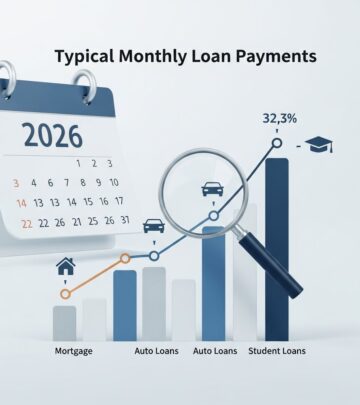
Monthly payments for vehicle financing have surged to unprecedented levels, reflecting broader economic strains on American households. In the fourth quarter of 2025, the average new car payment climbed to $767, marking a 2.8% increase from the previous year, while used car payments averaged $537, up 1.7%. These figures underscore a market where higher vehicle costs, extended loan durations, and shifting interest rates are reshaping how consumers afford transportation.
Current Landscape of Vehicle Financing Costs
The escalation in car payments stems from multiple interconnected factors. New vehicle transaction prices have risen 0.5% year-over-year as per the U.S. Bureau of Labor Statistics consumer price index in March 2026, contrasting with a 3.2% drop for used cars and trucks. Despite the dip in used prices, average loan amounts remain elevated at $43,582 for new vehicles and $27,528 for used ones in Q4 2025, up from prior quarters.
Leasing options have followed suit, with average new vehicle lease payments reaching $613 monthly, a 1.5% rise. This trend highlights how even alternative financing paths are becoming costlier, pushing total ownership expenses higher when factoring in insurance and maintenance surges.
| Vehicle Type | 2024 Avg. Payment | 2025 Avg. Payment | Dollar Increase | Percent Increase |
|---|---|---|---|---|
| New Vehicle | $746 | $767 | $21 | 2.8% |
| Used Vehicle | $528 | $537 | $9 | 1.7% |
| New Vehicle Lease | $604 | $613 | $9 | 1.5% |
Source: Experian State of the Automotive Finance Market, Q4 2024 and Q4 2025
Demographic Impacts: Younger Buyers Hit Hardest
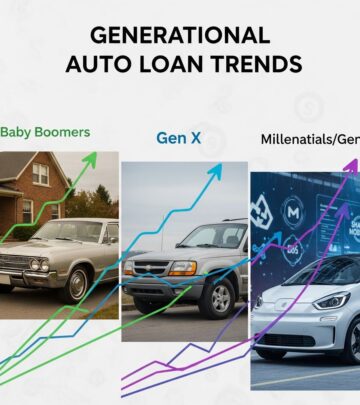
Generational differences amplify the burden. Bank of America Institute data reveals that younger Millennials (ages 30-36) have experienced a nearly 60% rise in average monthly auto loan payments since 2019, with older Millennials and Gen Z seeing over 40% increases. The share of younger Millennial households paying over $500 monthly has jumped by a third, compared to 16% for Baby Boomers.
This disparity arises as entry-level buyers face inflated prices in economy segments and reduced inventory, compounded by life-stage demands like family growth. Electric vehicle demand has softened particularly among Millennials, with new EV loan originations declining sharply due to affordability hurdles and subsidy changes.
- Younger Millennials: ~60% payment increase since 2019
- Gen Z and older Millennials: >40% rise
- Baby Boomers: Smaller proportional shifts
Delinquency Trends Signaling Financial Strain
Auto loan delinquencies are climbing, with 5.2% of outstanding debt at least 90 days late in Q4 2025, a 7.7% year-over-year increase per New York Fed data. While 30-day delinquencies dipped slightly to 7.7%, the severe late-stage metric points to deepening stress.
Subprime borrowers face heightened risks, with delinquency shares rising across credit tiers. For instance, deep subprime (300-500 scores) accounts for 16.01% of new car financing and 21.85% of used. Lenders like banks dominate at 31.79%, followed by credit unions (22.24%) and captive financiers (19.28%).
| Credit Tier | New Cars (%) | Used Cars (%) |
|---|---|---|
| 781-850 (Super Prime) | 4.66% | 7.70% |
| 661-780 (Prime) | 6.27% | 9.98% |
| 601-660 (Nonprime) | 9.57% | 14.49% |
| 501-600 (Subprime) | 13.17% | 19.42% |
| 300-500 (Deep Subprime) | 16.01% | 21.85% |
Source: Experian data via Bankrate
Interest Rates and Loan Term Extensions
Despite some rate relief—reaching lows not seen since 2023—average interest stands at about 8% for new vehicles and 13% for used in January 2026. Buyers are countering high principals by extending terms, with some reaching 90 months, thrusting many into the “$1,000 payment threshold” era where nearly 20% of new car buyers commit to $1,000+ monthly.
New car loans over $1,000 now comprise 18.91% of financing and 8.69% of leases. This strategy lowers immediate outlays but inflates total interest paid, exacerbating long-term debt loads.
Beyond Payments: Total Cost of Ownership Pressures
Car ownership expenses extend far beyond loans. Insurance premiums have skyrocketed, alongside parts and maintenance costs, distorting budgets. Supply constraints in affordable segments and EV policy shifts, like the post-September 30 elimination of certain clean vehicle credits, further complicate choices.
Projections suggest U.S. auto sales could hit 17 million units in 2026, buoyed by incentives, yet affordability remains a drag on volume. Consumers prioritize dealership experiences, with 60-70% willing to switch for better options per Equifax insights.
Strategies for Managing Escalating Costs
To navigate this environment:
- Prioritize credit health: Super prime scores (781+) secure rates as low as available, minimizing payments.
- Shop financing sources: Compare banks, credit unions, and captives for optimal terms.
- Consider used or leasing: Lower averages ($537 vs. $767) offer relief, though delinquencies persist.
- Shorten terms: Avoid 90-month traps to cut total costs.
- Budget holistically: Factor insurance, fuel, and repairs into affordability assessments.
Future Outlook for the Auto Finance Market
Looking ahead, softening new vehicle sales in early 2026 signal caution, with demand stuck in a lower gear amid high costs. Yet, potential sales growth to 17 million units hinges on sustained incentives without eroding profitability. Leaders in auto finance must adapt to persistent high rates, stretched terms, and demographic shifts, particularly supporting younger borrowers.
Overall, the market’s evolution demands informed decision-making. Strong credit and strategic planning remain pivotal to mitigating the bite of record payments.
Frequently Asked Questions (FAQs)
What is the average car payment in 2026?
New cars average $767 monthly in Q4 2025, used $537, and leases $613.
Why are car payments increasing?
Higher vehicle prices, larger loans ($43,582 new avg.), and longer terms drive the rise, despite some rate drops.
Which generations face the biggest payment hikes?
Younger Millennials saw ~60% increases since 2019, far outpacing Boomers.
Are auto loan delinquencies rising?
Yes, 90-day rates hit 5.2% in Q4 2025, up 7.7% YoY.
How can I lower my car payment?
Boost credit score, shop rates, opt for used vehicles, or shorten loan terms.
References
- Average Car Payment and Auto Loan Statistics: 2026 — LendingTree. 2026. https://www.lendingtree.com/auto/debt-statistics/
- Average Car Payments in 2026: What To Expect — Bankrate. 2026. https://www.bankrate.com/loans/auto-loans/average-monthly-car-payment/
- Autos: Stuck in a lower gear? — Bank of America Institute. 2026-02-18. https://institute.bankofamerica.com/content/dam/economic-insights/auto-demand-update.pdf
- What 2026 economic signals mean for auto-finance leaders — Auto Remarketing. 2026. https://www.autoremarketing.com/autofinjournal/commentary-what-2026-economic-signals-mean-for-auto-finance-leaders/
- Auto Insights for 2026 — Equifax. 2026-01. https://assets.equifax.com/marketing/US/assets/auto-insights-infographic-jan-2026.pdf
- US Auto Market Trends 2026: Volume, Affordability, and Opportunity — Morningstar. 2026. https://www.morningstar.com/business/insights/us-auto-market-trends
Similar Articles








Read full bio of medha deb