Right of First Refusal in Contingent Offers
Understand how right of first refusal impacts contingent offers in real estate transactions.
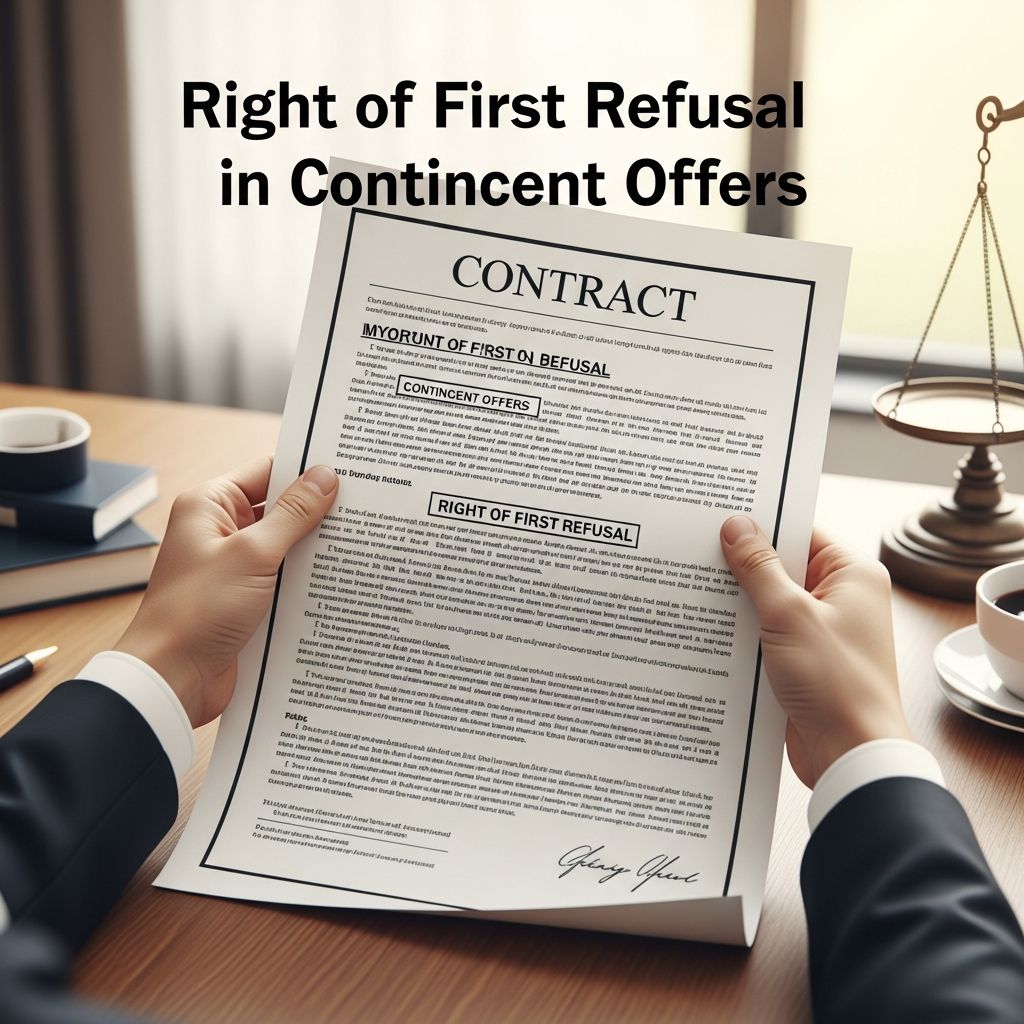
Understanding Right of First Refusal in Contingent Offers
The right of first refusal (ROFR) is a contractual agreement that plays a significant role in real estate transactions, particularly when contingent offers are involved. This legal provision gives a designated party the opportunity to purchase a property before the owner can sell it to another buyer. When combined with contingent offers, the right of first refusal becomes even more complex, requiring both buyers and sellers to understand how these mechanisms interact and what obligations they create.
A contingent offer in real estate is an offer to purchase a property that is conditional upon certain events occurring or conditions being satisfied. Common contingencies include home inspection, appraisal approval, financing approval, and the sale of another property. When a right of first refusal exists alongside a contingent offer, the holder of the ROFR has the opportunity to match or exceed any offers received, provided the contingencies are understood and addressed appropriately.
What Is a Right of First Refusal?
A right of first refusal is a legal provision that grants a specific party priority to purchase a property before the owner can negotiate with other potential buyers. The holder of this right—often a tenant, family member, or business partner—receives the first opportunity to buy the property when the owner decides to sell. This contractual right protects the interests of the holder by ensuring they have a chance to acquire the property under agreed-upon terms.
The ROFR is triggered when the property owner receives a legitimate offer from a third party. At that point, the owner must notify the ROFR holder of the offer details, including the purchase price and terms. The holder then has a specified timeframe—typically ranging from 3 to 10 days—to decide whether to match the offer and proceed with the purchase.
How Right of First Refusal Works with Contingent Offers
The Matching Process
When a right of first refusal exists and a contingent offer is received, the ROFR holder must decide whether to match the offer terms. If the holder chooses to match the offer, they essentially step into the shoes of the third-party buyer, agreeing to purchase the property under the same conditions. This includes accepting any contingencies present in the original offer.
The critical aspect here is that the ROFR holder assumes all contingencies attached to the original offer. If the contingent offer includes conditions such as a satisfactory home inspection, successful financing, or the sale of another property, the ROFR holder must also agree to these same conditions. This means the ROFR holder cannot eliminate contingencies or add new ones that weren’t in the original offer.
Declining the Offer
If the ROFR holder decides not to match the contingent offer or fails to respond within the stipulated timeframe, the property owner is free to proceed with the third-party buyer. The owner can accept the contingent offer and move forward with that transaction. However, the owner cannot negotiate different terms with the third party—they must maintain the same terms they presented to the ROFR holder.
Key Differences Between ROFR and Right of First Offer
It is important to distinguish between right of first refusal and right of first offer (ROFO), as these are distinct concepts that operate differently in real estate transactions.
| Aspect | Right of First Refusal (ROFR) | Right of First Offer (ROFO) |
|---|---|---|
| Timing | Activated after owner receives third-party offer | Activated before any offers are received |
| Mechanism | Holder matches existing offer terms | Holder makes initial offer to negotiate |
| Negotiation | Limited; must match or decline | Full negotiation allowed |
| Owner Control | Owner can shop property to others | Owner cannot market to others initially |
Implications for Buyers
Advantages of Having ROFR
For buyers, a right of first refusal provides significant advantages. Tenants, for example, can negotiate ROFR into their lease agreements, securing the opportunity to purchase the rental property if the landlord decides to sell. This gives tenants time to prepare for potential ownership without the pressure of competing with other buyers immediately.
ROFR also protects buyers who have invested time and resources into a property. If you have been renting a home, conducting maintenance, or otherwise maintaining the property, having a right of first refusal ensures you have the chance to purchase before the owner entertains other offers.
Challenges with Contingent Offers
When ROFR is combined with contingent offers, buyers face unique challenges. A ROFR holder matching a contingent offer must accept the same contingencies as the original buyer. This means if the inspection, appraisal, or financing falls through, the ROFR holder’s purchase may be jeopardized just like any other contingent offer.
Additionally, ROFR holders typically have limited time to make a matching decision—often just 3 to 5 business days. During this compressed timeframe, they must review the contingent offer, consult with their lender and inspector, and make a significant financial commitment. This rapid decision-making can be stressful and may require pre-approval preparation to respond quickly when triggered.
Implications for Sellers
Restricted Marketing Options
Sellers with outstanding right of first refusal agreements face restrictions on their ability to market the property freely. When a seller receives an offer from a third party, they must first notify the ROFR holder before proceeding. This notification period delays the seller’s ability to accept or negotiate with other buyers.
If the ROFR holder chooses to match the offer, the seller’s transaction becomes dependent on the ROFR holder’s contingencies. If those contingencies fail—such as an appraisal coming in low or financing falling through—the seller may lose the sale entirely and must start the marketing process again.
Contractual Obligations
Sellers must meticulously follow the terms of their ROFR agreement. They must provide timely written notice to the ROFR holder, including all material terms of any third-party offer. Failure to properly notify or provide accurate information could result in legal liability, as the ROFR holder could claim the right was violated.
Sellers should also understand that once they accept a matching offer from a ROFR holder, they cannot continue negotiating with other buyers, even if better offers emerge. The ROFR has effectively taken the property off the market during the contingency period.
Common Contingencies in ROFR Scenarios
When ROFR holders match contingent offers, they typically inherit several standard contingencies:
– Home Inspection Contingency: The buyer can have the property inspected and renegotiate or withdraw if significant issues are found.- Appraisal Contingency: The buyer’s financing is contingent on the property appraising for at least the purchase price.- Financing Contingency: The buyer’s offer depends on obtaining mortgage approval at specified terms.- Title Contingency: The buyer can withdraw if title issues are discovered during examination.- Property Sale Contingency: The buyer’s offer depends on successfully selling another property first.
Timeline and Notification Requirements
Proper notification is crucial in ROFR scenarios involving contingent offers. The property owner must provide the ROFR holder with written notice that includes the offer price, financing terms, contingencies, and closing timeline. This notice should specify the timeframe within which the ROFR holder must decide to match the offer—commonly 3 to 10 days.
The ROFR holder should promptly notify the owner of their decision, whether to match, decline, or request clarification. Delayed responses can result in the owner proceeding with other offers or negotiations. Real estate professionals should establish clear communication protocols to ensure all parties understand notification requirements and deadlines.
Best Practices for Managing ROFR with Contingent Offers
For ROFR Holders
– Maintain pre-approval from a lender to respond quickly when ROFR is triggered- Review contingencies carefully and understand what you’re accepting- Have a home inspector on standby if you anticipate exercising your right- Document your matching decision in writing within the specified timeframe- Understand the implications of each contingency on your purchase timeline
For Property Owners
– Clearly define ROFR terms in lease or ownership agreements- Provide complete and accurate information about third-party offers to ROFR holders- Maintain documentation of all notices sent to ROFR holders- Respect the specified response timeframe before proceeding with other buyers- Consult with a real estate attorney to ensure compliance with ROFR obligations
Legal Considerations
Right of first refusal agreements are enforceable contracts, and violations can result in legal liability. Property owners who fail to properly notify ROFR holders or who proceed with sales without following contractual procedures may face lawsuits or be forced to unwind completed transactions. Similarly, ROFR holders who fail to respond within specified timeframes forfeit their rights.
The enforceability of ROFR clauses varies by jurisdiction. Some states impose strict requirements on how these rights must be exercised, while others allow greater flexibility. Real estate professionals should understand the specific requirements in their state and advise clients accordingly.
Frequently Asked Questions
Q: Can a ROFR holder negotiate different terms than the third-party offer?
A: Typically, no. When matching an offer, the ROFR holder must accept the same terms presented to them. However, slight variations may be allowed depending on the specific ROFR agreement language.
Q: What happens if the ROFR holder matches the offer but the contingencies fail?
A: If contingencies fail, the purchase typically cannot proceed. The property returns to the market, and the owner must restart the selling process.
Q: How long does a ROFR typically last?
A: ROFR agreements vary in duration. Tenant ROFRs might last the entire lease term, while partnership agreements might establish indefinite rights or rights lasting for specified years.
Q: Can a ROFR holder waive their right?
A: Yes, ROFR holders can formally waive their rights in writing, allowing the owner to proceed with other buyers without restrictions.
Q: Is ROFR common in residential real estate?
A: ROFR is most common in lease agreements, family property transfers, and business partnerships. It’s less common in standard arm’s-length residential purchases.
Q: What should be included in a ROFR agreement?
A: A comprehensive ROFR agreement should specify the holder, trigger events, notification procedures, response timeframes, matching terms, and any exceptions to the right.
References
- What is a Right of First Refusal? — Peet Law Group. https://www.peetlaw.com/what-is-a-right-of-first-refusal
- Right of First Refusal in Real Estate — Rocket Mortgage. https://www.rocketmortgage.com/learn/right-of-first-refusal
- Right of Refusal – A Legal Guide for PA Real Estate — High Swartz LLP. https://highswartz.com/legal-insights/right-of-refusal-a-legal-guide-for-pa-real-estate/
- A Guide to Rights of First Refusal — California Lawyers Association. https://calawyers.org/real-property-law/a-guide-to-rights-of-first-refusal/
- Right Of First Refusal: What It Is & How It Works — Chase. https://www.chase.com/personal/mortgage/education/owning-a-home/right-of-first-refusal
- Right of First Refusal: A Guide for Real Estate Agents — National Association of Realtors. https://www.nar.realtor/residential-real-estate/right-of-first-refusal
- First Right of Refusal: Essential Clause Explained — fynk. https://fynk.com/en/clauses/first-right-of-refusal/
Similar Articles








Read full bio of medha deb