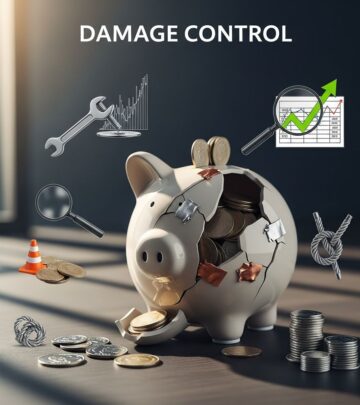
Reviving Failing Investments: Practical Recovery Guide
Transform underperforming assets into profitable opportunities with smart strategies and disciplined decision-making.

Every investor encounters setbacks, but the key to long-term success lies in recognizing when an asset is dragging down your portfolio and taking decisive action to recover. This guide explores proven methods to assess underperformers, exit strategically, and redeploy capital effectively for better returns.
Recognizing Signs of Investment Distress
Investments can falter due to market shifts, poor company performance, or misaligned strategies. Early detection prevents deeper losses. Common indicators include persistent declines relative to benchmarks, negative news impacting fundamentals, or divergence from your risk tolerance.
- Performance Lag: If a holding drops while the broader market rises, it signals specific issues.
- Fundamental Deterioration: Declining revenues, rising debt, or leadership changes often precede prolonged slumps.
- Opportunity Cost: Capital tied up in losers misses gains elsewhere.
Conduct quarterly reviews using tools like portfolio trackers to compare returns against indices such as the S&P 500. Tools from the U.S. Securities and Exchange Commission (SEC) emphasize regular monitoring to align holdings with goals.[10]
Overcoming Psychological Barriers to Action
Emotional hurdles like the sunk cost fallacy—clinging to losses hoping for recovery—amplify damage. Investors often double down, worsening outcomes.
Cognitive biases, including overconfidence and confirmation bias, cloud judgment. Studies from the CFA Institute highlight how these lead to irrational holds during downturns.
| Bias Type | Description | Impact on Investments |
|---|---|---|
| Emotional | Fear of loss or regret | Panic selling or holding too long |
| Cognitive | Overreliance on flawed data | Missing exit signals |
Counter these by maintaining an investment journal. Log rationale for each buy, track performance, and note lessons learned to build discipline.
Strategic Timing for Exiting Positions
Deciding when to sell requires predefined rules to avoid emotion-driven choices. Establish thresholds before entering trades.
- Percentage-Based Stops: Exit if value falls 7-10%, adjustable by volatility. Stop-loss orders automate this.
- Relative Underperformance: Sell if lagging peers by 15% over six months during market uptrends.
- Annual Audits: Reassess entire portfolio yearly against objectives like growth or income.
Avoid market-wide sell-offs; focus on outliers. The Federal Reserve notes that disciplined pruning enhances resilience.[11]
Tax Considerations in Loss Realization
Selling at a loss triggers capital gains tax benefits. Harvest losses to offset gains, reducing liability up to $3,000 annually against ordinary income per IRS rules.
Key Rules:
- Offset unlimited gains dollar-for-dollar.
- Carry forward excess losses indefinitely.
- Wash-sale rule prohibits repurchasing identical securities within 30 days.[12]
Time sales near year-end for optimization, consulting a tax advisor for complex scenarios.
Redirecting Capital for Maximum Impact
Once freed, reinvest thoughtfully. Prioritize high-return, low-risk options aligned with goals.
Embrace Diversification Through ETFs
Exchange-traded funds (ETFs) pool assets for instant diversification at low costs (expense ratios under 0.2%). Vanguard’s S&P 500 ETF (VOO) exemplifies passive strategies outperforming active funds over time.[13]
- Lower volatility than single stocks.
- Trade like stocks for liquidity.
- Sector or thematic ETFs target growth areas.
Strengthen Core Holdings
Add to proven winners. Dollar-cost averaging—investing fixed amounts regularly—mitigates timing risks. Fidelity data shows consistent investing beats timing markets.
Explore Alternative Assets
Balance equities with bonds, REITs, or commodities. A 60/40 stock-bond mix historically weathers volatility per Vanguard research.[13]
| Asset Class | Risk Level | Potential Benefit |
|---|---|---|
| ETFs/Stocks | High | Growth |
| Bonds | Low-Medium | Income/Stability |
| Real Estate | Medium | Inflation Hedge |
Prioritize Debt Elimination
High-interest debt (e.g., 20%+ credit cards) erodes wealth faster than investments grow. Paying it off yields guaranteed returns equivalent to the rate. Federal Reserve data confirms this as a top priority.[11]
Building a Resilient Future Portfolio
Prevention is ideal. Craft a rules-based plan:
- Define Objectives: Retirement, home purchase—set time horizons and risk profiles.
- Asset Allocation: 50-70% equities for long-term, adjust by age.
- Rebalance Quarterly: Sell winners, buy laggards to maintain targets.
- Stay Informed: Use SEC resources for education.[10]
Consider robo-advisors for automation or fiduciary advisors for personalization. Morningstar advises low-cost index funds for most.[14]
Frequently Asked Questions (FAQs)
What if the market crashes—should I sell everything?
No. Broad downturns are temporary; historical S&P 500 recoveries average 4-5 years. Focus on fundamentals.
How much loss is too much?
Depends on tolerance; 5-10% triggers common rules. Customize via backtesting.
Can I average down on losers?
Only if fundamentals remain strong; otherwise, it’s chasing sunk costs.
Are ETFs safe for beginners?
Yes, due to diversification and low fees, outperforming 80% of active funds long-term.[14]
What’s the role of professional advice?
Invaluable for complex portfolios; SEC-registered advisors ensure fiduciary duty.[10]
Long-Term Mindset for Investment Success
Turning bad investments around demands discipline, not despair. Regular reviews, bias awareness, and strategic redeployment compound advantages. Data from leading firms shows diversified, patient portfolios yield superior results over decades.[13][14]
References
- How to Turn a Bad Investment into a Good One — Experian. 2023-05-15. https://www.experian.com/blogs/ask-experian/how-to-turn-bad-investment-to-good-one/
- 3 Ways to Overcome Bad Investment Behaviour — Morningstar Australia. 2023-07-20. https://www.morningstar.com.au/personal-finance/3-ways-to-overcome-bad-investment-behaviour
- Capital Gains and Losses — Internal Revenue Service (IRS). 2025-10-01. https://www.irs.gov/taxtopics/tc409
- Investor Bulletin: Robo-Advisers — U.S. Securities and Exchange Commission (SEC). 2024-03-12. https://www.sec.gov/oiea/investor-alerts-and-bulletins/ib_roboadvisers
- Asset Allocation in a Volatile Market — Federal Reserve Bank of St. Louis. 2025-01-15. https://www.stlouisfed.org/publications/regional-economist/2025/asset-allocation-volatile-markets
- Vanguard ETF Performance Data — Vanguard Group. 2026-01-28. https://investor.vanguard.com/etfs
- 6 Tips to Manage Volatile Markets — Fidelity Investments. 2024-11-05. https://www.fidelity.com/viewpoints/investing-ideas/six-tips
Similar Articles








Read full bio of Sneha Tete