Reverse Repurchase Agreement: Definition and How It Works
Understanding reverse repos: Short-term secured lending for financial institutions and investors.
What Is a Reverse Repurchase Agreement (RRP)?
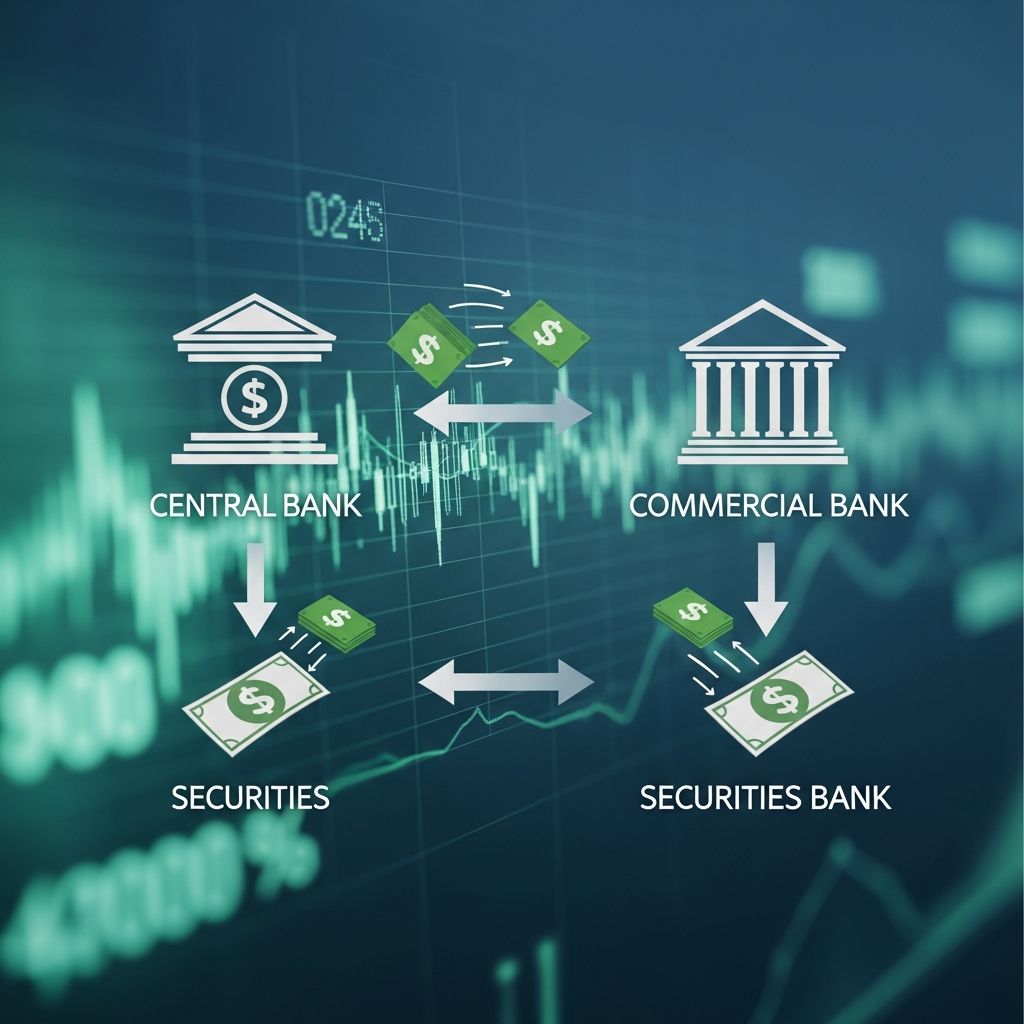
A reverse repurchase agreement, commonly referred to as a reverse repo or RRP, is a financial transaction in which one party sells securities to another party with the explicit agreement to repurchase those same securities at a slightly higher price at a specified future date. This arrangement represents the seller’s side of a repurchase agreement (repo), making it one of the most important short-term financing instruments in modern financial markets.
The reverse repo operates as a collateralized loan, where the difference between the initial sale price and the repurchase price effectively represents the interest paid by the seller to the buyer. These transactions typically occur between financial institutions such as banks, investment firms, and other lending entities, and they are frequently executed on an overnight basis, though they can extend for longer periods depending on market conditions and the parties’ needs.
How Reverse Repurchase Agreements Work
Understanding the mechanics of a reverse repurchase agreement requires recognizing the perspective of both parties involved in the transaction. When a party engages in a reverse repo, it is essentially the seller in the transaction, while the other party functions as the buyer or lender.
In this arrangement, the seller (the party executing the reverse repo) receives an immediate infusion of cash by selling securities to the buyer. The buyer, conversely, provides capital while acquiring securities that serve as collateral for the transaction. The seller agrees to repurchase these same securities at a predetermined future date at a higher price than the original sale price.
The difference between the sale price and the repurchase price, combined with the duration of the transaction, determines the implied interest rate. For example, if a seller sells securities worth $1 million and agrees to repurchase them for $1.01 million the next day, the $10,000 difference represents the cost of borrowing money overnight. This cost-effective structure makes reverse repos particularly attractive for institutions facing temporary liquidity needs.
The Role of Collateral
Collateral plays a fundamental role in reverse repurchase agreements, serving as protection for the buyer against default risk. The securities transferred from the seller to the buyer act as collateral, providing the buyer with a tangible asset they can liquidate if the seller fails to meet their repurchase obligation. This collateral arrangement significantly reduces credit risk in the transaction and allows financial institutions to operate with greater confidence in short-term lending markets.
Short-term RRPs generally carry lower collateral risks compared to long-term arrangements because the holding period is brief, reducing the likelihood of significant asset depreciation. However, as the duration of a reverse repo extends, the potential for the collateral’s value to decline increases, which is why most reverse repo transactions are structured as overnight or very short-term agreements.
Reverse Repo vs. Standard Repurchase Agreements
While reverse repos and repurchase agreements are closely related, they represent opposite sides of the same transaction. Understanding the distinction is crucial for financial professionals and investors.
In a standard repurchase agreement (repo), the buyer purchases securities and agrees to sell them back to the original owner at a higher price. From the buyer’s perspective, this is considered a reverse repo. However, the terminology used depends on which party’s viewpoint is being discussed. A reverse repo from one party’s perspective is simply a repo from the counterparty’s perspective.
Reverse repos differ from buy-sell back agreements in an important way. Buy-sell back agreements legally document each transaction separately, allowing each transaction to stand independently without enforcement of the other transaction. Reverse repos, conversely, are structured as a single unified transaction with interconnected obligations, providing clearer legal certainty for both parties involved.
Types of Reverse Repurchase Agreements
Reverse repurchase agreements can be classified based on their maturity dates and operational characteristics:
Overnight Reverse Repos
Overnight reverse repos are transactions where securities are sold with an agreement to repurchase them the following business day. These are the most common type of reverse repo transactions and are preferred by financial institutions seeking quick access to short-term liquidity without extended commitment periods.
Term Reverse Repos
Term reverse repos extend beyond one day and have specified maturity dates that can range from several days to several months. These arrangements provide parties with more predictable financing structures and allow for longer-term liquidity management.
Open Reverse Repos
Open reverse repos have no specified maturity date and can be terminated by either party at any time. This flexibility makes them useful for managing unexpected liquidity needs, though they may carry slightly higher operational complexity.
Practical Example of a Reverse Repurchase Agreement
Consider a realistic scenario involving two financial institutions to illustrate how reverse repos function in practice. Suppose Bank ABC currently maintains excess cash reserves and seeks opportunities to deploy this capital productively. Meanwhile, Bank XYZ faces a temporary reserve shortfall and requires immediate liquidity to meet regulatory requirements or operational needs.
Bank XYZ initiates a reverse repo agreement with Bank ABC by selling a portfolio of U.S. Treasury securities worth $50 million to Bank ABC at the current market price. Bank ABC, having excess cash, purchases these securities and agrees to sell them back to Bank XYZ at a slightly higher price, say $50.01 million, by the close of the next business day.
From Bank XYZ’s perspective, this is a reverse repo—they have sold securities and agreed to repurchase them. From Bank ABC’s perspective, this is a standard repo—they have purchased securities with the agreement to sell them back. The $10,000 difference represents the interest earned by Bank ABC for providing temporary liquidity to Bank XYZ. Throughout the transaction, the Treasury securities remain available for Bank ABC’s use, providing additional security and potential income through lending or other financial activities.
The Federal Reserve’s Use of Reverse Repos
The Federal Reserve employs reverse repurchase agreements as an important monetary policy tool to manage system liquidity and support the stability of short-term funding markets. When the Federal Reserve conducts reverse repo operations, it sells securities from the System Open Market Account (SOMA) to eligible counterparties, including primary dealers, money market funds, banks, and government-sponsored enterprises, with an agreement to repurchase these securities at a specified future date.
The Fed typically conducts reverse repos when there is excessive liquidity in the financial system that needs to be withdrawn. By selling securities temporarily, the Federal Reserve reduces the amount of cash available in the banking system, helping to manage interest rates and prevent excessive money supply. This operation is crucial during periods of significant government fiscal spending or other events that inject substantial liquidity into financial markets.
The interest rate implied in Federal Reserve reverse repo operations serves as a floor for money market rates. Market participants recognize that the Federal Reserve’s offering rate effectively represents the lowest rate they might earn for short-term lending, influencing broader money market pricing and ensuring orderly functioning of short-term credit markets.
Key Advantages and Considerations
Advantages for Borrowers
Reverse repos provide several important benefits for borrowers facing liquidity constraints. The arrangement offers quick access to capital with minimal delay, making it particularly valuable when institutions face unexpected cash shortfalls. The collateralization feature also tends to produce more favorable interest rates compared to unsecured borrowing because the lender’s risk is substantially reduced through the securities held as collateral. Additionally, reverse repos are typically available on very short notice, making them ideal for day-to-day liquidity management.
Advantages for Lenders
From the lender’s perspective, reverse repos offer attractive returns on excess cash balances while maintaining substantial safety through collateral. Financial institutions can effectively earn interest on idle cash reserves without accepting significant credit risk. The ability to recall securities or terminate transactions provides flexibility in managing their own portfolio and liquidity needs.
Market Considerations
The reverse repo market is sensitive to broader economic conditions, particularly the availability of collateral and the overall level of system liquidity. During periods of financial stress, collateral becomes scarcer and more valuable, potentially increasing the rates demanded in reverse repo transactions. Conversely, during normal market conditions with ample liquidity, reverse repo rates typically remain relatively low and stable.
Eligible Securities and Counterparties
In Federal Reserve reverse repo operations, eligible securities typically include U.S. Treasury securities, which represent the safest and most liquid collateral available in financial markets. Eligible counterparties in Fed operations include primary dealers, money market funds, banks, and government-sponsored enterprises. This carefully curated list ensures that reverse repo operations occur with financially sound institutions capable of meeting their obligations.
In private market reverse repo transactions, eligible securities may be more diverse and can include corporate bonds, mortgage-backed securities, and other fixed-income instruments, depending on the specific agreement between counterparties.
Settlement and Operations
Reverse repo transactions are cleared and settled through specialized platforms and clearing agents. When the Federal Reserve conducts reverse repo operations, transactions are settled on triparty repo platforms with designated clearing banks acting as agents. These clearing banks take custody of securities, value the collateral, and ensure proper settlement of the transaction.
The triparty arrangement provides important protections by having a neutral third party oversee the exchange of cash and securities, ensuring both parties fulfill their obligations. This infrastructure is essential for the efficient functioning of modern reverse repo markets and for minimizing settlement risk.
Reverse Repurchase Agreements vs. Other Financing Options
| Feature | Reverse Repos | Unsecured Loans | Securities Lending |
|---|---|---|---|
| Collateral Required | Yes – Securities | No | Yes – Securities |
| Duration | Typically overnight to short-term | Variable | Variable |
| Interest Rate | Lower (secured) | Higher (unsecured) | Variable based on scarcity |
| Speed of Access | Very Fast | Moderate | Moderate to Fast |
| Credit Risk | Low | High | Moderate |
Market Size and Importance
The reverse repo market represents a substantial portion of the broader repo market, which itself constitutes a crucial component of the global financial system. Trillions of dollars in transactions flow through repo and reverse repo markets daily, demonstrating their vital importance for liquidity provision and short-term funding in financial markets. The market has demonstrated resilience over decades, with sophisticated infrastructure and regulatory oversight ensuring its stability and efficiency.
Risks Associated with Reverse Repos
While reverse repurchase agreements are generally considered low-risk transactions, several risks merit consideration. Counterparty risk exists if the borrower fails to repurchase securities at the agreed-upon price and date. Collateral risk emerges if the value of securities held as collateral declines significantly, though this is typically mitigated through overcollateralization and frequent valuation adjustments. Market risk affects the rates available for reverse repo transactions, which fluctuate based on broader financial conditions.
Frequently Asked Questions
Q: How does a reverse repo differ from a regular repo?
A: A reverse repo represents the seller’s perspective, while a regular repo represents the buyer’s perspective. They are opposite sides of the same transaction—terminology depends on which party’s viewpoint is being discussed.
Q: Why would a financial institution use a reverse repo?
A: Institutions use reverse repos to access quick liquidity, manage temporary cash shortfalls, earn returns on excess cash, and maintain operational efficiency without the expense and complexity of longer-term borrowing arrangements.
Q: What happens if the seller defaults on a reverse repo?
A: If the seller fails to repurchase securities, the buyer (now the owner of the securities) can sell them to a third party to recover their investment, making the collateral crucial protection against default risk.
Q: Are reverse repos only available overnight?
A: While overnight reverse repos are most common, they can extend for longer periods (term repos) or have no specified maturity date (open repos), depending on the needs of the parties involved and market conditions.
Q: How does the Federal Reserve use reverse repos?
A: The Federal Reserve uses reverse repos to manage system liquidity by temporarily reducing the amount of cash available in financial markets, helping to control interest rates and maintain orderly functioning of short-term credit markets.
Conclusion
Reverse repurchase agreements represent essential financial instruments that enable institutions to access short-term liquidity efficiently while maintaining substantial safety through collateralization. Whether used in private markets between financial institutions or as a tool for monetary policy implementation by the Federal Reserve, reverse repos serve critical functions in supporting financial market stability and ensuring smooth operations of the global financial system. Understanding their mechanics, advantages, and applications is fundamental for finance professionals, investors, and policymakers seeking to comprehend modern financial markets.
References
- What Is a Reverse Repurchase Agreement (RRP)? How It Works — Investopedia. https://www.investopedia.com/terms/r/reverserepurchaseagreement.asp
- FAQs: Reverse Repurchase Agreement Operations — Federal Reserve Bank of New York. https://www.newyorkfed.org/markets/rrp_faq
- Understanding Repurchase Agreements — BlackRock. https://www.blackrock.com/cash/en-us/insight-and-education/understanding-repurchase-agreements
- What is the repo market, and why does it matter? — Brookings Institution. https://www.brookings.edu/articles/what-is-the-repo-market-and-why-does-it-matter/
- 1. What is a repo? — ICMA (International Capital Market Association). https://www.icmagroup.org/market-practice-and-regulatory-policy/repo-and-collateral-markets/icma-ercc-publications/frequently-asked-questions-on-repo/1-what-is-a-repo/
Similar Articles








Read full bio of medha deb