Reverse CD Laddering for a Home Down Payment
Learn how reverse CD laddering can help you earn more interest while steadily building a safe down payment for your future home.

Saving for a home down payment often takes several years, which makes the choice of where you keep that money very important. Certificates of deposit (CDs) can offer higher interest than regular savings accounts, and a technique called reverse laddering can help you earn even more while still keeping your timeline on track.
This guide explains how reverse CD laddering works, why it can be useful when saving for a house, how to shop for the best CD rates, and how a traditional CD ladder compares. It follows the same major topics as the original MoneyRates article, but expands the details and adds practical tips and examples.
Why Use CDs for a Home Down Payment?
A home down payment is usually a large sum of money that you cannot afford to risk in the stock market, but you still want it to grow faster than it would in a basic savings account. CDs can be a good fit for this type of goal.
- Safety: Most bank CDs are insured by the Federal Deposit Insurance Corporation (FDIC) up to at least $250,000 per depositor, per insured bank, per ownership category.
- Predictable returns: CDs generally offer a fixed interest rate for a fixed term, so you know how much you will earn if you hold the CD to maturity.
- Discipline: Because withdrawing early can trigger a penalty, CDs can help prevent impulsive spending of your house savings.
However, one challenge is that CD interest rates vary by term. Longer terms often pay more than shorter ones, meaning that how you structure your CDs can significantly affect how much you earn.
Making the Most of CD Rates: The Reverse Ladder
When people talk about CD laddering, they usually mean buying several CDs with different maturity dates so part of your money becomes available regularly. A reverse ladder takes the opposite approach: you buy CDs at different times but plan for them to mature on the same date, when you will need the money for a specific goal, such as a home purchase.
What Is a Reverse CD Ladder?
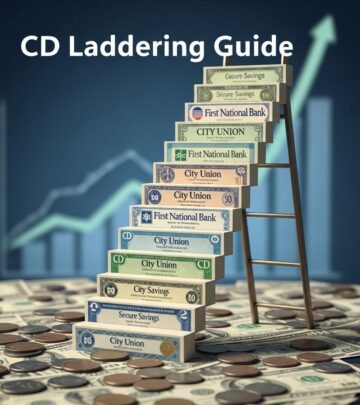
In a traditional CD ladder, you divide a lump sum into several CDs with staggered maturities (for example, 1, 2, 3, 4, and 5 years). As each CD matures, you typically roll it into a new long-term CD, creating an ongoing ladder that balances yield and liquidity.
In a reverse ladder:
- You have a future target date (for example, a planned home purchase in 2–3 years).
- You buy CDs periodically as you save money, but you choose terms so that each CD matures around the same target date.
- By the time the target date arrives, all of your CDs mature together, giving you your full down payment plus interest.
Reverse Ladder Example for a Home Down Payment
Consider a couple, Chris and Tina, who want to save a $32,000 down payment. They are paid every two weeks and can set aside $500 per paycheck. That means they can save about $1,000 per month, reaching their $32,000 goal in a little over 2.5 years if they stay consistent.
Instead of letting their savings sit in a typical savings account, Chris and Tina decide to use reverse laddering:
- They set a target purchase date roughly 30 months in the future.
- They open a CD with a term that lines up with that target date. For example, if the target date is 30 months away, they might open a 30-month CD with their first few thousand dollars.
- As they accumulate more savings, they continue opening new CDs, but each time they choose a term that ends around the same target date.
Over time, they build a collection of CDs with different opening dates but the same maturity date. This is their reverse ladder.
| Deposit Month | Amount Deposited | CD Term | Planned Maturity Date |
|---|---|---|---|
| Month 1 | $4,000 | 30 months | Target home purchase date |
| Month 4 | $3,000 | 26 months | Same target date |
| Month 8 | $3,500 | 22 months | Same target date |
| Month 16 | $5,000 | 14 months | Same target date |
While the numbers and timeline will vary in real life, the principle is the same: they keep directing new savings into CDs designed to mature when they expect to need the full down payment.
Why Reverse Laddering Can Boost Your Yield
Reverse laddering can help you earn more than you might in a liquid account or a very short-term CD:
- For each new CD, you can choose the highest rate available for a term that still lines up with your target date.
- Because the total savings horizon is several years, many of your CDs may be multi-year terms, which often pay more than very short-term CDs.
- The strategy keeps you fully invested: instead of letting large sums sit idle in a low-rate account, you commit them to higher-yielding CDs as soon as you can.
If your goal date is fixed and you do not need the money earlier, this approach can incrementally increase your total interest without taking on market risk.
CD Shopping Tips for Reverse Laddering
To get the most from a reverse CD ladder, you need to pay attention to where and how you open CDs. CD rates and terms vary across banks and credit unions, and the top offers can change frequently.
Compare CD Rates Every Time You Buy
You do not have to use the same bank for every CD in your reverse ladder. In fact, it often makes sense to shop around each time you have enough money to open a new CD.
- Check multiple institutions: Online banks, community banks, and credit unions may all offer different rates, even for the same term.
- Stay aware of national averages: Looking at national averages for CD rates can help you see whether an offer is competitive or not.
- Confirm FDIC or NCUA insurance: Make sure any bank or credit union you use is federally insured to protect your deposits.
Understand Early Withdrawal Penalties
Early withdrawal penalties are an important detail in any CD strategy:
- Most CDs charge a penalty if you withdraw funds before maturity, usually expressed as a certain number of days or months of interest.
- Penalties reduce your return if you need to access your money early, and in some cases may eat into part of your principal if the CD has not earned much interest yet.
- Before opening a CD, read the disclosure to understand the penalty schedule and how it is calculated.
With a down payment goal, you generally want to match your CD maturity date to when you expect to buy the home. But if your situation changes and you need the money sooner, knowing the penalty structure helps you decide which CD to break first, or whether it is worth waiting until maturity.
Match Terms to Your Realistic Timeline
Reverse laddering works best if you have a fairly clear sense of when you will need the money:
- If you know you want to buy a home in roughly two to three years and your employment is stable, you may be comfortable locking in longer-term CDs as part of a reverse ladder.
- If there is a good chance you will need the money earlier (for example, if you might move jobs, relocate, or change plans), shorter-term CDs or a more traditional CD ladder may be safer.
Your comfort with locking funds away should guide how aggressively you use longer-term CDs in your strategy.
CD Ladder Example: Starting at the Long End
The original article also describes a more traditional CD ladder example, which illustrates another way to take advantage of CD rates over time. Instead of reverse laddering toward a single target date, this method builds a ladder that eventually consists entirely of longer-term CDs.
How a Traditional CD Ladder Works
In a standard CD ladder, you divide your money across several CDs with staggered maturities. For example, you might put equal amounts into CDs with terms of 1, 2, 3, 4, and 5 years.
- After the first year, the 1-year CD matures.
- Instead of opening another 1-year CD, you roll the proceeds into a new 5-year CD.
- Now you have CDs maturing in 2, 3, 4, and 5 years, plus a new 5-year CD.
- Each year, as a CD matures, you roll it into a new 5-year CD.
Over time, you end up with a ladder where one CD matures every year, but each CD was originally opened as a 5-year term. This lets you enjoy the generally higher yields of long-term CDs while still having some money become available each year.
Starting at the Long End vs. the Short End
If you do not yet have enough money to build a full five-rung ladder all at once, you might wonder where to start:
- Starting at the short end: You might open a 1-year CD first, then over time add longer terms as you save more.
- Starting at the long end: You could instead open a 5-year CD first, then add new 5-year CDs in later years as you accumulate additional savings.
Because long-term CDs often pay more than short-term CDs, beginning with a 5-year CD can allow you to earn higher interest from the very start. After a few years, if you consistently add new 5-year CDs, you will still end up with a ladder where a CD matures each year—but all of your CDs will have originated at the higher long-term rate.
| Year | Strategy | New CD Opened | Remaining Time to Maturity |
|---|---|---|---|
| Year 1 | Start at long end | One 5-year CD | 5 years |
| Year 2 | Save more | Second 5-year CD | CD 1: 4 years, CD 2: 5 years |
| Year 3–5 | Add new CDs | One new 5-year CD per year | After Year 5, maturities 1–5 years apart |
This structure is particularly useful if your goal is ongoing savings growth with periodic liquidity, rather than a single one-time expense.
Reverse Laddering vs. Traditional Laddering
Reverse laddering and traditional CD laddering use similar tools but solve different problems. Choosing between them depends on your goals, timeline, and need for flexibility.
| Feature | Reverse CD Ladder | Traditional CD Ladder |
|---|---|---|
| Primary goal | Single future expense (e.g., home down payment) | Ongoing savings with regular access to funds |
| Maturity pattern | Many CDs maturing at the same time | CDs maturing at staggered intervals |
| Liquidity | Low before target date, high at target date | Moderate and recurring liquidity each year or term |
| Use of long-term rates | Depends on time until target date | Often designed so all CDs are long term after a few years |
| Best for | Savers with a clear date for a major purchase | Savers who want ongoing access and rate diversification |
For a home down payment, reverse laddering usually aligns more directly with the timing of the purchase. For broader savings goals, a traditional ladder might be more appropriate.
Practical Considerations Before You Start
Before committing to reverse laddering for your home down payment, consider the following practical points:
- Emergency fund: Maintain a separate emergency fund in a liquid account so that you are not forced to break CDs to cover unexpected expenses.
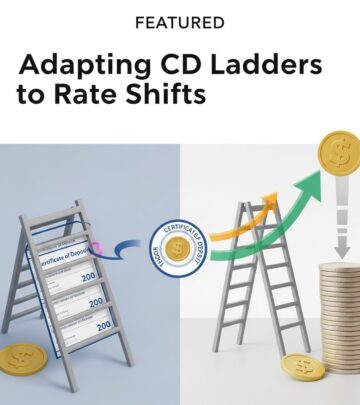
- Interest rate environment: When rates are rising, shorter CDs can give you the flexibility to reinvest at higher rates, while in stable or falling rate environments, locking in longer terms can be more attractive.
- Loan and mortgage timing: Talk with a mortgage lender early in your planning process so that your CD maturity dates roughly match when you expect to apply for a loan and close on a home.
Frequently Asked Questions (FAQs)
Q: Is a reverse CD ladder safe for my down payment savings?
A: A reverse CD ladder can be very safe if you use FDIC- or NCUA-insured institutions and keep your balances within coverage limits. Your main risk is needing to withdraw early and paying penalties, not losing your insured principal.
Q: What if interest rates change while I am building my reverse ladder?
A: As rates change, you simply choose the best available term and rate each time you open a new CD, as long as it still matures near your target date. If rates rise, you may be able to earn more on later CDs; if they fall, earlier CDs may end up being your highest-yielding ones.
Q: How much flexibility do I lose compared with a savings account?
A: CDs are less flexible because of early withdrawal penalties. If you think there is a meaningful chance you will need the money sooner than planned, consider using shorter terms, a smaller reverse ladder, or combining CDs with a high-yield savings account.
Q: Can I mix a reverse ladder with a traditional CD ladder?
A: Yes. Some savers use a reverse ladder for a specific goal like a house, while also maintaining a traditional ladder for general savings. The key is to keep track of which CDs are tied to each goal and when they mature.
Q: When should I not use reverse laddering?
A: If your timeline for buying a home is uncertain, your income is unstable, or you anticipate needing frequent access to your savings, a reverse ladder may feel too restrictive. In those situations, more liquid options or a traditional ladder with shorter maturities may be more appropriate.
References
- Deposit Insurance at a Glance — Federal Deposit Insurance Corporation (FDIC). 2023-06-30. https://www.fdic.gov/resources/deposit-insurance/
- How to Build a CD Ladder to Boost Income — InvestingAnswers. 2023-04-10. https://investinganswers.com/articles/how-cd-ladder-strategy-can-boost-your-income-interest-rates-rise
- Complete Guide to Setting Up a CD Ladder — MoneyRates. 2023-11-15. https://www.moneyrates.com/cd/complete-guide-cd-ladder.htm
- How CD Laddering Can Help You Rebuild Your Personal Savings — Money. 2023-08-01. https://money.com/high-interest-rates-cd-ladder/
- What Falling Interest Rates Could Mean for Your CD Ladder Strategy — MoneyRates. 2023-10-05. https://www.moneyrates.com/cd/what-falling-interest-rates-could-mean-for-your-cd-ladder-strategy.htm
- What to Do When Your CD Matures in a Falling Rate Environment — Bankrate. 2024-02-20. https://www.bankrate.com/banking/cds/what-to-do-when-your-cd-matures-in-a-falling-rate-environment/
Similar Articles








Read full bio of medha deb