Revamp Your Resume For 2026: Step-By-Step Guide
Master the art of resume updating with proven strategies for ATS compatibility, standout achievements, and job-specific tailoring to boost your interview chances.
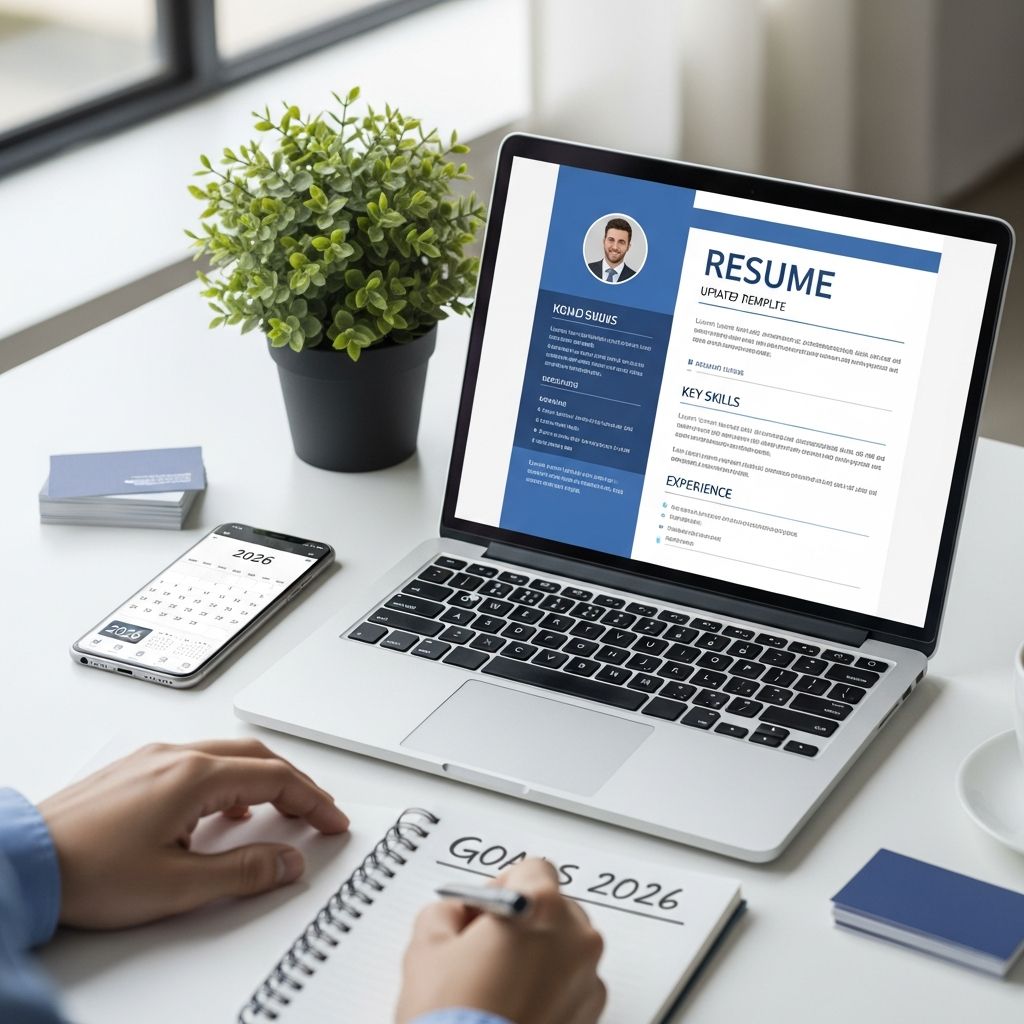
In today’s competitive job landscape, a well-updated resume serves as your primary tool for capturing recruiter attention. With applicant tracking systems (ATS) filtering most applications and hiring managers scanning documents in mere seconds, strategic updates are essential. This guide provides actionable steps to transform your resume into a compelling narrative of your professional value, drawing on current best practices for formatting, content prioritization, and customization.
Assess Your Current Resume’s Strengths and Gaps
Begin by conducting a thorough self-audit of your existing resume. Review each section to identify outdated information, such as roles from over 15 years ago or irrelevant hobbies that dilute your professional focus. Ask key questions: Does it reflect recent accomplishments? Is it aligned with target job descriptions? This evaluation sets the foundation for meaningful changes.
- Scan for expired certifications or skills no longer in demand.
- Check if contact details, including LinkedIn profiles, are current and professional.
- Evaluate length: Aim for one page if you have under 10 years of experience; two pages maximum for seasoned professionals.
Tools like grammar checkers and ATS simulators can reveal hidden issues early, ensuring your document passes initial digital hurdles.
Choose the Optimal Resume Layout for Your Career Stage
Selecting the right format amplifies your strengths while minimizing potential weaknesses. The three primary layouts—chronological, functional, and hybrid—each serve distinct purposes in 2026’s hiring environment.
| Format | Best For | Key Features | Drawbacks |
|---|---|---|---|
| Reverse-Chronological | Steady career progression | Lists experience from newest to oldest; emphasizes timeline | Highlights employment gaps |
| Functional | Career changers or gaps | Prioritizes skills over dates; groups achievements thematically | May raise ATS flags if not structured properly |
| Hybrid/Combination | Versatile professionals | Blends skills summary with chronological history | Requires more space; risk of clutter |
For most applicants, the reverse-chronological format remains dominant due to its ATS compatibility and recruiter familiarity.
Optimize Formatting for ATS and Human Readers
Modern resumes must navigate both automated parsers and human eyes. Prioritize simplicity to ensure seamless ATS processing while maintaining visual appeal.
- Fonts: Stick to standards like Arial, Calibri, or Times New Roman in 10-12 pt sizes. Use 14-16 pt for your name.
- Margins and Spacing: 1-inch margins; single spacing with extra lines between sections for scannability.
- Avoid: Tables, images, headers/footers, or fancy graphics that confuse parsers.
- File Type: Submit as .docx or PDF (check job posting preferences).
Consistent bolding for job titles and italics for company names enhances readability without overwhelming the layout.
Craft a Powerful Professional Snapshot
The opening summary or objective—positioned directly below your contact info—delivers a 3-5 sentence pitch of your value proposition. Tailor it to mirror job description language, quantifying impacts where possible.
Example: “Results-driven marketing specialist with 8+ years optimizing digital campaigns, boosting ROI by 35% at Fortune 500 firms. Expert in SEO, content strategy, and data analytics seeking to drive growth at innovative agencies.”
Avoid generic phrases like “hard worker”; instead, lead with unique differentiators that prompt further reading.
Showcase Impactful Achievements in Your Experience Section
Transform duty lists into achievement stories using the formula: Action Verb + Task + Result + Metric. Limit to 4-6 bullets per role, focusing on the last 10-15 years.
- Developed automated reporting system, reducing processing time by 40% and saving 200 hours annually.
- Led cross-functional team of 12, delivering project 20% under budget and two weeks ahead of schedule.
- Increased customer retention 25% through targeted outreach initiatives.
Strong action verbs like “orchestrated,” “engineered,” or “spearheaded” convey leadership and initiative. For entry-level candidates, emphasize internships, volunteer work, or academic projects similarly.
Build a Targeted Skills Inventory
Dedicate a concise section to 8-12 skills, blending hard (e.g., Python, Salesforce) and soft (e.g., conflict resolution) competencies. Pull keywords directly from the job posting to boost ATS matches—naturally, without stuffing.
- Technical: Adobe Suite, SQL, Google Analytics
- Soft: Agile Methodology, Stakeholder Management
- Certifications: PMP, Google Ads Certified
Group into categories if space allows, prioritizing those mentioned 3+ times in the job description.
Elevate Your Education and Additional Sections
Place education below experience unless you’re a recent graduate. Include degree, institution, graduation year (omit if 10+ years ago), and relevant honors. For non-traditional paths, highlight bootcamps or online credentials.
Incorporate optional sections like “Professional Development” for recent courses or “Publications” for thought leadership, but only if directly relevant.
Master Job-Specific Customization Techniques
Generic resumes rarely succeed; customization is non-negotiable. Spend 15-20 minutes per application dissecting the job ad for recurring themes.
- Copy-paste the description into a word cloud tool to spot top keywords.
- Rearrange bullets to lead with matching experiences.
- Swap in synonymous terminology (e.g., “team lead” for “project manager”).
This targeted approach can double interview rates by demonstrating fit.
Proofread, Test, and Iterate Relentlessly
Errors undermine credibility. Proofread multiple times: once for content, once for format, and aloud for flow. Enlist a peer review and run through free ATS checkers.
Track application outcomes to refine further—e.g., if skills sections underperform, amplify them in future versions.
Common Resume Pitfalls to Sidestep
Avoid these frequent mistakes that derail applications:
- Overly lengthy documents exceeding two pages.
- Listing responsibilities without outcomes.
- Personal details like age, photo, or marital status (U.S. standard).
- Inconsistent date formats or tense usage.
FAQs
What makes a resume ATS-friendly in 2026?
Use standard fonts, simple headings, bullet points, and job-specific keywords in context. Avoid images, tables, or non-standard layouts.
How long should my resume be?
One page for most; two pages for 10+ years of experience. Prioritize relevance over completeness.
Should I include a photo or references?
No photos in U.S. applications to prevent bias. Omit references; note “available upon request” if space-constrained.
How do I handle employment gaps?
Use functional format or bridge with freelance/volunteer work. Focus on skills gained during the period.
Is a cover letter still necessary?
Yes, when specified. It personalizes your story beyond the resume.
References
- How to Write a Resume in 2026 (Step-By-Step Guide) — MyPerfectResume. 2026. https://www.myperfectresume.com/career-center/resumes/how-to/write
- How to Refresh Your Resume for 2026: An ATS-Friendly Guide — Sedona Staffing. 2026. https://www.sedonastaffing.com/how-to-refresh-your-resume-for-2026-an-ats-friendly-guide-that-actually-works
- 16 Top Resume Tips to Help You Land a Job in 2026 — Coursera. 2026. https://www.coursera.org/articles/resume-tips
- The best resume fonts, sizes, and formatting tips (2026) — Microsoft Word Cloud. 2026. https://word.cloud.microsoft/create/en/blog/best-resume-fonts/
- What’s the best resume format in 2026? — Johnson & Johnson Careers. 2026. https://www.careers.jnj.com/en/employee-stories/career-tips/what-s-the-best-resume-format-in-2026/
Similar Articles








Read full bio of Sneha Tete