Retirement Tax Bomb: 5 Proven Strategies To Defuse It
Discover the hidden tax risks in your retirement savings and learn proven strategies to protect your nest egg from unexpected tax burdens.

The retirement tax bomb represents a significant yet often overlooked threat to retirees’ financial security. It occurs when substantial withdrawals from tax-deferred retirement accounts, combined with other income sources, result in unexpectedly high tax liabilities that erode savings faster than anticipated. This phenomenon affects diligent savers who have built large balances in traditional 401(k)s and IRAs, only to face a surge in taxable income during their golden years.
Understanding the Mechanics of the Tax Bomb
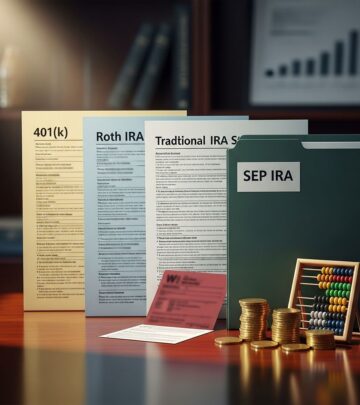
Tax-deferred accounts like traditional IRAs and 401(k)s provide upfront tax advantages: contributions reduce taxable income in working years, and investments grow without annual taxes. However, this deferral creates a liability that explodes in retirement when funds must be withdrawn as ordinary income.
Required Minimum Distributions (RMDs) are the primary trigger. Starting at age 73 (as of recent IRS rules), account owners must withdraw a percentage based on life expectancy, with penalties up to 25% for noncompliance (reduced from 50% in prior years). These amounts grow annually as balances appreciate and divisors shrink, pushing retirees into higher brackets.
- Large account balances amplify RMDs: A $3.5 million portfolio at age 73 might require $132,000 initially, escalating to nearly $200,000 by age 80 assuming 6% growth.
- Multiple accounts compound the issue: Combined RMDs from several plans create a torrent of taxable income.
- Loss of deductions: Retirees often claim fewer itemized deductions, increasing the effective tax rate on withdrawals.
Compounding Factors That Ignite the Bomb
Beyond RMDs, additional income streams pile onto the tax burden, creating a perfect storm.
| Income Source | Tax Impact | Example Thresholds (2026, Single Filer) |
|---|---|---|
| Social Security Benefits | Up to 85% taxable if combined income exceeds limits | $25,000-$34,000 (50% taxable); over $34,000 (85%) |
| Investment Income | Dividends, interest, capital gains added to AGI | Long-term gains at 0% up to $47,025 |
| Pensions/Annuities | Fully taxable as ordinary income | N/A |
| Part-Time Earnings | Counts toward provisional income | Phases out other benefits |
High combined income also triggers Income-Related Monthly Adjustment Amounts (IRMAA) for Medicare Parts B and D. For 2026, singles with Modified AGI over $106,000 face premiums rising to $395+ monthly, plus prescription surcharges.
Real-World Scenarios: When the Bomb Detonates
Consider a couple retiring with $4 million in pre-tax accounts, $100,000 in pensions, and maximized Social Security. Their first RMD year could generate $150,000+ in withdrawals alone, plus $50,000 in other income, landing them in the 24% bracket with partial Social Security taxation and base Medicare hikes.
By age 85, RMDs might double, propelling them into 32% territory, IRMAA brackets, and full Social Security taxation. Future heirs inherit the nightmare: non-spousal beneficiaries must empty inherited IRAs within 10 years, potentially slamming their own tax brackets.
Proactive Strategies to Defuse the Threat
Forward-thinking planning can neutralize much of the risk. Key tactics include:
- Roth Conversions: Shift pre-tax funds to Roth IRAs during low-income years (e.g., pre-Social Security). Pay taxes now at lower rates for tax-free growth and withdrawals later. Ideal in the 5-10 years post-retirement before RMDs.
- Bracket Management: Withdraw just enough to fill lower tax brackets annually, blending taxable and Roth sources.
- Qualified Charitable Distributions (QCDs): For those 70½+, direct up to $105,000 (2026 limit) from IRA to charity, satisfying RMDs tax-free.
- Tax-Efficient Asset Location: Hold growth assets in Roths, income producers in taxable accounts.
- Delay Social Security: Wait until 70 for 8% annual credits, using taxable accounts interim to enable conversions.
Projecting Your Personal Tax Trajectory
Use IRS Uniform Lifetime Tables to estimate RMDs: divide prior year-end balance by the factor for your age. Online calculators from official sources like IRS.gov refine projections accounting for growth rates and multiple accounts.
For instance:
- Age 73 factor: 27.4
- Age 80 factor: 20.2
- Age 90 factor: 11.2
Factor in inflation-adjusted brackets (projected 2026 single filer: 22% up to $110,000; 24% to $220,000) and state taxes for a full picture.
Navigating Policy Changes and Uncertainties
Tax laws evolve; the TCJA expires end-2025, potentially hiking rates. Anticipate higher brackets by accelerating conversions now. Medicare IRMAA uses AGI from two years prior, so plan withdrawals accordingly.
Frequently Asked Questions
What age do RMDs begin?
RMDs start at age 73 for those born 1951-1959, age 75 for 1960+.
Can I avoid RMDs entirely?
Continue working past 73 if still employed by the plan sponsor, but IRA RMDs still apply. Roth IRAs have no lifetime RMDs.
Is the tax bomb only for millionaires?
No—even $1 million portfolios can generate $40,000+ RMDs at 73, taxing 12-22% brackets amid other income.
How much should I convert to Roth yearly?
Target filling the 12% or 22% bracket without triggering IRMAA or phaseouts; consult a tax advisor for personalization.
What about inherited accounts?
Non-spouses must withdraw fully within 10 years post-death, risking bracket creep.
Building a Tax-Resilient Retirement Plan
Integrate tax planning from day one: diversify account types (Roth, taxable brokerage), model scenarios annually, and review post-life events. Engage CPAs or CFPs specializing in retirement transitions for Monte Carlo simulations incorporating tax variables.
Ultimately, the retirement tax bomb is defusable with discipline and foresight. Super-savers who ignore it risk surrendering 20-40% of nest eggs to taxes; those who act preserve wealth for legacy and lifestyle.
References
- What Is The Retirement Tax Bomb? — CenterPoint Financial Management. 2023. https://www.centerpointfm.com/blog/the-retirement-tax-bomb
- What Is a Retirement Tax Bomb? — Experian. 2023. https://www.experian.com/blogs/ask-experian/what-is-retirement-tax-bomb/
- Retirement Tax Bombs: Roth Conversions May Cut the Blue Wire — Kiplinger. 2023. https://www.kiplinger.com/retirement/roth-iras/retirement-tax-bombs-how-roth-conversions-may-cut-the-blue-wire
- Avoiding a Tax Bomb in Retirement — Larson Wealth Management. 2023. https://www.larsonwealthmgt.com/blog-01/avoiding-tax-bomb-retirement
- Retirement Savings or a Future Tax Bomb? — Keystone CPAs. 2025-09-07. https://keystone.cpa/2025/09/07/retirement-savings-or-a-future-tax-bomb/
Similar Articles








Read full bio of Sneha Tete