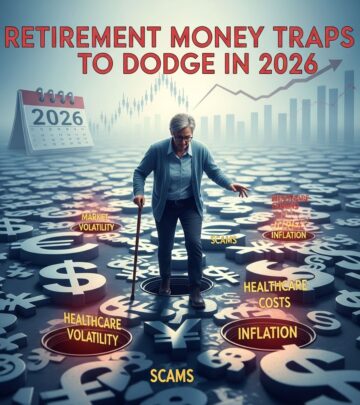
Retirement Savings Pitfalls to Dodge
Discover critical errors in retirement planning that can derail your future and learn proven strategies to build lasting financial security.

Building a robust retirement nest egg demands foresight, discipline, and awareness of frequent errors that undermine long-term goals. Many individuals approach this phase with good intentions but stumble into traps that erode their progress. This guide outlines key missteps in retirement preparation, drawing from established financial principles to offer actionable remedies. By recognizing these issues early, you can adjust your approach for greater stability.
Why Proactive Planning Matters Now
Retirement planning extends beyond mere saving; it involves projecting future needs against current habits. Inflation, healthcare expenses, and longevity risks amplify the stakes. Experts emphasize starting with realistic projections: aim to replace about 75% of pre-retirement income through diversified sources. Without this foundation, even diligent savers risk shortfalls. Life expectancy now often exceeds 30 years post-retirement, necessitating strategies that sustain funds over decades.
Delaying Your Savings Journey
One of the most damaging errors is postponing contributions. Time leverages compound interest powerfully; early inaction creates insurmountable gaps. For instance, beginning at age 25 versus 35 can double outcomes due to exponential growth. Young professionals often prioritize debts or lifestyle, yet low-interest obligations should not halt retirement inputs. Prioritize high-interest debt above 6% first, then allocate raises toward savings until reaching 15% of income.
- Start immediately: Even modest amounts grow substantially over decades.
- Automate contributions: Set payroll deductions to enforce consistency.
- Scale with income: Direct bonuses and promotions straight to accounts.
Overlooking this compounds into vulnerability, as late starters must save disproportionately more to catch up.
Overlooking Free Employer Perks
Employer matches represent ‘free money’ yet many fail to claim them fully. Plans like 401(k)s often match 50% up to 6% of salary, effectively boosting returns instantly. Missing this halves potential growth. Worse, maxing contributions too early risks forgoing matches if calculated per-paycheck without true-up provisions. Always verify plan details during enrollment.
| Contribution Level | Typical Match | Effective Boost |
|---|---|---|
| 3% of salary | 50% match | 1.5% extra |
| 6% of salary | 100% match | 6% extra |
| Max annual limit | Varies | Plan-dependent |
Contribute enough to capture full matches annually. This simple step can accelerate savings by 50% or more initially.
Underfunding Your Future Needs
Saving insufficiently leaves retirees exposed to escalating costs. Benchmarks provide guidance: target 3x salary by 45, 7x by 55, and 11x by 65. Yet averages fall short, with many under 15% annual savings including matches. Inflation erodes purchasing power, while healthcare can consume 20-30% of budgets. Reset budgets by curbing discretionary spends to redirect funds.
- Aim for 15%: Includes employer inputs for balanced progress.
- Use auto-escalation: Increase contributions yearly with raises.
- Track milestones: Annual reviews against age-based targets.
Without adequate padding, essentials like housing and medical care strain limited incomes.
Mismanaging Investment Choices
Inappropriate allocations sabotage growth. Younger savers should favor stocks for higher returns, shifting to bonds nearer retirement to mitigate volatility. Age-based models suggest 90% equities at 30, dropping to 50% at 65. Target-date funds automate this glide path, simplifying management. Avoid cash-heavy portfolios, as they lag inflation.
Professionally managed options reduce errors for those lacking time or expertise. Diversification across assets prevents overexposure to market swings.
Tapping Funds Prematurely
Early withdrawals incur taxes and 10% penalties before 59.5, plus lost compounding. Loans from 401(k)s risk job-loss repayment demands, amplifying losses. About 33% dip into savings pre-retirement, jeopardizing security. Build emergency funds covering 3-6 months expenses instead.
- Maintain liquidity: $1,000 starter fund, then expand.
- Seek alternatives: Low-interest credit or side income over raids.
- Preserve growth: Tax-deferred status multiplies untouched balances.
Excessive Dependence on Government Benefits
Social Security replaces only 40% of income on average, around $1,979 monthly. Claiming early reduces lifelong payouts; delaying to 70 maximizes benefits. It cannot solo fund retirement amid rising costs. Integrate with personal savings for comprehensive coverage.
Additional Traps in Later Stages
Retirees often face overspending on conveniences, home upgrades via withdrawals, or scams. Annual healthcare reviews, budget segregation, and verification protocols safeguard assets. Formal plans counter underestimation of longevity expenses.
Strategies for Robust Preparation
Counter pitfalls with holistic tactics:
- Project needs accounting for 30+ year horizons.
- Leverage tools like auto-enroll and target funds.
- Consult advisors for personalized adjustments.
Discipline trumps complexity; consistent execution yields security.
Frequently Asked Questions
How much should I save annually?
Target 15% of income, including matches, scaling to benchmarks like 11x salary by 65.
Are target-date funds suitable?
Yes, they adjust risk automatically based on retirement timeline.
What if I start late?
Increase contributions aggressively and optimize investments for catch-up growth.
Can I afford early withdrawals?
Rarely; penalties and lost growth outweigh short-term relief.
Is Social Security enough?
No, it covers ~40%; supplement with savings.
Key Takeaways Table
| Mistake | Impact | Solution |
|---|---|---|
| Starting late | Missed compounding | Automate now |
| Skipping matches | Free money lost | Contribute minimum |
| Under-saving | Shortfalls | 15% goal |
| Poor investments | Volatility risk | Age-based allocation |
| Early taps | Penalties/growth loss | Emergency fund |
References
- Six common retirement saving mistakes and how to avoid them — T. Rowe Price. 2023. https://www.troweprice.com/en/us/insights/six-common-retirement-savings-mistakes-and-how-to-avoid-them
- Retirement savings mistakes young people make — Fidelity. 2024. https://www.fidelity.com/learning-center/smart-money/common-retirement-mistakes
- How Retirees Are Sometimes Wasting Their Money and How To Avoid in 2026 — Mutual Assurance Society. 2025-12-15. https://www.mutual-assurance.com/post/how-retirees-are-sometimes-wasting-their-money-and-how-to-avoid-repeating-these-mistakes-in-2026
- Suze Orman Reveals the Biggest Retirement Traps to Avoid — 24/7 Wall St. 2026-01-13. https://247wallst.com/investing/2026/01/13/suze-orman-reveals-the-biggest-retirement-traps-to-avoid/
- Social Security Mistakes to Avoid in 2026 — Farther. 2026. https://www.farther.com/foundations/social-security-mistakes-to-avoid-in-2026
Similar Articles








Read full bio of Sneha Tete