Retirement Savings Goals by 60
Discover realistic savings targets for age 60, catch-up strategies, and how to build a secure retirement nest egg despite starting late.

Reaching age 60 marks a pivotal moment in financial planning, where accumulated savings should ideally support a transition into retirement. Financial guidelines recommend having 6 to 11 times your annual salary saved by this age, depending on retirement timeline and income sources like Social Security.
Understanding Savings Benchmarks Across Life Stages
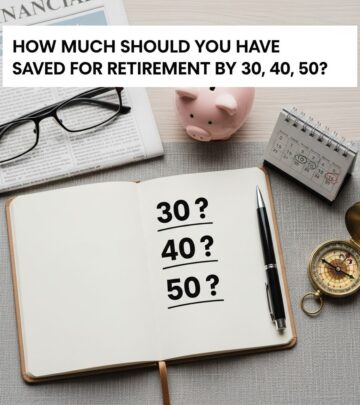
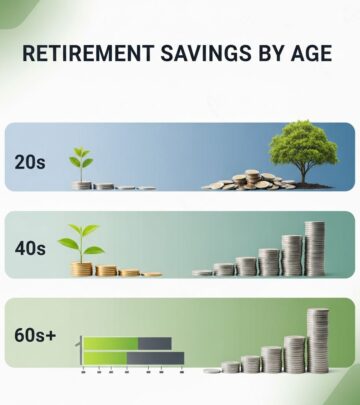
Retirement preparation follows progressive milestones to ensure steady growth. These targets adjust for career progression, compounding returns, and life changes, providing clear checkpoints from early adulthood onward.
| Age | Savings Multiple of Annual Salary | Key Focus |
|---|---|---|
| 30 | 0.5x – 1x | Establish habits, capture employer matches |
| 35 | 1x – 1.5x | Increase contributions with raises |
| 40 | 1.5x – 3x | Tax diversification, family balance |
| 45 | 2.5x – 4x | Maximize plans, review allocations |
| 50 | 3.5x – 6x | Begin catch-up contributions |
| 55 | 4.5x – 8x | Optimize for growth and preservation |
| 60 | 6x – 11x | Prepare withdrawals, Social Security bridge |
| 65 | 7.5x – 13.5x | Full retirement readiness |
These ranges account for varied incomes and circumstances; for a $75,000 earner, the age 60 target equates to $450,000 to $825,000.
Average Retirement Balances in Your 60s
Real-world data reveals many fall short of ideals. For ages 55-64, median total savings stand at $473,500, comprising $185,000 in retirement accounts, $350,000 home equity, and $67,700 other assets. Averages skew higher at $1,185,486 for those in their 60s, with medians at $536,748, highlighting disparity from high earners.
- Median retirement accounts (55-64): $185,000
- Average 60s balances: Over $1 million for some, but medians half that
- Factors influencing: Home equity boosts totals significantly
If below targets, focus shifts to acceleration rather than discouragement, as catch-up opportunities abound.
Why Age 60 Savings Matter for Retirement Security
By 60, savings must sustain potentially 25-30 years, covering healthcare, leisure, and inflation. The 4% safe withdrawal rule posits withdrawing 4% annually adjusts for market volatility; for $60,000 yearly needs, $1.5 million is required ($60,000 / 0.04). Early retirees need more to bridge to Social Security at 62 or full benefits at 67.
Healthcare emerges as a top expense; Medicare starts at 65, leaving a gap. Housing decisions—downsizing or staying—impact liquidity. Lifestyle choices, from travel to hobbies, refine exact needs, but benchmarks provide starting points.
2026 Catch-Up Contribution Limits: Boosting Your Nest Egg
Those 50+ gain enhanced limits, supercharged for ages 60-63. Maximize these to close gaps swiftly.
| Plan Type | Age 50+ Limit (2026) | Age 60-63 Enhanced |
|---|---|---|
| 401(k), 403(b), 457(b), TSP | $32,500 | $35,750 |
| SIMPLE Plans, SEP IRA | $21,000 | $22,250 |
| Traditional/Roth IRA | $8,600 | $8,600 |
| HSA (if eligible) | $5,400 | $5,400 |
A 55-year-old earning $150,000 could save $61,500 yearly across accounts, hitting 41% rate. Prioritize employer matches first, then IRAs and HSAs for triple tax advantages.
Strategies to Accelerate Savings in Your 50s and Early 60s
If trailing benchmarks, implement these proven tactics:
- Automate increases: Raise contributions 1-2% annually with pay hikes.
- Roth conversions: Shift traditional funds to Roth for tax-free growth, managing brackets.
- Tax-loss harvesting: Offset gains to lower taxes, freeing reinvestment cash.
- Asset reallocation: Shift to 60-70% stocks, 30-40% bonds for balanced risk.
- Windfalls utilization: Direct bonuses, inheritances directly to retirement accounts.
- Expense audit: Trim non-essentials; relocate for lower costs if feasible.
Example: 55-year-old at $150,000 income maxes 401(k) ($35,750 catch-up), HSA ($5,400), backdoor Roth ($8,600), taxable brokerage ($15,000)—totaling substantial annual input.
Projecting Income Streams Beyond Personal Savings
Savings aren’t solo; layer in Social Security, pensions, rentals. Use SSA.gov calculators for personalized estimates—average benefits replace 40% pre-retirement income. Delay claiming to 70 boosts payments 8% yearly past full retirement age.
Pensions, if any, provide stability. Investments yield 4-7% long-term returns. Home equity via reverse mortgage or sale funds longevity. A holistic budget—projecting 70-80% pre-retirement spending—ensures coverage.
Investment Allocation Adjustments Approaching 60
Glide paths reduce volatility: Pre-60s favor growth (70% equities), transitioning to preservation. Target-date funds automate this, rebalancing yearly. Diversify across stocks, bonds, internationals; low-cost index funds minimize fees eroding gains.
Common Pitfalls and How to Avoid Them
Many withdraw early from 401(k)s, incurring penalties. Underestimate inflation (3% erodes purchasing power). Ignore healthcare; plan HSAs early. Market timing fails—stay invested. Regularly review with advisors for personalized tweaks.
Frequently Asked Questions
How much should I have saved by 60 if earning $100,000?
Aim for $600,000-$1.1 million (6-11x salary), adjusting for other income. Use 4% rule for expense-based needs.
Can I catch up if behind at 60?
Yes, via super catch-ups ($35,750 for 401(k) ages 60-63), Roth ladders, and working longer. Many rebound effectively.
What’s the impact of retiring at 60 vs. 67?
Earlier requires 25-40% savings rates, larger nest eggs to bridge Social Security gap—potentially 8-10x salary.
Does home equity count toward savings?
Yes, bolstering medians; consider liquidity options like downsizing.
How does the 4% rule apply?
Withdraw 4% first year, adjust for inflation; supports $1.5M for $60K needs over 30 years.
Action Plan: Next Steps for Age 60 Readiness
1. Calculate net worth: Assets minus debts.
2. Run Social Security projections.
3. Maximize 2026 contributions.
4. Consult fiduciary advisor.
5. Stress-test portfolio with Monte Carlo simulations.
6. Draft spending plan covering healthcare, leisure.
Consistent action transforms shortfalls into security. Even partial benchmark achievement, paired with disciplined spending, yields fulfilling retirements.
References
- How much should you have saved for retirement in your 60s? — Thrivent. 2026. https://www.thrivent.com/insights/retirement-planning/how-much-should-you-have-saved-for-retirement-in-your-60s
- How Much Money Do You Need for Retirement? Complete 2026 … — Domain Money. 2026. https://www.domainmoney.com/post/saving-for-retirement-at-age-60-what-you-need-to-know
- Retirement Savings Goals by Age — American Century Investments. N/A. https://www.americancentury.com/insights/retirement-savings-every-age/
- You’re age 35, 50, or 60: How much should you have by now — T. Rowe Price. N/A. https://www.troweprice.com/personal-investing/resources/insights/youre-age-35-50-or-60-how-much-should-you-have-by-now.html
- How Much Do I Need to Retire at 60? — Pearl Wealth Group. N/A. https://pearlwealthgroup.com/how-much-do-i-need-to-retire-at-60-2/
Similar Articles








Read full bio of Sneha Tete