Retirement Savings Gap: $823K Needed vs Reality
Discover why Americans believe $823K is essential for comfortable retirement in 2026, yet most fall dramatically short of this goal.

Planning for retirement requires confronting hard numbers. Current retirees estimate that $823,800 in savings and investments is necessary for new retirees to live comfortably in 2026, a sharp increase from $580,310 the previous year. Yet, the average retiree holds only $288,700, revealing a massive shortfall.
The Growing Expectation for Retirement Funds
Expectations for retirement nest eggs have surged. In a survey of 1,000 retired Americans, respondents pegged the ideal amount at $823,800 for 2026, up nearly 42% from prior estimates. This reflects rising costs in healthcare, housing, and daily living. Forty percent even believe $1 million or more is required.
Women face a steeper challenge, averaging $261,763 in savings compared to $330,305 for men—a $68,542 difference. This gender gap underscores broader disparities in earnings and saving habits over lifetimes.
Current Savings: A Sobering Snapshot
Reality lags far behind aspirations. Retirees average $288,700 saved, down slightly from $308,040 last year and just 35% of the perceived need. Only 23% had $500,000 or more upon retiring. For working Americans aged 21-64, the median drops to a mere $955 across all, including those with no savings; savers fare better at $40,000 median.
Average figures paint a rosier but skewed picture at $532,291 overall or $87,000 per Federal Reserve data, distorted by high earners. Medians offer truer insights: $65,000 nationally.
State-by-State Disparities in Preparation
Savings vary widely by location, influenced by income, cost of living, and account adoption. Massachusetts leads with $150,000 average and 74.8% using tax-advantaged accounts. Mississippi trails at $35,000, with only 41.8% participation.
| State | Median Savings | Median Income | Account Prevalence |
|---|---|---|---|
| Massachusetts | $150,000 | $85,000+ | 74.8% |
| Washington | $143,400 | $99,389 | High |
| Mississippi | $35,000 | $59,127 | 41.8% |
These differences highlight how regional economics shape retirement readiness.
Age-Based Savings Benchmarks and Shortfalls
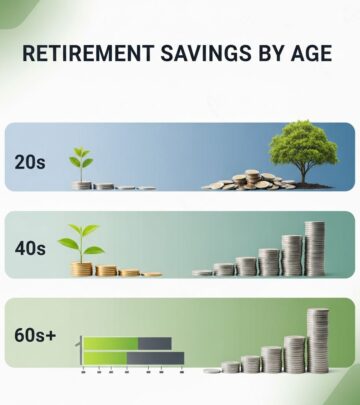
Savings should scale with age. Fidelity guidelines suggest 1x annual income by 30, 3x by 40, 6x by 50, 8x by 60, and 10x by 67. Yet, no median group meets these: men at 19%, women at 17% of targets. Asians (23%) and Whites (20%) outperform Black (11%) and Hispanic (11%) workers.
- Under 30: Often near zero, far from 1x income.
- 40s: Medians hover below 2x, not 3x.
- 50s: Averages around $200K, short of 6x for typical incomes.
- Pre-retirees (60+): Many under $500K vs. 8-10x needs.
Why the Gap Persists: Key Barriers
Several factors widen the divide. First, limited access: 56 million workers lack employer plans. High living costs divert funds from savings. Debt, inflation, and stagnant wages compound issues. Social Security faces a 20% cut risk by 2034 without reforms.
Behavioral hurdles include procrastination and underestimating longevity—many live 20-30 years post-retirement. Low financial literacy exacerbates this; 31% without accounts still expect comfort.
Strategies to Build a Stronger Nest Egg
Closing the gap demands action. Maximize 401(k)s and IRAs, especially with 2026 IRS limit hikes. Employer matches provide free money—contribute enough to capture full amounts.
Automate savings: Direct 15-20% of income to investments. Diversify into low-cost index funds for 7-10% historical returns. Cut expenses: Housing (downsizing), transportation, and subscriptions free up cash.
- Assess current savings vs. needs using calculators.
- Set aggressive goals: Aim for 25x annual expenses (4% rule).
- Side hustles or delayed retirement extend contributions.
- Health optimization reduces future costs.
Investment Approaches for Growth
Stocks historically outperform bonds for long horizons. A 60/40 stock/bond mix balances risk. Target-date funds simplify this. Recent data shows savers with plans average $179,082 vs. overall lows.
Consider Roth conversions for tax efficiency. Real estate or annuities suit some, but prioritize liquidity.
The Role of Social Security and Pensions
Don’t rely solely on personal savings. Social Security replaces ~40% of pre-retirement income but faces shortfalls. Pensions, once common, now cover few. Multi-pillar approach—savings, benefits, part-time work—is essential.
Demographic Insights and Future Trends
Gen Z and Millennials save more proactively but face student debt and housing woes. Boomers regret not starting earlier. By 2026, inflation may push needs higher, per trends.
Policy changes like expanded IRAs could help. Auto-enrollment boosts participation.
Common Myths About Retirement Savings
- Myth: Social Security suffices. It covers basics only.
- Myth: $1M is magic number. Personalize to lifestyle.
- Myth: Too late to start. Compound growth works wonders even late.
FAQs
How much do I really need for retirement?
Aim for 25x annual expenses. Retirees say $823K minimum for 2026 comfort.
What’s the average savings by age?
Varies: ~$40K median for savers 21-64; averages rise to $532K overall.
How can I catch up on savings?
Increase contributions, invest aggressively, reduce debt.
Does location affect savings?
Yes—Massachusetts $150K vs. Mississippi $35K.
Are women saving less?
Average $70K less than men due to wage gaps.
Actionable Steps for Today
1. Run a retirement projection.
2. Boost 401(k)/IRA now.
3. Review budget for savings room.
4. Consult a fiduciary advisor.
5. Track progress yearly.
With disciplined steps, surpassing averages is achievable. Start compounding today for 2026 security.
References
- Average Savings Fall $500000 Short of What Retirees Say They Need — Clever Real Estate. 2026. https://listwithclever.com/research/retirement-statistics/
- Retirement Savings by State – 2026 Study — SmartAsset. 2026. https://smartasset.com/data-studies/retirement-savings-2026
- The typical U.S. worker has $955 saved for retirement, report finds — CBS News. 2026. https://www.cbsnews.com/news/retirement-social-security-savings-us-workers/
- American workers fall short of retirement savings targets, study shows — Fox Business. 2026. https://www.foxbusiness.com/lifestyle/typical-american-worker-has-just-955-saved-retirement-study-shows
- Average retirement savings by age — Empower. 2026. https://www.empower.com/the-currency/money/average-retirement-savings-by-age
- Average Retirement Savings by Age 2026 — SafeMoney. 2026. https://safemoney.com/retirement-statistics/average-retirement-savings/
Similar Articles








Read full bio of Sneha Tete