Retirement Gap: $1.26M Dream vs Reality
Americans aim for $1.26 million in retirement savings, but median balances fall far short. Discover why and how to bridge the divide.

Americans increasingly view $1.26 million as the benchmark for a comfortable retirement, yet median savings hover around $87,000, exposing a profound disconnect in financial preparedness. This gap stems from rising costs, inconsistent saving habits, and uneven access to retirement vehicles like 401(k)s.
The Aspirational Target: Why $1.26 Million?
Surveys reveal that U.S. adults anticipate needing substantial nest eggs to sustain lifestyles amid inflation and longevity risks. This figure accounts for healthcare expenses, housing, and leisure in later years. Factors like extended lifespans—now averaging into the 80s—amplify the requirement, as savings must stretch over decades.
Regional variations influence perceptions; high-cost states push expectations higher. Nationally, only half of savers believe their current trajectory supports comfort, dropping to 31% for those without accounts.
Current Savings Landscape: A Sobering Snapshot
Despite market gains, aggregate retirement assets lag. The Federal Reserve notes an average of $87,000 per household, with medians at $65,000, skewed by high earners. Vanguard’s 2025 data shows 401(k) averages at $167,970 (up 13%) and medians at $44,115 (up 16%), buoyed by strong returns.
- Average vs. Median Disparity: Averages inflate due to outliers; medians better reflect typical households.
- Market Boost: 2025 volatility yielded highs, with 69% in managed allocations.
- Participation Rates: 59-70% have accounts, varying by demographics.
Savings Breakdown by State: From Leaders to Laggards
Geographic disparities highlight policy and economic influences. Massachusetts tops with $150,000 averages and 74.8% account prevalence, while Mississippi trails at $35,000 (59% of income).
| State | Avg Savings | Account Prevalence | Median Income |
|---|---|---|---|
| Massachusetts | $150,000 | 74.8% | $96,049 |
| Mississippi | $35,000 | 41.8% | $59,127 |
| National Median | $118,400 | 69.9% | – |
These differences tie to income levels, education, and employer offerings.
Generational Perspectives: Who’s Ahead and Behind?
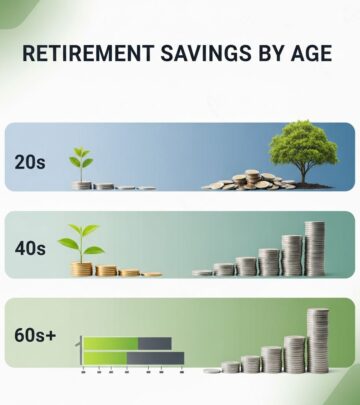
Younger cohorts save earlier but accumulate less due to career stages. Fidelity data shows:
- Baby Boomers: $249,300 (401k), $257,002 (IRA)
- Gen X: $192,300 (401k), $103,952 (IRA)
- Millennials: $67,300 (401k), $25,109 (IRA)
- Gen Z: $13,500 (401k), $6,672 (IRA)
Boomers benefit from pensions (24% access), while millennials face volatility in defined-contribution plans. Contribution rates average 5-6% employee, 3% employer.
Demographic Divides in Retirement Readiness
Access correlates with income, education, gender, and race. High earners ($100k+) boast 83% accounts vs. 28% for under $50k. College grads: 81% vs. 39%; men: 61% vs. women 57%; non-Hispanic whites: 68% vs. 42% people of color.
Women and minorities often juggle caregiving, wage gaps, and fewer benefits, widening shortfalls.
Key Barriers to Building Wealth
- Limited Access: Only 59% have dedicated accounts; workplace plans drive 90%+ commitment.
- Low Contributions: Typical 5-8% returns marred by market dips.
- Inflation and Costs: Healthcare, housing erode purchasing power; Social Security COLA at 2.8% adds ~$56/month.
- Debt and Spending: Student loans, mortgages divert funds.
Pathways to Close the Gap
Boost savings via auto-enrollment, matches, and target-date funds (80% access). Diversify with Roth IRAs, HSAs. Aim for 15% income allocation.
| Strategy | Impact | Example |
|---|---|---|
| Max 401(k) Match | Free money | 3-6% employer contrib |
| Target-Date Funds | Auto-adjust risk | 69% usage |
| Side Hustles | Extra income | +10-20% savings rate |
| Expense Tracking | Cut waste | Reallocate $500/mo |
Future Outlook: Policy and Trends
Improvements include rising participation (up 50% in managed options decade-over-decade). Yet, 1 in 4 doubt retirement feasibility. Reforms like expanded auto-IRAs could help. Median retiree income: $56,680.
Frequently Asked Questions (FAQs)
How much should I save by age 40?
Aim for 3x annual salary; e.g., $150k at $50k income. Adjust per Vanguard benchmarks.
Is $1.26M enough?
Depends on location, health; 4% rule suggests $50k/year withdrawal.
What’s the average 401(k) return?
5-8% annually, net of fees.
Do I need a financial advisor?
Useful for complex needs; 80% have managed services access.
How does Social Security factor in?
FRA 67; supplements but replaces ~40% pre-retiree income.
References
- Retirement Savings by State – 2026 Study — SmartAsset. 2026. https://smartasset.com/data-studies/retirement-savings-2026
- Previewing How America Saves 2026 — Vanguard. 2026. https://workplace.vanguard.com/insights-and-research/report/previewing-how-america-saves-2026.html
- 14 Must-Know Retirement Stats For 2026 — Carry. 2026. https://carry.com/learn/retirement-stats
- 44 Retirement Statistics That Might Change Your Plan [2026] — Amplify Life. 2026. https://www.getamplifylife.com/learn/blog/retirement-statistics
- Average Retirement Savings by Age 2026 — SafeMoney.com. 2026. https://safemoney.com/retirement-statistics/average-retirement-savings/
- Retirement in America — National Institute on Retirement Security (NIRS). 2026-02. https://www.nirsonline.org/wp-content/uploads/2026/02/NIRS_2026-Retirement-in-America-FINAL.pdf
- 401(k) Plans Drive Retirement Saving — Investment Company Institute (ICI). 2026. https://www.ici.org/news-release/401k-plans-drive-retirement-saving-nearly-half-of-participants-wouldn%E2%80%99t-save-for-retirement-without-access-to-their-plan
Similar Articles








Read full bio of medha deb