Retirement Plan Comparison: 403(b) vs 401(k)
Understand key differences between 403(b) and 401(k) plans for your retirement strategy.

Selecting the right retirement savings vehicle is one of the most important financial decisions an employee can make. While many workers have access to employer-sponsored retirement plans, understanding the specific plan type available to you is crucial for maximizing your long-term financial security. Two of the most common retirement plans in the United States are the 403(b) and 401(k), which offer similar tax advantages but serve different employee populations. Although these plans share fundamental characteristics, they differ in important ways that can significantly impact your retirement savings strategy.
Understanding Employer-Sponsored Retirement Plans
Employer-sponsored retirement plans represent a cornerstone of American retirement planning, offering employees structured ways to save for their future while receiving tax incentives from the government. These plans allow workers to set aside a portion of their compensation for retirement, with contributions often growing tax-free until withdrawal. The employer’s role varies depending on the plan type, with many organizations offering matching contributions that effectively boost employee savings at no additional cost to the worker.
Both 403(b) and 401(k) plans fall into the category of defined contribution plans, meaning employees contribute a specific portion of their salary while the eventual retirement benefit depends on how much was contributed and how well those investments performed. This structure differs from older pension plans, where employers bore the investment risk and guaranteed specific retirement income levels.
The Eligibility Divide: Understanding Who Can Access Each Plan
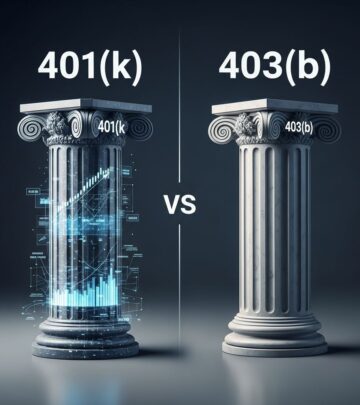
The most fundamental distinction between these retirement vehicles concerns eligibility and the types of employers that can offer them. A 401(k) plan is the standard retirement option for employees working at private, for-profit companies, ranging from small startups to large multinational corporations. Virtually any business organized as a for-profit entity can establish and maintain a 401(k) plan for its workforce.
In contrast, 403(b) plans serve a different employment landscape entirely. These plans are offered by non-profit organizations, including hospitals, educational institutions, churches, religious organizations, and certain government agencies. Public school employees, university staff, and workers at charitable foundations commonly have access to 403(b) plans. This distinction in eligible employers creates a clear dividing line: if you work in the private sector, you access a 401(k); if you work for a tax-exempt or public institution, you likely access a 403(b).
| Plan Feature | 401(k) Plan | 403(b) Plan |
|---|---|---|
| Typical Employer Type | For-profit private companies | Nonprofits, schools, hospitals, government agencies |
| Employer Status | Taxable private sector | Tax-exempt organizations |
| Common Industries | Technology, finance, retail, manufacturing | Education, healthcare, religious organizations |
Investment Options: Flexibility and Constraints
Once enrolled in either plan type, employees face different investment landscapes. The 401(k) typically offers a broader menu of investment choices, providing participants access to individual stocks, mutual funds, exchange-traded funds (ETFs), bonds, and sometimes company stock options. This variety allows workers to build diversified portfolios tailored to their risk tolerance and investment philosophy. The extensive choice enables age-appropriate asset allocation strategies, from aggressive equity-heavy portfolios for younger workers to conservative balanced approaches for those nearing retirement.
The 403(b) plan traditionally operates under more restrictive investment parameters. These plans typically limit investment choices to annuities and mutual funds. While annuities offer the distinct advantage of providing guaranteed income streams during retirement, they often come with higher associated fees and expenses compared to other investment vehicles. This limitation in investment options affects diversification possibilities, potentially making it more challenging for 403(b) participants to implement sophisticated investment strategies or minimize exposure to market volatility.
However, the practical impact of these differences varies considerably depending on individual investor needs. A participant who prefers simplicity and predictability might view the constrained options of a 403(b) as an advantage, as it reduces decision complexity. Conversely, investors seeking maximum control and the lowest possible expenses typically prefer the expansive choices available through a 401(k).
Tax Treatment: Traditional and Roth Options
Both plan types offer powerful tax advantages that form a major incentive for participation. Traditional 403(b) and 401(k) contributions are made with pre-tax dollars, meaning the amounts you contribute reduce your taxable income in the year the contribution is made. This immediate tax deduction can lower your tax liability during earning years, providing cash flow relief when workers typically face higher tax brackets.
The tax benefit continues as investments grow within the plan. Unlike taxable investment accounts where investment gains trigger annual tax obligations, retirement plan assets accumulate earnings without annual tax liability. Taxes are deferred until retirement, when distributions are taken and taxed as ordinary income. This deferral strategy works particularly well for individuals who anticipate being in lower tax brackets during retirement than they are during their earning years.
Recognizing that not all workers benefit from tax deferral, both 401(k) and 403(b) plans now commonly offer Roth versions. Roth contributions use after-tax dollars, so they don’t reduce current taxable income. However, qualifying distributions from Roth accounts are completely tax-free, including all accumulated investment earnings. This structure appeals to younger workers, those expecting higher lifetime earnings, and individuals who want to lock in current tax rates before potentially higher future rates.
Annual Contribution Limits and Catch-Up Provisions
The federal government establishes annual contribution limits for both plan types to prevent excessive tax-advantaged savings by higher-income individuals. For 2025, both 401(k) and 403(b) plans share identical contribution limits: employees can contribute up to $23,500 of their compensation annually. Additionally, contributions cannot exceed 100% of your current compensation, ensuring limits remain proportional to actual earnings.
Both plan types recognize that workers aged 50 and older face a compressed timeframe to catch up on retirement savings if they began contributing late in their careers. Accordingly, employees aged 50 and older can make additional catch-up contributions of $7,500 annually, bringing their total possible contribution to $31,000 for 2025.
The 403(b) plan uniquely offers an additional catch-up opportunity unavailable to 401(k) participants. Employees with 15 or more years of service at the same employer can contribute an extra $3,000 per year, up to a lifetime maximum of $15,000, provided they haven’t contributed more than $5,000 annually in prior years. This provision recognizes the long-term commitment of nonprofit and government sector employees and provides additional accumulation opportunities for career-long staff members.
Employer Matching: The Multiplier Effect
One of the most valuable components of any retirement plan is employer matching contributions, which effectively double-down on employee savings. When an employer offers a match, they contribute money to your retirement account based on your contributions, creating instant gains on your savings.
401(k) plans commonly feature structured matching programs. A typical arrangement might match 50% of employee contributions up to the first 6% of salary, meaning if you contribute 6% of your income, your employer adds 3%. This guaranteed employer contribution represents one of the strongest financial benefits available to private sector employees.
403(b) plans present a more variable picture regarding employer matches. While some nonprofit and government employers offer matching contributions, many do not. Among those that do provide matches, the structures and generosity levels vary considerably based on organizational policies and budget constraints. This inconsistency means 403(b) participants should carefully investigate whether their specific employer offers matching and, if so, what the structure entails. The presence or absence of employer matching can substantially impact long-term retirement accumulation, making this an important research topic when evaluating your 403(b) arrangement.
Fee Structures and Long-Term Costs
While contribution limits and investment options receive considerable attention, plan expenses often operate quietly in the background, yet they significantly impact retirement outcomes over decades of investing. The fee landscape differs between these plan types due to structural differences and regulatory considerations.
401(k) plans typically carry more competitive and transparent fee structures, partly due to the robust marketplace competition among providers serving for-profit companies. Investment options in 401(k)s tend to offer lower expense ratios, and administrative fees are often more standardized and reasonable.
403(b) plans, particularly those emphasizing annuity products, may feature higher fees and expense structures. Annuities, while providing valuable guarantees, typically involve higher costs than mutual funds or ETFs. These expenses accumulate over time, potentially reducing long-term retirement accumulation by thousands of dollars. Participants should thoroughly review their plan’s fee disclosures and compare expense ratios across available options.
Distribution Rules and Withdrawal Considerations
Both 401(k) and 403(b) plans follow similar distribution rules established by the Internal Revenue Service. Distributions before age 59½ generally trigger a 10% early withdrawal penalty, plus ordinary income taxes on the withdrawal amount. This penalty structure encourages long-term retirement savings by discouraging early access to funds.
Required Minimum Distributions (RMDs) begin at age 73 under current tax law for both plan types, requiring participants to withdraw specified percentages of their account balance annually. These mandatory distributions ensure that retirement funds ultimately generate tax revenue rather than accumulating indefinitely in tax-advantaged accounts.
Making Your Plan Selection
In most cases, your employer determines which plan type you access, removing the need for a personal selection. However, understanding how your specific plan operates empowers you to maximize its benefits through informed contribution and investment decisions.
If you have flexibility in employer choice or maintain accounts from multiple employers, consider these decision factors:
- Employer matching availability and generosity – Prioritize capturing any employer match, as this represents the strongest financial benefit. Always contribute enough to capture the full match before maximizing other savings vehicles.
- Investment option alignment – Review available investments and assess whether they match your investment philosophy. If you prefer hands-off simplicity, a 403(b)’s limited options might suffice. If you want extensive customization, a 401(k)’s broader menu appeals more.
- Long-term tenure prospects – If you plan extended employment at a nonprofit organization, the 403(b)’s 15-year catch-up provision might eventually provide significant additional savings opportunities.
- Fee comparison – Request detailed fee disclosures from both plans and compare total costs. Lower fees compound into substantial savings over 30+ year careers.
Frequently Asked Questions
Can I have both a 401(k) and a 403(b) simultaneously?
Yes, if you work for both a for-profit employer with a 401(k) and a nonprofit employer with a 403(b), you can maintain both accounts. However, your combined annual contributions across both plans cannot exceed the annual limit of $23,500 for employees under 50, or $31,000 for those 50 and older.
What happens to my 403(b) if I leave my nonprofit employer?
Your 403(b) account remains your property. You can leave the money in the plan, roll it to an IRA, or roll it to a 401(k) at a new employer that accepts such rollovers. Consult your plan administrator about specific options available to you.
Are there differences in loan provisions between these plans?
Both plans allow participants to borrow against their account balance, typically up to 50% of the vested balance or $50,000, whichever is less. Loan terms, interest rates, and other specifics vary by plan, so review your plan documents.
Can I convert my traditional 403(b) to a Roth?
Yes, in-service Roth conversions are permitted for both 401(k) and 403(b) plans, though your specific plan must allow this option. Conversions trigger taxes on the converted amount in the year of conversion.
Conclusion
Both 403(b) and 401(k) plans serve as powerful retirement savings vehicles offering substantial tax advantages and employer support opportunities. The 401(k) appeals to private sector workers with its broader investment options, common employer matches, and competitive fee structures. The 403(b) serves nonprofit and government employees, offering similar fundamental benefits with the added feature of long-term employee catch-up contributions.
Rather than debating which plan is objectively superior, focus on maximizing the specific plan available to you. Maximize any employer match, select appropriate investment options aligned with your risk tolerance and retirement timeline, and maintain consistent contributions throughout your career. With disciplined saving and thoughtful investment selection, either plan can provide the foundation for a secure retirement.
References
- 403(b) vs 401(k): What’s the Difference? — City National Bank. 2024. https://www.cnb.com/personal-banking/insights/403b-vs-401k.html
- 401(k) vs 403(b): What’s the difference? — Fidelity Investments. 2025. https://www.fidelity.com/learning-center/smart-money/401k-vs-403b
- 403(b) vs. 401(k): What Is the Difference? — Experian. 2024. https://www.experian.com/blogs/ask-experian/403b-vs-401k-whats-the-difference/
- 403(b) vs 401(k): Understanding the differences — Western Southern. 2024. https://www.westernsouthern.com/retirement/403b-vs-401k
- 401(k) vs. 403(b) Plans: Key Differences for Employers — J.P. Morgan. 2024. https://www.jpmorgan.com/insights/retirement/401k-vs-403b-plans-key-differences-for-employers
- What are the Differences Between 401(k) and 403(b) Plans? — National Council on Aging. 2024. https://www.ncoa.org/article/what-are-the-differences-between-401-k-and-403-b-plans/
- 401(k) vs 403(b): What’s the difference? — Empower. 2024. https://www.empower.com/the-currency/work/difference-between-401k-and-403b
Similar Articles








Read full bio of medha deb