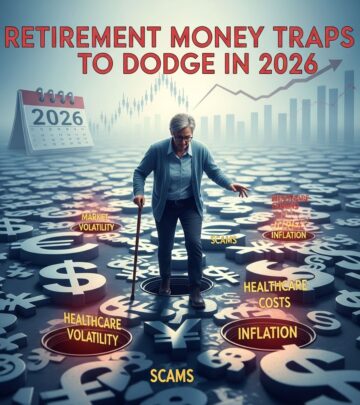
Retirement Pitfalls to Dodge
Discover essential strategies to sidestep common retirement errors and secure your financial future for a worry-free tomorrow.

Planning for retirement demands foresight and discipline to ensure long-term financial stability. Many individuals encounter avoidable errors that undermine their efforts, leading to insufficient funds during their later years. This article outlines critical missteps and offers actionable guidance to navigate them effectively, drawing on established financial principles.
Building a Solid Foundation: Why Planning Matters
A robust retirement strategy begins with a comprehensive plan that accounts for future needs. Without one, savers risk drifting aimlessly, unprepared for longevity or rising costs. Experts emphasize estimating required income beyond Social Security, often targeting 75% of pre-retirement earnings to maintain lifestyle.
- Assess total expenses: Factor in inflation, healthcare, and housing, projecting 30+ years of retirement.
- Set milestones: Review and adjust annually for life changes like salary shifts or family events.
- Integrate all sources: Combine pensions, investments, and benefits for a holistic view.
Neglecting this step leaves many vulnerable, as unplanned savings rarely align with reality.
Under-Saving: The Silent Wealth Killer
Insufficient contributions top the list of retirement blunders, eroding purchasing power over decades. Inflation compounds this issue, making early action imperative. Automatic enrollment in employer plans and escalating contributions can bridge the gap systematically.
| Age Group | Recommended Savings Rate | Potential Annual Gap |
|---|---|---|
| 20s-30s | 15% | $10,000+ |
| 40s-50s | 20% | $20,000+ |
| 60s | 25% (catch-up) | $30,000+ |
Redirect discretionary spending to savings via budget overhauls accelerates progress, countering the habit of delayed starts.
Overlooking Employer Perks
Failing to maximize matching contributions equates to forfeiting guaranteed gains. These ‘free money’ incentives can double initial inputs, supercharging growth. Always contribute enough to capture full matches, regardless of other investment pursuits.
- Review plan details: Confirm vesting schedules and match formulas.
- Prioritize over alternatives: Matches yield instant 50-100% returns.
- Automate compliance: Set contributions to hit thresholds effortlessly.
This oversight persists across income levels, costing high earners disproportionately through lost compounding.
Investment Missteps That Derail Progress
Improper asset allocation exposes portfolios to undue risk or stagnation. Younger savers benefit from stock-heavy mixes, shifting to bonds nearer retirement for stability. Target-date funds offer convenience but may not suit unique timelines, especially for affluent individuals.
Age-based guidelines suggest:
- Under 40: 80-90% equities for growth.
- 40-60: Gradual bond increase to 40-50%.
- 60+: Conservative tilt emphasizing preservation.
Professional management via target-date options automates adjustments, ideal for hands-off investors.
The Cost of Early Withdrawals
Tapping retirement accounts prematurely incurs taxes and 10% penalties before 59½, disrupting compounding. Wealthy clients often view these funds as accessible, yet experts advocate emergency cash reserves and taxable investments first.
- Build liquidity buffers: 6-12 months’ expenses in high-yield savings.
- Avoid exceptions traps: Loans or hardships still harm long-term growth.
- Job transitions: Roll over 401(k)s to IRAs to preserve tax deferral.
This habit undermines even substantial accumulations, perpetuating shortfall cycles.
Social Security: Timing and Rules Demystified
Misjudging Full Retirement Age (FRA)—66-67 based on birth year—leads to suboptimal claiming. Early applications slash benefits up to 30%; delaying to 70 boosts payments 8% annually past FRA.
| Birth Year | FRA | Early Claim Reduction (Age 62) | Delay Credit (to 70) |
|---|---|---|---|
| 1955-1959 | 66 + months | 20-25% | 24-32% |
| 1960+ | 67 | 30% | 24% |
Overlook spousal/survivor options at peril; earnings limits apply pre-FRA. Never rely solely on benefits—average $1,978 monthly falls short of needs.
Navigating 2026 Changes and Tax Traps
Annual adjustments impact planning: COLAs, Medicare hikes (nearly 10%), and raised contribution limits demand adaptation. Tax misconceptions, like ignoring deductions from gross pensions, create shortfalls—net income rules retirement reality.
- Max contributions: 2026 caps rise, enabling catch-up for 50+.
- Verify records: SF-50s and service history prevent delays.
- FEHB/survivor: Coordinate health and legacy benefits meticulously.
Standard deductions increase aids Roth conversions, optimizing withdrawals.
Health and Longevity Oversights
Underestimating healthcare—potentially $300,000+ per couple—devastates budgets. Longevity risk assumes 30-year retirements; women average longer spans. Diversify with HSAs and long-term care insurance early.
Inflation at 3% annually doubles costs every 24 years, necessitating aggressive savings.
Psychological Barriers to Success
Procrastination and overconfidence plague savers. ‘Retirement feels distant’ delays starts, forfeiting compounding magic—$10K at 25 grows to $500K+ by 65 at 7% returns, versus $100K from age 45.
Discipline via auto-features counters inertia; periodic audits align with evolving goals.
Common Pitfalls Comparison
| Pitfall | Impact | Avoidance Strategy |
|---|---|---|
| No Plan | Mismatched savings | Annual reviews |
| Low Savings | Shortfall risk | Auto-escalate |
| Ignore Matches | Lost free money | Max employer gift |
| Poor Investments | Volatility exposure | Age-based allocation |
| Early Pulls | Penalties/taxes | Emergency funds |
| SS Errors | Reduced income | Delay to 70 |
Frequently Asked Questions
How much should I save for retirement?
Aim for 10-15x final salary by retirement, starting with 15% annual contributions including matches.
Is Social Security enough?
No—covers ~40% needs; supplement with savings.
When to claim Social Security?
Optimal at FRA or 70 for longevity; calculate breakeven ~age 82.
What if I change jobs?
Roll over to IRA/ new plan; avoid cash-outs.
Can I catch up on savings?
Yes—50+ catch-ups and budget resets help.
Final Steps to Secure Your Future
Implement a dynamic plan, leverage tools, and consult advisors. Consistent action transforms pitfalls into strengths, ensuring prosperity.
References
- Six common retirement saving mistakes and how to avoid them — T. Rowe Price. 2023. https://www.troweprice.com/en/us/insights/six-common-retirement-savings-mistakes-and-how-to-avoid-them
- Top 5 Retirement Pitfalls Feds Must Avoid in 2026 — YouTube (Plan Your Federal Retirement). 2026. https://www.youtube.com/watch?v=N_6WbI2N8mQ
- A CFP Reveals 4 Retirement Account Mistakes in 2026 — GOBankingRates. 2026. https://www.gobankingrates.com/retirement/planning/cfp-retirement-account-mistakes-wealthy-clients-making-2026/
- Social Security Mistakes to Avoid in 2026 — Farther. 2026. https://www.farther.com/foundations/social-security-mistakes-to-avoid-in-2026
- 9 Ways Your Retirement Planning Will Change in 2026 — AARP. 2026. https://www.aarp.org/money/retirement/biggest-changes-2026/
Similar Articles








Read full bio of Sneha Tete