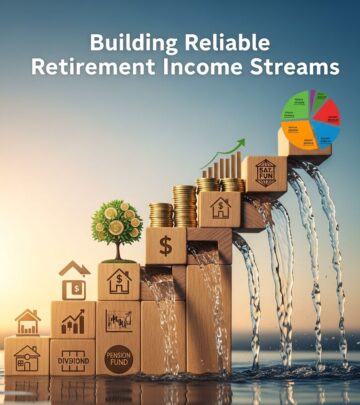
Building Your Retirement Income Strategy
Master the fundamentals of sustaining your lifestyle through strategic retirement investing.

Transitioning from a working life focused on accumulating wealth to retirement requires a fundamental shift in how you approach your investments. Rather than emphasizing growth above all else, retirees must balance the need for income with the desire for long-term appreciation that outpaces inflation. Understanding how to structure your portfolio and manage withdrawals effectively can mean the difference between a secure retirement and financial stress. This guide explores the key principles and strategies that help retirees generate reliable income while preserving their assets.
Understanding Your Income Needs and Timeline
The foundation of any successful retirement income strategy begins with a clear assessment of your financial requirements. Before making investment decisions, you must determine how much money you need annually to maintain your desired lifestyle. This calculation should account for essential expenses such as housing, utilities, healthcare, and food, as well as discretionary spending on travel, entertainment, and hobbies.
Your timeline is equally important to understand. Modern life expectancies mean that many retirees must plan for 25 to 40 years or more of retirement spending. This extended horizon fundamentally shapes your investment approach, as you cannot afford to be overly conservative and risk running out of money in your later years. The longer your potential retirement, the more emphasis you should place on growth-oriented investments to combat inflation and ensure your purchasing power remains intact.
Once you have identified your annual income needs and realistic timeline, you can determine what total portfolio value is required to support your desired lifestyle. This calculation forms the basis for all subsequent investment decisions and helps you evaluate whether your retirement savings are sufficient.
The Core Principles of Retirement Portfolio Construction
A retirement portfolio should reflect the same disciplined approach to asset allocation that served you well during your accumulation years, though the specific mix of investments will likely shift. The fundamental principle is to maintain an appropriate balance of stocks, bonds, and cash investments that aligns with your risk tolerance and time horizon. This balanced approach provides the dual benefit of generating current income while allowing for portfolio growth that keeps pace with inflation.
The rationale behind this diversified approach lies in how different asset categories perform under varying economic conditions. Stocks tend to appreciate over longer periods but experience significant short-term volatility. Bonds provide more stable income through interest payments but offer limited growth potential. Cash investments such as certificates of deposit or money market funds preserve principal but offer minimal returns. By combining these categories, you create a portfolio that smooths out extreme fluctuations while maintaining growth potential.
Your specific asset allocation should depend on several factors including your age, risk tolerance, health status, and the certainty of other income sources such as Social Security or pension payments. A younger retiree with 30 to 40 years ahead may maintain a more growth-oriented allocation, while someone in their 90s might shift toward greater stability and income generation.
Income-Generating Investments for Retirees
Several investment categories are particularly well-suited to generating retirement income. Understanding the characteristics and trade-offs of each can help you construct a diversified income stream.
Dividend-Paying Stocks
Stocks that consistently pay dividends offer both current income and the potential for capital appreciation over time. When evaluating dividend stocks for retirement, focus on companies with a long history of stable or increasing dividend payments rather than those offering exceptionally high yields, which may be unsustainable. Utility stocks and real estate investment trusts (REITs) are particularly popular among retirees seeking equity income, as these sectors tend to prioritize distributions to shareholders. However, remember that dividend payments can fluctuate with business performance, and stock prices move daily, introducing some volatility to your income stream.
Bond Investments
Bonds represent a more stable income source through regular interest payments. Rather than purchasing a single bond maturing at a specific future date, many retirees benefit from a bond ladder strategy—purchasing bonds with varying maturity dates so that portions of the principal return regularly, allowing reinvestment or withdrawal. This approach reduces interest rate risk by spreading maturity dates across time, though it exposes you to inflation risk if rising prices erode the purchasing power of fixed interest payments.
Bond options available to retirees include government securities such as Treasury bonds, corporate bonds from established companies, and municipal bonds with potential tax advantages. Bond mutual funds offer professional management and diversification across many issuers, reducing the risk associated with any single issuer’s financial troubles.
Certificates of Deposit and Cash Products
Bank products such as certificates of deposit (CDs) provide FDIC insurance protection up to specified limits and offer predictable returns with virtually no risk of principal loss. These products serve an important role in conservative portions of retirement portfolios, though their yields typically trail those of stocks or bonds. CDs with varying maturity dates can be structured similarly to bond ladders to create regular income streams.
Strategic Withdrawal Approaches
How you withdraw money from your retirement accounts is as important as how you invest it. Several distinct approaches exist, each with different characteristics and implications for your long-term financial security.
Living on Income Alone
If your portfolio is sufficiently large, you may generate enough income through dividends, interest, and other distributions to cover all expenses without touching principal. This approach appeals to conservative retirees who want certainty about portfolio longevity and minimal need for active management. However, it requires a substantial portfolio to generate adequate income, and may not provide sufficient inflation protection if income yields are low.
The Total Return Strategy
Rather than focusing exclusively on income-generating investments, the total return approach treats your portfolio as a source of overall returns that come in the form of interest, dividends, and capital gains. With this method, you establish a sustainable withdrawal rate—typically between 3% and 5% of your portfolio’s annual value—and withdraw this amount regardless of whether it comes from income or appreciation.
This approach requires more active portfolio management and introduces the risk that you may need to liquidate investments at unfavorable times or that your withdrawals could exceed your portfolio’s long-term growth rate. However, it provides greater flexibility, typically generates higher total returns, and better protects against inflation by maintaining growth-oriented investments. The key is structuring your portfolio so that you can meet withdrawal needs from stable assets even during market downturns.
Guaranteed Income Strategies
Annuities represent a distinct approach to retirement income, converting a portion of your assets into a guaranteed income stream that lasts for life or a specified period. Income annuities, purchased from insurance companies, provide certainty about retirement cash flow and can help cover essential non-discretionary expenses. This certainty comes at a cost: annuities typically offer lower total returns than investment portfolios, provide limited or no access to the underlying assets, and may include surrender charges if you need to withdraw funds early.
Many retirees use a hybrid approach, combining annuities to cover basic living expenses with an investment portfolio that provides discretionary income and growth. This strategy blends the certainty of guaranteed income with the flexibility and growth potential of self-directed investing.
Asset Allocation Models for Different Life Stages
Your optimal asset allocation shifts throughout retirement as your time horizon shortens. Early in retirement, when you may have 25 to 40 years ahead, maintaining a portfolio with meaningful stock exposure—typically 50% to 70%—supports long-term growth. As you progress into your later retirement years, gradually shifting toward more conservative allocations with greater bond and cash positions can reduce volatility and allow you to avoid liquidating stocks during market downturns.
Within the stock portion of your portfolio, diversification across asset categories reduces risk and improves returns. A typical allocation might include 60% U.S. large-cap stocks, 25% developed international stocks, 10% U.S. small-cap stocks, and 5% emerging market stocks. This diversification ensures that if one market sector underperforms, others may provide offsetting gains.
Managing Inflation Risk in Retirement
Inflation represents one of the most significant long-term risks to retirement security. With average inflation rates around 3% annually, living costs double in less than 25 years. This reality makes growth investments essential even in retirement. A portfolio consisting exclusively of bonds or cash will almost certainly fail to preserve purchasing power over a 20 to 40-year retirement period.
By maintaining a diversified portfolio with meaningful stock exposure, you position your investments to generate returns that exceed inflation, ensuring that your income grows over time to support increasing living costs. This inflation protection is one reason that many financial advisors recommend maintaining growth investments throughout retirement, even as you simultaneously generate income for current needs.
Tax Considerations and Account Selection
The accounts from which you withdraw money significantly affect your tax situation. Generally, you should follow a strategic sequence: withdraw from taxable accounts first, then tax-deferred accounts like traditional IRAs, and save tax-free accounts such as Roth IRAs for last. This approach minimizes your lifetime tax burden and allows tax-advantaged accounts to continue growing for as long as possible.
Understanding the tax characteristics of your investments also matters. Qualified dividends and long-term capital gains receive favorable tax treatment compared to ordinary interest income from bonds or CDs. Municipal bonds offer tax-free interest income for federal tax purposes and sometimes state purposes as well. Strategic tax planning can meaningfully increase your after-tax retirement income without changing your investment strategy.
Building Your Personal Strategy
Creating an effective retirement income strategy requires honest assessment of your situation and sometimes difficult trade-offs. The approach that maximizes growth may introduce too much volatility for your comfort. The strategy that provides complete certainty may not generate sufficient income or protect against inflation.
Most successful retirees use a combination of approaches. Perhaps they establish a foundation of guaranteed income through Social Security and annuities to cover essential expenses, maintain a diversified investment portfolio for discretionary income and growth, and follow a systematic withdrawal strategy that adapts to changing circumstances. This layered approach provides both security and flexibility.
Regular monitoring and adjustment of your strategy become increasingly important in retirement. As your portfolio grows or shrinks, as your spending patterns evolve, and as the economic environment changes, your optimal approach may shift. An annual review allows you to rebalance your portfolio back to your target allocation and assess whether adjustments are needed to stay on track toward your retirement goals.
References
- 8 Sources of Generating Retirement Income Cash Flow — New York Life. https://www.newyorklife.com/articles/how-to-generate-income-in-retirement
- Managing Your Retirement Portfolio — FINRA. https://www.finra.org/investors/learn-to-invest/types-investments/retirement/managing-retirement-income/managing-your-retirement-portfolio
- Retirement Income Strategies — Fidelity Investments. https://www.fidelity.com/learning-center/personal-finance/retirement/retirement-income-strategies
- 4 Investment Options to Help Generate Retirement Income — U.S. Bank. https://www.usbank.com/retirement-planning/financial-perspectives/investment-options-to-generate-retirement-income.html
- Investing in Retirement — Vanguard. https://investor.vanguard.com/investor-resources-education/retirement/income-investing-in-retirement
- Retirement Savings by Age: What to Do With Your Portfolio in 2026 — T. Rowe Price. https://www.troweprice.com/personal-investing/resources/insights/retirement-savings-by-age-what-to-do-with-your-portfolio.html
Similar Articles








Read full bio of medha deb