Retirement Accounts and Tax Impacts
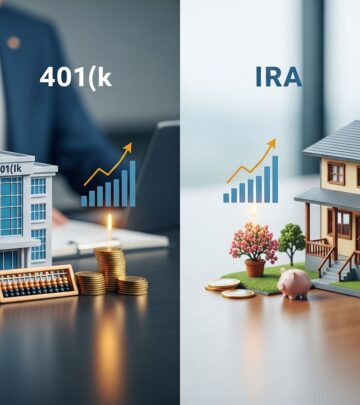
Discover how traditional and Roth retirement accounts influence your taxes at contribution, growth, and withdrawal stages for smarter planning.
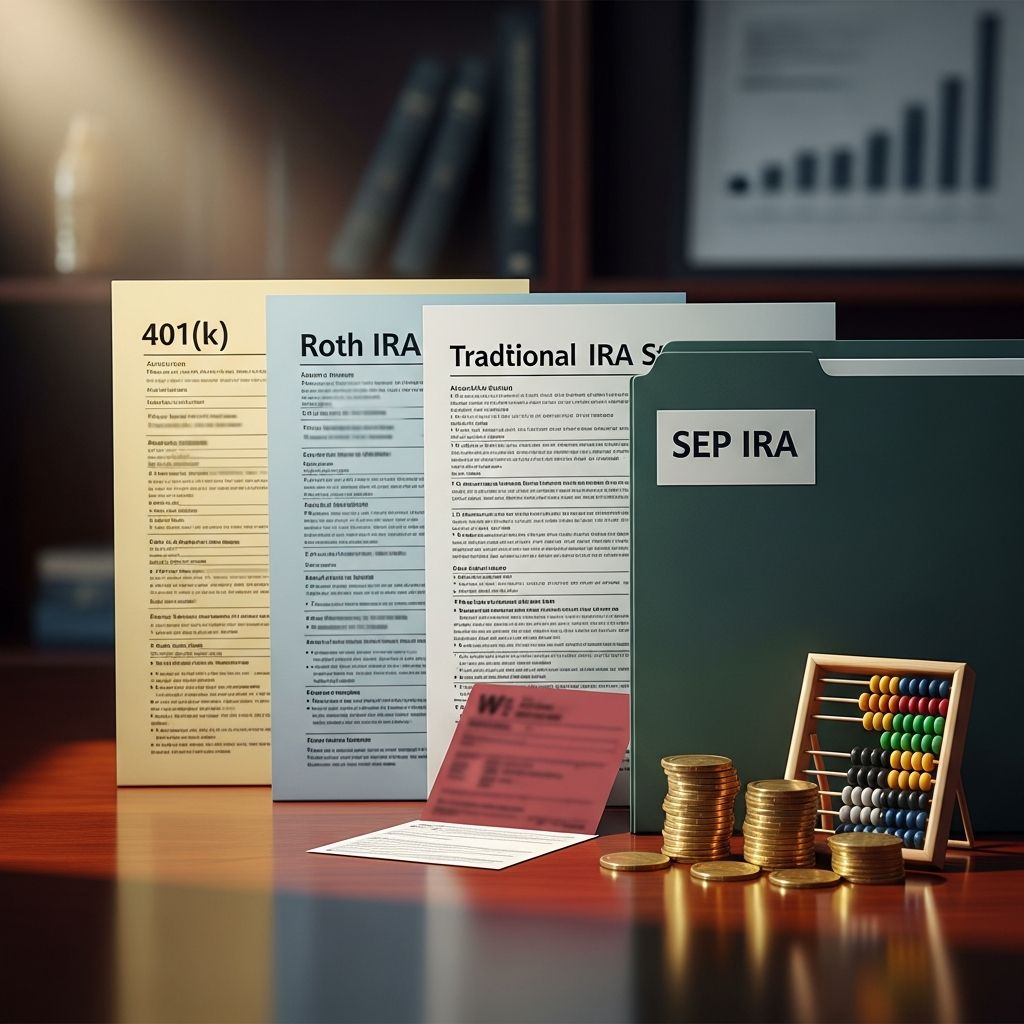
Retirement savings vehicles like 401(k)s and IRAs offer significant tax advantages that can substantially influence your overall financial health. These accounts defer or eliminate taxes on contributions and investment growth, but the timing of tax obligations varies by account type. Understanding these mechanics helps individuals select the best option based on current and future tax situations.
Core Tax Advantages of Retirement Savings Plans
Retirement accounts provide benefits across three phases: contributions, investment growth, and distributions. Most plans excel in two of these areas, creating a strategic trade-off between immediate relief and future savings.
- Contributions: Pre-tax options lower current taxable income, while after-tax ones do not but promise later gains.
- Growth: Earnings from interest, dividends, and gains accumulate without annual taxation, unlike standard brokerage accounts.
- Withdrawals: Taxation occurs at distribution in some cases or remains exempt under specific conditions.
This structure encourages long-term saving by minimizing the tax drag on compounding returns.
Traditional Accounts: Deferring Taxes for Later
Traditional 401(k)s, 403(b)s, and IRAs allow contributions with pre-tax dollars, directly reducing your adjusted gross income for the contribution year. For instance, employer-sponsored plans like 401(k)s often feature automatic payroll deductions that bypass immediate taxation.
Investment growth within these accounts enjoys tax-deferred status, meaning no taxes apply until funds are withdrawn. This deferral lets money compound more effectively over decades.
However, all distributions in retirement count as ordinary income, taxed at your prevailing rate. Larger withdrawals could elevate your tax bracket, especially when combined with other income sources.
| Feature | Traditional IRA/401(k) |
|---|---|
| Contributions | Pre-tax (deductible) |
| Growth | Tax-deferred |
| Withdrawals | Taxed as ordinary income |
| Early Withdrawal Penalty | 10% before age 59½ |
Roth Accounts: Paying Now for Tax-Free Future
Roth IRAs and Roth 401(k)s require after-tax contributions, offering no upfront deduction. In return, qualified withdrawals—including earnings—are entirely tax-free after age 59½ and a five-year holding period from the first contribution.
The five-year rule starts on January 1 of the year of your initial Roth contribution. Contributions themselves can be withdrawn anytime without taxes or penalties, providing flexibility.
Growth in Roth accounts is tax-free, making them ideal for those anticipating higher future tax rates or extended investment horizons. Younger savers particularly benefit as their funds have more time to grow untaxed.
| Feature | Roth IRA/401(k) |
|---|---|
| Contributions | After-tax (non-deductible) |
| Growth | Tax-free if qualified |
| Withdrawals | Tax-free if qualified |
| Early Withdrawal | Contributions tax/penalty-free; earnings penalized |
Navigating Withdrawals and Required Minimum Distributions
Once you reach retirement age, withdrawal rules dictate tax implications. Traditional accounts mandate Required Minimum Distributions (RMDs) starting at age 73, calculated based on account balance and life expectancy. These RMDs are taxable as ordinary income and failure to take them incurs a 25% excise tax (reducible to 10% if corrected timely).
Roth IRAs escape lifetime RMDs, allowing funds to grow indefinitely tax-free, though Roth 401(k)s may require RMDs unless rolled into a Roth IRA. Strategic planning, like converting traditional funds to Roth via taxable conversions, can manage future RMD burdens but triggers immediate taxes.
Early withdrawals before 59½ from either type generally incur a 10% penalty plus income taxes on applicable amounts, with exceptions for hardships like medical expenses or first-time home purchases.
Strategic Choices: Which Account Fits Your Situation?
Selecting between traditional and Roth depends on your current tax bracket, expected retirement bracket, and time until withdrawal. If you’re in a high bracket now but expect lower in retirement, traditional accounts provide immediate relief. Conversely, low-bracket workers or those predicting tax hikes favor Roth for tax-free growth.
Many build both types for flexibility—drawing from traditional accounts first to fill lower brackets, then Roth tax-free. Employer matches in 401(k)s are always pre-tax, regardless of your designation.
Reporting Contributions and Tracking Basis
Employers report 401(k) contributions on Form W-2, but IRA contributions require self-reporting on your return. Deductible traditional IRA contributions claim a direct adjustment, while nondeductible ones need Form 8606 to track basis and avoid double taxation later.
Roth contributions aren’t deducted but must be documented for the five-year rule. Software like TurboTax automates much of this, but understanding forms ensures accuracy.
Other Retirement Income Tax Considerations
Beyond accounts, pensions, annuities, and Social Security factor into your tax picture. Up to 85% of Social Security may be taxable based on combined income, influenced by retirement withdrawals. Taxable brokerage gains incur capital gains rates, often lower than ordinary income.
A sequenced withdrawal strategy—taxable accounts first, then traditional, Roth last—minimizes lifetime taxes by controlling annual brackets.
Frequently Asked Questions
Do employer matches affect my taxes?
Matches to traditional 401(k)s are pre-tax and don’t count toward your contribution limit, taxed only upon withdrawal.
Can I roll over accounts to change tax treatment?
Yes, rolling traditional to Roth triggers taxes on the converted amount but enables tax-free future growth.
What happens if I miss an RMD?
The IRS imposes penalties, but waivers are possible for reasonable cause.
Are there income limits for Roth contributions?
Direct Roth IRA contributions phase out at higher incomes; backdoor Roth strategies bypass this for high earners.
How do state taxes interact with federal rules?
Many states conform to federal treatment, but some tax retirement income differently—check local laws.
Planning Tips for Tax Efficiency
To maximize benefits:
- Maximize contributions annually, prioritizing employer matches.
- Diversify with both account types.
- Model future scenarios considering tax law changes.
- Consult professionals for personalized advice.
Regular reviews adjust for life changes like income shifts or market performance.
References
- Understanding retirement account tax benefits: Roth vs. traditional — Citizens Bank. 2023. https://www.citizensbank.com/learning/retirement-account-tax-benefits.aspx
- Tax Benefits of Retirement Accounts: Comparing 401(k)s, 403(b)s and IRAs — TurboTax Intuit. 2024. https://turbotax.intuit.com/tax-tips/retirement/tax-benefits-of-retirement-accounts-comparing-401ks-403bs-and-iras/L6ChGOXHE
- IRAs: How Are They Taxed and When? — MissionSquare Retirement. 2023. https://www.missionsq.org/products-and-services/iras/ira-taxes.html
- What to know about how retirement savings is taxed — BlackRock. 2024. https://www.blackrock.com/us/individual/education/retirement/tax-implications
- Retirement topics – Tax on normal distributions — Internal Revenue Service. 2025-01-15. https://www.irs.gov/retirement-plans/plan-participant-employee/retirement-topics-tax-on-normal-distributions
- Taxes in Retirement: How to Reduce Taxes on Your Withdrawals — Merrill Lynch. 2024. https://www.ml.com/articles/taxes-in-retirement.html
- Traditional IRAs — Internal Revenue Service. 2025-02-20. https://www.irs.gov/retirement-plans/traditional-iras
Similar Articles








Read full bio of medha deb