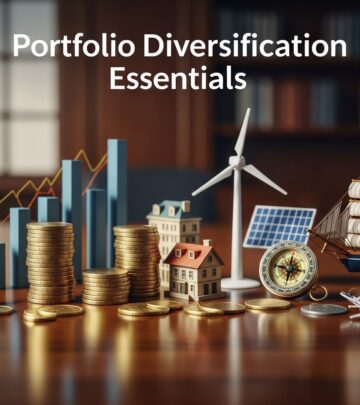
Rethinking Global Portfolio Diversification
Discover why expanding beyond domestic markets can strengthen your investment strategy and unlock resilient long-term growth.

Global diversification involves spreading investments across international markets to capture varied economic cycles and reduce reliance on any single economy. This approach helps mitigate risks tied to domestic downturns while opening doors to high-growth regions worldwide.
Why Go Beyond Borders?
Investors often focus heavily on home markets, but history reveals no single country dominates indefinitely. For instance, U.S. stocks have led recently, yet periods of underperformance highlight the value of broader exposure. International allocations smooth volatility by tapping into uncorrelated returns from diverse economies.
Key advantages include:
- Reduced Volatility: Combining assets from multiple regions limits the impact of localized crises, as global events affect markets unevenly.
- Enhanced Growth Potential: Emerging markets offer higher returns during expansion phases, complementing mature economies’ stability.
- Inflation and Currency Hedges: Foreign investments counteract domestic inflation and currency fluctuations through natural diversification.
Core Pillars of Effective Diversification
Building a robust global portfolio requires layering multiple strategies. Start with asset class variety, then refine by sector, geography, and investment style.
Asset Class Balance
Distribute holdings across equities, fixed income, commodities, and real estate. Equities drive growth, bonds provide income stability, and alternatives like gold hedge against uncertainty. A balanced mix historically outperforms concentrated bets.
| Asset Class | Role in Portfolio | Example Global Exposure |
|---|---|---|
| Equities | Growth engine | U.S., Europe, Asia ETFs |
| Bonds | Income and stability | Government, corporate international bonds |
| Commodities | Inflation protection | Gold, oil futures globally |
| Real Estate | Diversification boost | Global REITs |
Sector and Style Variety
Within equities, avoid overconcentration in tech or finance by including healthcare, consumer staples, and industrials. Factor-based tilts toward value, small-cap, or low-volatility stocks further enhance resilience, especially amid U.S. mega-cap dominance.
Navigating Geographic Exposure
Geographic spread is central to global thinking. Developed markets like Europe and Japan offer predictability, while emerging regions such as Asia and Latin America promise outsized gains despite higher risks.
Consider these allocations:
- 40-60% Domestic for familiarity.
- 20-30% Developed International for steady returns.
- 10-20% Emerging Markets for growth upside.
Correlation data supports this: Distant economies often move independently, buffering portfolio swings.
Modern Tools and Innovations
Today’s investors leverage advanced methods to implement diversification efficiently.
- ETFs and Index Funds: Low-cost vehicles track global benchmarks, ideal for passive exposure.
- Smart Beta and Factors: Target momentum, value, or quality to outperform traditional indexes.
- ESG Integration: Aligns diversification with sustainability, accessing ethical growth sectors.
- Robo-Advisors: Automate rebalancing across borders based on risk profiles.
Active tilts, like overweighting non-U.S. equities or hedging currencies, can refine passive cores for better risk-adjusted outcomes.
Practical Steps to Build Your Global Portfolio
Implement diversification systematically:
- Assess Risk Tolerance: Determine your horizon and capacity for volatility.
- Set Target Allocations: Aim for 20-40% international initially, adjusting per goals.
- Select Vehicles: Use broad international ETFs for simplicity.
- Rebalance Annually: Restore drifts to maintain discipline.
- Monitor Correlations: Adapt as global ties evolve.
Recent trends, like international stocks’ 2025 rebound, underscore timely opportunities despite past U.S. leads.
Overcoming Common Challenges
Home bias tempts many, but data counters it: Global portfolios weather U.S. slumps better. Currency risks exist, yet long-term holding often neutralizes them. Emerging market volatility demands patience, balanced by their rebound potential.
Alternatives like private markets or hedge funds add uncorrelated returns, though accessibility varies.
Long-Term Performance Insights
Multi-decade analysis shows diversified portfolios achieve steadier compounded growth. Equities outpace bonds by 4-5% annually since 1900, amplified globally. No market leads forever—global spreads capture leadership shifts seamlessly.
FAQs
What percentage of my portfolio should be international?
Typically 20-40%, depending on risk appetite and goals. Start conservative and scale up.
Does global diversification guarantee higher returns?
No, but it reduces risk and improves consistency over time.
How do I handle currency risk?
Use hedged funds or focus on long horizons where fluctuations average out.
Are emerging markets worth the risk?
Yes, for growth potential; limit to 10-20% of equities.
When should I rebalance?
Annually or when allocations drift 5-10% from targets.
References
- A Comprehensive Guide to Building a Diversified Investment Portfolio — Carter Wealth. 2023. https://www.carterwealth.com/insights/a-comprehensive-guide-to-building-a-diversified-investment-portfolio/
- Diversification strategy: From Harry Markowitz to today’s best practices — Saxo. 2024. https://www.home.saxo/learn/guides/diversification/diversification-strategy-from-harry-markowitz-to-todays-best-practices
- 5 Smart Ways to Diversify Your Portfolio in 2026 — Morningstar. 2026-01-15. https://www.morningstar.com/portfolios/5-smart-ways-diversify-your-portfolio-2026
- How to Build a Global Investment Portfolio for the Next Decade — Goldman Sachs. 2024-10-01. https://www.goldmansachs.com/insights/articles/how-to-build-a-global-investment-portfolio-for-the-next-decade
- Exploring Global Diversification in an Investment Portfolio — LetsAssemble. 2025-04-01. https://www.letsassemble.com/blog/global-portfolio-diversification
Similar Articles








Read full bio of medha deb