Retail Credit Cards: When to Keep or Close Them
Evaluate whether your store credit cards deserve a place in your wallet.

Many consumers find themselves carrying multiple store credit cards accumulated over years of shopping at various retailers. Each card came with an enticing initial offer—a percentage discount on that day’s purchase, special financing terms, or promises of exclusive rewards. However, as time passes, these cards often become forgotten financial obligations that may or may not serve your current financial goals. The question many cardholders face is whether keeping these accounts open is beneficial or if closing them would be a smarter financial move.
The decision to maintain or close store credit cards isn’t straightforward. It requires understanding how these accounts affect your credit profile, evaluating the actual value they provide, and considering your overall financial situation. This guide walks you through the critical factors to help you make an informed decision about your retail credit card portfolio.
Understanding Store Credit Card Characteristics
Before deciding whether to keep or cancel store credit cards, it helps to understand what makes them different from general-purpose credit cards. Store credit cards are branded financial tools designed specifically to encourage spending at particular retailers or retail chains. Unlike rewards credit cards that work at multiple merchants, store cards restrict their benefits to purchases made at their affiliated locations or partners.
These cards typically come with distinctive features that shape both their appeal and their drawbacks. Interest rates on store cards frequently exceed 25-30% annually, significantly higher than the average general-purpose credit card rate of around 18%. Additionally, store cards usually come with lower credit limits than traditional credit cards, which can create complications for your credit profile even if you manage the account responsibly.
The rewards structures on store cards also differ meaningfully from other credit products. Store card benefits are usually capped, meaning your maximum earnings or discount savings have a ceiling. For example, a retailer might offer 30% off a purchase, but limit total savings to a specific dollar amount. These restrictions mean that even when you take advantage of promotional offers, the long-term value proposition may be disappointing.
The Credit Score Impact of Keeping Store Cards Open
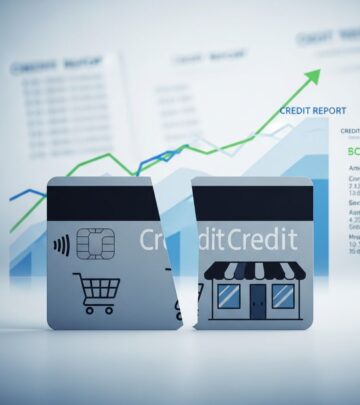
One of the most important considerations when deciding whether to keep a store credit card is how it affects your credit score. Contrary to what many people assume, closing credit card accounts isn’t automatically beneficial for your credit profile. In fact, it can create unexpected negative consequences.
Credit utilization ratio—the percentage of your available credit that you’re currently using—represents a significant component of credit scoring models. When you close a credit card account, you reduce your total available credit, which can increase your utilization ratio even if you haven’t changed your spending habits. For example, if you have $10,000 in total credit limits across all cards and carry a $3,000 balance, your utilization is 30%. If you close a card with a $5,000 limit, your total available credit drops to $5,000, pushing your utilization to 60%.
Most credit experts recommend maintaining a credit utilization ratio below 30%, with lower being better. A sudden spike in utilization from closing an account can temporarily lower your credit score, even though the effect is usually temporary and disappears once you pay down balances and creditors report the updates.
Another credit benefit of maintaining store cards involves credit mix. Credit scoring models consider having different types of credit accounts as a positive indicator of your ability to manage various credit products. A store card counts toward this diversity, and closing accounts can slightly reduce the complexity of your credit profile.
However, these benefits only apply if you manage the store card responsibly. Missing payments or maintaining high balances creates far worse credit consequences than any benefit from keeping the account open.
When Store Cards Actually Provide Value
While store credit cards generally offer less value than general-purpose rewards cards, specific situations exist where keeping these accounts makes financial sense. Identifying whether your situation fits these scenarios is key to making the right decision.
Frequent Shopping at a Single Retailer
If you regularly shop at a particular retailer and qualify for cardholder-exclusive perks, a store card might deliver genuine value. Retailers frequently reserve their best deals, special sales events, and flexible return policies for cardholders. When combined with regular purchases, these exclusive benefits can offset the drawbacks in certain circumstances. Calculate your annual spending at the retailer and compare the cardholding benefits against what you’d receive from a general-purpose rewards card.
Building or Rebuilding Credit
Store credit cards are significantly easier to qualify for than traditional rewards credit cards, making them valuable tools for people with limited credit history or lower credit scores. If you’re in the early stages of building credit or recovering from past credit challenges, a store card can serve as a stepping stone toward better credit products. The key is using the card responsibly—making all payments on time and keeping your balance low—to demonstrate creditworthiness.
Taking Advantage of Limited-Time Offers
Some store cards offer substantial upfront benefits, particularly around holidays or during special promotional periods. If you’re planning a significant purchase anyway, the initial discount or special financing could be worth the application. Just ensure you understand all terms, particularly regarding deferred-interest offers, before committing.
Red Flags That Suggest Closing Is Better
Certain situations indicate that closing a store credit card is the prudent financial decision. Recognizing these warning signs helps you proactively manage your credit portfolio.
- You rarely shop at the retailer: If you haven’t used the card in six months or longer, it’s probably not delivering value. The minimal rewards or benefits from occasional usage don’t justify maintaining another account in your credit profile.
- You’re tempted to overspend: The psychological effect of having available credit is real. Studies indicate that people spend up to 83% more when using cards compared to cash payments. If a store card encourages unnecessary spending, the promotional discount won’t offset your extra purchases.
- The card has an annual fee: Some premium store cards charge annual fees. Unless the cardholder benefits clearly exceed the annual cost, a fee represents dead weight in your wallet.
- You carry a balance: If you typically maintain a balance on a store card, the high interest rates will quickly erase any discount benefits. Store cards should only be used if you can pay the full balance monthly.
- You have multiple similar cards: Holding store cards from several related retailers or department store chains might be excessive. Consolidating to one or two cards reduces management burden and helps your credit utilization.
Understanding Deferred-Interest Traps
Many store credit cards offer promotional financing such as “12 months interest-free” or “0% APR on purchases through December.” These offers tempt consumers, but they contain a significant gotcha that catches many cardholders off guard.
Deferred-interest promotions charge interest retroactively if you don’t pay off the full promotional balance by the deadline. For example, if you purchase $2,000 of furniture with a “0% interest for 24 months” offer but only pay off $1,500 by month 25, you’ll owe interest on the full $2,000 from the original purchase date—not just the remaining $500. This retroactive interest can be substantial, especially on larger purchases.
Before accepting any deferred-interest offer, calculate whether you can realistically pay off the full balance before the promotional period ends. If uncertainty exists, the risk typically outweighs the benefit of the promotion.
The Mechanics of Closing a Card Responsibly
If you decide that closing a store credit card is the right choice, executing the closure properly protects your credit score as much as possible. Follow these steps to minimize negative impacts:
- Pay off the full balance: Before closing the account, eliminate any remaining balance. Closing an account with an outstanding balance doesn’t eliminate the debt and looks particularly problematic to credit scoring models.
- Check for rewards: Many store cards offer points or cash back rewards. Redeem any accumulated benefits before closing to capture this value.
- Contact the issuer: Call the card issuer directly to request closure. This creates a clear record that you initiated the closure intentionally.
- Confirm the closure: Request written confirmation that the account is closed at your request. This documentation proves the closure was voluntary if any disputes arise.
- Space out closures: If closing multiple store cards, stagger the closures over several months. Closing multiple accounts simultaneously creates a larger negative impact on your credit score than spacing them out.
Comparing Store Cards to General-Purpose Alternatives
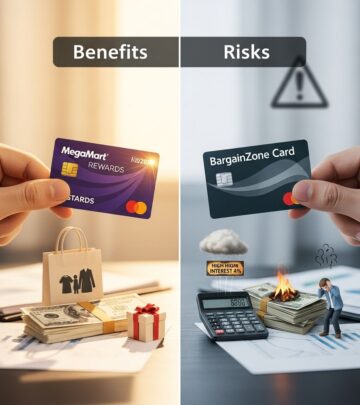
When evaluating whether to keep a store card, comparing it directly to what you’d earn from a general-purpose rewards card provides useful perspective. General-purpose credit cards offer several advantages over store cards:
| Feature | Store Credit Card | General-Purpose Card |
|---|---|---|
| Interest Rate (APR) | 25-30%+ (High) | ~18% average (Lower) |
| Credit Limit | Low (typically $500-$2,000) | Higher (varies by creditworthiness) |
| Rewards Scope | Single retailer only | Multiple merchants |
| Rewards Cap | Usually capped | Often uncapped |
| Acceptance | Limited (specific stores) | Widely accepted |
| Approval Difficulty | Easy | More stringent |
For most consumers with established credit, a general-purpose cash-back or rewards card provides superior value compared to a store card. However, the ease of approval for store cards makes them valuable for people building credit who may not qualify for premium general-purpose cards.
Creating Your Store Card Strategy
Rather than making emotional decisions about store cards, develop a strategic approach to your retail credit portfolio. Start by listing every store card you own, noting the annual spending at each retailer, any benefits you actually use, and the interest rate charged. Categorize each card into “Keep,” “Close,” and “Decide Later” groups based on the criteria discussed.
For “Keep” cards, ensure you’re maximizing available benefits and managing the account responsibly. For “Close” cards, develop a timeline for closure that minimizes credit score impact. For “Decide Later” cards, set a specific review date to reassess whether your circumstances have changed.
This systematic approach prevents keeping cards out of inertia while also protecting you from making impulsive closure decisions that could harm your credit unnecessarily.
Frequently Asked Questions
Will closing a store credit card hurt my credit score?
Closing a store card can temporarily impact your credit score by reducing available credit and increasing your utilization ratio. However, the effect is usually temporary and disappears as you pay down other balances and creditors report updates. The impact is typically less severe than missing payments or carrying high balances.
Should I keep store cards I never use?
Store cards you haven’t used in six months or longer probably aren’t providing sufficient value to justify keeping them open. However, if closing them would significantly reduce your available credit and you carry balances on other cards, consider keeping them open with zero balance to help your credit utilization ratio.
Can I negotiate store card interest rates?
Many store card issuers won’t negotiate APR, but it doesn’t hurt to ask, especially if you have a long history of on-time payments. If negotiation fails, using a store card only for promotional offers and paying the balance in full is the best approach to avoid high interest charges.
How many store cards should I have?
There’s no magic number, but most personal finance experts suggest keeping only store cards from retailers where you shop regularly and actually use the benefits. Having three to five store cards might be reasonable if you actively use all of them. Beyond that, management becomes burdensome and your credit profile suffers from multiple accounts.
Is it better to close or keep a store card with a balance?
Never close a store card with a balance. Not only does this look negative to creditors, but the debt remains your responsibility. Always pay off the balance completely before closing an account.
Making Your Final Decision
The decision to keep or close store credit cards ultimately depends on your individual circumstances, shopping habits, and credit goals. There’s no universal answer that applies to everyone. What matters is making a conscious, informed decision rather than drifting along with cards you no longer use or that actively harm your financial situation.
Regularly audit your credit card portfolio to ensure each account serves a purpose. Store cards can be valuable financial tools when used strategically, but they can also become financial anchors if kept out of habit or inertia. By understanding the tradeoffs and making deliberate choices, you’ll optimize your credit profile and maximize the value from every account in your wallet.
References
- Pros and Cons of Store Credit Cards — Experian. 2024. https://www.experian.com/blogs/ask-experian/pros-and-cons-of-store-credit-cards/
- Here are 4 reasons why store credit cards are a bad idea — The Points Guy. 2024. https://thepointsguy.com/credit-cards/steer-clear-store-credit-cards/
- Before You Say Yes: Pros & Cons of Store Credit Cards — Harvard Federal Credit Union. 2024. https://blog.harvardfcu.org/before-you-say-yes-pros-cons-of-store-credit-cards
- Pros and Cons of Store Credit Cards — Crown Financial Ministries. 2024. https://www.crown.org/radio/pros-and-cons-of-store-credit-cards/
- Are Retail Credit Cards Worth It? — Bankrate. 2024. https://www.bankrate.com/credit-cards/rewards/are-store-credit-cards-worth-it/
Similar Articles








Read full bio of Sneha Tete