Resume Types: Chronological, Functional & Combination
Master the three main resume formats to showcase your qualifications effectively.
Understanding Resume Types and Formats
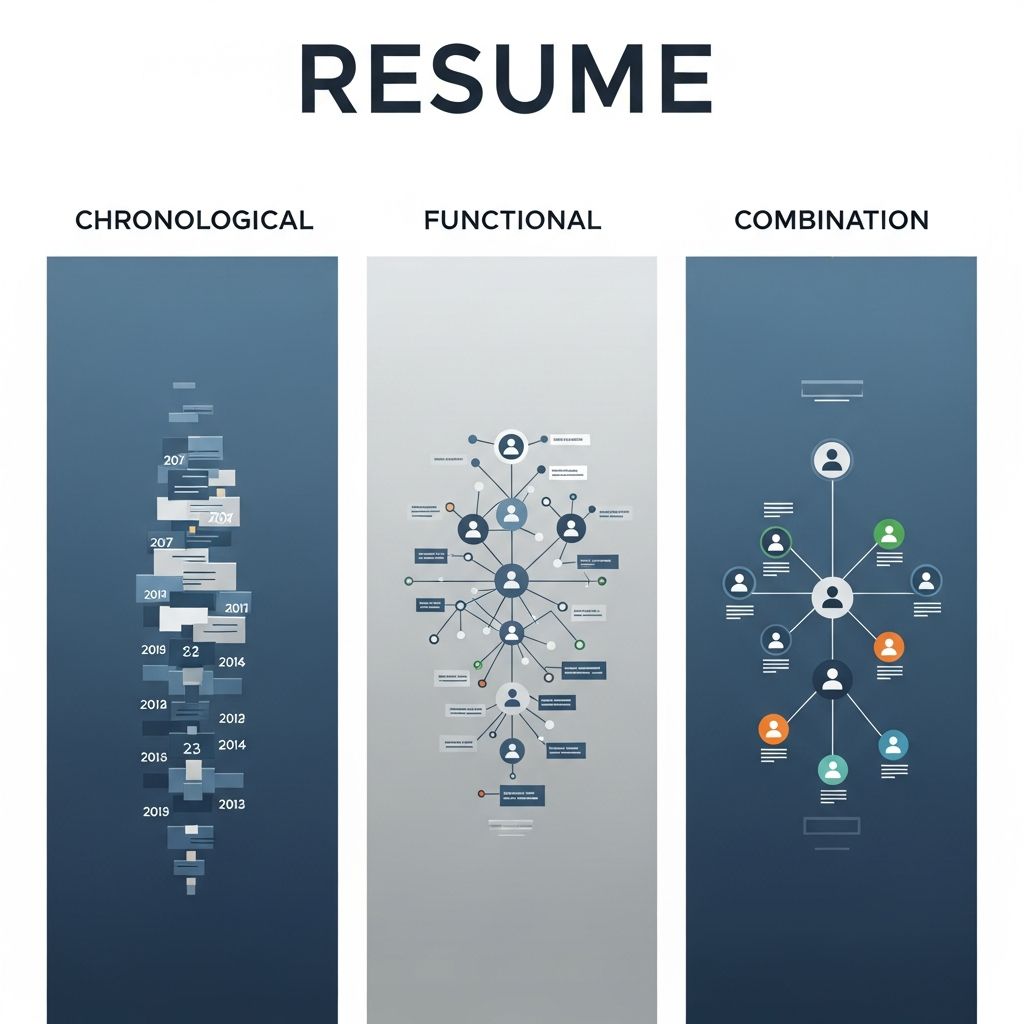
Your resume is often the first impression you make on potential employers. The format you choose plays a crucial role in how hiring managers perceive your qualifications and career trajectory. While many job seekers focus solely on content, the structure and presentation of your resume can be equally important in capturing attention and effectively communicating your professional value. Understanding the three primary resume types—chronological, functional, and combination—allows you to strategically present your experience in a way that highlights your strengths and aligns with your career goals.
Approximately 39% of hiring managers spend less than a minute reading a resume, which underscores the importance of choosing a format that immediately conveys your most relevant qualifications. The right resume format can mean the difference between your application being reviewed thoroughly or passed over entirely. By selecting the format that best suits your professional background and career objectives, you can ensure that your strongest assets are prominently displayed and easily identifiable to potential employers.
Chronological Resume Format
What Is a Chronological Resume?
A chronological resume, also known as a reverse chronological resume, is the most traditional and commonly used resume format. This format organizes your work history in reverse chronological order, meaning your most recent position appears first, followed by progressively earlier positions. The chronological resume focuses on your employment history as the primary selling point to hiring managers, making it easy for them to see what jobs you have held and when you worked at each position.
This format remains the preferred choice for many employers because it provides a clear, easy-to-follow narrative of your professional journey. It demonstrates how you have progressed through your career and shows consistent growth within your field or industry. The chronological format is particularly effective at showcasing career advancement, promotions, and increasing levels of responsibility over time.
Chronological Resume Structure
A well-organized chronological resume follows this standard structure:
– Contact Information- Resume Summary or Objective- Work Experience (in reverse chronological order)- Education- Skills- Additional Sections (certifications, awards, publications, etc.)
The work experience section forms the core of the chronological resume, with each position including the company name, job title, employment dates, and detailed descriptions of your responsibilities and accomplishments. Each job entry typically includes bullet points highlighting key achievements, metrics, and impact.
When to Use a Chronological Resume
A chronological resume format is most effective when you possess:
– Consistent and continuous work history with minimal employment gaps- Clear career progression and advancement within your field- Relevant industry experience directly related to your target position- Notable employers or prestigious company names worth highlighting- A traditional career path within the same or similar industry- Promotions that demonstrate increasing responsibility and expertise
This format works as a safe, versatile choice for virtually all job seekers, particularly those with strong, uninterrupted employment histories. It is especially valuable for professionals applying to traditional industries such as finance, law, healthcare, and corporate management, where employers expect to see a clear, linear career progression.
Advantages of Chronological Resumes
– Shows clear career progression and growth over time- Highlights recent achievements and accomplishments first- Demonstrates industry expertise through consistent experience- Effectively showcases promotions and increased responsibility- Familiar format that most hiring managers expect and prefer- Includes specific dates, company names, and detailed metrics
Disadvantages of Chronological Resumes
– Overshadows and de-emphasizes specific skills in favor of dates and timeline- Challenges candidates who are career changers or transitioning between industries- Limits focus on transferable abilities and skills- Emphasizes and draws attention to employment gaps- May not effectively highlight diverse experience across different sectors- Less suitable for recent graduates or those with limited work history
When to Avoid a Chronological Resume
The chronological resume format does not work well for career changers or those transitioning between industries. If you have extensive work experience in different fields but are applying for a position in a new industry, a chronological format will emphasize the disconnect and may raise questions about your commitment to your new field. Similarly, if you have gaps in employment history, a chronological resume will prominently highlight these interruptions, potentially causing hiring managers to question the reasons for your absence from the workforce.
Functional Resume Format
What Is a Functional Resume?
A functional resume emphasizes skills and qualifications over chronological work history and employment dates. Rather than listing jobs in order, this format organizes your professional achievements and experience under skill categories or areas of expertise. This approach allows you to highlight what you can do and how your abilities align with the job requirements, regardless of when or where you acquired those skills.
The functional resume builds credibility through grouped achievements and proven abilities, showing employers your capability to handle role requirements independent of your employment timeline. This format is particularly effective at showcasing transferable skills that apply across multiple positions or industries.
Functional Resume Structure
A functional resume typically follows this organizational pattern:
– Contact Information- Resume Summary or Objective- Skills or Core Competencies (organized by category)- Professional Achievements (grouped under skill areas)- Work History (listed with minimal detail)- Education- Additional Sections
The skills section is the focal point of a functional resume. You can organize these skills under categories such as “Project Management,” “Technical Leadership,” “Customer Relations,” or “Financial Analysis.” Under each skill category, you include bullet points describing specific accomplishments that demonstrate your proficiency in that area.
When to Use a Functional Resume
A functional resume format is most appropriate when you have:
– Specialized, relevant expertise you want to highlight prominently- Plans to change industries or are actively changing careers- Key certifications or credentials that are particularly relevant to your target position- Diverse experience across multiple sectors or roles- Significant transferable skills applicable to your desired position- Employment gaps or non-traditional work history- Limited work experience but strong skill development
Advantages of Functional Resumes
– Emphasizes skills and qualifications over employment timeline- Effectively highlights transferable abilities across different roles- De-emphasizes employment gaps and career transitions- Ideal for career changers and those with diverse experience- Allows you to focus on relevant achievements regardless of when they occurred- Particularly effective for recent graduates or those re-entering the workforce
Disadvantages of Functional Resumes
– Many employers are unfamiliar with or skeptical of this format- Can appear to hide or obscure employment history- May raise red flags about employment gaps or lack of stability- Applicant Tracking Systems (ATS) often struggle to parse functional resumes effectively- Requires more effort to explain how skills were developed- Less effective at demonstrating career progression
Combination Resume Format
What Is a Combination Resume?
A combination resume, also called a hybrid resume, merges the most useful elements of both chronological and functional resume types. This format allows you to highlight your skills prominently while also providing a comprehensive overview of your work history. If chronological and functional resumes sit at opposite ends of a spectrum, the combination resume occupies the middle ground, offering flexibility and balance.
The combination resume is particularly effective for professionals with substantial work experience, specialized skills, and a desire to emphasize both their capabilities and their employment history. This format has gained popularity among job seekers seeking to present a more complete and nuanced picture of their qualifications.
Combination Resume Structure
A combination resume typically follows this organizational framework:
– Contact Information- Resume Summary or Objective- Core Skills or Competencies- Professional Achievements (organized by skill area)- Work Experience (in reverse chronological order, often divided into “Related Work Experience” and “Additional Professional Experience”)- Education- Additional Sections
The key to an effective combination resume is strategically dividing your work experience into sections. By separating your experience into “Related Work Experience” and “Additional Professional Experience,” you can focus recruiter attention on positions most relevant to your target job while providing a complete and honest work history. This approach ensures transparency while strategically guiding the reader toward your most pertinent experience.
When to Use a Combination Resume
A combination resume works well when you have:
– Technical skills developed over a long, specialized career- Transferable skills with detailed work history to support them- Significant work and education experience to showcase- A need to emphasize both skills and career progression- Experience in multiple roles or industries that you want to effectively contextualize- Strong qualifications for your target position along with diverse background
Creating a combination resume is generally easier when you have substantial work and education experience to draw upon. This format allows you to demonstrate both your expertise in specific areas and your consistent professional growth over time.
Advantages of Combination Resumes
– Combines the strengths of both chronological and functional formats- Emphasizes relevant skills while maintaining complete work history transparency- Allows you to highlight achievements in context of your employment- Effective for career changers with relevant transferable skills- Demonstrates both specialization and diverse experience- Works well with Applicant Tracking Systems when properly formatted
Disadvantages of Combination Resumes
– Can become lengthy and exceed one or two pages if not carefully edited- May appear unfocused if not strategically organized- Requires careful formatting to avoid appearing cluttered- Some traditional employers may prefer simpler chronological format- Takes more effort to create than straightforward chronological format
Comparison of Resume Formats
| Feature | Chronological | Functional | Combination |
|---|---|---|---|
| Primary Focus | Work history and career progression | Skills and qualifications | Both skills and work history |
| Best For | Consistent career path | Career changers | Specialized experience |
| Employment Gaps | Prominently displayed | De-emphasized | Minimized with context |
| ATS Compatibility | Excellent | Poor | Good |
| Employer Preference | Highly preferred | Often skeptical | Generally acceptable |
| Length | Typically one page | One to two pages | One to two pages |
How to Choose the Right Resume Format
Selecting the appropriate resume format depends on your unique career situation, professional goals, and the specific positions you’re targeting. Consider the following factors when making your decision:
Choose Chronological If You Have: Progression in the same field, consistent employment history with the same or similar industry focus over time, promotions demonstrating increasing responsibility, notable employers worth highlighting, or a background in a traditional field where employers expect to see linear career development.
Choose Functional If You Have: Specialized, relevant expertise to highlight, plans to change industries or are actively changing careers, key certifications that matter significantly for your specific job target, or diverse experience across different sectors that you want to emphasize over traditional progression.
Choose Combination If You Have: Both substantial work history and specialized skills you want to showcase, technical expertise developed over a long career, or transferable skills along with relevant employment experience that benefits from context and explanation.
If you remain uncertain about which format suits your situation best, the combination resume offers a practical middle-ground solution that places your skills section under your professional summary but above your chronological work history. This approach allows you to emphasize your strongest qualifications while maintaining transparency about your complete professional background.
Additional Resume Format Considerations
The Targeted Resume
Beyond the three primary formats, many career professionals recommend creating a targeted resume customized for specific positions. A targeted resume can be chronological, functional, or combination in structure, but is specifically tailored to match the job description and requirements of the position you’re applying for. This approach involves carefully selecting the most relevant skills, achievements, and experiences to highlight, ensuring that your strongest qualifications directly align with what the employer is seeking.
Applicant Tracking System Optimization
Regardless of which format you choose, your resume must be optimized for Applicant Tracking Systems (ATS) used by many employers to screen applications. Chronological resumes typically perform best with these systems, while functional resumes often struggle with ATS parsing. If you choose a functional or combination format, ensure your resume uses standard formatting, clear section headers, and appropriate keywords to maximize compatibility.
Frequently Asked Questions About Resume Formats
Q: What is the most commonly used resume format?
A: The chronological resume is the most traditional and widely used format. Most employers prefer this format because it clearly shows career progression and work history in a familiar structure that is easy to scan and understand.
Q: Can I use a functional resume if I have a consistent work history?
A: While you technically can use any format, a functional resume is not recommended if you have a strong, consistent work history. Employers may question why you’re not using the standard chronological format and could view it suspiciously. A chronological or combination format would be more effective for showcasing your steady career progression.
Q: How long should each resume format be?
A: Most resumes should be one page for entry-level candidates or those with less than five years of experience. Chronological resumes for experienced professionals can extend to two pages, as can functional and combination resumes. Avoid exceeding two pages unless you have exceptionally relevant experience.
Q: Should I use the same resume format for every job application?
A: Not necessarily. While you may have a primary resume format that matches your career situation, you should consider creating targeted versions for different types of positions. You might use a combination resume for some positions and a chronological resume for others, depending on how well each format highlights your most relevant qualifications for that specific role.
Q: Which resume format is best for career changers?
A: Functional or combination resumes work best for career changers. These formats allow you to emphasize transferable skills and relevant accomplishments rather than focusing on your previous industry experience, which may seem unrelated to your new career direction.
Q: How do I handle employment gaps on my resume?
A: Functional and combination resumes are better equipped to de-emphasize employment gaps. However, don’t try to hide gaps—be prepared to explain them briefly in cover letters or interviews if asked. Chronological resumes will prominently display gaps, so consider which format best suits your situation.
Q: Are functional resumes acceptable to most employers?
A: While functional resumes are legitimate, many traditional employers are skeptical of them and prefer chronological formats. Some employers may view a functional resume as an attempt to hide or obscure your employment history. If you use a functional format, ensure it’s genuinely the best choice for your situation and that you can articulate why you selected that format.
References
- Chronological, Functional or Combination Resume Format: Pick the Right One for Your Job Search — Skill Roads. 2024. https://skillroads.com/blog/chronological-functional-combination-resume-format
- Differences Between a Functional vs. Chronological Resume — Teal. 2024. https://www.tealhq.com/post/functional-vs-chronological-resume
- Chronological vs Functional Resumes: What’s the Difference? — Indeed. 2024. https://www.indeed.com/career-advice/resumes-cover-letters/chronological-vs-functional-resume
- Types of Resumes: Different Resume Types Used by Job Seekers — Resume Genius. 2024. https://resumegenius.com/blog/resume-help/types-of-resumes
- Your Complete Guide to Resume Formats (and How to Pick the Best One for You) — The Muse. 2024. https://www.themuse.com/advice/resume-formats-pick-best-one-for-you
- Four Resume Types: Which is Right for Your Job Search? — Apex Systems. 2024. https://www.apexsystems.com/careers/career-resources/four-resume-types-which-right-your-job-search
Similar Articles








Read full bio of medha deb