Resume Strengths List: Top Skills Employers Want
Discover the most powerful resume strengths that employers actively seek and how to highlight them effectively.
The Most Important Resume Strengths Employers Want to See
Your resume is your first opportunity to make an impression on potential employers. While your experience and qualifications matter, the specific strengths you highlight can be the difference between landing an interview and being passed over. Employers look for candidates who not only have the technical abilities to perform the job but also possess the interpersonal and professional qualities that make them valuable team members. Understanding which strengths to emphasize can significantly improve your chances of success in today’s competitive job market.
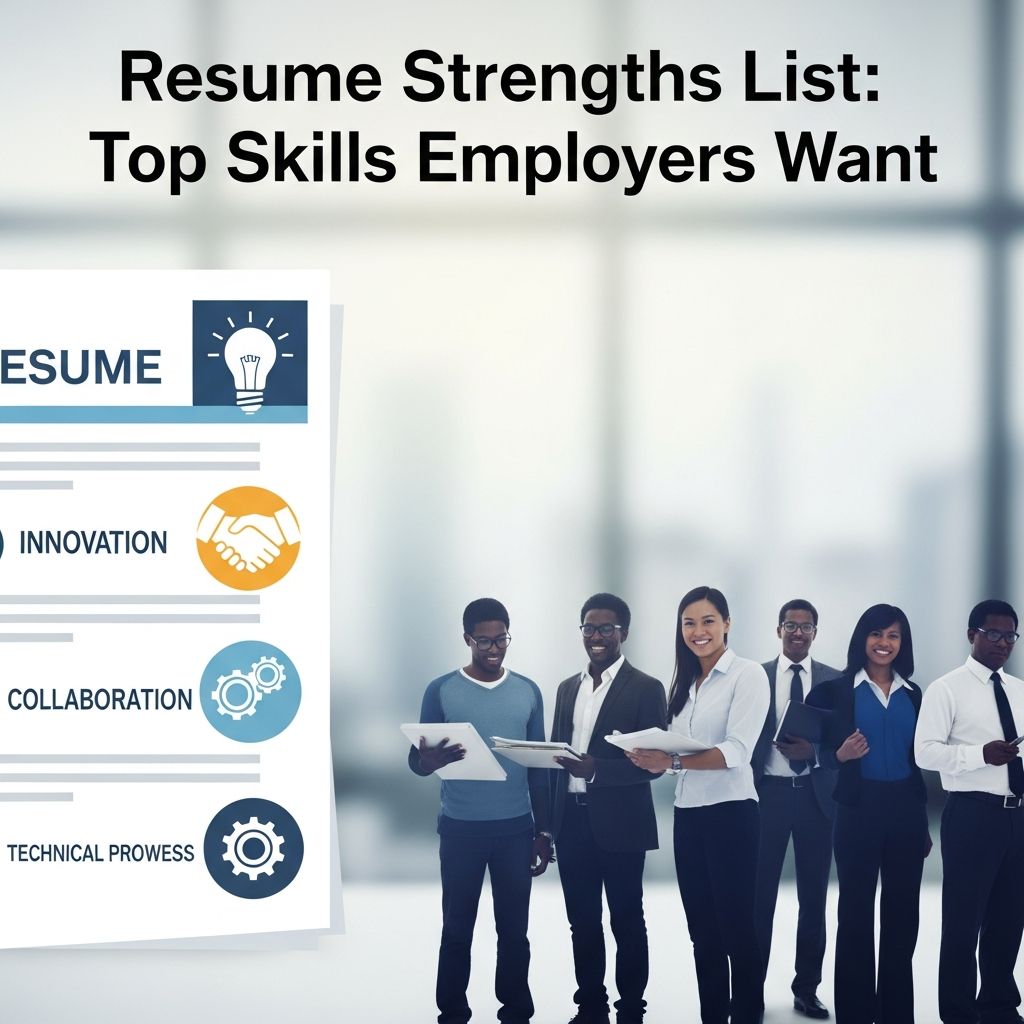
The most sought-after resume strengths fall into three main categories: hard skills (technical abilities specific to your industry), soft skills (interpersonal and professional qualities), and industry-specific competencies. By strategically presenting a mix of these strengths, you demonstrate that you’re a well-rounded professional capable of contributing meaningfully to an organization.
Essential Soft Skills Employers Prioritize
Soft skills have become increasingly important to hiring managers, often determining whether candidates get hired or passed over. While technical skills can be taught, soft skills reflect your character, work ethic, and ability to collaborate effectively. A candidate may possess all the technical qualifications but still miss out on the position due to weak communication or poor teamwork abilities.
Communication Skills
Clear and effective communication is fundamental in virtually every role. This includes both verbal and written communication abilities. Employers want candidates who can articulate ideas clearly, listen actively to colleagues, and adapt their communication style to different audiences. Highlighting examples of presentations you’ve delivered, reports you’ve written, or cross-departmental collaborations you’ve led demonstrates strong communication prowess.
Collaboration and Teamwork
How well you work with others is critical to career success. Employers value candidates who can work seamlessly with team members and across departments. When describing your experience, emphasize instances where you contributed to team goals, supported colleagues, and fostered positive working relationships. Include examples of successful group projects or initiatives where your collaboration directly contributed to achieving results.
Problem-Solving Ability
Every job involves challenges and problems. Employers want employees who approach obstacles creatively and develop practical solutions. Demonstrate this strength by describing situations where you identified problems, evaluated options, and implemented effective solutions. Use specific examples showing how your problem-solving abilities benefited your previous employers through improved processes, cost savings, or increased efficiency.
Leadership and Initiative
You don’t need to be in a managerial position to demonstrate leadership. Taking charge on important deliverables, working independently on complex projects, or going above and beyond to solve problems all showcase leadership qualities. Initiative involves proactively identifying tasks that need attention and taking ownership without requiring constant direction. Highlight moments when you stepped up to lead, motivated colleagues, or championed important initiatives.
Adaptability and Flexibility
In today’s rapidly changing work environment, adaptability is invaluable. Show that you can adjust to new situations, learn new skills quickly, and navigate changes in processes, technologies, or company culture. Include examples of times you successfully transitioned to new roles, mastered unfamiliar systems, or thrived during organizational changes.
Attention to Detail
Mistakes are expensive to businesses in terms of time and money. Demonstrate your careful and deliberate approach by submitting a meticulously proofread resume and cover letter. In your bullet points, highlight work achievements that showcase your diligence and conscientiousness, such as maintaining high accuracy rates or implementing quality control measures.
Time Management
Whatever role you’re seeking, time management is a prime skill to include on your resume. Employers want to know you have the discipline to meet deadlines, prioritize effectively, and maximize productivity. Describe situations where you juggled multiple projects and competing priorities while maintaining quality work and meeting all deadlines.
Critical Hard Skills and Technical Competencies
Hard skills are technical abilities specific to your industry and role. These are learnable, measurable competencies that directly impact job performance. The hard skills employers value vary by position, but certain competencies are universally respected across industries.
Data Analysis and Interpretation
In our data-driven world, the ability to analyze information and draw meaningful conclusions is increasingly valuable. Whether you’re working with spreadsheets, databases, or specialized analytics software, emphasize your capacity to interpret data, identify trends, and inform strategic decision-making. Include software proficiencies like Microsoft Excel, SQL, or industry-specific analytics tools.
Technical Proficiency
List the specific software, programming languages, or tools relevant to your target position. The technology skills on your resume should directly relate to the job you’re pursuing. For example, accountants might highlight Microsoft Excel and enterprise resource planning software expertise, while business analysts might showcase experience with AI forecasting tools or modeling software.
Project Management
The ability to plan, organize, and execute projects successfully is valued across industries. Highlight your experience managing timelines, coordinating team members, allocating resources, and delivering results on schedule. Include specific examples of complex projects you’ve overseen and their outcomes.
Financial Acumen
For finance-related positions, demonstrate your understanding of financial principles, budgeting, forecasting, and cost management. Show how you’ve identified cost-saving opportunities, improved financial processes, or contributed to revenue growth. Use quantifiable examples like “Reduced bad debt by 12% by analyzing delinquent accounts” or “Implemented cost-saving initiatives resulting in 33% cost savings.”
Industry-Specific Strengths
Different industries and roles require specialized skill sets. Tailoring your resume to highlight industry-specific strengths significantly increases your competitiveness.
Accounting and Finance
Accountants are expected to crunch numbers and make data-driven conclusions while communicating findings to non-technical audiences. Key strengths for these roles include analytical and problem-solving abilities, Microsoft Excel expertise, enterprise resource planning software knowledge, business and leadership capabilities, verbal and writing skills, data analytics, revenue recognition, risk and compliance understanding, and knowledge of Generally Accepted Accounting Principles (GAAP). Highlight achievements like accurate financial reporting, successful audits, or process improvements that enhanced efficiency.
Business Analysis
Business analysts wear many hats as data specialists, finance professionals, and problem solvers. Essential strengths include business acumen, data mining capabilities, client relations skills, strategic thinking abilities, experience with AI forecasting tools or modeling software, verbal and presentation skills, project management expertise, and strong collaboration abilities. Emphasize your experience translating complex data into actionable business insights.
Technology and Development
For technical roles, highlight relevant programming languages, software development methodologies, database management, cloud platform experience, and cybersecurity knowledge. Demonstrate both technical depth and your ability to communicate technical concepts to non-technical stakeholders.
Marketing and Communications
Marketing professionals should emphasize data analytics, content creation, social media management, campaign strategy development, SEO/SEM expertise, and customer insights analysis. Include specific achievements like “Developed an Instagram strategy that increased engagement by 40%.”
Character-Based Strengths That Set You Apart
Beyond specific skills, hiring managers assess character-based strengths that predict long-term success and cultural fit.
Dependability
Hiring managers want team members who do what they say they will do. Dependability becomes especially important when working with outside clients, where missing deadlines can damage business relationships. Showcase this strength through examples like completing all projects on time, earning attendance recognition, or maintaining consistent high-quality output.
Positivity and Resilience
This doesn’t mean being excessively cheerful but rather approaching difficulties with a can-do attitude. Show that you maintain a positive outlook, focus on solutions when facing challenges, and inspire colleagues through your optimistic yet realistic perspective. Demonstrate resilience by describing how you’ve overcome obstacles and emerged stronger.
Accountability
Accountability means always delivering on promises, building trust and reliability within teams. Accountable individuals admit mistakes, learn from them, and take steps to improve. This strength builds confidence that you’re someone others can depend on regardless of circumstances.
Emotional Intelligence
This skill allows individuals to understand and manage their own emotions while recognizing and responding to others’ emotions. Emotional intelligence creates a healthy workplace culture by enabling people to build strong positive relationships with colleagues. Include examples of times you’ve navigated difficult interpersonal situations or supported colleagues through challenges.
Level-Headedness Under Pressure
Remaining calm and collected when facing tight deadlines and demanding situations demonstrates maturity and professionalism. Show that you can prioritize effectively, think clearly under pressure, and make sound decisions even in challenging circumstances.
Demonstrating Strengths Through Achievement-Based Bullet Points
The way you present your strengths matters as much as which strengths you choose. Rather than simply listing skills, demonstrate them through specific, quantifiable achievements that show real-world impact.
Quantify Your Impact
Instead of saying “managed multiple projects,” write “Smoothly and calmly prioritized multiple web design projects for a team of 20 people in a fast-paced environment.” Use percentages, dollar amounts, and specific metrics: “Managed competing editorial deadlines while delivering weekly content that improved click rates by 20%.”
Show Problem-Solving in Action
Describe the challenge you faced, the action you took, and the result achieved. For example: “Implemented new consolidation procedures for monthly and quarterly close, reducing closing time by 30%” or “Closed 92% of desktop support tickets on the first call without escalation.” This approach demonstrates problem-solving ability through concrete evidence.
Highlight Transferable Skills
Identify skills gained from past experience that your future employer will value, such as research, analytical abilities, teamwork, communication, and leadership. Be specific about the context and outcomes to help readers understand how you’ll apply these skills in the new role.
Tailoring Strengths to the Job Description
Customizing your resume for each position dramatically improves your chances of getting noticed. Carefully review the job description and identify the employer’s stated priorities and required competencies.
Pay close attention to how the company says it operates and the workplace environment it promotes, then emphasize your most pertinent strengths. If the position emphasizes data analysis, ensure your analytical strengths are prominent. If teamwork and collaboration are repeatedly mentioned, highlight your collaborative achievements.
Use similar language to the job posting when describing your qualifications. If the employer uses specific terminology, mirror that language in your resume to improve keyword matching and show you understand the role’s requirements.
Creating a Balanced Skill Profile
A well-crafted resume balances both soft and hard skills, proving you’re a well-rounded professional with technical competence and collaborative spirit to excel. Imagine two equally qualified candidates on paper with identical technical skills and experience. The candidate whose resume highlights strong personal skills throughout bullet points—demonstrating collaboration, clear communication, and adaptability—will likely get the job. This candidate gives the hiring manager confidence they’ll fit long-term with the organization.
Ensure your resume demonstrates not just what you can do but who you are as a professional. Show that you’re technically proficient, interpersonally skilled, and personally invested in excellence.
Frequently Asked Questions
Q: What if I don’t have all the strengths mentioned in the job description?
A: Focus on the strengths you do possess and demonstrate how they’ll help you succeed in the role. Emphasize your ability and willingness to learn new skills. Many employers are willing to teach specific technical skills to candidates with strong foundational soft skills and the right attitude.
Q: Should I include a “Skills” section on my resume?
A: Yes, a dedicated skills section is valuable, especially for technical positions. However, also weave relevant skills into your experience descriptions through achievement-based bullet points. This dual approach reinforces your qualifications and improves keyword matching for applicant tracking systems.
Q: How do I prove soft skills on a resume?
A: Demonstrate soft skills through specific examples in your bullet points. Rather than writing “strong communicator,” describe how you “presented findings to senior leadership” or “coordinated across five departments to launch successful initiative.” Let your achievements speak to your soft skills.
Q: How many strengths should I highlight on my resume?
A: Aim for 6-10 core strengths distributed throughout your experience section. Quality matters more than quantity. Choose strengths that are most relevant to the position and supported by concrete examples from your background.
Q: Should I update my resume strengths for every job application?
A: Absolutely. Customizing your resume for each position shows you’ve carefully considered how your qualifications match their needs. Prioritize strengths that align with the job description and company culture. This targeted approach significantly improves your chances of getting selected for an interview.
References
- Skills to Put on a Resume Employers Will Actually Read — Robert Half. 2024. https://www.roberthalf.com/us/en/insights/landing-job/skills-that-will-make-your-resume-pop
- Listing Accomplishments on Your Resume (With Examples) — Indeed. 2024. https://www.indeed.com/career-advice/resumes-cover-letters/listing-accomplishments-on-your-resume
- 30 Best Personal Skills for Your Resume [Examples] — Teal HQ. 2024. https://www.tealhq.com/post/personal-skills-for-resume
- Writing Impactful Resume Bullets — Yale University Office of Career Strategy. 2024. https://ocs.yale.edu/resources/writing-impactful-resume-bullets/
Similar Articles








Read full bio of Sneha Tete