Creating Resilient Investment Portfolios Through Strategic Diversification
Master the art of spreading investments to build stronger, more stable financial futures.

In an unpredictable financial landscape, building a portfolio capable of weathering market storms has become essential for investors of all experience levels. The foundation of this resilience lies in a principle as old as investing itself: don’t put all your eggs in one basket. Portfolio diversification—the practice of spreading investments across multiple asset classes, industries, and geographies—has emerged as one of the most effective strategies for managing risk while pursuing meaningful returns. Unlike strategies that require constant monitoring or market timing, diversification operates as a passive yet powerful defense mechanism that works continuously to protect your wealth.
Understanding the Mechanics of Portfolio Resilience
A resilient portfolio is one that maintains stability across varying economic conditions. This resilience doesn’t emerge from luck or perfect prediction; it comes from intentional construction. When you concentrate your investments in a single asset class or sector, you expose yourself to what financial experts call concentration risk. If that specific investment or market segment experiences a downturn, your entire portfolio suffers proportionally.
Consider what happened during economic disruptions: investors with heavily equity-weighted portfolios experienced dramatic losses, while those with balanced allocations across stocks, bonds, and other assets saw their losses cushioned by more stable holdings. This principle applies whether markets face cyclical downturns or unexpected shocks. By spreading capital across investments that respond differently to economic conditions, you create a natural shock absorber.
The Multi-Asset Foundation: Building Blocks of Strength
Modern diversification extends far beyond simply owning a few different stocks. A truly resilient portfolio incorporates multiple asset classes, each serving a distinct purpose:
- Equities (Stocks)—Provide long-term growth potential and historically deliver the strongest returns over extended periods, though they experience significant volatility in the short term
- Fixed Income (Bonds)—Generate steady income streams and typically move inversely to stocks, often rising when equities decline
- Commodities—Include precious metals and industrial commodities that respond to inflation and currency movements differently than traditional securities
- Cash Equivalents—Certificates of deposit (CDs) and money market accounts offer principal stability and serve as a foundation for confidence
- International Securities—Reduce exposure to domestic-only risk and capture growth from developing and established foreign markets
Within each asset class, further subdivisions create additional resilience. Bonds, for example, can be sourced from municipalities, corporations, or federal governments, each with different risk profiles and return characteristics. Stocks span small-cap, mid-cap, and large-cap companies, as well as domestic and international markets. This layered approach ensures that even within asset classes, concentration risk is minimized.
How Diversification Smooths the Investor Experience
One of the most underappreciated benefits of diversification is its ability to create smoother returns over time. An investor holding only technology stocks might experience extraordinary gains during a tech boom, followed by catastrophic losses during a sector correction. The emotional and financial toll can drive poor decision-making—panic selling at market bottoms or abandonment of long-term strategies.
A diversified portfolio eliminates these extreme swings. When stocks decline, bonds often provide ballast. When inflation rises, commodities and real assets typically benefit. The result is a more predictable, steady progression toward financial goals. Historical data consistently demonstrates this effect: while a pure equity portfolio may spike higher during bull markets, the diversified portfolio experiences smaller peaks and smaller troughs, generating superior total returns over complete market cycles.
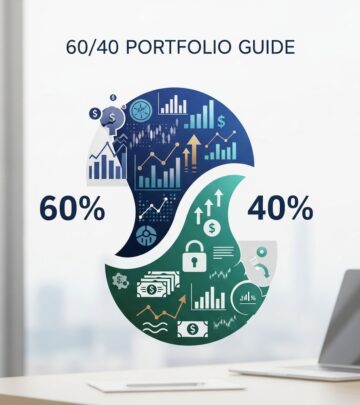
The 60/40 strategy—allocating 60% to stocks and 40% to bonds—exemplifies this principle. While this allocation historically underperforms during stock market surges, it demonstrates superior performance during downturns, and superior overall returns across full market cycles. This consistency allows investors to maintain discipline and stay invested rather than making emotionally-driven changes at precisely the wrong times.
Risk Management and the Two Types of Investment Risk
Understanding risk is central to appreciating diversification’s value. Investors face two categories of risk: systematic and unsystematic.
Systematic risk—also called market risk—affects entire markets and cannot be eliminated through diversification. Economic recessions, interest rate changes, and geopolitical events create broad market impacts that touch all investments to some degree.
Unsystematic risk—specific to individual companies or sectors—can be substantially reduced through diversification. If one semiconductor manufacturer faces production challenges, other diversified holdings insulate your portfolio from the full impact. A portfolio holding companies across healthcare, energy, consumer goods, and technology spreads this company-specific risk across numerous independent entities.
This distinction explains why diversification doesn’t eliminate risk—it can’t overcome market-wide forces—but it effectively neutralizes the risk within your control. By addressing unsystematic risk, diversification allows you to capture market returns without unnecessary exposure to preventable losses.
Geographic Diversification: Expanding Beyond Home Markets
Modern portfolio construction increasingly recognizes that economic cycles vary globally. The U.S. market boom might coincide with stagnation in Asian markets, while European economic strength could emerge during American weakness. By including international stocks and bonds, investors capture growth opportunities across the world while reducing dependence on any single nation’s economic performance.
Geographic diversification also provides inflation protection and currency diversification. When the U.S. dollar strengthens, international holdings may lose value in dollar terms but often benefit from the underlying economic strength of their home countries. Conversely, dollar weakness boosts international investment returns when converted back to dollars. This natural hedging effect represents an often-overlooked resilience factor.
The Accessibility Advantage
A common concern among individual investors is that meaningful diversification requires enormous capital or complex strategies. The reality is quite different. Modern investment vehicles—particularly exchange-traded funds (ETFs) and mutual funds—enable diversification with minimal investment. A single ETF holding 500 stocks provides diversification across market capitalizations, industries, and sectors instantaneously.
This accessibility democratizes portfolio construction. Even investors with modest accounts can achieve sophisticated diversification that would have been impossible two decades ago. Target-date funds automatically adjust allocations based on your time horizon, requiring virtually no ongoing management from the investor.
Tax Efficiency Through Strategic Allocation
Resilient portfolios don’t ignore tax implications—they integrate them into the construction process. Strategic placement of assets in tax-advantaged accounts versus taxable accounts significantly improves after-tax returns. Growth-oriented stocks perform better in tax-deferred accounts like 401(k)s and traditional IRAs, where compounding occurs without annual tax drag. Meanwhile, income-generating bonds can utilize tax-advantaged structures more efficiently than taxable accounts.
Additionally, tax-loss harvesting—offsetting gains with losses from underperforming investments—becomes more valuable in diversified portfolios where some holdings will inevitably decline. This turns market volatility into a tax advantage unavailable to concentrated portfolios.
Maintaining Discipline During Market Chaos
The ultimate test of portfolio resilience occurs during market downturns when fear drives irrational behavior. Investors with concentrated portfolios face pressure to abandon their strategies after watching investments plummet 40-50%. Those with diversified portfolios experience smaller declines and see some holdings rising while others decline, providing psychological reinforcement to remain invested.
Historical analysis shows that investors who panic sell during downturns substantially underperform those who maintain discipline. A resilient portfolio designed to weather downturns actually prevents the costly mistakes that damage long-term wealth accumulation more severely than market volatility itself.
Evaluating Your Diversification Strategy
| Portfolio Type | Typical Allocation | Best For | Risk Level |
|---|---|---|---|
| Conservative | 20% Stocks / 80% Bonds & Cash | Near-retirees, risk-averse investors | Low |
| Moderate | 60% Stocks / 40% Bonds & Cash | Mid-career professionals, balanced goals | Moderate |
| Aggressive | 90% Stocks / 10% Bonds & Cash | Long-horizon investors, growth-focused | High |
| Global Diversified | 40% U.S. / 30% International / 30% Bonds & Alternatives | Investors seeking geographic diversity | Moderate-High |
Frequently Asked Questions
Can diversification completely eliminate investment risk?
No. Diversification addresses unsystematic risk—company and sector-specific risk—but cannot eliminate systematic market risk. However, reducing unsystematic risk while accepting unavoidable market risk represents the optimal approach for long-term investors.
How many investments do I need for adequate diversification?
Research suggests that 20-30 individual holdings across multiple asset classes and sectors provides substantial diversification benefits. However, a single well-constructed diversified fund can achieve this instantly.
Does diversification hurt returns?
Diversified portfolios typically don’t achieve the spectacular peaks of concentrated portfolios during bull markets, but they substantially outperform over complete market cycles by avoiding the devastating valleys. The smoother path to wealth accumulation ultimately generates superior results.
How often should I rebalance a diversified portfolio?
Annual or semi-annual rebalancing typically maintains target allocations and ensures discipline. More frequent rebalancing creates unnecessary costs without additional benefit for most investors.
Building Your Resilient Portfolio Today
The construction of a resilient portfolio begins not with complex analysis but with honest assessment: your risk tolerance, time horizon, financial goals, and liquidity needs. A 25-year-old investor can tolerate considerably more equity risk than someone five years from retirement. A parent saving for education expenses faces different constraints than someone funding retirement decades away.
Once you understand your parameters, the path forward becomes clear. Allocate across asset classes appropriate for your situation, select quality investments within each class, and commit to a rebalancing schedule. The beauty of diversification is that it works quietly and continuously, requiring neither perfect market timing nor constant intervention.
In a world of persistent uncertainty, resilient portfolios built through diversification don’t promise to eliminate challenges—they promise something more valuable: steady progress toward your financial goals despite inevitable market turbulence. This timeless principle, supported by decades of evidence, remains the most reliable path to long-term investment success.
References
- 3 Reasons to Consider Portfolio Diversification — Comerica. https://www.comerica.com/insights/personal-finance/3-reasons-to-consider-portfolio-diversification.html
- Portfolio Diversification: Why It’s Important — Bankrate. https://www.bankrate.com/investing/diversification-is-important-in-investing/
- The Benefits of Diversification and How To Diversify Your Portfolio — Let’s Assemble. https://www.letsassemble.com/blog/benefits-of-diversification
- Diversifying investments for the long run — BlackRock. https://www.blackrock.com/americas-offshore/en/education/portfolio-construction/diversifying-investments
- Portfolio Diversification: What It Is and Why It’s Important — SoFi. https://www.sofi.com/learn/content/why-portfolio-diversification-matters/
Similar Articles







Read full bio of medha deb