Resignation Letter For Health Reasons: 6 Key Elements
Learn how to write a professional resignation letter due to health reasons with templates and examples.
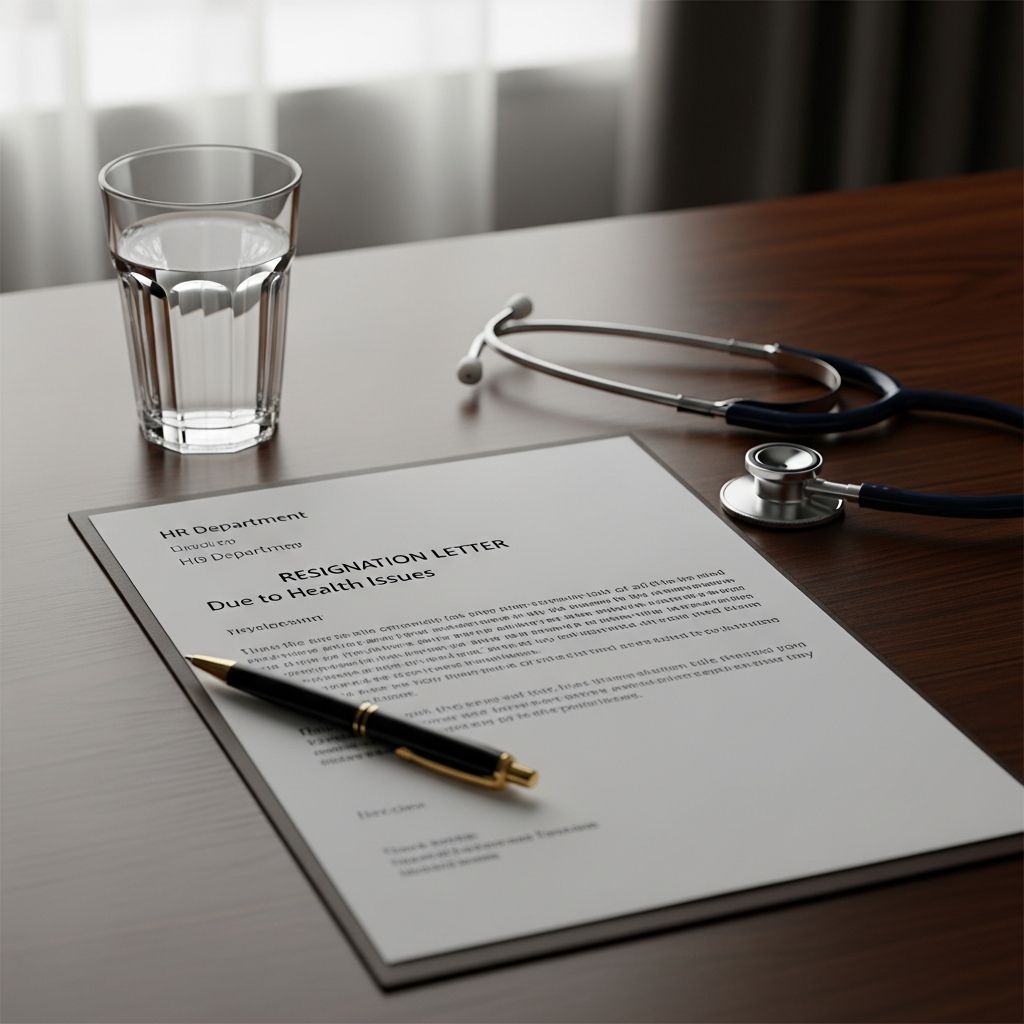
How to Write a Resignation Letter Due to Health Issues
Resigning from your job due to health concerns is never an easy decision. You’re facing a challenging situation where your physical and mental well-being must take priority, yet you still want to handle your departure professionally and respectfully. Writing a resignation letter due to health issues requires a delicate balance between protecting your privacy and providing your employer with the context they need to understand your decision.
Whether you’re dealing with a chronic illness, a recent medical diagnosis, mental health challenges, or any condition that impacts your ability to work effectively, your resignation letter is an important formal document that will be part of your employment record. This comprehensive guide will help you navigate the process with confidence and ease, ensuring you make a smooth transition while taking care of your health.
Understanding a Health-Related Resignation
A resignation letter due to health issues is distinct from a standard resignation. Rather than leaving for a new opportunity or career advancement, you’re stepping away from your position because health-related factors are severely impacting your physical and/or mental well-being. This type of resignation acknowledges that your health circumstances make it difficult or impossible to continue performing your job duties effectively.
When you resign due to health reasons, you’re making a clear statement that you’re prioritizing personal health above work obligations. This might stem from a recent medical diagnosis, a long-term chronic illness, mental health deterioration, stress-related conditions, or other health complications that require your immediate attention and focus. Understanding this distinction helps you frame your resignation letter appropriately.
Key Elements to Include in Your Resignation Letter
Regardless of your specific circumstances, every effective resignation letter due to health issues should contain certain fundamental elements. These components ensure your letter is professional, clear, and legally appropriate.
Opening with a Professional Greeting
Begin your letter with an appropriate salutation addressed to your direct manager or supervisor. Use “Dear Mr./Ms. [Last Name]” or “Dear [First Name]” depending on your workplace culture and your relationship with your supervisor. This sets a professional tone from the very beginning of your communication.
Clear Statement of Resignation
Make your resignation intentions unmistakably clear from the start. State explicitly that you are resigning from your position. Include your job title, the company name, and your projected last working day. This information should appear in your opening paragraph to ensure there’s no confusion about your intentions. For example, you might write: “I am writing to formally resign from my position as [Job Title] at [Company Name], effective [Date].”
Explanation of Health Circumstances
While you’re not required to disclose specific medical details or diagnoses, providing some context about why you’re leaving helps your employer understand your decision. You should share enough information to explain that health concerns are driving your resignation, but only what you’re comfortable sharing. A simple statement such as “due to my current health condition” or “due to health concerns that significantly impact my ability to perform my duties” is typically sufficient.
Your Last Working Day
Clearly specify your last day of work. This helps your employer plan for the transition and ensures there’s no confusion about your end date. If you’re providing a two-week notice, calculate the exact date two weeks from when you submit the letter. If circumstances require immediate resignation, state that clearly as well.
Expression of Gratitude
Thank your employer for the opportunities you’ve had during your employment. Acknowledge any skills you’ve gained, relationships you’ve built, or experiences that have been valuable to your professional development. This closing gesture helps maintain positive relationships despite your departure.
Professional Closing
End your letter with a professional sign-off such as “Sincerely,” followed by your full name and contact information. This formal closing reinforces the professional nature of your communication.
Tips for Writing Your Health-Related Resignation Letter
Be Concise About Your Medical Condition
You don’t need to disclose specific health details, your diagnosis, or extensive medical information. Simply mention what’s necessary—enough to explain your decision without oversharing. For instance, you might say: “Unfortunately, due to my current health condition, I have come to the difficult decision that it is time for me to leave my position.” This approach communicates your decision while respecting your privacy and maintaining professional boundaries.
Maintain a Professional Tone
Even though your situation is deeply personal, maintain a professional and respectful tone throughout your letter. Avoid emotional language, complaints about the workplace, or negative commentary. Your letter is a formal document that may be kept in your employment file, so ensure every word reflects professionalism.
Keep It Concise
Your resignation letter should be brief—typically one to two pages maximum. Provide all necessary information without unnecessary elaboration. Get straight to the point about your resignation and the reason, and avoid lengthy explanations about your health situation.
Offer Support During Transition
If feasible, offer to help during the transition period. You might suggest that you’re available to train your replacement, document your responsibilities, or answer questions about ongoing projects. This gesture demonstrates professionalism and consideration, even as you step away from your position.
Consider Delivery Method
You can deliver your resignation letter via email or as a formal printed letter. Email is increasingly acceptable and provides a timestamped record of your resignation. If you send an email, use a professional subject line such as “Resignation Notice—[Your Name]” and follow the same formatting standards you would use for a printed letter.
Resignation Letter Template
Use this template as a starting point for crafting your resignation letter:
[Your Name][Your Address][City, State ZIP Code][Your Phone Number][Your Email Address][Date][Manager's Name and Title][Company Name][Company Address][City, State ZIP Code]Dear [Manager's Name]:I am writing to formally resign from my position as [Job Title] at [Company Name], effective [Last Working Day]. This decision has not been an easy one, but due to personal health reasons, I am no longer able to continue working in my current role.Over the past [time period], I have been managing [brief reference to health impact] that has significantly impacted my ability to perform my duties effectively. After consulting with medical professionals, it has become clear that I need to prioritize my health and well-being at this time.I am grateful for the opportunities I have had during my employment at [Company Name]. I have genuinely enjoyed working with my colleagues and have learned valuable skills that will benefit my career. The experience and relationships I've built here have been instrumental to my professional growth.If possible, I would be happy to assist with the transition in any way I can, such as training my replacement or documenting my current responsibilities, depending on what my health circumstances allow.Thank you for your understanding during this challenging time. I wish you and the company continued success.Sincerely,[Your Signature][Your Typed Name][Your Phone Number][Your Email Address]Resignation Letter Examples
Example 1: Standard Health-Related Resignation with Two Weeks Notice
Subject: Resignation Letter—Health Reasons
Dear Mr. Johnson,
I am writing to formally notify you of my resignation from my position as Marketing Manager at ABC Corp, effective March 15, 2024. This decision has not been easy, but due to personal health reasons, I am no longer able to continue working in my current role.
Over the past several months, I have been struggling with a chronic condition that has significantly impacted my ability to perform my duties. After consulting with my medical team, it has become clear that I need to prioritize my health and well-being at this time. As much as I have valued working at ABC Corp, I believe it is in the best interest of both myself and the company for me to step down.
I am grateful for the opportunities I have had to grow professionally and to work alongside such talented colleagues. I will do my best to ensure a smooth transition during my remaining time here.
Sincerely,
Sarah Mitchell
Example 2: Resignation Due to Mental Health Concerns
Subject: Resignation Letter—Mental Health Reasons
Dear Ms. Williams,
I am writing to inform you of my decision to resign from my position as Senior Analyst at TechVision Solutions, effective April 5, 2024. After careful consideration, I have determined that I need to prioritize my mental health and well-being.
Over the past months, my mental health has deteriorated, and it has become increasingly difficult for me to perform my job effectively. Despite my best efforts, I have reached a point where I can no longer maintain the performance standards this position requires. I believe the most responsible decision for everyone involved is for me to step away and focus on my recovery.
I have genuinely appreciated my time at TechVision Solutions and the professional development opportunities provided. I am grateful for the support of my team and management.
Sincerely,
David Chen
Example 3: Immediate Resignation Due to Urgent Health Concerns
Subject: Immediate Resignation—Health Reasons
Dear Mr. Anderson,
I am writing to notify you of my immediate resignation from my position as Operations Coordinator at GlobalTrade Inc., effective immediately. My current medical situation requires urgent attention and immediate focus on my recovery.
Unfortunately, I am unable to provide a standard notice period due to the pressing nature of my health circumstances. I understand this creates an inconvenient situation, and I apologize. However, my medical team has advised that I must remove myself from the workplace immediately to address my health concerns.
I am grateful for my time with GlobalTrade Inc. and the experiences I have gained. I will make myself available on a limited basis, as my health permits, if you need assistance with the transition.
Sincerely,
Jessica Rodriguez
Example 4: Resignation with Health and Family Considerations
Subject: Resignation Letter—Health and Family Reasons
Dear Ms. Thompson,
I am writing to formally notify you of my resignation from my position as Project Manager at DesignWorks Creative, effective May 1, 2024. This decision comes after careful consideration of personal health and family circumstances that now require my immediate attention.
My health situation, combined with family obligations, has made it necessary for me to step away from my professional responsibilities. I need to focus on my recovery and supporting my family during this challenging time.
I am deeply grateful for the opportunities I have had at DesignWorks Creative. The skills I’ve developed and relationships I’ve built here have been invaluable. I wish the company and my colleagues continued success.
Sincerely,
Michael Patterson
Important Considerations Before You Resign
Review Your Employment Benefits
Before submitting your resignation, review your employment benefits, particularly health insurance coverage. Understand how your resignation will affect your health insurance, whether COBRA is available, and what deadlines you need to meet. This information is crucial when planning your resignation and recovery.
Check Your Employment Contract
Review your employment contract or employee handbook to understand any notice period requirements, severance policies, or other terms related to resignation. Some positions require longer notice periods, though health-related resignations may be treated differently.
Consult with HR
Before submitting your resignation letter, consider speaking with your HR department. They can explain your benefits, any severance options, and how your resignation will be processed. They may also provide guidance on the resignation process itself.
Consider Medical Documentation
While not always necessary, having medical documentation supporting your resignation can be helpful, particularly if you’re resigning without the standard notice period. This documentation remains private but may be important for your records.
Frequently Asked Questions
Q: Do I have to explain my health condition in detail?
A: No. You are not required to disclose specific diagnoses or detailed medical information. Simply stating that health concerns are affecting your ability to work is sufficient. Share only what you’re comfortable revealing.
Q: Can I resign immediately due to health issues?
A: Yes, you can resign immediately if your health circumstances require it. While employers typically expect notice, your health and well-being take priority. Explain the urgent nature of your situation in your resignation letter.
Q: Should I email my resignation or deliver it in person?
A: Email is perfectly acceptable and increasingly standard. It provides a timestamped record of your resignation. If you prefer, you can deliver a printed letter in person and follow up with an email for documentation purposes.
Q: Will resigning due to health issues affect my eligibility for unemployment benefits?
A: This depends on your location and specific circumstances. In some areas, resigning due to medical reasons may qualify you for unemployment benefits. Contact your state’s unemployment office for specific guidance.
Q: What should I do about my work projects and responsibilities?
A: Offer to help with the transition as much as your health permits. Document your current projects, priorities, and any critical information your replacement will need. This professionalism can help maintain positive references for your future.
Q: How much notice should I provide?
A: Two weeks is standard, but this may vary based on your position, industry, and employment contract. If health circumstances require immediate resignation, provide as much notice as possible, even if it’s just a few days.
Moving Forward After Your Resignation
After you’ve submitted your resignation letter, focus on your recovery and well-being. Maintain professionalism during your remaining time at work, complete any transition tasks you’re able to manage, and document important information for your successor. Take care of your health insurance situation, understand your final paycheck details, and consider what your next steps will be once you’ve recovered.
Remember that prioritizing your health is never wrong. Your well-being is paramount, and taking the necessary time to recover will ultimately benefit both you and your career in the long term.
References
- How to Write a Resignation Letter Due to Health Reasons — The Muse. 2024. https://www.themuse.com/advice/resignation-letter-due-to-health
- How To Write a Letter of Resignation Due to Illness — Indeed Career Guide. 2024. https://www.indeed.com/career-advice/starting-new-job/resignation-letter-due-to-illness
- Free Resignation Letter Due to Health & Stress — Legal Templates. 2024. https://legaltemplates.net/form/resignation-letter/health-and-stress/
- Employment and Health Insurance Rights — U.S. Department of Labor. 2024. https://www.dol.gov/
- Understanding Unemployment Benefits — U.S. Department of Labor, Employment and Training Administration. 2024. https://www.edd.ca.gov/
Similar Articles








Read full bio of Sneha Tete