Representative Sample: Definition, Importance & Why It Matters
Understanding representative samples: Essential for accurate research, surveys, and statistical analysis.

What is a Representative Sample?
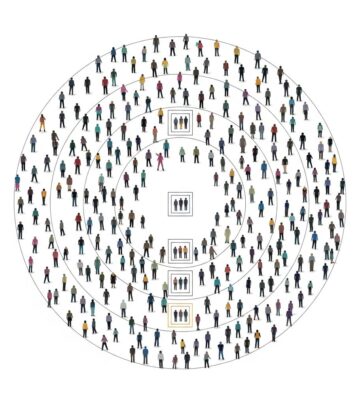
A representative sample is a subset of a population that accurately reflects the demographic, social, economic, and other relevant characteristics of the larger population from which it is drawn. In research, statistics, and surveys, a representative sample serves as a microcosm of the entire population, allowing researchers to draw conclusions and make inferences about the whole group without needing to study every single individual.
The primary goal of obtaining a representative sample is to minimize bias and ensure that the findings derived from analyzing the sample can be reliably generalized to the broader population. When a sample is truly representative, the results obtained from studying it should closely mirror what researchers would find if they had examined the entire population.
Representative sampling is fundamental to quantitative research, market research, political polling, quality control, medical studies, and countless other fields where understanding population characteristics is essential but studying every member is impractical or impossible.
Key Characteristics of a Representative Sample
For a sample to be considered representative, it must possess several critical characteristics:
Demographic Alignment
The sample should mirror the demographic composition of the population, including age, gender, race, ethnicity, education level, income, and other relevant factors. If the general population is 51% female, the sample should reflect approximately the same gender distribution.
Size and Adequacy
The sample must be sufficiently large to provide reliable data. Sample size calculations depend on the population size, desired confidence level, and acceptable margin of error. Larger samples generally provide more accurate representations, though the relationship is not linear.
Random Selection
Members of the population should have an equal or known probability of being selected for the sample. This randomness helps eliminate selection bias and ensures that the sample is not skewed toward particular groups.
Behavioral and Attitudinal Diversity
Beyond demographics, representative samples should capture the diversity of beliefs, attitudes, preferences, and behaviors present in the population. A politically representative sample, for example, should include individuals across the political spectrum proportionally.
Socioeconomic Representation
Income, occupation, education level, and employment status should be represented in proportions that match the population being studied.
Why Representative Samples Matter
Validity of Research Findings
Representative samples are essential for producing valid, trustworthy research findings. When researchers work with a truly representative sample, they can be confident that their conclusions apply broadly to the entire population. Without representativeness, findings may only reflect the characteristics of the specific individuals studied, severely limiting the generalizability of results.
Cost and Time Efficiency
Studying an entire population is often impossible, impractical, or prohibitively expensive. Representative sampling allows researchers to obtain accurate population insights by studying a smaller, manageable subset. This dramatically reduces research costs and timelines while maintaining accuracy.
Reducing Bias
Non-representative samples often introduce systematic bias. For instance, if a survey about technology adoption only interviews people in urban areas, it will overestimate technology usage compared to the general population. Representative sampling techniques work to eliminate such biases.
Supporting Evidence-Based Decision Making
Governments, businesses, healthcare providers, and organizations rely on representative sampling to make informed policy decisions, product development choices, and resource allocation. Decisions based on biased or non-representative samples can lead to poor outcomes.
Statistical Reliability
Representative samples allow researchers to calculate confidence intervals and margins of error, quantifying the precision of their estimates. This statistical rigor is fundamental to the scientific method and to creating credible research.
Methods for Obtaining Representative Samples
Simple Random Sampling
In simple random sampling, every member of the population has an equal chance of being selected. Researchers use random number generators or lottery methods to select participants. This is often considered the gold standard but may not guarantee representativeness in small samples or when the population has distinct subgroups.
Stratified Random Sampling
This method divides the population into distinct strata or subgroups based on relevant characteristics (age, income, education, etc.), then randomly samples from each stratum proportionally. Stratified sampling often produces more representative samples than simple random sampling, especially when population subgroups vary considerably.
Cluster Sampling
Researchers divide the population into clusters, randomly select some clusters, then either sample all members of selected clusters or randomly sample within them. This approach is cost-effective for geographically dispersed populations.
Systematic Sampling
Starting with a random point, researchers select every nth individual from a list of the population. This method is simpler than random sampling but can be problematic if the population list has hidden patterns.
Quota Sampling
Rather than purely random selection, researchers fill predetermined quotas for specific population segments. While faster than random methods, quota sampling introduces more subjective judgment and potential bias.
Common Challenges in Creating Representative Samples
Non-Response Bias
Even when researchers attempt to create a representative sample, not all selected individuals participate. Those who refuse to participate may differ systematically from those who do, introducing bias. High non-response rates can significantly compromise sample representativeness.
Selection Bias
When the selection process itself favors certain groups, the resulting sample becomes biased. For example, telephone surveys conducted during business hours may oversample retirees and unemployed individuals while undersampling employed people.
Coverage Bias
If certain population segments are difficult or impossible to reach, the sample will not represent them adequately. Internet-based surveys, for instance, exclude people without internet access.
Sampling Error
Even with proper random selection, samples differ from the population by chance. Larger samples reduce sampling error, but eliminating it entirely is impossible.
Population Definition Issues
Ambiguity about who comprises the target population can lead to samples that don’t represent the intended group. Clear definition of the population is essential before sampling begins.
Assessing Sample Representativeness
Comparison with Population Parameters
Researchers compare the sample’s characteristics with known population characteristics. If census data or other reliable population information exists, comparing demographic and other variables helps identify representation gaps.
Statistical Testing
Chi-square tests and other statistical methods can evaluate whether the sample’s distribution across key variables matches the population distribution.
Response Analysis
Examining characteristics of non-respondents and comparing them with respondents helps researchers understand potential response bias.
Weighting Adjustments
When samples deviate from population characteristics, researchers can apply statistical weights to adjust the analysis, giving more weight to underrepresented groups and less weight to overrepresented ones.
Representative Samples Across Different Fields
Market Research
Companies use representative samples to understand consumer preferences, test new products, and estimate market demand. A representative sample of consumers ensures that market research findings accurately predict how the broader market will respond.
Political Polling
Election polls rely heavily on representative sampling. Pollsters work to ensure their samples represent the likely voting population by age, party affiliation, geographic location, and other factors to predict election outcomes accurately.
Medical Research
Clinical trials require representative samples of the patient population to ensure that findings apply to diverse patients, not just a narrow demographic. Lack of representativeness in medical research has historically led to treatments that work differently across demographic groups.
Quality Control
Manufacturing and service industries use representative sampling to monitor product and service quality. Random samples at various production stages help identify quality issues without inspecting every unit.
Academic Research
University studies across psychology, sociology, economics, and other disciplines depend on representative sampling to produce generalizable findings.
The Relationship Between Sample Size and Representativeness
While larger samples generally provide better representation, the relationship is more nuanced than simply “more is always better.” A small sample selected through proper random stratification can be more representative than a large sample with selection bias. However, larger samples do reduce sampling error and increase confidence in findings.
The appropriate sample size depends on the population size, desired confidence level (typically 95% or 99%), acceptable margin of error (typically ±3% to ±5%), and the variability within the population on variables of interest.
Common Misconceptions About Representative Samples
Misconception: A Representative Sample Must Be Very Large
While size matters, representativeness depends more on proper sampling methodology and adequate size relative to population size. A well-designed sample of 1,000 can represent a nation of 330 million accurately.
Misconception: Random Selection Automatically Creates Representativeness
While randomization is essential, it doesn’t guarantee representativeness in small samples or when population subgroups vary significantly. Stratified approaches often work better.
Misconception: Representativeness Is Absolute
No sample perfectly represents a population. Representativeness exists on a spectrum, and researchers should quantify how well their sample represents the population.
Frequently Asked Questions
Q: What is the difference between a representative sample and a random sample?
A: A random sample is selected using randomization to avoid bias, but randomness alone doesn’t guarantee representativeness. A representative sample is specifically selected or weighted to match population characteristics. A representative sample should be random, but not all random samples are representative.
Q: How do researchers decide on sample size?
A: Sample size is determined using statistical formulas that consider population size, desired confidence level, acceptable margin of error, and expected variability in the population. Online calculators and statistical software help determine appropriate sample sizes for different research scenarios.
Q: Can a sample be representative if it’s not random?
A: Rarely, and with difficulty. Non-random samples typically introduce bias. However, quota sampling and weighted analysis can sometimes produce reasonably representative results if properly designed and validated against known population characteristics.
Q: Why do some polls predict election results poorly despite using representative samples?
A: Even well-designed representative samples have margins of error, and actual election outcomes depend on factors like voter turnout, late-deciding voters, and dynamic campaign events that sampling cannot fully capture.
Q: How is representativeness measured?
A: Representativeness is assessed by comparing sample characteristics with known population parameters using statistical tests. Researchers examine whether key demographic and other variables are distributed similarly in the sample and population.
References
- Sampling Theory and Practice — National Institute of Standards and Technology (NIST). 2023. https://www.nist.gov/
- Survey Sampling Methods and Statistics — U.S. Census Bureau. 2024. https://www.census.gov/
- Principles of Statistical Inference — American Statistical Association. 2024. https://www.amstat.org/
- Research Methods: The Essential Knowledge Base — SAGE Publications Research Methods. 2023. https://methods.sagepub.com/
- Clinical Trial Sampling and Patient Representation — U.S. Food and Drug Administration. 2024. https://www.fda.gov/
Similar Articles








Read full bio of Sneha Tete