Understanding Renters Insurance Requirements
Learn whether renters insurance is mandatory and how it protects you

When signing a rental agreement, many tenants encounter a requirement to obtain renters insurance. This coverage protects personal belongings and provides liability protection, yet many renters remain uncertain about whether this insurance is truly mandatory or simply a landlord preference. Understanding the legal landscape, coverage options, and your rights as a tenant is essential before committing to any rental arrangement.
Legal Status of Renters Insurance Across the United States
Renters insurance is not mandated by state law in any U.S. state. However, this does not mean you can ignore insurance requirements when renting. The distinction is critical: while no state legislature requires renters to carry insurance, individual landlords and property management companies retain the authority to make it a condition of tenancy through lease agreements.
The legal framework surrounding renters insurance varies significantly by state. Some states impose tenant protections that regulate how landlords can enforce insurance requirements, while others grant landlords broader discretion in setting coverage terms. Understanding your state’s approach helps clarify what to expect during the leasing process.
States with Enhanced Tenant Protections
Thirteen states have implemented specific protections limiting how landlords can mandate renters insurance. These jurisdictions include California, Connecticut, Delaware, Illinois, Maine, Maryland, Massachusetts, New Jersey, New York, Oregon, Rhode Island, Vermont, and Washington.
In these states, common restrictions include:
- Caps on required liability coverage amounts
- Advance notice requirements before enforcement
- Prohibitions on landlords being named as policy beneficiaries
- Transparent disclosure of insurance terms in lease documents
These protections do not eliminate insurance requirements but create clearer boundaries between tenant responsibilities and landlord authority, offering greater transparency and consumer safeguards.
States with Flexible Landlord Authority
In the remaining thirty-seven states, landlords operate under fewer statutory restrictions regarding renters insurance demands. These states rely more heavily on general contract law rather than detailed tenant protection statutes specific to insurance. Landlords in these jurisdictions can typically require renters insurance as a lease condition without explicit state guidelines limiting their authority, provided requirements are disclosed upfront in the lease agreement.
In these states, coverage requirements and liability minimums can vary significantly between properties, depending entirely on individual landlord preferences rather than state-mandated standards.
Why Landlords Require Renters Insurance
Landlords require renters insurance for practical risk management purposes. Standard landlord insurance policies cover the building structure and common areas but typically do not protect tenants’ personal belongings or liability arising from tenant actions. By requiring renters insurance, landlords shift certain financial responsibilities to tenants while protecting themselves from disputes over damaged or lost property.
Additional reasons landlords enforce this requirement include:
- Liability Protection: Renters insurance covers the tenant’s liability if someone is injured in the rental unit or if the tenant causes damage to another person’s property, reducing the landlord’s exposure to lawsuits.
- Tenant Financial Security: Coverage ensures tenants can recover financially if their belongings are damaged, stolen, or destroyed, reducing potential disputes with landlords.
- Property Preservation: Tenants with insurance may take better care of rental properties, knowing claims could result in higher premiums.
- Dispute Prevention: Clear insurance requirements minimize disagreements about property damage responsibility and financial recovery.
Coverage Details: What Renters Insurance Protects
Renters insurance typically comprises three main coverage types, each addressing different risks:
Personal Property Protection
This component covers your belongings within the rental unit, including furniture, clothing, electronics, and other possessions you own. Coverage applies to losses from covered events such as theft, fire, windstorms, vandalism, and other named perils, depending on policy specifics. Most policies require selecting a coverage limit that reflects the replacement cost of your belongings.
Liability Coverage
Liability insurance protects you financially if you’re held responsible for another person’s injury or property damage. The average policy includes a minimum of $100,000 in liability coverage, though some extend to $300,000. This protection applies whether the incident occurs within your rental unit or elsewhere, covering medical expenses, legal defense, and damages awarded by a court.
Additional Living Expenses
If a covered loss makes your rental unit uninhabitable, this coverage pays for temporary housing costs, meals, and other necessary expenses while repairs are completed. Without this protection, you would bear these costs independently during displacement periods.
Determining Appropriate Coverage Amounts
The question of how much renters insurance to require varies by property and location. Industry best practices suggest requiring coverage that addresses the replacement cost of tenants’ belongings while providing at least $100,000 in liability protection. However, some states establish maximum limits on required coverage, necessitating compliance with local regulations.
For individual tenants, coverage needs depend on personal circumstances. Most renters should carry insurance covering at least $20,000 in damages, though higher-value personal property collections may warrant greater protection. Creating a detailed home inventory helps determine appropriate coverage levels and simplifies the claims process if losses occur.
Tenant Responsibilities and Lease Implications
Once renters insurance is required by your lease agreement, obtaining and maintaining coverage becomes your sole responsibility. Landlords typically demand proof of active insurance before move-in and may require ongoing proof of coverage throughout your tenancy. Failing to maintain required insurance can result in lease violations, leading to:
- Financial penalties as specified in the lease
- Lease termination and eviction proceedings
- Legal action by the landlord
- Negative rental history affecting future housing applications
Allowing coverage to lapse after moving in creates financial exposure and violates lease terms, potentially jeopardizing your tenancy.
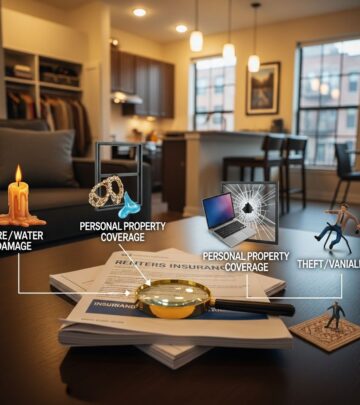
Practical Scenarios: How Renters Insurance Protects You
Understanding real-world applications illustrates why this coverage matters. Consider these common situations:
Fire or Natural Disaster
A fire damages your apartment, making it temporarily uninhabitable. Your renters insurance covers replacement of destroyed belongings and pays for hotel accommodations while repairs proceed.
Theft or Vandalism
Burglars steal electronics and jewelry from your rental unit. Your policy reimburses the replacement cost of stolen items, minus the deductible.
Water Damage Liability
Your washing machine malfunctions, causing water damage to your unit and neighboring apartments. Your liability coverage pays for damage repairs to other units and covers medical expenses if someone is injured.
Visitor Injuries
A guest slips and falls in your apartment, sustaining injuries. Liability coverage pays their medical bills and any awarded damages, protecting you from personal financial responsibility.
Affordability and Value Considerations
Renters insurance remains remarkably affordable for the protection it provides. Policies often cost between $5 and $20 monthly, representing minimal expense relative to the financial risk of uninsured losses. Even tenants with limited possessions benefit from this coverage, as replacement costs accumulate quickly and liability claims can result in substantial expenses.
Many landlords strongly recommend renters insurance even when not legally required, recognizing that most tenants benefit from protection at such reasonable cost. The investment shields both tenants and landlords from financial hardship resulting from unexpected events.
Navigating State-Specific Requirements
Before signing any lease, research your state’s renters insurance laws. Tenants in states with enhanced protections should carefully review lease language to ensure compliance with state guidelines. Verify that required liability amounts don’t exceed state maximums and that landlords haven’t included prohibited terms like being named as policy beneficiaries.
In states with fewer restrictions, clarify all insurance requirements before signing, including specific coverage amounts, proof submission procedures, and consequences of non-compliance. Consulting the lease agreement ensures you understand all obligations before committing to tenancy.
Common Questions About Renters Insurance Requirements
Can landlords require specific insurance companies?
Generally, landlords cannot mandate coverage from particular insurers but may specify minimum coverage requirements that your chosen policy must meet. You retain the freedom to shop among insurers offering compliant coverage at competitive rates.
What happens if I don’t obtain required insurance?
Failure to maintain required renters insurance violates your lease agreement. Consequences can range from financial penalties to lease termination and eviction proceedings, depending on lease terms and state law.
Does my landlord’s insurance cover my belongings?
No. Landlord insurance covers the building structure and common areas but excludes tenants’ personal belongings and liability arising from tenant actions. Renters insurance is necessary for personal property protection.
Can I cancel renters insurance during my lease?
Canceling required insurance constitutes lease violation. You must maintain coverage throughout your tenancy unless the lease is terminated. Even if requirements aren’t legally mandatory in your state, breach of lease terms can result in eviction.
Is renters insurance tax-deductible?
Personal renters insurance is not tax-deductible for most individuals. However, if you use part of your rental for business purposes, you may claim a proportional deduction. Consult a tax professional for your specific situation.
Taking Action: Next Steps for Renters
If you’re beginning a rental search or renewing a lease, proactively address renters insurance requirements. Compare policies from multiple insurers, ensuring coverage meets lease requirements while fitting your budget. Document all policy information and maintain proof of coverage readily available for landlord verification. Review your coverage annually to ensure it still reflects your belongings’ value and your liability risk profile.
Understanding renters insurance requirements empowers you to make informed decisions about rental agreements and protect yourself from financial hardship. Whether mandated by state law or required by your specific landlord, this coverage represents a small investment with substantial protective benefits for your financial security.
References
- Can a Landlord Require My Tenants to Have Renters Insurance? — Travelers Insurance. 2024. https://www.travelers.com/resources/home/landlords/can-a-landlord-require-renters-insurance
- Which states limit renters insurance requirements and which do not — The Mountain Near. 2024. https://themtnear.com/premium/stacker/stories/which-states-limit-renters-insurance-requirements-and-which-do-not
- Is Renters Insurance Required? — Allstate Insurance. 2024. https://www.allstate.com/resources/renters-insurance/is-renters-insurance-required
- Renters Insurance Requirements for Landlords 2026 — Obie Insurance. 2026. https://www.obieinsurance.com/blog/how-much-renters-insurance-should-landlord-require
- Landlord Requirements and Your Lease — GEICO. 2024. https://www.geico.com/renters-insurance/states/
- How Much Renters Insurance Should a Landlord Require? — My Smart Move. 2024. https://www.mysmartmove.com/blog/how-much-renters-insurance-does-tenant-need
- How Much Renters Insurance Do I Need? — State Farm. 2024. https://www.statefarm.com/simple-insights/residence/how-much-renters-insurance-do-i-need
Similar Articles








Read full bio of Sneha Tete