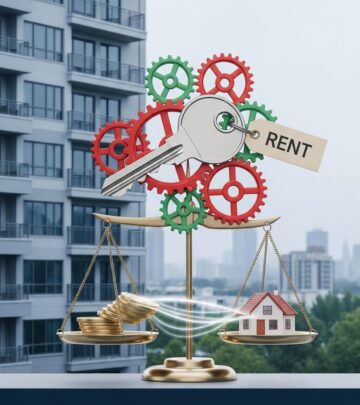
Rent Control Policies: Impact on Housing Markets
Understanding rental price restrictions and their effects on tenants and landlords.

Rental housing affordability remains a critical issue in many communities across North America and beyond. Governments have implemented various policy mechanisms to address rising rents and protect tenants from sudden price increases. One of the most debated approaches is rent control, a regulatory framework that restricts how much landlords can charge for residential properties. Understanding this policy requires examining its mechanics, intended outcomes, documented effects, and alternative solutions.
Defining Rental Price Restrictions
Rent control encompasses a broad spectrum of government interventions designed to regulate the residential rental market. At its core, this policy limits the amounts landlords can charge tenants and restricts how frequently or substantially rents can increase. The term “rent control” itself covers multiple regulatory approaches, each with distinct characteristics and varying degrees of restriction.
A related but distinct concept is rent stabilization, which allows rent to increase by a predetermined percentage annually rather than freezing prices entirely. Rent stabilization is considered more moderate than strict rent control, as it permits gradual price adjustments while still protecting tenants from excessive hikes. Both approaches aim to enhance housing stability, though they operate through different mechanisms.
Different Models of Rental Price Regulation
Rental price regulation frameworks vary significantly in their scope and implementation. Understanding these variations helps clarify the policy landscape and its real-world applications.
- Absolute Price Freezes: Also known as first-generation rent controls, these systems prohibit any rent increases regardless of circumstances. Rents remain fixed at the level established when the regulation took effect, providing maximum protection for existing tenants but creating potential disincentives for property investment.
- Tenancy-Based Controls: These regulations allow rent increases only between tenant transitions. Once a lease renewal occurs, landlords may adjust the price within government-set limits, but increases during a tenant’s continuous occupancy remain restricted. This approach balances tenant protection with landlord flexibility.
- Percentage Cap Systems: Rather than setting absolute dollar limits, these policies restrict annual increases to a specific percentage. For example, regulations might limit yearly increases to inflation plus a set percentage, allowing gradual market adjustments while preventing sudden spikes.
- Reference Price Models: Some jurisdictions establish local reference rent databases that track rental prices for comparable units. Landlords can only increase rents in accordance with the regional average, preventing excessive pricing relative to neighborhood standards.
How Rental Price Controls Function in Practice
When rent control regulations are implemented, they establish legal boundaries for landlord pricing decisions. Landlords cannot arbitrarily increase rents beyond government-specified limits, regardless of market demand or property improvements. This creates a predictable rental environment for tenants who benefit from reduced uncertainty about their housing costs.
The mechanics typically work as follows: a local government establishes maximum allowable rent levels, either as absolute amounts or as percentage increases permissible during lease renewals. Tenants occupying rent-controlled units enjoy cost stability, knowing their landlord cannot impose unexpected rent hikes. When lease renewal occurs, any increase must comply with regulatory limits rather than market demand.
Administrative structures support enforcement of these controls. Independent regulators and ombudsmen oversee compliance, investigate disputes, and impose penalties on landlords violating price restrictions. This oversight system ensures consistent application across properties and protects tenants lacking resources to contest illegal rent increases independently.
Intended Benefits and Tenant Protections
Proponents of rental price controls emphasize several potential advantages for residential communities and individual tenants.
Housing Stability and Community Continuity: By limiting rent increases, these policies enable long-term residents to remain in their homes despite rising property values. Neighborhoods maintain demographic diversity and social cohesion rather than experiencing rapid displacement. Families, elderly residents, and community workers can afford to stay in their established neighborhoods.
Financial Predictability: Tenants benefit from knowing their housing costs will not escalate dramatically, allowing them to plan budgets and allocate resources to other needs. This predictability reduces financial stress associated with uncertainty about future housing expenses.
Gentrification Mitigation: Rising property values often trigger neighborhood gentrification, where long-term residents cannot afford increased rents and relocate to distant areas. Rent controls impose barriers to this displacement process, preserving existing communities and preventing the cultural disruption associated with rapid demographic change.
Reduced Eviction Pressures: Many rent control frameworks include eviction protections requiring landlords to demonstrate specific just-cause reasons for tenant termination. Combined with affordable rent levels, these protections reduce housing instability and homelessness.
Documented Challenges and Market Effects
Economic research reveals substantial concerns about rental price restrictions’ unintended consequences for housing markets.
Reduced Housing Construction: When rents are capped below market rates, developers cannot generate sufficient returns to justify new construction investments. Capital flows to unrestricted markets where profit potential is higher. This reduces the supply of new rental housing precisely when demand is high, exacerbating shortages.
Property Maintenance Decline: Price restrictions limit landlord revenues, reducing funds available for property maintenance and improvements. Buildings deteriorate more rapidly when owners lack incentive to invest in upkeep. Tenants in rent-controlled units may experience declining housing quality despite protected prices.
Inequitable Tenant Outcomes: Rent control creates a two-tiered rental market where some tenants secure controlled rates while new entrants face uncontrolled market prices. This generates tension between protected and unprotected renters. Additionally, existing tenants may stay longer than otherwise optimal, reducing housing availability for others.
Economic Consensus: Research demonstrates substantial economist agreement regarding adverse effects. A survey by the American Economic Association found 93% of U.S. economists agreed that rent control reduces the quantity and quality of available housing. Academic studies consistently document construction reductions, maintenance deterioration, and supply constraints in regulated markets.
Comparative Policy Approaches
Recognition of rent control’s limitations has prompted exploration of alternative affordability strategies.
| Policy Approach | Mechanism | Intended Effect | Primary Advantage |
|---|---|---|---|
| Supply Expansion | Reduce zoning restrictions and development costs | Increase rental unit availability | Addresses root cause of affordability |
| Housing Vouchers | Direct tenant subsidies for market-rate housing | Enable low-income renters to access housing | Preserves market function while supporting vulnerable populations |
| Income-Based Assistance | Federal programs like Section 8 subsidies | Close gap between tenant income and market rents | Targets assistance to those most in need |
| Regulatory Streamlining | Simplify approval processes for new construction | Accelerate development of new units | Reduces development costs and timelines |
These alternatives address affordability by expanding supply or directly assisting tenants rather than restricting prices. Supply-side approaches increase housing availability, theoretically moderating prices through market competition. Demand-side assistance helps low-income renters afford existing housing without suppressing development incentives.
International Applications and Variations
Rent control implementation varies substantially across jurisdictions and countries. At least 14 of 36 OECD countries maintain some form of rental price restrictions, reflecting diverse approaches to housing policy.
In the United States, four states have implemented statewide regulations. California established a statewide rent cap limiting annual increases to 5% plus regional inflation, applying to properties built before specified dates. Oregon became the first state to adopt comprehensive statewide rent control, limiting increases to inflation plus 7%, while exempting new construction for 15 years.
Germany employs reference price models where local rent databases guide permissible increases, with usury protections prohibiting price rises exceeding 20% over three-year periods. This approach provides flexibility while preventing excessive spikes.
Egypt implemented dramatic regulatory transitions, allowing controlled rents to increase substantially upon decontrol, creating significant affordability shifts for affected tenants.
Frequently Asked Questions
How do landlords respond to rent control?
Landlords often respond by reducing investment in controlled properties, transferring capital to unrestricted markets, deferring maintenance, or converting rental units to owner-occupied or alternative uses. These responses reduce housing availability and quality over time.
Does rent control help low-income renters?
Rent control provides immediate relief to existing tenants but can harm low-income renters generally by reducing housing supply and quality. Alternative assistance programs targeting low-income households may be more efficient at expanding opportunity without discouraging construction.
Can rent control prevent gentrification?
Rent control creates barriers to gentrification by limiting price increases, allowing existing residents to remain despite rising neighborhood property values. However, it does not eliminate underlying gentrification pressures and may distort housing markets in ways that create other challenges.
What distinguishes rent control from rent stabilization?
Rent control typically freezes prices between tenancies or absolutely, while rent stabilization permits percentage-based increases annually. Stabilization is considered more moderate, allowing gradual price adjustments within government limits.
Are there successful rent control models?
Success depends on policy objectives and measurement criteria. Some jurisdictions report maintained affordability for existing tenants, while experiencing reduced construction, property quality decline, or other market effects. No model has demonstrated long-term affordability improvements without acknowledged tradeoffs.
Conclusion and Future Considerations
Rent control represents a direct government intervention in rental markets intended to protect tenants and ensure housing stability. While these policies provide immediate relief to existing renters by limiting price increases, substantial economic research documents significant market consequences including reduced construction, property maintenance challenges, and housing supply constraints.
Policymakers considering rental price restrictions face difficult tradeoffs between protecting current residents and addressing underlying housing supply limitations. Alternative approaches including supply expansion, zoning reform, and direct tenant assistance may address affordability without suppressing development incentives. Effective housing policy likely requires combining multiple strategies tailored to local market conditions rather than relying solely on price controls.
References
- Rent regulation — Wikipedia. Accessed February 2026. https://en.wikipedia.org/wiki/Rent_regulation
- What is rent control and how does it work? — Rocket Mortgage. Accessed February 2026. https://www.rocketmortgage.com/learn/rent-control
- Rent Control: Policy Issue — National Apartment Association. Accessed February 2026. https://naahq.org/advocacy/policy/issues/rent-control
- Rent Control — WRA Action. November 2024. https://action.wra.org/2024/11/01/rentcontrol/
Similar Articles








Read full bio of medha deb