Rent Control: Definition, How It Works, and Effects
Understanding rent control policies and their impact on tenants, landlords, and housing markets.
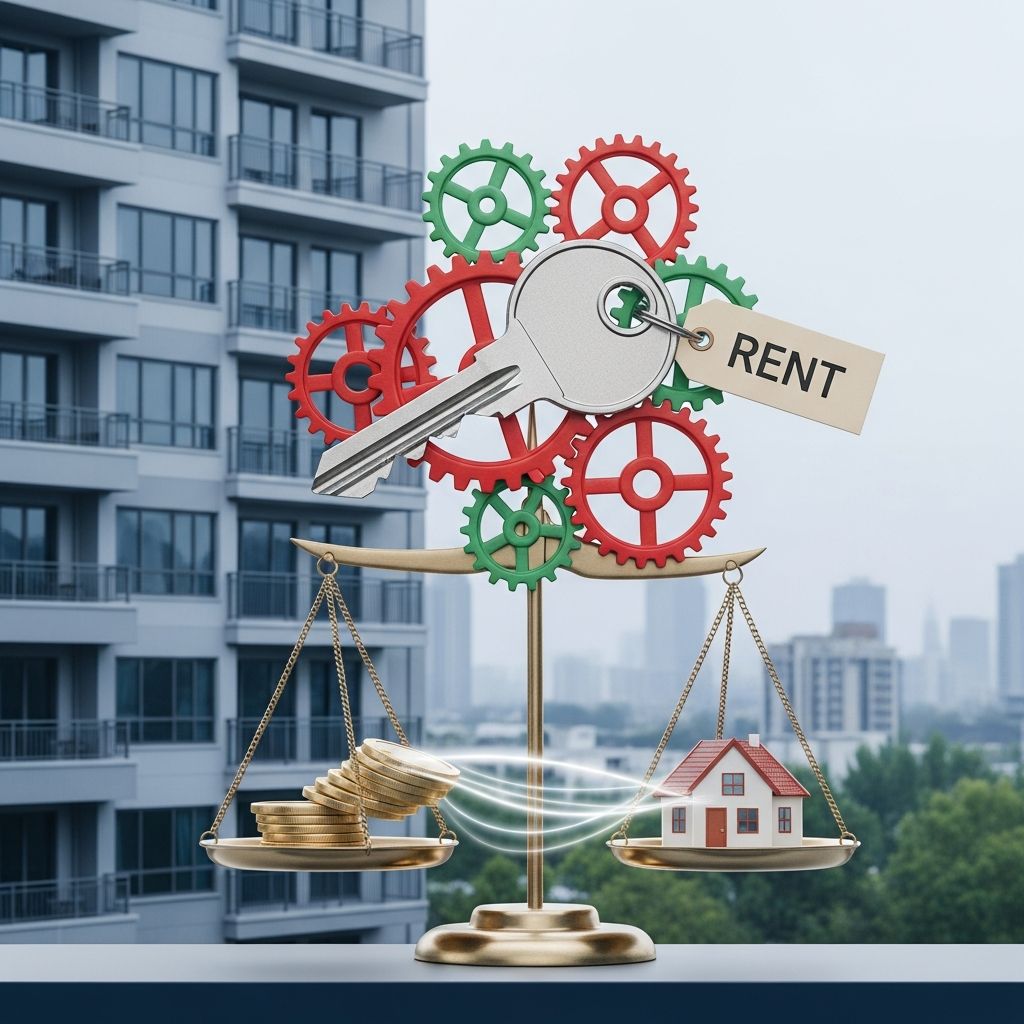
What Is Rent Control?
Rent control refers to government policies and regulations that limit the amount landlords can charge tenants for rental properties. These laws are designed to protect renters from steep and sudden rent increases, ensuring that housing remains affordable and accessible, particularly in rapidly developing areas where housing demand outpaces supply. Rent control operates at various governmental levels—municipal, state, and federal—though it is most commonly enacted at the local or state level.
The concept of rent regulation has ancient roots, dating back to ancient Rome, but in the United States, rent control gained significant traction during World War I in response to severe housing shortages. Since then, it has evolved into a multifaceted approach to managing housing costs, with different jurisdictions implementing varying degrees of regulation. Today, rent control remains one of the most contentious policy issues in the real estate and housing sectors, with proponents arguing it protects vulnerable residents and critics contending it creates market inefficiencies.
Understanding Rent-Controlled Apartments
A rent-controlled apartment is a residential unit protected by local or state rent-control laws. The protections afforded to tenants in these units vary significantly depending on the jurisdiction. In some areas, rent control establishes strict limits on the total rent that can be charged for specific apartments. In other locations, landlords may increase rent, but only within parameters set by local regulators—often limited to a fixed percentage annually or upon lease renewal.
For example, California’s Tenant Protection Act, enacted in 2020, stipulates that most properties built more than 15 years ago can only raise rent annually by the lesser of 5% plus the cost-of-living increase or 10%. Different cities and states apply different standards, making it essential for tenants to understand the specific regulations governing their local housing market.
How Rent Control Works
Rent control operates by establishing regulatory limits on how much landlords can increase rent on an annual basis or upon lease renewal. The mechanism typically works as follows:
Initial Rent Setting: When a tenant first moves into a rent-controlled unit, the landlord may charge market-rate rent. However, once the rent-control regulations take effect, subsequent increases are constrained by law.
Annual Increases: Local governments set limits determining the maximum percentage by which rent can increase each year. This prevents tenants from facing surprise increases such as a sudden 50% rent hike. These limits are often tied to inflation indices or determined by housing agencies.
Lease Renewal: Upon lease renewal, rent may increase according to the predetermined percentage limits rather than being reset to market rates.
Deregulation: In many jurisdictions, rent-controlled status applies only during the tenure of the current tenant. Once a tenant vacates, the property may be automatically deregulated, allowing the landlord to charge the next tenant at market rates. Alternatively, some jurisdictions implement “vacancy control,” which maintains restrictions from one tenancy to the next.
Rent Control vs. Rent Stabilization
Though often used interchangeably, rent control and rent stabilization are distinct regulatory approaches. Understanding the difference is crucial for tenants and policymakers:
| Feature | Rent Control | Rent Stabilization |
|---|---|---|
| Regulation Stringency | More stringent with stricter limits on rent and renewal increases | Less restrictive but broader array of protections |
| Rent Increase Method | Sets a total cap or maximum limit on rent charges | Allows limited annual increases based on percentages |
| Flexibility | Minimal landlord flexibility in rent adjustments | Provides landlords more leeway while protecting tenants |
| Additional Protections | Varies by jurisdiction | Often includes renewal rights and stricter eviction prerequisites |
| Current Trend | Slowly disappearing in many areas | Has become the norm since the 1970s |
Geographic Distribution of Rent Control Laws
Rent control regulations are not uniformly applied across the United States. Statewide allowances for rent control exist primarily on the coasts, including California, New York, and New Jersey. However, the landscape has shifted dramatically over recent decades.
As of 2024, 33 states prohibit rent control regulations entirely, reflecting a nationwide trend away from strict rent control policies. Notably, Oregon became the first state to adopt statewide rent regulation in 2019, followed by California’s passage of statewide rent control legislation that same year. New York also enacted a rent reform bill in 2019 that strengthened stabilization rules and made them permanent.
Advantages of Rent Control
Rent control policies offer several potential benefits for tenants and communities:
Housing Affordability: Rent controls help make housing more affordable for existing tenants by preventing excessive price increases. This is particularly valuable in markets where rapid development and rising demand drive costs beyond reach for average workers.
Stability and Predictability: By limiting annual rent increases, tenants can better anticipate and budget for future housing costs. This predictability reduces financial stress and allows residents to plan long-term housing arrangements. Neighborhoods with rent control often see greater residential stability, allowing communities to remain in their homes longer.
Increased Disposable Income: When less money goes toward rent, tenants can allocate those savings toward other essential expenses, savings accounts, education, or quality-of-life improvements.
Lower Eviction Rates: Rent control regulations frequently include protections against eviction. Combined with controlled rent increases that make payments more manageable, these measures reduce involuntary displacement.
Reduced Vacancy Rates: Long-term residents who can afford their rent reduce the number of unoccupied units, generating more stable income streams for landlords. Landlords lose income when properties remain empty, making tenant retention economically advantageous.
Tenant Retention: For landlords, increased lease renewals mean better tenant retention and reduced vacancy periods requiring re-renting and property turnover costs.
Disadvantages of Rent Control
Despite its protective intentions, rent control introduces complications that negatively affect multiple stakeholders:
Reduced Profitability for Landlords: With limits on rent increases, landlords’ profit margins from rent collection shrink significantly. This reduced profitability can discourage investment and property improvements.
Deferred Maintenance: Smaller profit margins may incentivize landlords to defer necessary maintenance, skip repairs, and neglect property upkeep. This burden ultimately falls on tenants living in deteriorating conditions. Research demonstrates that rent control can lead to landlord negligence regarding maintenance and proper property upkeep.
Limited Housing Supply: Rent-controlled units are difficult to find due to reduced new construction. Regulations can dissuade developers from building in rent-controlled areas, limiting availability for prospective tenants. Developers and investors often redirect funding to non-rent-controlled jurisdictions where returns are higher, exacerbating housing shortages.
Property Conversion: Rather than adhering to regulations restricting profits, landlords may convert rental buildings to condominiums or commercial properties, further reducing the rental housing stock.
Market Inefficiencies: Rent control ignores the root cause of affordability challenges—insufficient housing supply at all price points—and can paradoxically worsen housing crises by discouraging investment in new construction.
Rent Control and Gentrification
Gentrification—the process of rising property values displacing current residents to cheaper areas and disrupting communities—represents a significant housing challenge in many urban markets. Rent control serves as a protective mechanism against this phenomenon by restricting how much rent can increase.
By preventing rapid rent escalation, rent control helps existing residents maintain housing stability even as neighborhood property values rise. This preservation of community character and prevention of involuntary displacement makes rent control an appealing policy tool for neighborhoods experiencing gentrification pressure. However, critics argue that rent control, by limiting housing supply and new construction, may paradoxically accelerate gentrification by making the remaining housing stock more scarce and valuable.
Current State of Rent Control in America
The rent control landscape in America reveals a complex patchwork of policies and philosophies. While coastal states like California, New York, and New Jersey maintain robust rent control frameworks, most of the nation has moved in the opposite direction. The prohibition of rent control in 33 states reflects growing skepticism about the policy’s effectiveness and concerns about its unintended consequences.
Recent legislative changes suggest a potential shift. The passage of statewide rent regulation in Oregon (2019) and California (2019), along with New York’s rent reform bill (2019), indicate that some states are reconsidering rent control as a tool for addressing housing affordability crises. These developments suggest that the debate over rent control’s merits will continue to shape housing policy for years to come.
Special Considerations and Variations
Rent control policies often incorporate special provisions that further complicate the regulatory landscape. Some jurisdictions pair rent control with just-cause eviction measures or other restrictions that make property management more challenging for housing providers. Vacancy control provisions, which maintain rent restrictions from one tenancy to the next, create additional constraints on landlord flexibility.
Additionally, some rent control laws include exemptions based on property age, rent level thresholds, or tenant income, creating a nuanced system where different units within the same building may have different protections.
Frequently Asked Questions
Q: Is rent control legal in all states?
A: No. As of 2024, rent control is prohibited in 33 states. Rent control is primarily found in coastal states like California, New York, and New Jersey, though recent legislative changes in Oregon and California suggest this may be evolving.
Q: What is the difference between rent control and rent stabilization?
A: Rent control imposes strict limits on total rent charges, while rent stabilization allows limited annual percentage increases. Rent stabilization is generally less restrictive but often provides broader tenant protections including renewal rights and stricter eviction requirements.
Q: How does rent control affect property maintenance?
A: Rent control can reduce landlord profitability, potentially leading to deferred maintenance and neglected repairs. With lower profit margins, some landlords may prioritize cost-cutting over property upkeep, disadvantaging tenants.
Q: Does rent control increase or decrease housing supply?
A: Research suggests rent control decreases housing supply by discouraging new construction and encouraging property conversion to condominiums or commercial uses. This reduction in supply can ultimately harm renters seeking affordable housing options.
Q: Can rent control prevent gentrification?
A: Rent control can slow gentrification by preventing rapid rent increases, helping existing residents remain in their homes. However, it may paradoxically accelerate gentrification by limiting housing supply and making remaining units more valuable.
Q: What happens to a rent-controlled apartment when a tenant moves out?
A: This depends on local regulations. In most jurisdictions, the unit automatically deregulates upon tenant departure, allowing landlords to charge market rates to new tenants. However, some areas maintain “vacancy control,” where restrictions persist across tenancies.
References
- What is rent control and how does it work? — Rocket Mortgage. 2024. https://www.rocketmortgage.com/learn/rent-control
- Rent regulation (rent control) — EBSO Research Starters. 2024. https://www.ebsco.com/research-starters/economics/rent-regulation-rent-control
- Rent control: definition, how it works, pros and cons — Chase Bank. 2024. https://www.chase.com/personal/mortgage/education/finding-a-home/what-is-rent-control
- Rent Control: Policy Issue — National Apartment Association. 2024. https://naahq.org/advocacy/policy/issues/rent-control
- Rent Control: What Does the Research Tell Us About the Effectiveness of Local Action? — Urban Institute. 2019. https://www.urban.org/sites/default/files/publication/99646/rent_control._what_does_the_research_tell_us_about_the_effectiveness_of_local_action_1.pdf
Similar Articles








Read full bio of Sneha Tete