Renovation vs. Remodel: Key Differences & Costs
Understand the crucial differences between home renovations and remodels to plan your project effectively.
Understanding Home Renovations vs. Remodels
When homeowners consider improving their living spaces, they often use the terms “renovation” and “remodel” interchangeably. However, these two types of home improvement projects differ significantly in scope, cost, timeline, and the expertise required. Understanding these distinctions is essential before embarking on any home improvement project, as each comes with its own range of costs, timeframes, permit requirements, and potential return on investment.
What is a Home Renovation?
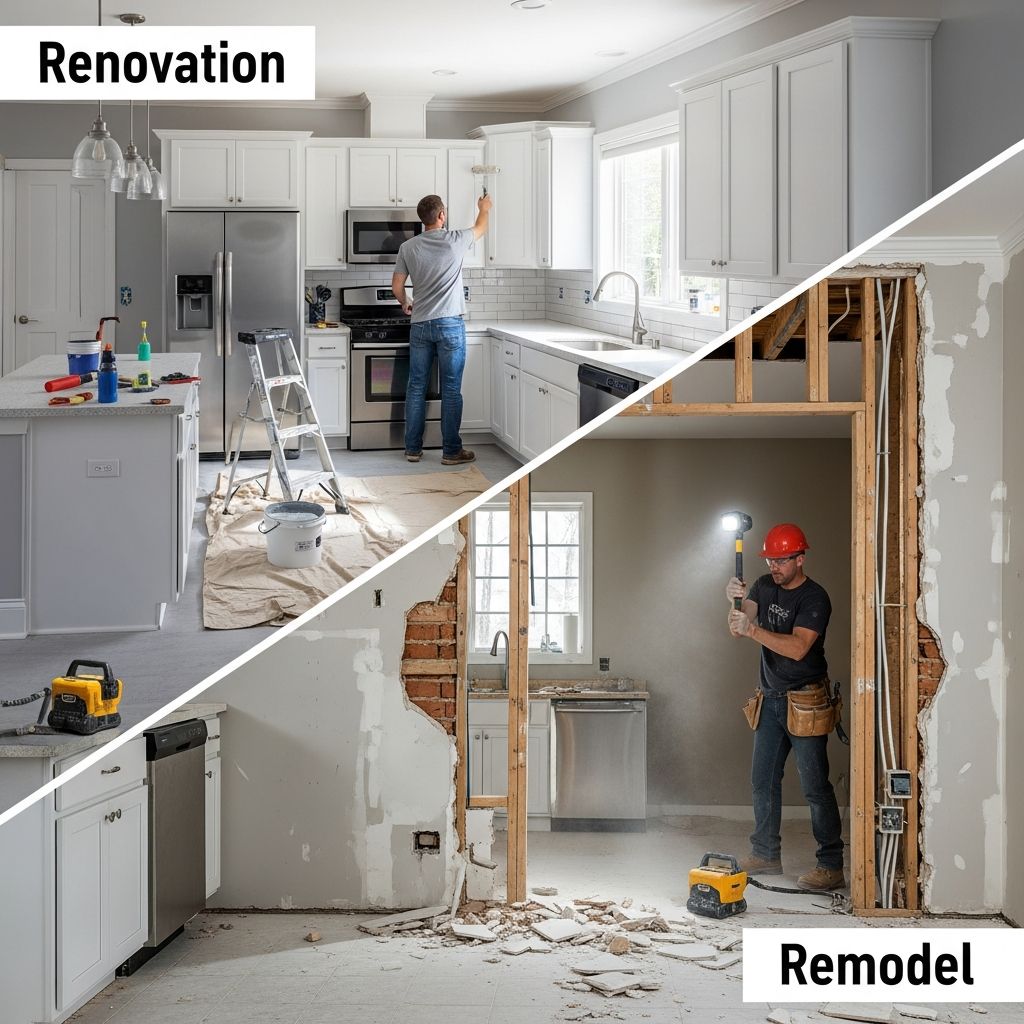
A home renovation is fundamentally a refresh or minor makeover of your existing space. When you think of a renovation, imagine updating the aesthetics and functionality of a room without making structural changes. Renovations are typically projects that homeowners can undertake themselves, making them accessible to those seeking a DIY approach to home improvement.
Common Renovation Projects
Typical renovation tasks include:
- Painting walls and trim
- Changing hardware on kitchen cabinets
- Updating light fixtures and lighting
- Replacing flooring in specific areas
- Updating window treatments
- Refinishing existing surfaces
These projects serve as “spruce-ups” for your home’s aesthetics without requiring professional contractors or building permits in most cases. One of the greatest advantages of renovations is their flexibility and timeline—many renovation projects can be started and completed within a single weekend, depending on their scope and complexity.
What is a Home Remodel?
A home remodel, by contrast, represents a reconstruction or major project that fundamentally changes the structure, layout, or functionality of your home. Remodels involve significant alterations that typically require hiring professional contractors, obtaining building permits, and planning for extended timelines. These projects often involve specialized trades like plumbing, electrical work, and structural modifications.
Examples of Remodeling Projects
Common remodeling undertakings include:
- Raising or lowering ceilings
- Moving bathtubs or other plumbing fixtures to new locations
- Adding home extensions or new rooms
- Installing kitchen islands with plumbing and electrical components
- Complete kitchen or bathroom overhauls
- Structural modifications and load-bearing wall adjustments
- Major HVAC system installations or upgrades
A remodel is a significant commitment that requires careful planning, budgeting, and coordination among multiple professionals. The scope of changes involved makes remodels substantially more expensive and time-consuming than renovations, often spanning weeks or months depending on the project’s complexity.
Cost Comparison: Renovation vs. Remodel
Understanding the financial implications of each project type is crucial for homeowners planning their investments. The costs can vary dramatically based on several factors, including project scope, materials selected, labor requirements, and regional market conditions.
Renovation Costs
Home renovations are generally budget-friendly and accessible to most homeowners. A simple renovation can often be accomplished for just a few hundred dollars. For example, paint supplies and light fixtures can be incorporated into virtually any budget. On a per-square-foot basis, home renovations typically cost between $15 to $60 per square foot on average, though costs could approach $150 per square foot depending on the specific room, your geographic location, house size, and the types of materials selected.
Remodel Costs
Home remodels, on the other hand, require significantly larger financial investments. According to current market data, home remodels may cost anywhere from $3,000 to $190,000 or more, depending on the project’s scope and scale. On average, remodel and renovation projects combined average approximately $52,272, with most home projects ranging from $19,488 to $88,406. For context, a major kitchen remodel with midrange materials typically costs close to $21,000, while more extensive projects can exceed these figures considerably.
Cost Factors That Influence Pricing
Several variables significantly impact the final cost of both renovations and remodels:
- Materials Quality: Choosing between economy, midrange, and upscale materials dramatically affects costs
- Location: Regional labor costs and material availability vary by geographic area
- Home Size: Larger homes generally require more materials and labor
- Complexity: Projects involving structural changes, plumbing, or electrical work cost substantially more
- Permit Requirements: Obtaining necessary permits adds time and expense
- Contractor Fees: Professional labor represents a significant portion of remodeling costs
Return on Investment Analysis
When considering home improvements, understanding potential return on investment is critical. Not all renovation and remodeling projects recoup their costs equally, and some may actually decrease your home’s appeal to future buyers if not executed thoughtfully.
Best-Returning Projects
According to industry reports, certain upgrades demonstrate exceptional return on investment:
- Garage Door Replacement: 193.9% cost recovery
- Hardwood Floor Refinishing: 147% cost recovery
- Insulation Upgrades: 100% cost recovery
Projects with Lower Returns
Other improvements may not recover their full investment:
- Kitchen Remodels: 67% cost recovery (though kitchen upgrades improve daily quality of life)
- Adding a Bathroom: 63% cost recovery
- Upscale Master Suite Addition: 23.9% cost recovery
These variations underscore an important principle: less-expensive renovations often offer a greater return on investment at home resale time than luxury-level improvements. A major kitchen remodel with midrange materials recoups nearly 50 percent of its costs, versus only 38 percent for one with upscale materials. This suggests that practical, mid-level improvements frequently appeal more to future buyers than high-end luxury additions.
Timeline and Duration Considerations
Project duration significantly affects your daily life and ability to use your home normally during improvements. Renovations typically can be completed in a matter of hours or days, allowing minimal disruption to your household. A painting project, cabinet hardware replacement, or lighting update might be finished in a single weekend or even during an afternoon.
Remodels, however, represent a longer commitment. Depending on the project’s scope—whether involving structural modifications, new electrical circuits, plumbing lines, or additions—remodels can span several weeks to multiple months. During this time, you may experience significant disruption, limited access to certain areas of your home, and daily presence of contractors and various trade workers. Planning for this disruption and establishing clear communication with contractors about timelines is essential.
Permit and Regulatory Requirements
Another critical difference between renovations and remodels involves building permits and regulatory compliance. Most simple renovations—such as painting, changing fixtures, or updating hardware—typically do not require building permits. These projects usually fall within the realm of standard homeowner maintenance and improvement.
Remodels, conversely, frequently require building permits and inspections, particularly when involving structural changes, electrical work, plumbing modifications, or room additions. Securing permits ensures that work meets local building codes and safety standards, protecting both your home and your investment. While permits add time and cost to remodeling projects, they are essential for ensuring quality workmanship and maintaining your home’s safety and compliance with regulations.
Choosing Between Renovation and Remodel
Deciding whether to renovate or remodel depends on multiple factors unique to your situation. Consider the following when making this important decision:
Your Budget
Evaluate how much you can comfortably spend on home improvements. If you’re working with a limited budget, renovations offer accessible ways to refresh your space. If you have more substantial funds available and want to make significant functional changes, remodeling may be appropriate.
Your Timeline
Consider how long you’re willing to have your home under construction. Renovations work well if you need quick improvements. Remodels require patience and planning for extended disruption.
Return on Investment Goals
Research which projects in your local market offer the best return on investment. Consult with a real estate agent or appraiser about which renovations and remodels enhance home value and appeal to potential buyers in your area. Generally, a more modest redo provides a better return than a deluxe one.
Room Usage
Focus your spending on rooms you frequently use. Investing in spaces central to your daily life provides greater satisfaction and functionality than improving rarely-used areas.
Your Long-Term Plans
How long do you plan to stay in your home? If a move is foreseeable, simple renovations make more financial sense, as you’ll recoup your investment more easily. If it’s your forever home and changes increase functionality for your family’s needs, a larger remodel could be justified even if the return on investment isn’t exceptional from a resale perspective.
Functional vs. Monetary Value
While monetary return on investment matters, don’t overlook personal value. If you frequently host large dinner parties but have a tiny dining room and kitchen, a large-scale remodel of that area makes sense for improving your quality of life, even if the project won’t have exceptional property value returns. You’ll enjoy the improved functionality daily while living in your home.
Making Your Decision
Before committing to any home improvement project, take time to:
- Evaluate your budget and financing options
- Research potential costs specific to your location and project type
- Assess the payoff and return on investment for your chosen improvements
- Carefully consider which projects will give you the largest return on your investment
- Think about how improvements will contribute to your home’s function and your lifestyle
- Plan your timeline and understand the disruption involved
- Determine whether you’ll handle the project yourself or hire professionals
Frequently Asked Questions
Q: What’s the main difference between a renovation and a remodel?
A: Renovations are refresh projects involving cosmetic updates like painting and changing fixtures that homeowners can typically do themselves. Remodels are major structural or functional changes that usually require professional contractors and building permits.
Q: How much should I expect to spend on a renovation?
A: Simple renovations can cost just a few hundred dollars. On average, renovations cost $15 to $60 per square foot, though this can reach $150 per square foot depending on materials and location.
Q: What’s the typical cost range for a home remodel?
A: Home remodels typically range from $3,000 to $190,000 or more. The average remodeling project costs around $52,272, with most projects falling between $19,488 and $88,406.
Q: Will my home improvement project increase my home’s value?
A: Return on investment varies significantly by project type. Some improvements like garage door replacement recover over 100% of costs, while others like kitchen remodels recover around 67%. Consulting a local real estate agent about your specific market is advisable.
Q: Do I need permits for home renovations?
A: Most simple renovations like painting and fixture changes don’t require permits. However, remodels involving structural changes, electrical work, or plumbing typically require permits and inspections.
Q: How long does a typical renovation take?
A: Many renovations can be started and finished within a single weekend, depending on the project’s scope and complexity.
Q: Should I renovate or move if I’m unhappy with my home?
A: This depends on your location satisfaction, budget, long-term plans, and how much the improvements will enhance your lifestyle. If your location is ideal and the changes will significantly improve functionality, remodeling may be worthwhile even without exceptional financial returns.
References
- What’s The Difference Between A Home Renovation & A Remodel? — Bankrate. 2025. https://www.bankrate.com/loans/home-improvement/renovation-vs-remodel/
- 2024 Cost vs. Value Report — Journal of Light Construction (JLC). 2024. https://www.jlconline.com/
- 2022 Remodeling Impact Report — National Association of Realtors. 2022. https://www.nar.realtor/
- Paying for Home Renovations: Financing Vs. Savings — Bankrate. 2025. https://www.bankrate.com/home-equity/best-way-to-pay-for-home-renovations/
- Why It’s Smart To Use Home Equity For Remodeling — Bankrate. 2025. https://www.bankrate.com/home-equity/home-equity-for-improvement-renovation/
- How To Decide Whether To Remodel Your Home or Move — Bankrate. 2025. https://www.bankrate.com/real-estate/remodel-your-home-or-sell-it/
Similar Articles








Read full bio of medha deb